What is considered abnormal uterine bleeding?
Bleeding may be considered abnormal when it is unusually heavy or prolonged, occurs between periods or after sex, cycles are repeatedly irregular, or any bleeding occurs after menopause.


+91 9111674111
+91 9100001201
Obstetrician & Gynecologist
If you have heavy periods, irregular menstrual bleeding or spotting between periods, this guide explains possible causes, symptoms, diagnostic tests and treatment options. The right approach depends on your age, symptoms, medical history, pregnancy possibility and future fertility plans.
Call for a Gynecology Consultation Explore Tests & Treatment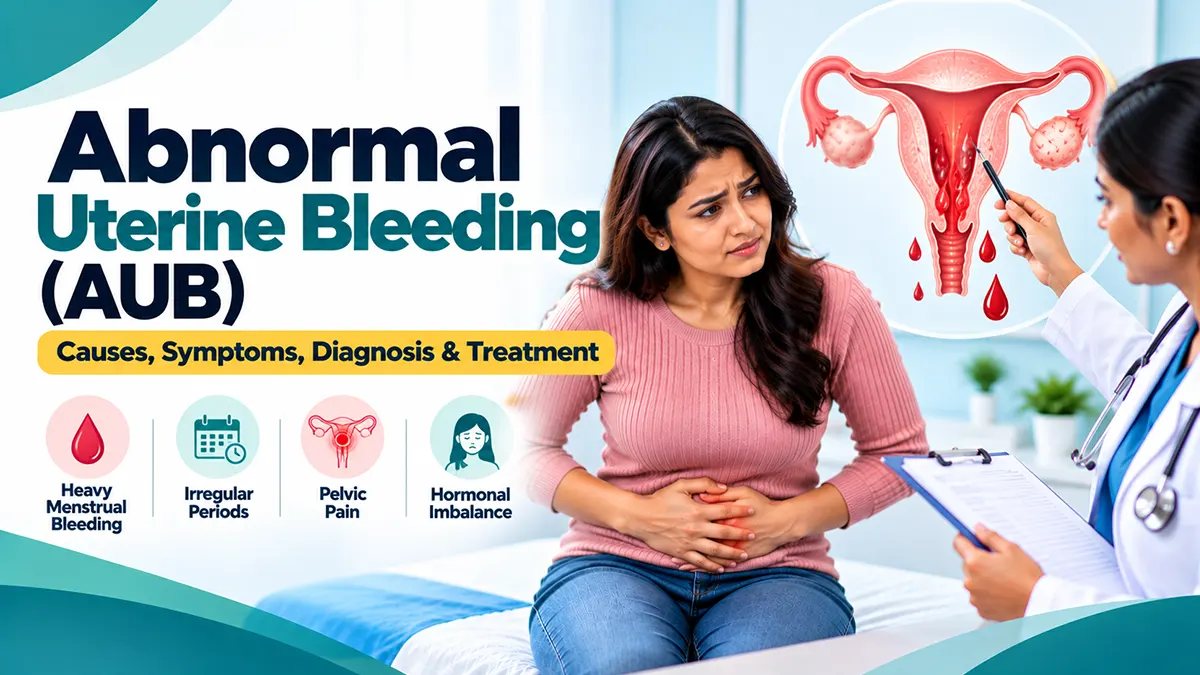
Bleeding patterns vary, but a noticeable change from your usual cycle deserves attention—especially if it is persistent, heavy or occurs after menopause.
Abnormal uterine bleeding is a term used for bleeding from the uterus that is irregular in timing, unusually heavy, prolonged or otherwise different from an individual's usual menstrual pattern. It can include spotting between periods, bleeding after sexual intercourse, periods lasting longer than about seven days, or cycles that frequently occur too close together or too far apart.
AUB is a symptom rather than a single disease. Sometimes the cause is related to ovulation or hormone changes; at other times, a structural issue such as a uterine polyp or fibroid is responsible. Pregnancy-related bleeding is evaluated separately, and bleeding after menopause should always be assessed by a healthcare professional.
Your gynecologist considers hormonal, structural, pregnancy-related and other medical causes.
If ovulation does not occur regularly, the uterine lining may build up and shed unpredictably. This may be associated with adolescence, the years approaching menopause, PCOS or thyroid disorders.
Noncancerous growths or changes in the uterine muscle can contribute to heavy, prolonged or painful periods. Pelvic ultrasound and, in selected cases, hysteroscopy may help assess these causes.
Cervical or uterine infections and pelvic inflammatory disease can sometimes cause bleeding, discharge, pelvic pain or bleeding after sex.
Bleeding may be related to miscarriage, ectopic pregnancy or other pregnancy complications. If pregnancy is possible, testing and timely medical advice are important.
Hormonal contraception, some intrauterine devices, missed or irregular contraceptive doses and blood-thinning medicines may affect bleeding. Tell your clinician what you take.
Bleeding disorders, endometrial thickening and, less commonly, precancerous or cancerous changes may cause abnormal bleeding. Risk depends on factors including age and medical history.
The pattern, amount and duration of bleeding—and any associated symptoms—help guide the assessment.
There is no single test for every person. Investigations are selected according to symptoms, age, pregnancy possibility and risk factors.
The clinician may ask about cycle timing, bleeding amount, pain, pregnancy history, contraception, medicines and prior health conditions. A physical or pelvic examination may be recommended to help locate the source of bleeding.
A pregnancy test may be needed when pregnancy is possible. A complete blood count can check for anaemia; iron studies, thyroid tests or tests for a bleeding disorder may be considered when clinically indicated.
Ultrasound can assess the uterus, endometrial lining, ovaries and possible structural causes such as fibroids or polyps. The type and timing of imaging depend on the clinical question.
In selected cases, hysteroscopy lets the gynecologist view the inside of the uterus. An endometrial biopsy may be advised according to age, persistent symptoms and risk factors for endometrial disease.
Treatment is personalized based on its cause, bleeding severity, other medical conditions and whether you want to become pregnant in the future.
Depending on the cause, options may include hormonal contraception, progestin treatment, a levonorgestrel-releasing intrauterine system, tranexamic acid or anti-inflammatory medicines. These are not suitable for everyone and should be prescribed after evaluation.
Treatment may involve managing thyroid problems, infection, a bleeding disorder or another medical condition. If anaemia is present, the clinician may recommend iron assessment and treatment.
Hysteroscopy may help diagnose or remove certain polyps. Myomectomy removes fibroids while aiming to preserve the uterus. Other procedures may be suitable for selected conditions after reviewing fertility plans and risks.
This procedure reduces or stops bleeding by treating the uterine lining. It is generally not suitable for people who want a future pregnancy, and pregnancy afterwards can be dangerous.
Removal of the uterus may be considered for selected severe or persistent conditions when other appropriate options have not worked or are not suitable. It permanently ends the ability to carry a pregnancy.
Some people need follow-up appointments, repeat blood tests or imaging to check whether treatment is working. Report ongoing or worsening bleeding even if a treatment was started.
Arrange a medical assessment if bleeding is new, recurring, unusually heavy or different from your normal pattern.
When symptoms are severe, use emergency services rather than waiting for an appointment.
Confirm the KPHB consultation appointment before visiting. Urgent bleeding symptoms should not wait for routine clinic hours.
Consult about heavy or irregular periods, abnormal bleeding and other gynecological concerns.
Book Appointment
Discuss abnormal bleeding, menstrual concerns and fertility-related questions during a gynecology consultation.
Book AppointmentGeneral information only; your clinician can advise based on your personal symptoms and health history.
Medical disclaimer: This page provides general educational information and does not replace diagnosis or individualized treatment. Bleeding during pregnancy is evaluated separately from non-pregnancy-related AUB. If symptoms are severe or you may be experiencing an emergency, seek prompt medical care. Doctor schedules may change; confirm availability with the hospital.
Not all vaginal bleeding starts in the uterus. Examination may identify a cervical or vaginal source, and pregnancy-related causes need separate assessment. A normal Pap screening result does not explain persistent bleeding or replace a symptom assessment.
After menopause, even one episode of light spotting should be checked. Do not assume it is harmless because it stopped or because a previous scan was normal.
Ask when bleeding should improve, which side effects to report and when to return. Keep a bleeding record and bring your medicines and earlier reports. Do not delay urgent treatment to complete a diary.
If anaemia is found, ask how it will be treated and monitored alongside the bleeding cause. Persistent or returning symptoms may need reassessment.
Ask why hysteroscopy, a biopsy or surgery is being proposed and how the result will guide care. Discuss alternatives and future pregnancy plans. Endometrial ablation and hysterectomy have major reproductive implications; they are not interchangeable with removing a polyp or fibroid.
My Health Hospitals, H.No. 15-24-212, MIG-212, Road Number 1, KPHB Phase 1, Kukatpally Housing Board Colony, Hyderabad, Telangana 500072.
+91 9111674111. Dr. Rajya Lakshmi: 10 AM–4 PM; Dr. Hima Sindhu: 4 PM–8 PM. Confirm the doctor’s current schedule before visiting.
Ask which tests are needed, where they will be done, how results will be reviewed and whether consultation, scans, tissue sampling and laboratory charges are separate. If a procedure is advised, request a written estimate and exclusions. A consultation listing does not confirm that every test or procedure is available at this branch.
For branch-specific visit information, see our abnormal uterine bleeding consultation page for Tarnaka, Secunderabad. For other gynecology services and specialist details, visit the Obstetrics and Gynecology specialty page.
Discuss your bleeding pattern, symptoms and treatment options with a qualified gynecology professional.
Call +91 91116 74111Send an EnquiryFind Our Kukatpally and Tarnaka Branches
H.No 15-24-212, MIG-212, Rd Number 1, K P H B Phase 1, Kukatpally, Hyderabad, Telangana 500072
H.No:-12-5-30, WhiteHouse, Moula Ali Rd, South Lalaguda, Tarnaka, Secunderabad, Telangana 500017