What is a hysterectomy?
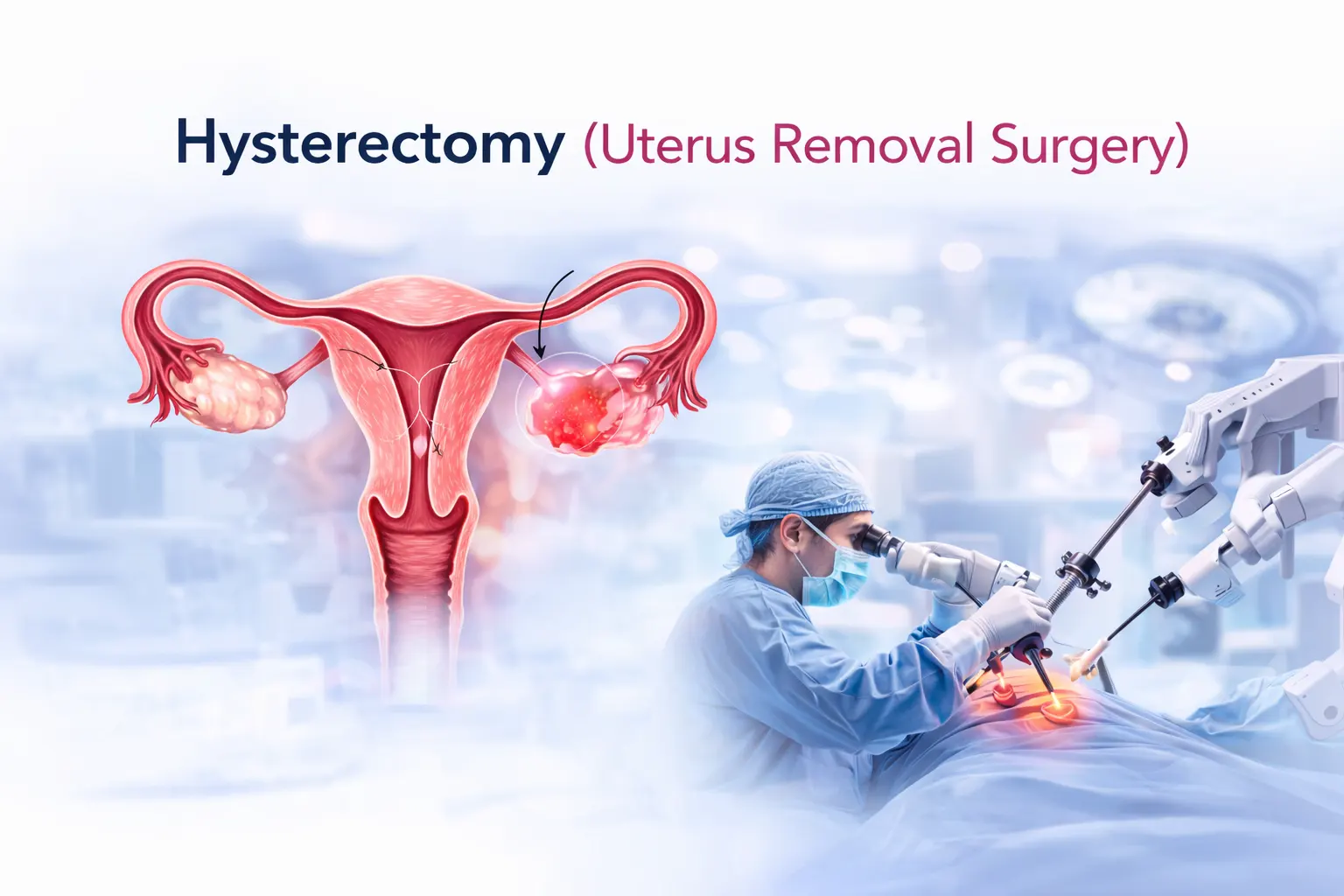
A hysterectomy is an operation to remove the uterus. The cervix, fallopian tubes or ovaries may also be removed depending on the condition and agreed surgical plan.


+91 9111674111
+91 9100001201
Obstetrician & Gynecologist
If you are considering hysterectomy treatment in Kukatpally, Hyderabad, this guide explains why the operation may be recommended, its types, preparation, recovery, risks, alternatives and questions to discuss with your gynecologist.
Book a Gynecology Consultation Explore Types & RecoveryLooking for a branch-specific consultation guide? See laparoscopic hysterectomy consultation information in Tarnaka, Secunderabad.
Hysterectomy is surgery to remove the uterus. The operation should be considered after discussing the reason for surgery, alternatives and expected effects on fertility.
The uterus, also called the womb, is where a pregnancy develops. After a hysterectomy, a person can no longer carry a pregnancy. Depending on the condition being treated, the surgeon may remove only the uterus or may also remove the cervix, fallopian tubes or ovaries. These are separate decisions and should be discussed before surgery whenever possible.
Hysterectomy is generally considered when symptoms are significant, other suitable treatments have not worked or are not appropriate, or surgery is needed for a serious condition. It is not the first or only treatment for every case of fibroids, heavy bleeding or pelvic pain.
The decision depends on the underlying diagnosis, symptom severity, previous treatment and the patient's preferences and health.
Hysterectomy may be discussed for persistent abnormal uterine bleeding when other treatments are unsuitable or have not provided enough relief.
Fibroids can cause heavy periods, pelvic pressure or pain. Other options may include monitoring, medicines or fibroid-removal procedures, depending on the case.
When the uterus descends into the vagina and symptoms are troublesome, surgery may be one option after discussion of nonsurgical support and other procedures.
It may be considered in selected cases after careful evaluation. A hysterectomy does not guarantee that all pelvic pain will disappear, especially if pain has other causes.
Some cancers of the reproductive system require hysterectomy as part of treatment. The operation and extent of tissue removal depend on the specific diagnosis.
Your specialist may discuss hysterectomy for other severe or persistent conditions when the likely benefits outweigh the risks and alternatives.
The type describes either which organs are removed or how the operation is performed. Your surgeon will explain the recommended option and why it fits your condition.
| Type | What it involves | When it may be used |
|---|---|---|
| Total hysterectomy | The uterus and cervix are removed. | May be used for a range of benign conditions or as part of treatment for selected cancers. |
| Subtotal (supracervical) hysterectomy | The main body of the uterus is removed while the cervix remains. | Appropriate only in selected cases after discussing continued cervical screening needs. |
| Radical hysterectomy | The uterus and cervix plus surrounding tissues are removed. | Used for selected cancer-related situations under specialist care. |
| Vaginal hysterectomy | The uterus is removed through the vagina, without an abdominal incision. | May be suitable depending on anatomy, diagnosis and surgical assessment. |
| Laparoscopic hysterectomy | Small abdominal incisions are used with a camera and instruments. | May be an option for suitable patients; the choice depends on clinical factors and local expertise. |
| Abdominal (open) hysterectomy | The uterus is removed through an incision in the abdomen. | May be required for certain large uteri, complex conditions or when another route is not appropriate. |
The plan is individualized according to the condition being treated, health history and surgical approach.
Your gynecologist reviews symptoms, medical history, previous treatments and future pregnancy preferences. Depending on the reason for surgery, evaluation may include a pelvic examination, ultrasound, blood tests, cervical screening or tissue sampling.
Ask whether medicines, an intrauterine device, fibroid-focused treatment or another procedure could help. The team should explain why hysterectomy is being considered and what it is expected to achieve.
The operation is performed with an anesthesia plan suited to the surgical approach and your health. The uterus is removed through the planned route, and the surgeon checks for bleeding and other issues before completion.
The care team monitors pain, bleeding, mobility, urination and other aspects of recovery. Follow-up arrangements and histopathology results, when tissue is examined, should be discussed with the treating team.
Recovery varies with the surgical route, whether complications occur, and your general health. Follow your own discharge instructions rather than relying on a fixed timeline.
When hysterectomy is appropriate, it may address the condition causing symptoms—for example, it stops uterine menstrual bleeding and may help with certain fibroid-related problems or prolapse. The likely benefit depends on the diagnosis, and pelvic pain may have more than one cause.
All operations carry risks. Ask your surgeon which risks matter most in your situation and what measures are used to reduce them. The safest approach is the one that is appropriate for your condition—not necessarily the newest or least invasive option.
A personalized estimate is more reliable than a single advertised price because the total depends on the operation planned and individual care needs.
Contact the hospital for a current estimate after clinical evaluation. Confirm what is included, which items may be billed separately and how insurance authorization works.
Confirm current KPHB consultation schedules and appointment availability before visiting.

Listed timing: 10:00 AM – 4:00 PM
Book Appointment
Listed timing: 4:00 PM – 8:00 PM
Book AppointmentGeneral answers for patient education. Your surgical team can give advice specific to your situation.
Ask the surgeon to describe each organ being removed and the reason. The word “total” refers to the uterus and cervix; it does not by itself mean the ovaries are removed. Keeping ovaries usually avoids immediate surgical menopause, although menopause can occur earlier than otherwise expected.
If ovary removal is proposed, discuss hormonal effects and whether hormone treatment would be appropriate for your health history.
Ask what diagnosis the operation treats, which symptoms should improve and what may persist. For benign conditions, discuss suitable medicines or uterus-preserving options before deciding. Cancer-related treatment may require specialist referral.
Ask about the planned route, the possibility of changing the operation and procedure-specific risks before consenting.
Get written instructions about medicines, wounds, lifting, driving, intercourse and when to seek urgent help. Confirm who will explain tissue-test results and when recovery will be reviewed. Ask whether cervical screening or other follow-up remains necessary, based on whether the cervix was retained and any precancer or cancer history.
My Health Hospitals, H.No. 15-24-212, MIG-212, Road Number 1, KPHB Phase 1, Kukatpally Housing Board Colony, Hyderabad, Telangana 500072.
+91 9111674111. Dr. Rajya Lakshmi: 10 AM–4 PM; Dr. Hima Sindhu: 4 PM–8 PM. Confirm availability before visiting.
Bring scan and biopsy reports if available, prescriptions, previous surgery records and your medicine/allergy details. Confirm the treating surgeon and operation location.
Request a written estimate covering the exact procedure, anaesthesia, theatre, consumables, room, medicines, pathology and follow-up. Ask about exclusions, additional stay, complications and insurance approvals. No fixed package or availability of every approach is confirmed here.
For branch-specific visit information, read our Tarnaka hysterectomy consultation guide.
Discuss symptoms, possible alternatives, surgical approaches, recovery and the effect on fertility or menopause with a qualified gynecology professional.
Call +91 91116 74111Medical disclaimer: This page is for general education and does not replace a medical consultation. Whether hysterectomy is appropriate, which organs are removed, the surgical route, expected recovery and follow-up should be decided with your treating gynecologist after individualized assessment. Doctor timings and service availability can change; please confirm directly with the hospital.
Find Our Kukatpally and Tarnaka Branches
H.No 15-24-212, MIG-212, Rd Number 1, K P H B Phase 1, Kukatpally, Hyderabad, Telangana 500072
H.No:-12-5-30, WhiteHouse, Moula Ali Rd, South Lalaguda, Tarnaka, Secunderabad, Telangana 500017