

Anal Fissure Treatment in Hyderabad: Symptoms, Causes, Diagnosis & Treatment
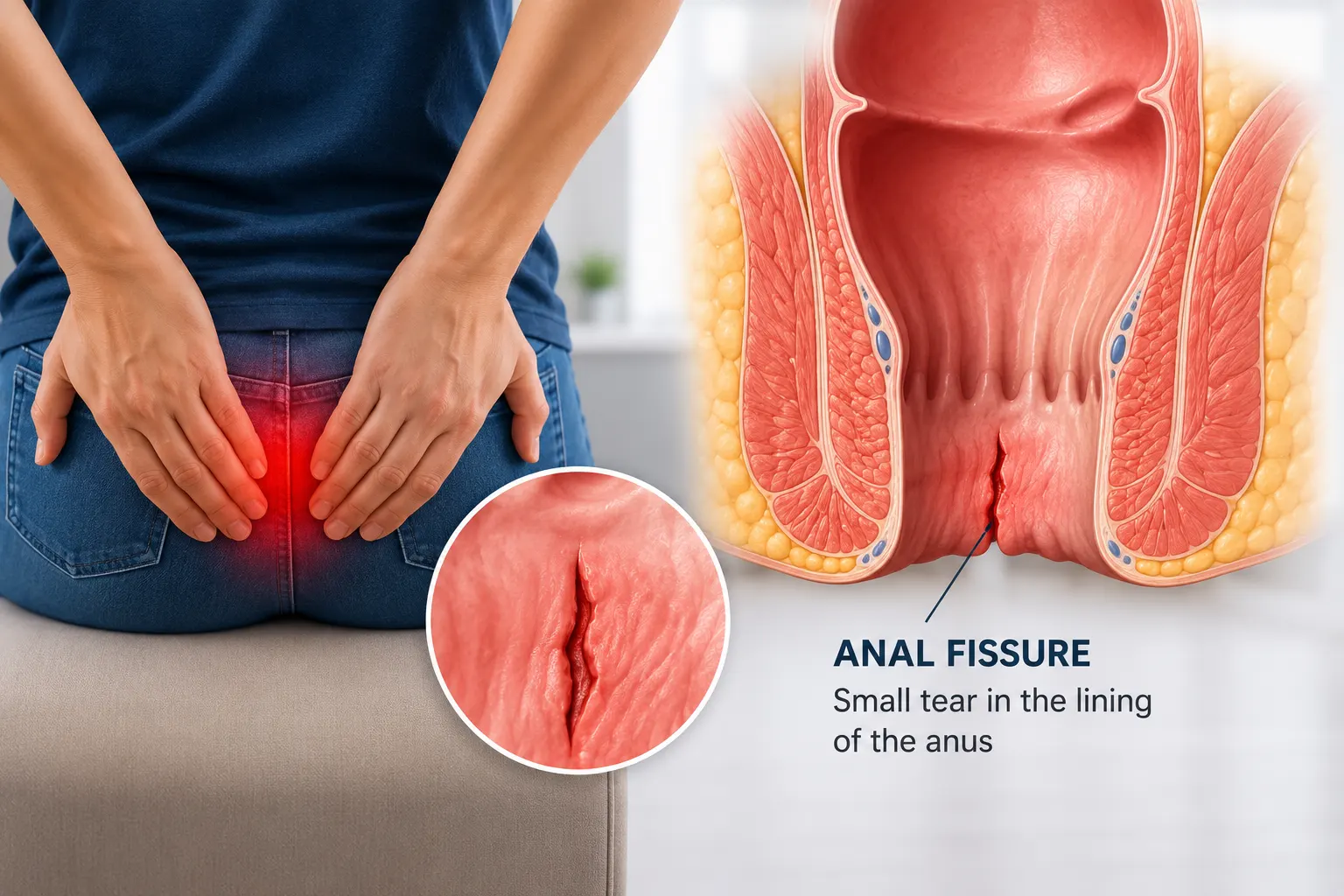
An anal fissure is a small tear in the lining of the anal canal that can cause sharp pain, burning and bright-red bleeding during or after bowel movements. Treatment depends on whether the fissure is acute or persistent and may include fiber, fluids, stool-softening measures, warm sitz baths, prescription medicines, Botox or surgery when appropriate.
Information: Treatment follows clinical assessment | Department: GI & Laparoscopic Surgery
When should a fissure be evaluated?
Persistent anal pain or rectal bleeding deserves medical evaluation because hemorrhoids and other conditions can cause similar symptoms.
What is the treatment for an anal fissure?
Many anal fissures are initially managed without surgery by keeping stools soft and avoiding straining. A high-fiber diet, adequate fluids, fiber supplements or stool-softening measures, and warm sitz baths may help. Prescription topical medicines can be used for persistent fissures. Chronic or treatment-resistant fissures may be considered for Botox injection or lateral internal sphincterotomy after appropriate assessment.
What Is an Anal Fissure?
An anal fissure, also called a fissure-in-ano, is a small tear or split in the lining of the anal canal. It commonly causes pain during bowel movements and may cause bright-red blood on toilet paper or in the toilet bowl.
Fissures can develop after passing hard or large stools, but diarrhea and other conditions can also contribute. Some acute fissures heal with conservative treatment, while persistent or recurrent fissures may need prescription treatment or a procedure.
Because rectal bleeding can have causes other than an anal fissure, ongoing or unexplained bleeding should be assessed by a healthcare professional.
Anal Fissure Symptoms
Symptoms may vary, but pain and bleeding during bowel movements are common features of an anal fissure.
Pain During Bowel Movements
Sharp, tearing or burning pain may occur while passing stool and can continue afterwards.
Bright-Red Bleeding
A small amount of bright-red blood may appear on toilet paper or around the stool.
Anal Tenderness
The skin around the anus may feel sensitive, irritated or tender.
Itching or Irritation
Local itching or irritation may occur around the affected area.
Anal Spasm
Spasm or increased tightness of the internal anal sphincter can contribute to pain.
Difficulty Passing Stool
Pain may make a person avoid bowel movements, which can worsen constipation and straining.
What Causes an Anal Fissure?
Anal fissures can occur when the anal lining is stretched or injured. Constipation and hard stools are common triggers, but other conditions can also contribute.
Constipation, Hard or Large Stools
Passing hard or large stools and straining can stretch the anal canal and contribute to a fissure.
Diarrhea and Repeated Irritation
Frequent loose stools can irritate the anal canal and may be associated with fissure formation.
Childbirth or Local Trauma
Childbirth and local injury or trauma are among the factors associated with anal fissures.
Inflammatory or Medical Conditions
Conditions such as Crohn's disease can be associated with anal fissures. Atypical or difficult-to-heal fissures may need evaluation for an underlying condition.
How Is an Anal Fissure Diagnosed?
Diagnosis is often based on symptoms and examination of the anal area. Additional tests are considered when the diagnosis is uncertain or another condition needs evaluation.
Clinical Examination
A clinician reviews symptoms and examines the area around the anus for a visible fissure, tenderness or other findings.
Digital Rectal Examination
A digital rectal examination may be considered when appropriate. Severe pain may affect whether it is performed immediately.
Anoscopy or Proctoscopy
A small instrument may be used to inspect the anal canal when further visualization is needed.
Hemorrhoids and other bowel conditions can also cause bleeding. Persistent, recurrent or unexplained bleeding should be assessed.
Anal Fissure Treatment in Hyderabad
Treatment is selected according to duration, symptom severity, response to conservative care and individual risk factors. Most acute fissures are initially treated without surgery.
1. Fiber, Fluids & Stool Management
- Increase dietary fiber to help produce soft, formed stools.
- Fiber supplements may be used when advised.
- Drink adequate fluids unless medically restricted.
- Avoid straining and prolonged toilet sitting.
- Stool softeners may be recommended in selected patients.
2. Warm Sitz Baths
Sitting in warm water for around 10–20 minutes can soothe anal pain and help relax the anal sphincter. It is commonly used as part of conservative care.
3. Prescription Topical Medicines
Depending on the diagnosis, a doctor may prescribe topical medicines such as a calcium channel blocker or nitrate to relax the internal anal sphincter and support healing.
4. Botox Injection
Botulinum toxin can relax the internal anal sphincter. It may be considered for selected chronic fissures, particularly when topical treatment has not provided adequate healing.
Lateral Internal Sphincterotomy for Chronic or Resistant Fissure
Lateral internal sphincterotomy involves a controlled division of part of the internal anal sphincter to reduce excessive sphincter pressure and allow the fissure to heal. It is an established option for selected chronic or treatment-resistant fissures.
Surgery is not suitable for everyone. Existing fecal incontinence, previous sphincter injury, obstetric injury, inflammatory bowel disease and other factors can affect the decision. A surgeon should discuss benefits, alternatives and risks before treatment, including temporary or lasting difficulty controlling wind or stool. Tell the surgeon about existing leakage, previous anal surgery and childbirth-related injury.
How Can You Reduce Anal Fissure Recurrence?
A fissure can recur, especially when constipation, hard stools or other contributing factors return.
Do not ignore persistent symptoms
Recurrent anal pain or rectal bleeding should be evaluated rather than repeatedly self-treated without identifying the cause.
When Should You See a Doctor?
Arrange a medical evaluation if:
- Anal pain is severe, persistent or repeatedly returns.
- Rectal bleeding continues or is unexplained.
- Symptoms do not improve with appropriate conservative care.
- You have recurrent fissures.
- You have symptoms suggesting an underlying bowel condition.
Seek urgent care for heavy bleeding
Heavy or continuous bleeding, large clots, fainting or marked weakness needs emergency care. Severe anal pain with fever or swelling may indicate another condition such as an abscess and needs urgent assessment.
Anal Fissure Treatment: Key Points
Plan Your Anal Fissure Assessment
KPHB — Dr. Krishna Chaitanya
General, GI & Laparoscopic Surgeon; MBBS, MS, FMAS; 15+ years experience.
11:00 AM–4:00 PM. Call +91 9111674111 to confirm availability.
H.No 15-24-212, MIG-212, Road Number 1, KPHB Phase 1, Kukatpally Housing Board Colony, Hyderabad, Telangana 500072.
Tarnaka — Dr. T. Phanindra
General Surgeon; MBBS, MS, FMAS; 10+ years experience.
10:00 AM–5:00 PM. Call +91 9100001201 to confirm the appointment.
H.No 12-5-30, White House, Moula Ali Road, South Lalaguda, Tarnaka, Secunderabad, Telangana 500017.
Bring previous prescriptions, procedure reports, medicines and allergy details. Mention constipation, diarrhea, bleeding pattern, bowel-control problems and earlier anal operations. Confirm availability of any proposed Botox or surgery, the actual procedure location and follow-up arrangements. Ask for a written estimate showing tests, procedure, anesthesia, medicines, consumables, stay and follow-up, plus exclusions and insurance requirements.
For general guidance, see NHS anal fissure information. This reference does not confirm local prices or hospital services.
Frequently Asked Questions About Anal Fissure
Yes. Many acute anal fissures can improve with non-surgical care such as adequate fiber, fluids, stool-softening measures and warm sitz baths. Persistent or chronic fissures may need prescription treatment or a procedure.
Common symptoms include sharp or burning pain during bowel movements, pain that may continue afterwards, bright-red rectal bleeding, anal tenderness, itching and spasm.
Treatment depends on the individual. Prescription topical medicines and Botox are options for selected patients, while lateral internal sphincterotomy is an established surgical option for selected chronic or treatment-resistant fissures.
Healing time varies. Acute fissures may improve over several weeks with appropriate treatment, while chronic fissures can be more difficult to heal and may require prescription treatment or a procedure.
Yes. Recurrence can occur, particularly when constipation, hard stools or other contributing factors return. Maintaining comfortable bowel movements and treating underlying causes can help reduce recurrence risk.
Yes. Botulinum toxin can be injected into the internal anal sphincter to relax the muscle. It may be considered for selected chronic fissures, including some that have not responded adequately to topical treatment.
Lateral internal sphincterotomy is a surgical procedure in which a controlled portion of the internal anal sphincter is divided to reduce sphincter pressure and help a chronic fissure heal.
Seek medical evaluation for persistent or recurrent anal pain, ongoing rectal bleeding, symptoms that do not improve with appropriate care, recurrent fissures or symptoms that suggest another bowel condition. Heavy bleeding or fainting requires urgent attention.
Persistent Anal Pain or Rectal Bleeding?
A proper examination can help determine whether symptoms are due to an anal fissure or another anorectal condition and guide appropriate treatment.