
-
 Kphb Branch
+91 9111674111
-
Tarnaka Branch
+91 9100001201
- Book Appointment
+91 9111674111
+91 9100001201
General Medicine
This 2026 guide explains what hypertension means, how blood pressure is classified, common risk factors, symptoms that can occur with very high blood pressure, diagnosis, treatment, home monitoring, diet and lifestyle measures, and when urgent medical attention is needed.
Book a Consultation Explore Treatment OptionsHypertension is persistently raised blood pressure in the arteries and can increase the risk of heart, brain, kidney and other health problems.
Blood pressure is recorded using two numbers: systolic pressure, the pressure when the heart contracts, and diastolic pressure, the pressure when the heart relaxes between beats.
High blood pressure is often called a "silent" condition because many people do not feel unwell. Regular blood pressure measurement is therefore important, especially for people with risk factors such as excess weight, physical inactivity, high salt intake, tobacco use, family history, diabetes or kidney disease.
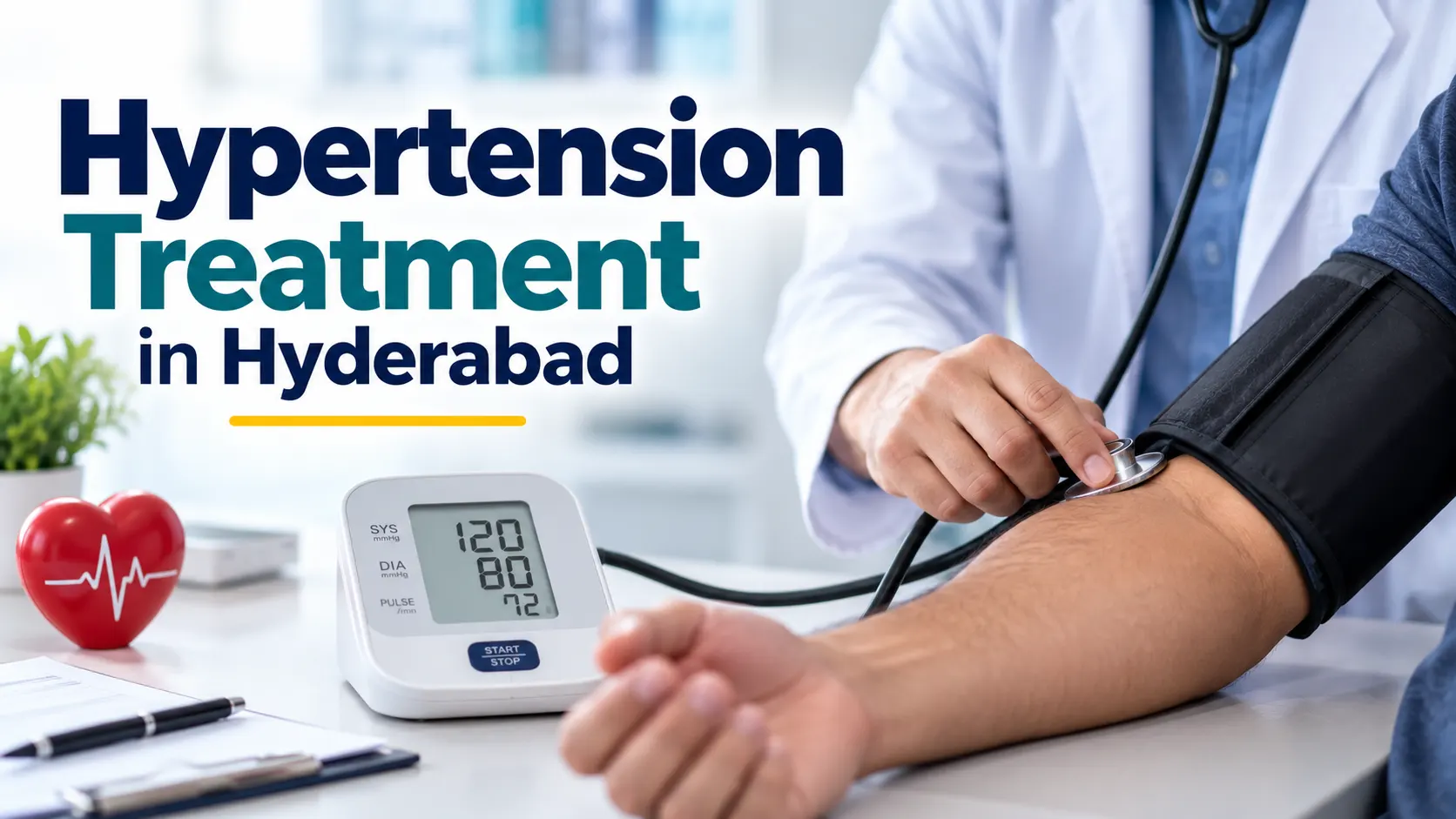
Different clinical guidelines use different diagnostic thresholds. The table below follows the adult category framework used in the 2025 AHA/ACC guideline.
| Category | Systolic (mm Hg) | Diastolic (mm Hg) |
|---|---|---|
| Normal | Less than 120 | Less than 80 |
| Elevated | 120–129 | Less than 80 |
| Stage 1 hypertension | 130–139 | 80–89 |
| Stage 2 hypertension | 140 or higher | 90 or higher |
Most people with hypertension have no symptoms. Symptoms are more likely when blood pressure is very high or complications develop.
Many people with high blood pressure feel normal, which is why routine measurement matters.
Very high blood pressure can be associated with severe headache, although headache is not a reliable way to diagnose hypertension.
Blurred or changed vision can occur with very high blood pressure and needs medical assessment.
Shortness of breath can occur in severe situations or when hypertension has affected the heart or other organs.
Chest pain with markedly high blood pressure can be a warning sign requiring urgent assessment.
Nosebleeds can occur for many reasons and are not, by themselves, a reliable sign of hypertension.
Hypertension can result from a combination of inherited, lifestyle and medical factors.
Age and family history can increase the likelihood of developing hypertension.
Overweight and obesity are important modifiable risk factors for high blood pressure.
Excess dietary sodium can contribute to raised blood pressure, particularly in salt-sensitive people.
Low physical activity is associated with higher cardiovascular risk and can contribute to hypertension.
Tobacco use and excessive alcohol intake can increase cardiovascular risk and make blood pressure harder to control.
Kidney disease, diabetes, sleep-related conditions and some hormonal or medication-related problems can contribute to high blood pressure.
High blood pressure treatment is individualised according to blood pressure levels, cardiovascular risk, age, other medical conditions and response to treatment.
A heart-healthy eating pattern can help lower blood pressure. Reducing excess sodium and choosing more vegetables, fruits, whole grains and other nutritious foods can be part of the plan.
Regular physical activity and achieving or maintaining a healthy weight can help prevent or lower high blood pressure when appropriate for the individual.
Depending on blood pressure and cardiovascular risk, a doctor may prescribe medicines such as ACE inhibitors, ARBs, calcium-channel blockers or diuretics. Medicines should be selected and adjusted by a qualified clinician.
Regular clinic visits and, when advised, home blood pressure monitoring can help assess whether treatment is working and whether changes are needed.
Correct technique can improve the usefulness of home blood pressure readings.
A heart-healthy eating pattern can support blood pressure control alongside prescribed treatment.
Persistently high blood pressure can damage blood vessels and important organs over time.
Hypertension increases the risk of heart disease, heart attack and heart failure.
Uncontrolled hypertension is a major risk factor for stroke and other vascular complications.
Long-term high blood pressure can contribute to kidney damage and chronic kidney disease.
High blood pressure can damage blood vessels and may contribute to vision-related complications.
Very high blood pressure together with signs of possible organ damage requires urgent medical attention.
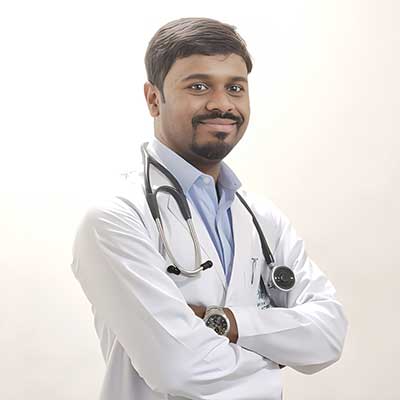
The source page identifies Dr. Ch. Srujith as a General Physician and Diabetologist with MBBS and MD (General Medicine) qualifications. The page presents hypertension care within the General Medicine service.
During consultation, blood pressure readings, symptoms, medical history, medications, associated conditions and cardiovascular risk can be reviewed to determine an appropriate management plan.
Call 9111674111*Consultation timings are based on the supplied page content and should be confirmed with the hospital before visiting.
Hypertension is persistently raised blood pressure in the arteries. It can increase the risk of heart, brain, kidney and blood-vessel disease.
Yes. Many people with hypertension have no noticeable symptoms. Regular blood pressure measurement is the best way to detect it.
Definitions vary by guideline. The 2025 AHA/ACC adult framework classifies 130–139 systolic or 80–89 diastolic as stage 1 hypertension and 140 or higher systolic or 90 or higher diastolic as stage 2.
Some people can achieve excellent blood pressure control through lifestyle changes and treatment, but many need long-term monitoring and medication. Do not stop prescribed treatment without medical advice.
There is no single treatment for everyone. Management may include lifestyle changes, home monitoring and one or more medicines selected according to blood pressure, cardiovascular risk and other health conditions.
Lifestyle changes can lower blood pressure and may be sufficient for some people, while others need medication. Treatment decisions should be made with a healthcare professional.
A reading around or above 180/120 mm Hg is severe. If it occurs with chest pain, breathing difficulty, weakness, vision changes, confusion or difficulty speaking, seek emergency care immediately.
Healthy eating, reducing excess sodium, physical activity, achieving a healthy weight, avoiding tobacco and limiting alcohol can help. Some people still require prescription medicine.
Home monitoring can be useful when performed with an appropriate validated device and correct technique. Your clinician can advise how often to measure and record readings.
Patients can consult a qualified physician or hypertension-focused clinician for evaluation and long-term management. My Health Hospitals' supplied page identifies Dr. Ch. Srujith as a General Physician and Diabetologist.
Discuss your blood pressure readings, symptoms, medications and cardiovascular risk with a qualified healthcare professional to develop an appropriate management plan.
Call 9111674111Medical Disclaimer: This page is for general educational information and does not replace medical examination, diagnosis or personalised treatment. Blood pressure targets, medicines and treatment decisions vary between patients. Seek urgent medical care for severe blood pressure with concerning symptoms. Hospital services, doctor availability and consultation timings may change; confirm current details directly with My Health Hospitals.
Find the Best Hospital Near You
H.No 15-24-212, MIG-212, Rd Number 1, K P H B Phase 1, Kukatpally, Hyderabad, Telangana 500072
H.No:-12-5-30, WhiteHouse, Moula Ali Rd, South Lalaguda, Tarnaka, Secunderabad, Telangana 500017