
-
 Kphb Branch
+91 9111674111
-
Tarnaka Branch
+91 9100001201
- Book Appointment
+91 9111674111
+91 9100001201
Vascular Surgery
Looking for varicose veins treatment in Hyderabad? Varicose veins are enlarged, twisted veins that commonly affect the legs and may cause aching, swelling, heaviness, itching or skin changes. Treatment depends on your symptoms, vein anatomy and clinical evaluation, with venous Doppler ultrasound used when indicated to assess blood flow and affected veins.
Medically reviewed: Vascular & Endovascular Surgery content | Updated: August 2026

Bulging veins, aching, swelling, heaviness, itching and nighttime cramps can occur.
A clinical examination and venous Doppler ultrasound may be used to assess blood flow and reflux.
Options can include lifestyle measures, compression therapy and procedures such as ablation or sclerotherapy.
A vascular surgeon or another clinician experienced in vein disorders can evaluate persistent symptoms.
Varicose veins are enlarged, twisted veins that usually develop in the legs. They can occur when vein walls or valves become weak or damaged, allowing blood to pool or flow backward in the veins.
Some people have visible veins without significant symptoms, while others experience pain, swelling, heaviness, itching, cramps or skin changes. Persistent or worsening symptoms should be assessed by a qualified healthcare professional.

Diagnosis usually starts with a clinical examination and a discussion of symptoms, family history and factors such as prolonged standing or sitting. A venous Doppler or duplex ultrasound may be recommended to assess blood flow, valve function and venous reflux.
The legs may be examined while standing to assess visible veins, swelling and skin changes.
Ultrasound can assess blood flow and help identify reflux or other vein problems.
The findings help the clinician decide whether observation, compression or a procedure is appropriate.
Compression stockings apply graduated pressure to the legs and may help reduce symptoms such as swelling, aching and heaviness. They are often part of conservative management and may also be recommended after some vein procedures.
The right type and pressure level depend on the person and the clinical situation. People with circulation problems should ask a healthcare professional whether compression is appropriate before choosing medical-grade stockings.
There is no single treatment that is best for every person. Treatment selection depends on symptoms, vein anatomy, reflux, the size and location of affected veins, previous treatment and the individual's overall health.
Regular movement, avoiding prolonged sitting or standing and elevating the legs when appropriate may help symptoms.
Compression stockings may help control swelling, aching and heaviness in selected patients.
A solution or foam is injected into selected veins to close them. It is commonly used for smaller veins.
Endovenous thermal treatment uses catheter-based energy to close a diseased vein in appropriately selected cases.
RFA uses radiofrequency energy to heat and close the target vein under appropriate clinical and ultrasound guidance.
Selected bulging veins may be removed through small skin openings, while traditional surgery is reserved for appropriate cases.
Sclerotherapy involves injecting a solution or foam into a selected vein. The treatment causes the vein to close, allowing blood to be redirected through healthier veins. It is often used for smaller varicose veins and spider veins, depending on the clinical assessment.
The clinician assesses the veins and may use ultrasound when symptoms or vein anatomy require imaging.
A small needle is used to place the sclerosing solution or foam into the selected vein.
The treated vein gradually fades or becomes less visible. More than one session may sometimes be required.
Endovenous laser treatment uses a catheter and laser energy to heat and close a target vein. Blood then travels through other healthy veins. It may be considered when the anatomy and ultrasound findings are suitable.
RFA uses controlled radiofrequency energy delivered through a catheter to close the affected vein. It is another endovenous thermal option that may be appropriate for selected patients.
| Treatment | Typical role | How it works |
|---|---|---|
| Compression stockings | Symptom management | Applies pressure to the legs to support venous return and reduce swelling. |
| Sclerotherapy | Selected smaller varicose or spider veins | Injected solution or foam closes the treated vein. |
| Laser / EVLT | Selected refluxing veins | Catheter-based laser energy heats and closes the target vein. |
| RFA | Selected refluxing veins | Radiofrequency energy heats and closes the target vein. |
| Phlebectomy | Selected bulging surface veins | Target veins are removed through tiny skin openings. |
| Surgery | Selected cases | Vein ligation/removal may be considered when clinically appropriate. |
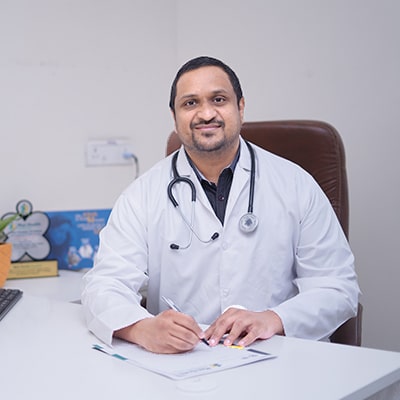
MBBS, DNB
Senior Vascular & Endovascular Surgeon
Patients with persistent or troublesome varicose veins can consult a vascular surgeon or another clinician experienced in venous disorders. At My Health Hospitals, Dr. Puneeth Joopalli provides vascular evaluation and treatment based on the individual patient's condition.
Book ConsultationExperience: 19+ years
Reported procedures: 1,500+
Consultation: 11 AM – 5 PM
Details supplied by My Health Hospitals and should be kept current on the physician profile.
If you are searching for varicose veins treatment in Hyderabad, the first step is a proper vascular assessment rather than choosing a procedure solely by name. Depending on symptoms and ultrasound findings, treatment may involve compression therapy, sclerotherapy, endovenous laser treatment, radiofrequency ablation, phlebectomy or another appropriate approach.
People searching for a varicose veins doctor near me or a varicose veins specialist should look for a qualified clinician with experience evaluating venous disease and access to appropriate diagnostic facilities.
Discuss symptoms, medical history, lifestyle factors and treatment goals.
A clinical examination and venous Doppler may be used when indicated.
The specialist explains suitable options, expected recovery and follow-up.
Persistent leg pain, swelling, heaviness or visible veins may need medical evaluation. A vascular specialist can assess your condition and recommend appropriate treatment based on your symptoms and vein findings.
This page is for general educational information and does not replace an in-person medical evaluation. Treatment decisions should be made with a qualified healthcare professional after considering symptoms, examination findings, relevant investigations and individual health needs.
Find the Best Hospital Near You
H.No 15-24-212, MIG-212, Rd Number 1, K P H B Phase 1, Kukatpally, Hyderabad, Telangana 500072
H.No:-12-5-30, WhiteHouse, Moula Ali Rd, South Lalaguda, Tarnaka, Secunderabad, Telangana 500017