Is Zerodol-SP a painkiller?
Yes. It is a prescription combination medicine used for pain and inflammation.


+91 9111674111
+91 9100001201
Medicines
Uses, Side Effects, Composition & Safety
Zerodol-SP is a prescription combination tablet containing aceclofenac 100 mg, paracetamol 325 mg and serratiopeptidase 15 mg. It is commonly prescribed for selected pain, inflammation and swelling.
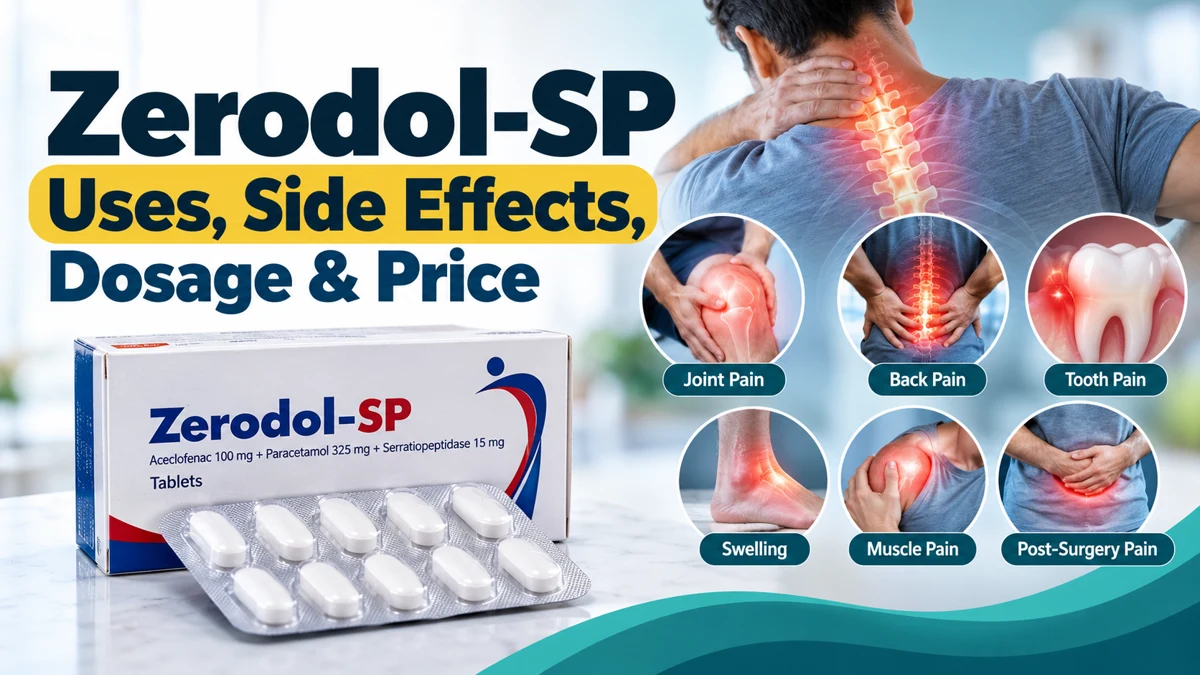
Check your pack: Ipca’s September 2025 price list lists the 100 mg aceclofenac / 325 mg paracetamol / 15 mg serratiopeptidase combination. An older manufacturer list shows a different paracetamol strength. Confirm the ingredients on your actual strip and leaflet with a pharmacist; do not identify a tablet by brand name alone.
Zerodol-SP combines an NSAID, a pain-relieving medicine and serratiopeptidase.
An NSAID used to reduce pain and inflammation.
Provides pain-relieving and fever-reducing effects.
An enzyme included in this combination. Its presence does not establish that the combination is the best option for every cause of pain or swelling.
Doctors may prescribe it for selected conditions involving pain, inflammation or swelling:
May be used for acute musculoskeletal pain when an anti-inflammatory medicine is appropriate.
May provide symptomatic relief in selected inflammatory joint conditions.
May be prescribed for selected acute dental pain, while the cause still needs dental treatment.
May be prescribed for selected injury-related or postoperative pain and swelling.
If you have taken more than prescribed, or may have duplicated paracetamol or another painkiller, seek urgent medical advice even if you feel well. Early symptoms can be absent. Take the packs and a list of what you took; do not wait for liver-injury symptoms.
The dose and duration should be decided by the prescribing doctor. Online dosage information is not a personal prescription.
Stop taking the medicine and seek emergency care for vomiting blood, black tarry stools, breathing difficulty, facial/throat swelling or a severe blistering rash. Severe abdominal pain, fainting, jaundice or markedly reduced urine needs urgent assessment. Chest pain or stroke-like symptoms also need emergency care.
Tell your doctor about ulcers, kidney/liver disease, heart disease, high blood pressure, NSAID allergy, bleeding problems or multiple medicines.
Do not self-start during pregnancy, breastfeeding or when trying to conceive. From 20 weeks, aceclofenac may harm fetal kidney function and reduce amniotic fluid. It is contraindicated in the third trimester. This combination does not share the safety profile of paracetamol alone.
Avoid alcohol. Tell your doctor about blood thinners, other NSAIDs, aspirin, steroids, diuretics, methotrexate, lithium, digoxin and other medicines.
It may be prescribed for selected acute dental pain but does not treat the underlying dental cause.
It may be used for selected acute musculoskeletal pain. Persistent or severe pain needs assessment.
The presence of paracetamol does not make this combination suitable for every fever. Ask for advice about the cause and an appropriate medicine rather than self-selecting it for fever alone.
| Feature | Zerodol-P | Zerodol-SP |
|---|---|---|
| Aceclofenac | Yes | Yes |
| Paracetamol | Yes | Yes |
| Serratiopeptidase | No | Yes |
| Best choice | Depends on diagnosis and medical advice | |
Price varies by pack size, pharmacy, location, discounts and market availability. Check the latest printed MRP or current licensed-pharmacy price rather than relying on a permanent online price.
Zerodol-SP combines three ingredients that act in different ways. Aceclofenac is an NSAID that reduces substances involved in pain and inflammation. Paracetamol helps reduce pain and fever. Serratiopeptidase is included in the combination for its proposed role in reducing inflammatory swelling; however, evidence for serratiopeptidase can vary by condition and it should not be considered a guaranteed treatment.
Because the tablet contains more than one active ingredient, taking additional painkillers without checking their ingredients can increase the risk of side effects or accidental overdose.
A doctor may consider Zerodol-SP when a patient has pain together with inflammation or swelling and a combination medicine is appropriate. The exact reason for prescribing it depends on the diagnosis.
For selected soft-tissue or musculoskeletal injuries where pain and inflammation are present.
It may be prescribed for selected postoperative or dental pain and swelling. The underlying condition still needs appropriate treatment.
It may provide symptomatic relief in selected arthritis or inflammatory joint conditions.
It may be considered for certain short-term muscle, joint or back pain when an NSAID is suitable.
Aceclofenac contraindications include previous NSAID-related gastrointestinal bleeding or perforation, active or recurrent ulcers, severe kidney or liver failure, and established ischaemic heart disease, peripheral arterial disease, cerebrovascular disease or certain degrees of heart failure. Previous NSAID-triggered asthma or serious allergy also makes it unsuitable. Tell the prescriber about these conditions before taking the combination.
Before a doctor prescribes it, mention all medicines and supplements you take. This is especially important if you use medicines that affect bleeding, blood pressure, kidney function or liver function.
It may provide temporary pain relief when prescribed, but severe toothache can be caused by decay, infection or an abscess. Pain relief does not remove the dental cause, so dental assessment may still be necessary.
It may help selected acute musculoskeletal back pain when an NSAID is appropriate. Back pain with weakness, numbness, bladder or bowel changes, fever or major injury needs prompt medical assessment.
It can provide symptomatic relief in some joint conditions, but persistent joint pain needs evaluation to identify the cause and appropriate long-term treatment.
Its ingredients are intended to help reduce pain and inflammatory symptoms. Persistent or unexplained swelling should be evaluated rather than repeatedly treated with painkillers.
Longer or repeated use of NSAID-containing medicines can increase the risk of stomach ulcers or bleeding, kidney problems, fluid retention and other complications in susceptible people. Paracetamol can also cause serious liver injury when taken in excessive amounts or combined with other paracetamol-containing products.
For this reason, repeated use should be reviewed by a doctor rather than continued automatically whenever pain returns.
| Before taking it | Check with a doctor/pharmacist |
|---|---|
| Know why it was prescribed | History of ulcer or GI bleeding |
| Check all active ingredients | Kidney or liver disease |
| Follow the prescribed dose | Pregnancy or breastfeeding |
| Tell them about all medicines | Blood thinners or multiple medicines |
Yes. It is a prescription combination medicine used for pain and inflammation.
No. Zerodol-SP is neither an antibiotic nor a corticosteroid.
It may be prescribed for selected acute dental pain, but it does not treat the underlying cause such as tooth decay or an abscess.
It may help selected acute musculoskeletal back pain when an NSAID is appropriate. Persistent or severe back pain needs medical evaluation.
Do not add another paracetamol-containing medicine unless a doctor or pharmacist confirms it is safe, because Zerodol-SP already contains paracetamol.
Do not combine NSAIDs such as ibuprofen or diclofenac with Zerodol-SP unless specifically advised by a healthcare professional, as this can increase adverse-effect risk.
Do not self-start it during pregnancy. Aceclofenac can cause fetal kidney and amniotic-fluid problems from 20 weeks and is contraindicated in the third trimester. Ask your obstetrician for an alternative pain plan.
It is best to avoid alcohol while taking it because of increased stomach and liver-related safety concerns.
Not necessarily. NSAIDs can affect kidney function, so people with kidney disease should use it only under medical advice.
Yes. Indigestion, heartburn and stomach pain can occur. Black stools, vomiting blood or severe abdominal pain need urgent medical attention.
Use only for the prescribed duration, at the lowest effective dose for the shortest necessary time. Do not extend treatment automatically when pain returns; ask for reassessment.
Do not increase the dose yourself. If pain is severe, persistent or worsening, contact your doctor for reassessment.
For persistent, severe or unexplained pain, consult a qualified doctor rather than repeatedly self-medicating.
Medical disclaimer: This page is for general education and does not replace advice from a qualified doctor or pharmacist. Do not start, stop or change prescription medicines without professional advice.
Read the leaflet supplied with your medicine. Ingredient-level sources do not replace the combination product’s prescribing information or individual clinical advice.
Find Our Kukatpally and Tarnaka Branches
H.No 15-24-212, MIG-212, Rd Number 1, K P H B Phase 1, Kukatpally, Hyderabad, Telangana 500072
H.No:-12-5-30, WhiteHouse, Moula Ali Rd, South Lalaguda, Tarnaka, Secunderabad, Telangana 500017