
My Health Hospitals logo

Diabetes & General Medicine

Blood Sugar Spikes After Eating

Health Blog

Diabetes care guide · 2026

Why Does Blood Sugar Spike After Eating? 7 Possible Reasons

Seeing a high glucose reading after a meal can be confusing, especially when you are trying to eat well and follow your treatment plan. Blood sugar normally rises after eating, but the size and duration of that rise can be affected by food portions, insulin action, medicines, activity, sleep and illness.

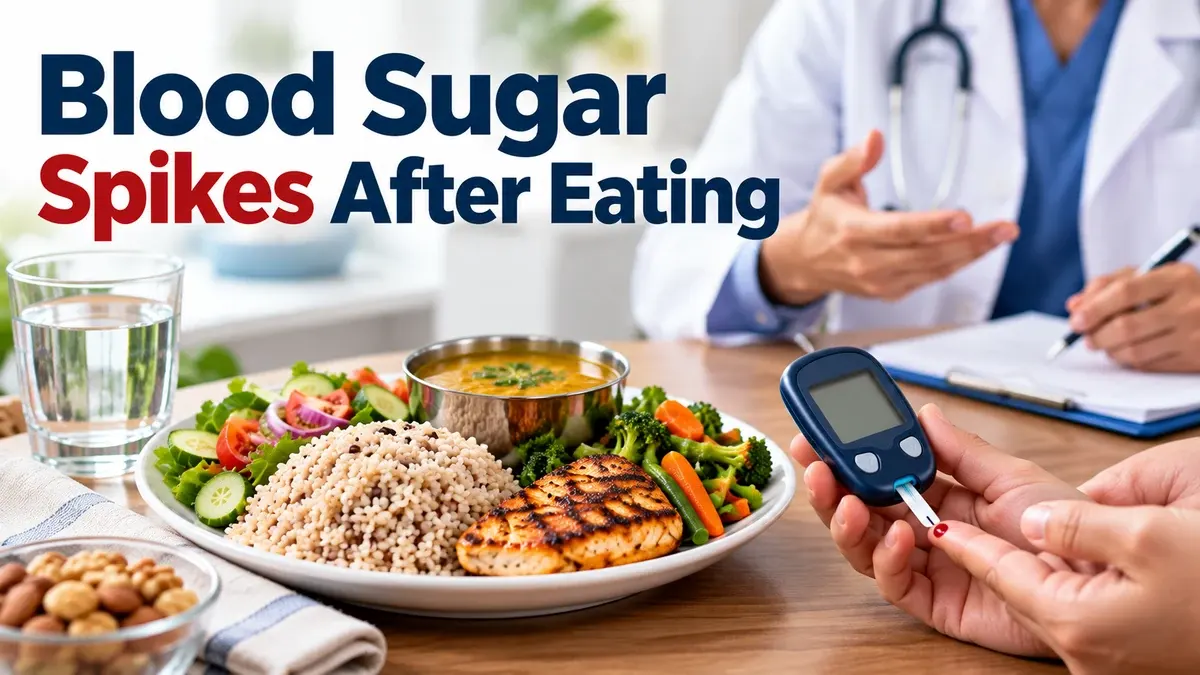
Blood sugar spikes after eating showing a balanced meal and glucose monitoring
Food choices, medication timing, activity and health factors can all influence post-meal glucose.

Quick Answer: Why Does Blood Sugar Spike After Eating?

Blood sugar rises after a meal because the body breaks down carbohydrates into glucose. Insulin helps move glucose from the bloodstream into cells. In diabetes, the body may not make enough insulin or may not use it effectively, so glucose can rise higher or stay elevated longer. Seven possible contributors are large carbohydrate portions, sugary drinks, high-fat mixed meals that delay absorption, insulin resistance, missed or mistimed medication, inactivity, and stress, poor sleep or illness. The timing of your reading and your personal target matter as much as the number itself.

What Happens to Blood Sugar After a Meal?

After you eat, your digestive system breaks down carbohydrates in foods such as rice, bread, potatoes, fruit and other starches into glucose. The glucose enters the bloodstream and provides energy. Insulin helps glucose enter cells and allows the body to store some glucose for later use.

If insulin production is insufficient or the body's cells respond poorly to insulin, blood glucose may stay elevated. The amount and type of carbohydrate, the mix of foods in a meal, physical activity, medication and other health factors all influence the reading.

What is a usual post-meal target?

For many nonpregnant adults with diabetes, the American Diabetes Association's general target is below 180 mg/dL, measured 1–2 hours after the beginning of a meal. Individual targets can differ. Follow the target agreed with your healthcare professional.

Reference: American Diabetes Association — Checking Your Blood Sugar.

7 Possible Reasons Blood Sugar Spikes After Eating

A post-meal spike can have more than one cause. These are common possibilities to discuss with your clinician; they do not diagnose the reason for an individual reading.

1

Eating Too Many Carbohydrates in One Meal

The quantity and type of carbohydrates can strongly affect post-meal glucose. Large portions of white rice, bread, noodles, potatoes, sweets or other starches may raise blood sugar, particularly when insulin is insufficient or does not work effectively.

What may help:

  • Pay attention to portions rather than automatically eliminating all carbohydrates.
  • Include non-starchy vegetables and an appropriate protein source.
  • Choose higher-fibre carbohydrate sources more often when suitable.
  • Ask a dietitian or diabetes clinician about a portion plan for you.

2

Drinking Sugary Beverages

Regular soft drinks, sweetened tea or coffee, packaged fruit drinks and energy drinks can provide rapidly consumed carbohydrates. Some drinks that appear healthy may also contain considerable sugar. Whole fruit generally provides more fibre than juice.

What may help:

  • Choose water or unsweetened drinks more often.
  • Reduce added sugar in tea or coffee gradually.
  • Check serving sizes and added sugars on packaged-drink labels.
3

Large, High-Fat Mixed Meals

Meals containing substantial amounts of carbohydrate and fat may delay digestion and glucose absorption. Some people then see a later or more prolonged rise after meals such as rich biryani, pizza or fried foods. The effect varies by person and meal.

What may help:

  • Review portion sizes and your glucose response to different meals.
  • Balance carbohydrate-rich foods with vegetables and appropriate protein.
  • If you use mealtime insulin, ask your care team how to manage these meals safely; do not change doses independently.
4

Insulin Resistance or Insufficient Insulin

In type 2 diabetes, body cells may respond less effectively to insulin, a process called insulin resistance. The pancreas may also be unable to make enough insulin. In type 1 diabetes, the body makes little or no insulin, so insulin treatment is necessary.

What may help:

  • Discuss recurring high readings with your clinician.
  • Your clinician may review glucose records, HbA1c, medicines and other relevant factors.
  • A single post-meal reading cannot determine your diabetes type or severity.
5

Missing or Mistiming Diabetes Medication

Missing a prescribed dose, taking medicine at a different time than instructed or using a plan that no longer meets your needs may contribute to high readings. The right timing depends on the medicine and individual treatment plan.

What may help:

  • Take medicines as prescribed and follow your clinician's instructions.
  • Ask what to do if you miss a dose or are sick.
  • Do not take an extra dose to correct a high reading unless you have a specific plan from your care team.
6

Sitting for Long Periods After Eating

Physical activity helps muscles use glucose. Long periods of inactivity may contribute to higher post-meal readings, while regular movement can support glucose management.

What may help:

  • Consider a short, comfortable walk after a meal if it is safe for you.
  • Start gradually and choose activity that suits your health and mobility.
  • If you use insulin or medicines that can cause low blood sugar, ask about exercise precautions.
7

Stress, Poor Sleep, Illness or Certain Medicines

Stress hormones, inadequate sleep and illnesses such as infections can affect glucose regulation and insulin sensitivity. Dehydration and some medicines, including corticosteroids, may also contribute to higher readings. An unexpected spike does not necessarily mean you ate the wrong food.

What may help:

  • Aim for a regular sleep schedule and enough sleep.
  • Use appropriate relaxation strategies and drink water regularly unless you have been told to limit fluids.
  • Follow your clinician's sick-day plan when unwell.
  • Ask whether a new medicine could affect glucose. Do not stop prescribed treatment on your own.

Sources for further reading: CDC — Things That Can Spike Blood Sugar; Mayo Clinic — Hyperglycemia in Diabetes.

How Can You Manage Blood Sugar Spikes After Eating?

You do not need to make several major changes at once. Start by identifying patterns and discussing repeated high readings with your healthcare team.

Practical stepHow it may help
Build balanced mealsInclude non-starchy vegetables, a suitable protein source and a planned portion of carbohydrate-rich food.
Check glucose at the advised timeIf your clinician recommends post-meal checks, record them consistently, often 1–2 hours after the meal begins.
Keep a food and glucose recordRecord meal portions, medicine timing, activity, sleep and readings so patterns are easier to review.
Maintain a steady routineAppropriate activity, adequate sleep, regular meals and prescribed medicine use may support glucose management.
Review repeated high readingsYour clinician can assess HbA1c, medicines and other factors before considering treatment changes.

Learn more in our Diabetes Diet Plan in English. If you are concerned about long-term glucose control, ask your healthcare professional whether HbA1c testing or another form of glucose monitoring is appropriate for you. The best test and testing schedule depend on your symptoms and medical history.

People taking insulin or medicines that can cause low blood sugar should obtain individualized guidance before changing meal patterns or exercise routines.

When Should You Contact a Doctor?

Contact your healthcare professional if post-meal readings repeatedly exceed your prescribed target, glucose remains high, or you experience frequent thirst, frequent urination, unusual tiredness or blurred vision. Bring your glucose log and medication list to the appointment if possible.

When Is High Blood Sugar an Emergency?

If you are unwell and your glucose is 240 mg/dL or higher, follow your clinician's sick-day plan about ketone testing and when to get medical help. High ketone levels require prompt medical advice.

Seek emergency medical care immediately if high blood sugar occurs with vomiting, abdominal pain, fruity-smelling breath, rapid or deep breathing, severe dehydration, confusion or reduced consciousness. These may be signs of a serious complication. Do not wait for a routine appointment.

Need Help Managing Your Blood Sugar?

Discuss recurring post-meal glucose spikes, diabetes symptoms or medication questions with a qualified healthcare professional at My Health Hospitals. Your care team can help assess the pattern and advise on appropriate next steps.

Book a Consultation Call 91000 01201
MEDICAL REVIEWGeneral Medicine
Dr. Ch. Srujith, General Physician and Diabetologist

Dr. Ch. Srujith

MBBS, MD — General Physician & Diabetologist

Clinical focus: Seasonal and viral fevers, dengue, malaria, typhoid and adult internal medicine.

Hospital: My Health Hospitals

This article is medically reviewed for clinical accuracy and patient-safety considerations. It is intended for general education and does not replace an individual medical consultation, diagnosis or treatment plan.

Medical Review and Disclaimer

Medical review: This article is prepared for patient education. Before publication, it should be reviewed by a qualified My Health Hospitals clinician in General Medicine or Diabetology. Add the verified reviewer's name, qualifications and actual review date after clinical review is completed.

This article is for general education and does not replace medical diagnosis or individualized treatment. Glucose targets and treatment recommendations vary between people. Do not start, stop or change prescription medicines based on this article alone. Seek medical help for concerning symptoms or readings.

Frequently Asked Questions

These answers cover common questions about high blood sugar after meals. Your personal glucose target may be different from general guidance.

Carbohydrates are digested into glucose, which enters the bloodstream. A large carbohydrate portion, a sugary drink or insufficient insulin action can cause a more pronounced rise.

For many nonpregnant adults with diabetes, the usual target is below 180 mg/dL at 1–2 hours after the beginning of a meal. Individual targets may differ, so follow your clinician's advice.

It varies with the meal, portion size, diabetes type, medication, activity and other health factors. Some meals may cause a delayed rise. Repeated or prolonged elevations should be discussed with your healthcare team.

Yes. White rice contains carbohydrates that are broken down into glucose. Portion size and the rest of the meal influence the response. You may not need to eliminate rice, but individualized portion guidance can help.

Yes. Fruit contains natural carbohydrates and can raise glucose. Whole fruit also provides fibre and nutrients; portion size matters, and whole fruit is generally a better choice than fruit juice.

Light physical activity, such as a short walk when safe, can help muscles use glucose. The benefit varies. People taking medicines that can cause low blood sugar should discuss exercise precautions with their clinician.

Portion size, carbohydrate content, insulin resistance, medication timing, stress, poor sleep and other factors may contribute. Nutritious foods can still contain carbohydrates. Reviewing meal details and glucose trends may help identify a pattern.

Yes. Stress hormones can affect glucose regulation. Poor sleep and illness can also contribute to higher readings.

Not necessarily. Carbohydrates provide energy and can be part of a balanced diet. Discuss appropriate portions, food choices and meal composition with a qualified dietitian or diabetes clinician.

Arrange a medical review if readings repeatedly exceed your individual target or occur with symptoms. Seek emergency care for severe symptoms such as vomiting, rapid or deep breathing, severe dehydration or confusion.

Our Branch Locations

Find the Best Hospital Near You

My Health Hospitals – Kukatpally

H.No 15-24-212, MIG-212, Rd Number 1, K P H B Phase 1, Kukatpally, Hyderabad, Telangana 500072

Get Directions

My Health Hospitals – Tarnaka

H.No:-12-5-30, WhiteHouse, Moula Ali Rd, South Lalaguda, Tarnaka, Secunderabad, Telangana 500017

Get Directions
My Health Assistant