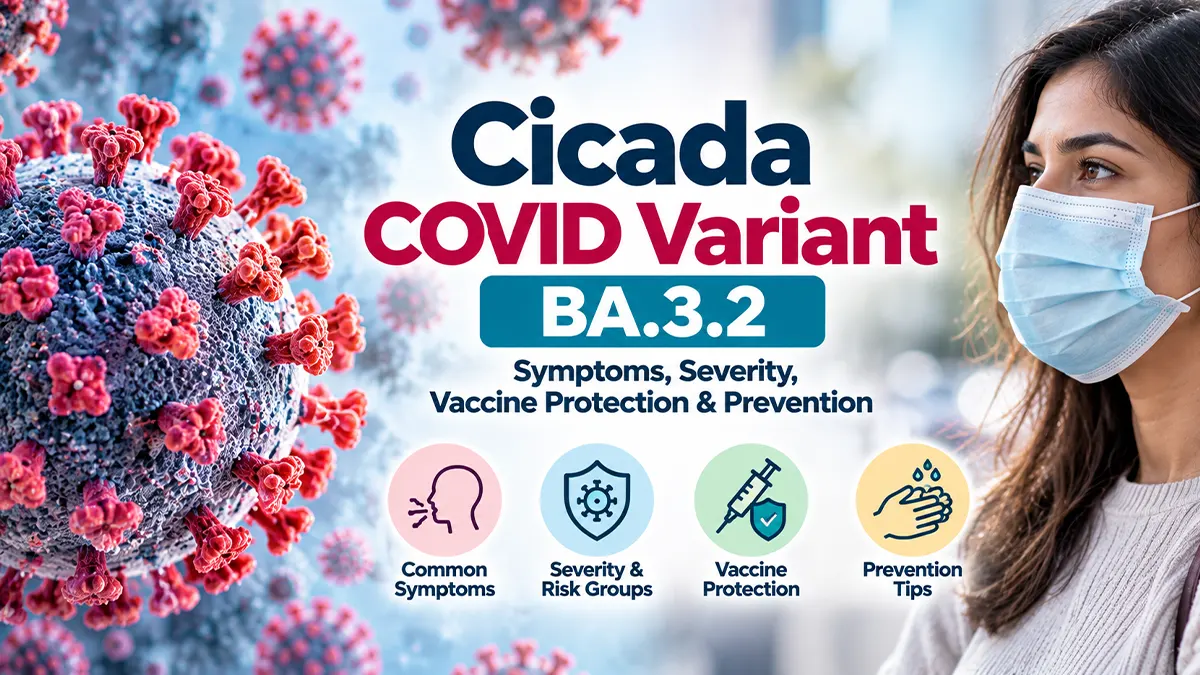
Quick Answer: What Is the Cicada COVID Variant?
BA.3.2 is a SARS-CoV-2 lineage under WHO monitoring. WHO lists it as a Variant Under Monitoring (VUM). Its genetic changes are being tracked, but current WHO surveillance does not establish that BA.3.2 causes more severe disease than other circulating variants. Symptoms overlap with other COVID-19 infections, so symptoms alone cannot identify BA.3.2.
2026 update: Variant prevalence and risk assessments can change as genomic and clinical evidence is updated.
LineageBA.3.2
WHO statusVariant Under Monitoring
Current evidenceNo established evidence of greater severity
Important: A nickname, mutation count or laboratory result should not be presented as proof that a COVID-19 variant is more dangerous. Clinical and epidemiological evidence matters.
What Is BA.3.2?
BA.3.2 is a SARS-CoV-2 lineage. “Cicada” is a nickname used in public discussion; BA.3.2 is the formal lineage designation. WHO designated BA.3.2 as a Variant Under Monitoring on December 5, 2025, and lists its earliest documented sample as November 22, 2024.
Is BA.3.2 More Dangerous?
Not on the evidence currently summarized by WHO. A Variant Under Monitoring designation means a lineage is being tracked because of characteristics that merit surveillance; it does not itself mean the virus causes more severe disease. WHO surveillance reporting in 2026 states that none of the currently circulating variants under monitoring had shown evidence of increased public-health risk in the cited reporting period.
BA.3.2 Symptoms
There is no symptom pattern that reliably distinguishes BA.3.2 from other SARS-CoV-2 infections. Possible symptoms include:
- Fever or chills
- Sore throat
- Cough
- Runny or blocked nose
- Fatigue
- Headache and body aches
- Nausea, vomiting or diarrhea in some people
- Shortness of breath or breathing difficulty
- Loss of taste or smell can occur, although it is less typical than earlier in the pandemic
BA.3.2 vs Flu vs Common Cold
| Feature | COVID-19 | Flu | Common cold |
|---|
| Fever | Possible | Common | Less common |
| Cough | Common | Common | Common |
| Sore throat | Possible | Possible | Common |
| Runny/stuffy nose | Possible | Possible | Common |
| Body aches | Possible | Often prominent | Usually milder |
| Loss of taste/smell | Possible | Less typical | Less typical |
Symptoms overlap substantially, so testing may be appropriate when the result could affect treatment or precautions.
Does BA.3.2 Evade Immunity?
BA.3.2 has numerous genetic changes, including changes in the spike protein that are relevant to immune-recognition research. Laboratory studies can help researchers understand antibody neutralization, but laboratory immune-escape findings are not the same as proof that vaccines no longer protect people from severe disease.
Do COVID-19 Vaccines Still Work Against BA.3.2?
Vaccine protection varies with the vaccine formulation, time since vaccination, previous infection and individual risk factors. Vaccination remains an important tool for reducing the risk of severe COVID-19. Follow current vaccination recommendations for your age and risk group rather than changing vaccination decisions because of social-media claims about BA.3.2.
Who Is at Higher Risk of Severe COVID-19?
- Older adults
- People with chronic heart, lung or kidney disease
- People with diabetes or other significant chronic conditions
- People with weakened immune systems
- People taking immune-suppressing medicines
- Pregnant people, depending on individual circumstances
If you are at higher risk and develop COVID-19 symptoms, early medical advice can be important because some antiviral treatments have a limited treatment window.
What Should You Do If You Have Symptoms?
- Note when symptoms began and whether they are worsening.
- Consider a COVID-19 test when appropriate.
- Reduce close contact while acutely unwell and protect vulnerable household members.
- Contact a clinician early if you are at higher risk of severe disease.
- Rest and maintain adequate fluids unless a clinician has advised otherwise.
BA.3.2 Testing
Routine antigen or laboratory molecular tests can identify SARS-CoV-2 infection. Most routine patient tests do not identify the exact variant. Variant identification generally requires genomic sequencing or specialized surveillance testing.
BA.3.2 Treatment
There is no separate “Cicada variant” medicine. Treatment is based on illness severity and individual risk:
- Mild illness: supportive care such as rest, fluids and appropriate symptom relief may be sufficient for many people.
- Higher-risk patients: a clinician may consider an antiviral when eligible and within the recommended treatment window.
- Moderate or severe illness: medical assessment may include oxygen monitoring and hospital treatment when clinically indicated.
- Antibiotics: they do not treat SARS-CoV-2 and are used only when a bacterial infection or another appropriate indication is present.
When Should You Seek Urgent Care?
- Severe or worsening difficulty breathing
- Persistent chest pain or pressure
- New confusion or inability to stay awake
- Blue, grey or unusually pale lips, face or skin
- Severe dehydration or rapidly worsening illness
How to Reduce COVID-19 Risk
- Keep recommended COVID-19 vaccination up to date.
- Improve ventilation in crowded indoor spaces when practical.
- Consider a well-fitting mask when respiratory-virus exposure is higher, especially around vulnerable people.
- Practice hand hygiene.
- Stay home or reduce close contact when acutely unwell.
BA.3.2 and COVID-19 in Hyderabad
Fever, cough, sore throat and fatigue in Hyderabad can have many causes, including COVID-19, influenza and other respiratory infections. General Medicine can provide an initial assessment and determine whether testing, treatment or specialist care is appropriate. My Health Hospitals has General Medicine services in Kukatpally and healthcare services at Tarnaka; confirm current doctor availability and timings before visiting.
Medically Reviewed By
General MedicineMedical Review
Dr. Ch. Srujith
MBBS, MD – General Medicine | Internal Medicine
General Medicine physician at My Health Hospitals, Kukatpally, Hyderabad.
Frequently Asked Questions
The Cicada COVID variant is the nickname used for SARS-CoV-2 lineage BA.3.2. WHO lists BA.3.2 as a Variant Under Monitoring.
BA.3.2 was designated by WHO as a Variant Under Monitoring in December 2025 and continues to be tracked in 2026.
Cicada is a nickname used in public discussion. The formal lineage name is BA.3.2.
Symptoms can include fever, sore throat, cough, runny or blocked nose, fatigue, headache and body aches. Some people may have gastrointestinal symptoms or breathing difficulty.
Current WHO surveillance information does not establish that BA.3.2 causes more severe disease than other circulating variants.
A claim that BA.3.2 is universally more transmissible should not be made without current comparative surveillance evidence.
Most routine COVID-19 tests identify SARS-CoV-2 infection rather than a specific lineage. Variant identification generally requires genomic sequencing or specialized surveillance testing.
Vaccine protection varies by formulation, time since vaccination and individual factors. Vaccination remains an important tool for reducing severe COVID-19 risk.
Post-COVID conditions can occur after SARS-CoV-2 infection, but available information does not support attributing a specific long-COVID risk to BA.3.2 without stronger evidence.
Risk is generally higher in older adults and people with certain chronic conditions or weakened immune systems.
Consider COVID-19 testing when appropriate, reduce close contact while unwell, rest and hydrate, and contact a clinician early if you are at higher risk.
Seek urgent care for severe breathing difficulty, persistent chest pain or pressure, new confusion, inability to stay awake, blue or grey discoloration, severe dehydration or rapidly worsening illness.
Many mild COVID-19 infections can be managed with supportive care at home, but treatment depends on symptoms and risk factors.
Antibiotics do not treat SARS-CoV-2. They are used when a clinician identifies a bacterial infection or another appropriate indication.
Diabetes can be associated with a higher risk of complications from COVID-19. People with diabetes should follow individualized medical advice.
Variant circulation changes over time and should be assessed using the latest Indian and WHO genomic surveillance data.
For non-emergency symptoms, General Medicine can provide an initial clinical assessment. My Health Hospitals has General Medicine services in Kukatpally and healthcare services at Tarnaka.
Yes. SARS-CoV-2 surveillance is continuously updated, and WHO can change variant classifications and risk assessments as new evidence becomes available.
Sources & Evidence
Have Fever, Cough or Breathing Symptoms?
If symptoms persist or worsen, or you are at higher risk of severe COVID-19, seek individualized medical advice.
My Health Hospitals – General Medicine: +91 9111674111
Medical information: This page is for education and is not a substitute for individual medical advice. SARS-CoV-2 surveillance and treatment guidance can change as evidence is updated.

 Kphb Branch