
-
 Kphb Branch
+91 9111674111
-
Tarnaka Branch
+91 9100001201
- Book Appointment
+91 9111674111
+91 9100001201
Urology
If you have severe side or back pain, blood in the urine, repeated vomiting, urinary symptoms or a diagnosed kidney stone, a urology consultation can help determine whether the stone is likely to pass naturally or requires active treatment.
Book a Consultation Explore Kidney Stone TreatmentKidney stones are solid mineral deposits that can develop in the kidneys and move through the urinary tract.
A kidney stone may remain in the kidney without causing symptoms or may travel into the ureter. When a stone obstructs urine flow, it can cause significant pain and may sometimes lead to infection or kidney-related complications.
Stones vary in size and composition. The treatment plan is therefore based on the individual stone and the patient's symptoms rather than using one treatment for every case.
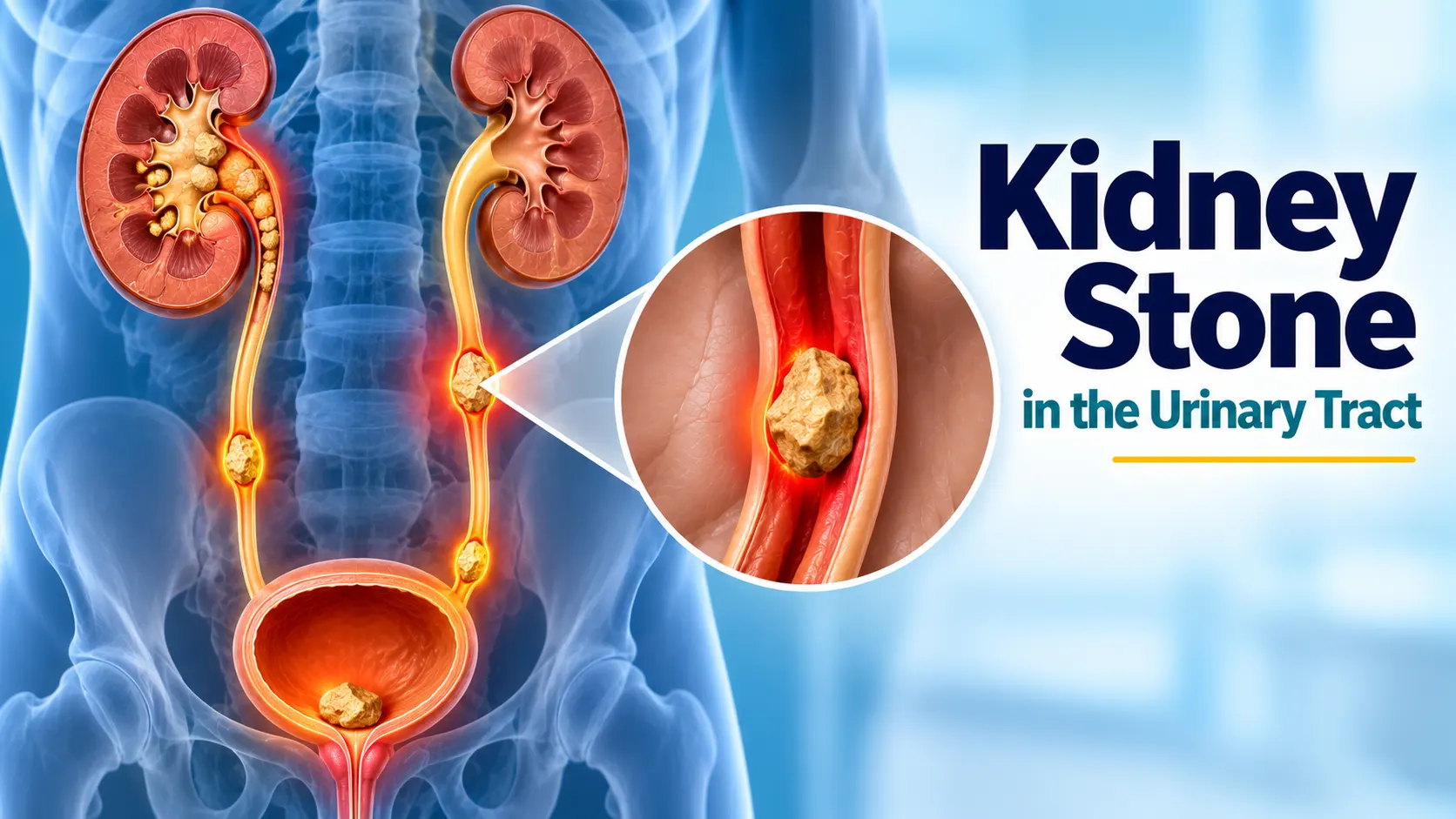
Symptoms can vary depending on the stone's size and location and whether it is blocking urine flow.
Sharp pain in the side or back is a common symptom when a stone moves through the urinary tract.
Kidney stones can cause blood to appear in the urine, although blood in urine can have other causes too.
Urgency, frequency, burning or difficulty passing urine can occur when a stone reaches the lower urinary tract.
Renal colic can produce severe pain that changes in intensity as the ureter contracts around a moving stone.
Severe kidney stone pain may be accompanied by nausea or vomiting.
Fever or chills with suspected urinary obstruction may indicate infection and needs prompt medical attention.
A urologist may use symptoms, examination, urine tests, blood tests and imaging to evaluate a suspected stone.
The doctor reviews pain pattern, urinary symptoms, previous stones, medicines and relevant medical conditions.
Urinalysis can help identify blood, infection and other findings relevant to urinary stone evaluation.
Blood tests may be used to assess kidney function and look for metabolic factors when appropriate.
Ultrasound, X-ray or CT imaging may help determine the stone's size, location and effect on urine drainage.
Treatment is selected according to stone size, location, symptoms, obstruction, infection risk and the patient's overall condition. If you are looking for kidney stone treatment in Hyderabad, the appropriate treatment approach can be decided after evaluating these factors and the patient's overall health.
Selected small stones may pass naturally. A doctor may recommend observation, hydration guidance, pain control and medicines when appropriate.
ESWL uses externally generated shock waves to break a suitable kidney or ureteric stone into smaller fragments that can then pass through the urinary tract.
During ureteroscopy, a small endoscope is passed through the urinary tract to reach the stone. The stone may be removed or fragmented depending on its size and location.
Laser energy can be used during ureteroscopy to fragment a stone into smaller pieces or dust that can be removed or passed naturally.
PCNL is a minimally invasive procedure commonly considered for larger or complex kidney stones when other approaches may not be suitable.
When obstruction and infection or significant drainage problems are present, urgent urinary drainage may be needed before definitive stone treatment.
| Approach | What it involves | May be considered for |
|---|---|---|
| Observation | Monitoring a stone while allowing time for natural passage. | Selected smaller stones without complications. |
| ESWL | Shock waves break the stone into smaller fragments. | Selected kidney or ureteric stones depending on size and location. |
| Ureteroscopy | A small endoscope is used to access and treat the stone. | Many ureteric and selected kidney stones. |
| Laser Lithotripsy | Laser energy fragments the stone during endoscopic treatment. | Selected stones treated through ureteroscopy. |
| PCNL | The kidney is accessed through a small skin incision to remove or fragment stones. | Large or complex kidney stones in appropriate patients. |
Prevention depends partly on the type of stone and individual risk factors.
Drinking enough fluid is an important part of kidney stone prevention for many people. Your doctor may provide personalised fluid advice based on your health.
Dietary changes depend on the stone type and metabolic risk. Avoid making major dietary restrictions without appropriate advice.
People with recurrent stones may benefit from evaluation for factors that increase stone formation.
Follow-up testing, medicines and dietary measures may be recommended when recurrent stone formation needs long-term prevention.

Dr. Jayanth Reddy is presented on this page as a urology specialist with more than 15 years of experience. Patients with kidney stones can discuss symptoms, imaging reports, previous stone treatment and appropriate treatment options during a urology consultation.
The appropriate procedure depends on the stone's characteristics and the patient's clinical findings. Doctor schedule and availability may change, so confirm current details before visiting.
Call 9100001201For appointment information, contact the hospital and confirm the current consultation location and timing.
Patients in and around Tarnaka can contact My Health Hospitals for urology consultation and kidney stone treatment information.
9100001201Patients in and around KPHB can contact My Health Hospitals to enquire about urology consultation and kidney stone care.
9111674111A urologist who evaluates and treats urinary stones can be consulted for kidney and ureteric stone problems, including cases that may require procedures.
There is no single best treatment for every stone. The appropriate option depends on stone size, location, symptoms, obstruction, infection and patient factors.
Some smaller stones can pass naturally. A doctor can assess whether observation is reasonable or whether active treatment is safer or more effective.
Laser stone treatment uses laser energy during an endoscopic procedure, commonly ureteroscopy, to fragment a stone into smaller pieces.
Ureteroscopy uses a small endoscope passed through the urinary tract to reach a stone so it can be removed or fragmented.
ESWL may be considered for selected kidney or ureteric stones. Suitability depends on the stone's size, location and other patient-specific factors.
PCNL is commonly considered for larger or complex kidney stones when a percutaneous approach is appropriate.
Fever can occur when a urinary infection is present. Fever with suspected urinary obstruction can be an urgent situation and should be medically evaluated promptly.
Yes. Kidney stones can cause blood in the urine, but other urinary conditions can also cause this symptom and may need evaluation.
You can contact My Health Hospitals at 9100001201 and ask about a urology consultation with Dr. Jayanth Reddy at the current Tarnaka or KPHB location.
A urology consultation can help determine the stone's size and location and whether observation, medicines or a stone-removal procedure is appropriate.
Call 9100001201Medical Disclaimer: This page provides general educational information and does not replace a medical examination, diagnosis or personalised treatment plan. Kidney stone treatment depends on the patient's symptoms, stone characteristics, imaging, medical history and clinical findings. Emergency symptoms require prompt medical care. Doctor schedules, locations and services may change, so confirm current details directly with My Health Hospitals.
Find the Best Hospital Near You
H.No 15-24-212, MIG-212, Rd Number 1, K P H B Phase 1, Kukatpally, Hyderabad, Telangana 500072
H.No:-12-5-30, WhiteHouse, Moula Ali Rd, South Lalaguda, Tarnaka, Secunderabad, Telangana 500017