
-
 Kphb Branch
+91 9111674111
-
Tarnaka Branch
+91 9100001201
- Book Appointment
+91 9111674111
+91 9100001201
Obstetrician and Gynecologist
Cervical screening can identify cervical cell changes or high-risk human papillomavirus (HPV) before cervical cancer develops. This guide explains Pap Smear testing in Tarnaka and Secunderabad, HPV testing, preparation, results and follow-up.
Screening recommendations depend on age, previous results, HPV status, medical history and the screening programme being followed. A gynecologist can help determine which test and interval are appropriate for you.
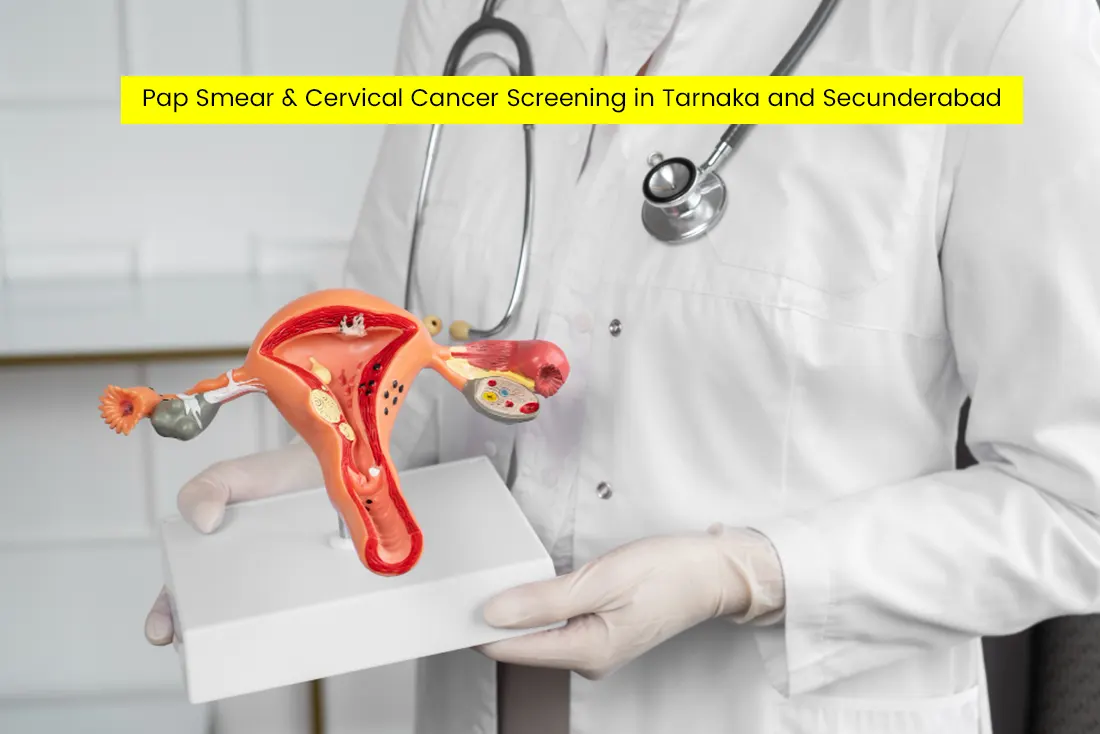
A Pap Smear (Pap test) is a cervical screening test that examines cells collected from the cervix for abnormal changes. HPV testing looks for high-risk types of HPV associated with cervical cancer. Depending on age, screening history and local guidance, HPV testing, cytology, or a combination may be used. An abnormal screening result does not by itself mean cancer; it usually indicates that further evaluation or follow-up may be needed.
Examines cervical cells for abnormalities that may represent precancerous changes or other cellular findings.
Detects high-risk HPV infection associated with cervical precancer and cervical cancer.
Uses HPV testing and cytology together when that approach is recommended by the applicable screening protocol.
WHO's current guidance places HPV-based testing at the centre of modern cervical-cancer screening programmes, while the exact test and interval should follow the local screening programme and individual clinical situation.
There is no single screening schedule that applies to every woman worldwide. The interval depends on the screening test, age, previous results, risk factors and national or local guidance.
| Screening situation | Key point |
|---|---|
| HPV-based screening | WHO identifies HPV DNA testing as the preferred primary screening method in programmes that can implement it appropriately. |
| Screening interval | WHO recommendations commonly use multi-year intervals for HPV-based screening; the exact interval depends on the guideline and programme being followed. |
| Cytology/Pap testing | May still be used where HPV-based screening is not available or as part of a specific screening algorithm. |
| Previous abnormal results or higher-risk conditions | Follow-up may be more frequent and may involve HPV testing, repeat cytology, colposcopy or other evaluation. |
Important: The old source page's blanket statement that every woman aged 21–65 should have a Pap test every 3 years is not suitable as a universal 2026 recommendation. Screening should be individualized and aligned with the applicable guideline. WHO's 2026 update emphasizes HPV-based screening and risk-based management.
Menstrual bleeding can sometimes interfere with cervical sampling. If you are bleeding heavily on the planned test date, contact the clinic to ask whether the appointment should be rescheduled.
| Step | What happens |
|---|---|
| Positioning | You are positioned for a pelvic examination in a private clinical setting. |
| Speculum examination | A speculum is gently placed in the vagina so the cervix can be seen. |
| Sample collection | A cervical sample is collected with a small brush or sampling device. |
| Laboratory analysis | The sample is examined using the selected cytology and/or HPV testing method. |
| Follow-up | The result is interpreted in context. Abnormal findings may require repeat testing, HPV assessment, colposcopy or another evaluation. |
The test itself is usually brief. Some people experience pressure or short-lived discomfort during sample collection.
No concerning cervical cell abnormality was identified in the sample. Continue screening according to your recommended schedule.
A high-risk HPV type may be detected without cancer being present. Further management depends on the HPV result, cytology and risk assessment.
Abnormal cells do not automatically mean cancer. Follow-up may include repeat testing, HPV testing, colposcopy or biopsy.
Persistent infection with high-risk HPV types is a major cause of cervical cancer. Prevention therefore involves a combination of vaccination, appropriate cervical screening and timely follow-up of abnormal results.
HPV vaccination can reduce the risk from vaccine-covered HPV types. Ask a qualified clinician about eligibility and the recommended schedule.
Screening can identify HPV infection or cervical changes before invasive cancer develops.
A positive or abnormal screening result needs appropriate follow-up rather than being ignored.
Screening is generally preventive and may be appropriate even when there are no symptoms. You should also seek medical advice for symptoms such as unusual vaginal bleeding, bleeding after sex, persistent unusual discharge or pelvic pain.
Symptoms do not diagnose cervical cancer by themselves. A gynecologist can decide whether cervical screening, an examination, HPV testing, imaging or another investigation is appropriate.
The cost of cervical screening varies according to the test used, laboratory method, HPV testing, consultation charges and whether additional investigations are required.
| Cost component | What can affect the final amount? |
|---|---|
| Pap cytology | Conventional versus liquid-based cytology and laboratory charges. |
| HPV testing | Whether HPV testing is performed separately or with cytology. |
| Consultation | Doctor consultation and clinical examination charges. |
| Additional evaluation | Repeat testing, colposcopy, biopsy or other investigations when clinically indicated. |
Note: The older source page contained fixed price and timing claims. Those have not been carried forward as 2026 quotations. Ask the hospital for the current itemized estimate before testing.
For women searching for Pap Smear near Tarnaka, cervical cancer screening in Secunderabad, HPV testing near Habsiguda or a women's health consultation near Mettuguda, choose care that provides appropriate screening, clear reporting and follow-up for abnormal results.
My Health Hospitals' source page identifies Dr. Swetha Reddy as an Obstetrician & Gynecologist with MBBS, DNB and a Fellowship in Minimal Access Surgery. The source lists consultation hours as 10 am–6 pm; confirm current availability directly with the hospital.

Modern cervical cancer prevention increasingly uses HPV-based screening, but the appropriate test and interval depend on the screening programme and individual risk. A Pap Smear remains an important cytology test and may be used alone or with HPV testing in appropriate settings. If a result is abnormal, timely follow-up is important.
A Pap Smear, or Pap test, examines cells collected from the cervix for abnormal changes that may need follow-up.
A Pap Smear evaluates cervical cells, while an HPV test looks for high-risk HPV infection associated with cervical precancer and cancer. The tests may be used separately or together depending on the screening programme.
The test is usually brief. Some people feel pressure or short-lived discomfort when the speculum is inserted or the cervical sample is collected.
Heavy menstrual bleeding can interfere with sampling. If you are menstruating on the appointment date, ask the clinic whether the test should be rescheduled.
Fasting is generally not required for a Pap Smear. Follow any specific instructions provided by the clinician or laboratory.
Tell the clinician about your previous screening results, pregnancy status and relevant medical history, and follow the clinic's instructions about vaginal products or intercourse before sampling.
The sample collection is usually completed within a few minutes, although the overall appointment may take longer because of registration, consultation and examination.
Turnaround varies by laboratory and test. Ask the hospital or laboratory when your report is expected and how it will be communicated.
An abnormal result means that cervical cells show changes that may need further assessment. It does not automatically mean that you have cervical cancer.
Management depends on the HPV type or result, cytology findings, age and previous screening history. Follow-up may include repeat testing, triage or colposcopy.
No. Most HPV infections do not progress to cancer. Persistent infection with high-risk HPV types is the major concern, which is why screening and appropriate follow-up matter.
No. HPV vaccination reduces risk from vaccine-covered HPV types but does not eliminate the need for cervical screening when screening is recommended.
There is no single worldwide starting age for every screening programme. WHO's HPV-based recommendations generally start population screening at age 30, while local programmes may use different strategies and age groups.
The interval depends on the test used, age, previous results and the guideline being followed. HPV-based programmes generally use longer intervals than cytology-only screening.
Cervical cancer prevention includes HPV vaccination, appropriate screening and timely management of abnormal screening results. No prevention strategy eliminates risk completely.
Unusual vaginal bleeding, bleeding after sex, persistent unusual discharge or pelvic pain should be discussed with a clinician, particularly if symptoms persist or worsen.
My Health Hospitals' source page provides Pap Smear and women's health information for Tarnaka, Secunderabad. Confirm current testing availability, timings and appointment details directly with the hospital.
Liquid Based Cytology is a method of processing a cervical cell sample for cytology. It is one laboratory approach to Pap testing rather than a completely different screening purpose.
Tell the clinician about the previous result and any HPV testing or colposcopy you have had. Your follow-up schedule may differ from routine screening.
Screening after menopause depends on age, previous screening history and the applicable guideline. Postmenopausal bleeding should also be medically evaluated rather than treated as a screening issue alone.
If you are looking for Pap Smear or cervical cancer screening in Tarnaka or Secunderabad, discuss the appropriate test and follow-up plan with a qualified gynecologist.
+91 9100001201Find the Best Hospital Near You
H.No 15-24-212, MIG-212, Rd Number 1, K P H B Phase 1, Kukatpally, Hyderabad, Telangana 500072
H.No:-12-5-30, WhiteHouse, Moula Ali Rd, South Lalaguda, Tarnaka, Secunderabad, Telangana 500017