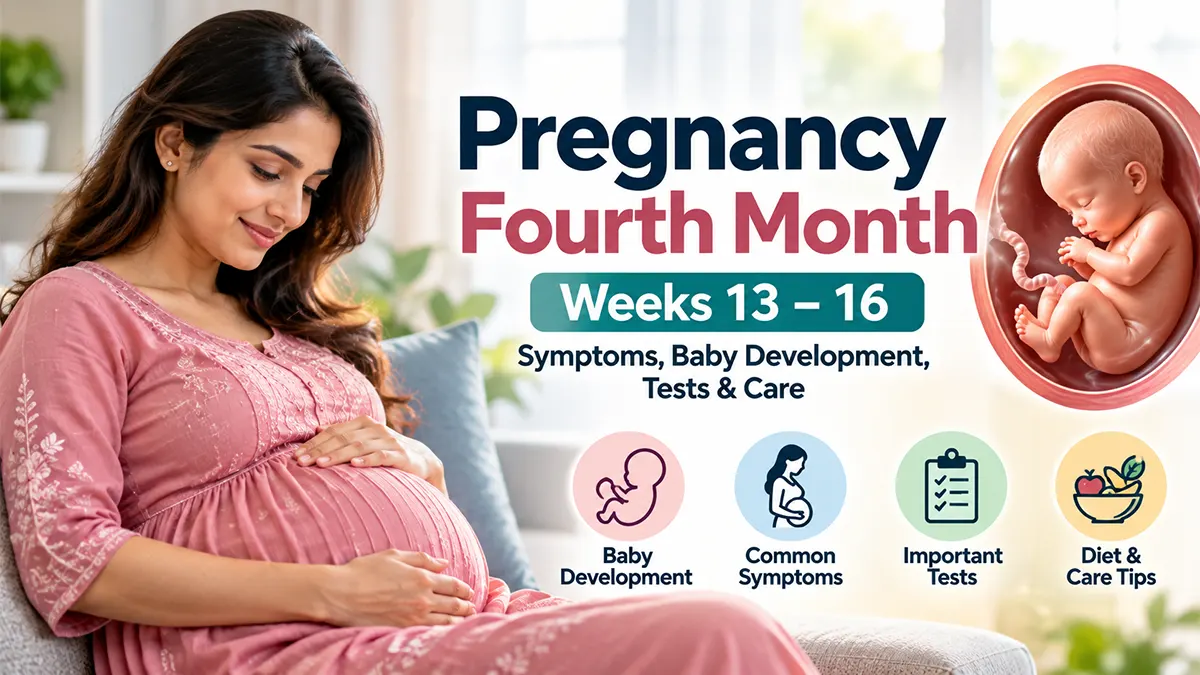
Pregnancy • Weeks 13–16
Pregnancy Fourth Month: Symptoms, Baby Development, Tests & Care
The fourth month is a transition period as pregnancy moves from the end of the first trimester into the early second trimester. Learn what can change in your body, how the baby develops, which tests may be discussed, and how to plan safe antenatal care.
Quick Answer: What Happens in the Fourth Month of Pregnancy?
Pregnancy month 4 is commonly described as weeks 13–16. During this period, the fetus grows rapidly, bones begin to harden, the neck and lower limbs become more developed, toenails form and hearing begins to develop. Nausea and fatigue may improve for some people, while appetite and energy may increase. Prenatal screening decisions and upcoming second-trimester testing should be reviewed with your obstetrician. ACOG places the second trimester from 14 weeks 0 days through 27 weeks 6 days, so week 13 is technically still in the first trimester by that definition.
What Happens During the Fourth Month of Pregnancy?
Weeks 13–16 are a period of continued fetal growth and maternal adjustment. The exact experience varies from one pregnancy to another, so symptoms and ultrasound findings should be interpreted according to gestational age and your clinical history.
Baby Development
Bones continue hardening, the neck becomes more defined, the lower limbs develop further, toenails form and hearing begins to develop. Lung tissue also continues forming for later breathing function.
Changes in Your Body
Nausea and fatigue may become less troublesome for some people. The uterus continues to enlarge, appetite may increase, and constipation, bloating, breast changes or mild stretching discomfort can occur.
Baby Development at 13, 14, 15 and 16 Weeks
Week 13: The fetus continues developing rapidly as the first trimester nears its end. Major organs have formed but continue to mature.
Week 14: The neck is more defined, the lower limbs are developed further and hearing begins to develop.
Week 15: Bone development and overall growth continue. Screening or diagnostic testing may be discussed depending on earlier results and individual risk.
Week 16: The fetus continues gaining size and coordination. Some people may notice early movement, although many do not feel consistent movement yet.
Fourth Month Pregnancy Symptoms: Weeks 13–16
Some first-trimester symptoms may ease during this period, but pregnancy symptoms differ widely.
Nausea & Vomiting
Morning sickness may improve for some people, while others continue to have nausea. Persistent vomiting or dehydration needs medical advice.
More Energy
Fatigue may improve as pregnancy progresses, although tiredness can continue depending on sleep, anemia and other factors.
Digestive Changes
Constipation, bloating and heartburn can occur. Fiber, fluids and pregnancy-safe activity may help when appropriate.
Body & Skin Changes
Breasts continue changing, the abdomen gradually expands, and pigmentation or skin changes may become more noticeable.
Pregnancy Fourth Month Diet: What to Eat
A varied, balanced diet helps meet maternal nutritional needs while supporting fetal growth. Continue any prenatal vitamins or supplements prescribed by your clinician.
- Protein: eggs, dal, beans, lentils, paneer, yogurt, fish or other suitable protein sources.
- Iron: leafy greens, legumes, meat where appropriate and prescribed iron supplements when needed.
- Calcium: pasteurized milk, curd, paneer and other calcium-rich foods.
- Folate: leafy vegetables, beans and prenatal folic acid as advised.
- Fiber: vegetables, fruits, whole grains and legumes to support bowel regularity.
- Fluids: drink regularly and address persistent vomiting or dehydration promptly.
Foods and Substances to Avoid
- Avoid alcohol and tobacco exposure.
- Avoid raw or undercooked meat, eggs and seafood.
- Avoid unpasteurized milk or dairy products and foods with avoidable food-safety risks.
- Discuss caffeine limits with your pregnancy-care clinician.
- Do not start herbal products, supplements or medicines without checking whether they are appropriate in pregnancy.
Important Tests During the Fourth Month
There is no single test schedule that applies to every pregnancy. Testing depends on gestational age, previous results, medical history and the antenatal protocol being followed.
| Test / Assessment | Typical timing or role | Why it may be discussed |
|---|
| Prenatal genetic screening | Some options begin earlier; cfDNA can be performed from 10 weeks | Estimates the chance of certain chromosomal conditions; screening is not diagnostic. |
| Second-trimester serum screening | Quad screening is commonly offered at 15–22 weeks where used | Can screen for certain chromosomal conditions and neural-tube-defect risk. |
| Amniocentesis | Usually 15–20 weeks when indicated | Diagnostic testing for selected genetic or chromosomal conditions. |
| Second-trimester anatomy ultrasound | Usually 18–22 weeks | Assesses fetal structures including brain, spine, heart, abdomen, face and limbs. |
| Antenatal checkup | According to your pregnancy-care schedule | Reviews blood pressure, weight, symptoms, supplements, screening decisions and pregnancy concerns. |
Important: A screening result estimates risk; it does not by itself diagnose a fetal condition. ACOG's January 2026 guidance recommends making cfDNA screening for common aneuploidies routinely available to obstetrical patients, while emphasizing pretest counseling and the distinction between screening and diagnostic testing.
Exercise and Daily Activity at 4 Months Pregnant
For many people with uncomplicated pregnancies, appropriate physical activity can continue during the second-trimester transition. Walking and other pregnancy-appropriate activities may help maintain fitness and wellbeing. Restrictions may be necessary for some complications or high-risk pregnancies.
- Follow the activity level recommended by your obstetrician.
- Stay hydrated and avoid overheating.
- Use comfortable footwear and avoid activities with a significant risk of falling or abdominal trauma.
- Stop and seek advice if you develop bleeding, severe pain, fainting or significant breathlessness.
Fourth Month Pregnancy Do's and Don'ts
Do's
- Attend scheduled antenatal appointments.
- Take prescribed prenatal supplements.
- Eat a varied, balanced diet.
- Stay appropriately active and hydrated.
- Plan upcoming screening and the anatomy scan with your clinician.
Don'ts
- Do not smoke or drink alcohol.
- Do not self-medicate.
- Do not stop prescribed medicines without medical advice.
- Avoid foods with significant food-safety risks.
- Do not ignore heavy bleeding, severe pain, fluid leakage or other warning signs.
When to Contact a Doctor During the Fourth Month
Contact your obstetrician or seek urgent medical assessment when symptoms are severe, sudden or unusual for you.
- Heavy vaginal bleeding or passing clots
- Severe or persistent abdominal or pelvic pain
- Fluid leaking from the vagina
- Fever or feeling acutely unwell
- Fainting or severe dizziness
- Persistent vomiting with inability to keep fluids down
- Any sudden symptom that causes significant concern
Fourth Month Pregnancy Care in Hyderabad
My Health Hospitals provides obstetric and gynecology services at its Kukatpally and Tarnaka branches. Antenatal care should be individualized according to gestational age, medical history, screening results and pregnancy risk factors. Current doctor schedules and services should be confirmed directly with the hospital.
Obstetrics & GynecologyAntenatal Care
Dr. Swetha Reddy
Obstetrician & Gynecologist
Pregnancy Fourth Month – FAQs
The fourth month is commonly described as weeks 13 to 16. ACOG defines the second trimester as beginning at 14 weeks, so week 13 is technically still in the first trimester by that definition.
Bones continue hardening, the neck becomes more defined, the lower limbs develop further, toenails form, hearing begins to develop and lung tissue continues forming.
Nausea and fatigue may improve, while appetite and energy may increase. Constipation, bloating, headaches, breast changes, skin pigmentation and mild stretching discomfort can also occur.
Some people notice early fluttering during this period, but many do not feel consistent movement until later. Fetal movement can begin at different times.
Testing depends on gestational age, previous results and medical history. Your clinician may discuss genetic screening, blood tests and upcoming second-trimester ultrasound.
Nuchal translucency screening is generally performed during the late first-trimester window, commonly around 11 to 14 weeks, rather than throughout the fourth month.
Amniocentesis is usually performed between 15 and 20 weeks when clinically indicated. It is a diagnostic test and is not routinely required for every pregnancy.
Aim for a varied diet containing protein, whole grains, vegetables, fruits, calcium-rich foods and iron-rich foods. Continue prescribed prenatal supplements and choose pasteurized and properly cooked foods.
Avoid alcohol and tobacco, raw or undercooked animal foods and unpasteurized products. Discuss caffeine limits, supplements and herbal products with your clinician.
For many uncomplicated pregnancies, moderate activity such as walking is appropriate. Exercise should be individualized when pregnancy complications or restrictions are present.
Comfort and individual circumstances matter at this stage. As pregnancy advances, your clinician can advise on sleep positioning. There is no need to force a particular position simply because you are four months pregnant.
Mild intermittent stretching or pulling discomfort can occur as the uterus enlarges. Severe, persistent or worsening pain, especially with bleeding, fever or fluid leakage, needs prompt medical assessment.
Yes. Some people improve as the second trimester approaches, while others continue to have nausea. Persistent vomiting with difficulty keeping fluids down should be discussed with your clinician.
There is no single appropriate amount for everyone. Recommended pregnancy weight gain depends on pre-pregnancy BMI, whether the pregnancy is singleton or multiple, and individual medical factors.
The second-trimester ultrasound for fetal structural assessment is ideally performed around 18 to 22 weeks. Ask your obstetrician when to schedule it.
Ultrasound may sometimes show fetal sex depending on gestational age, fetal position, image quality and local practice. The anatomy scan is primarily intended to assess fetal anatomy and development.
Seek prompt medical assessment for heavy vaginal bleeding, severe or persistent abdominal or pelvic pain, fluid leakage, fever, fainting, severe dizziness, persistent vomiting with dehydration or another sudden concerning symptom.
Keep scheduled antenatal visits, take prescribed supplements, maintain a balanced diet, stay appropriately active, avoid alcohol and tobacco, use medicines only after medical advice and plan upcoming screening with your obstetrician.
Medical note: This article is for general pregnancy education. Pregnancy care, screening, medicines, supplements, exercise restrictions and follow-up should be individualized by a qualified obstetrician or gynecologist. Do not use this guide to diagnose a pregnancy complication.
Need Antenatal Guidance?
If you are 13–16 weeks pregnant and have questions about symptoms, screening, nutrition or your upcoming anatomy scan, discuss them with your obstetrician at My Health Hospitals.
Kukatpally: +91 9111674111 | Tarnaka: +91 9100001201

 Kphb Branch