
-
 Kphb Branch
+91 9111674111
-
Tarnaka Branch
+91 9100001201
- Book Appointment
+91 9111674111
+91 9100001201
Vascular
The estimated varicose veins laser treatment cost in Hyderabad is around ₹60,000 to ₹1,50,000 for Endovenous Laser Treatment (EVLT). The actual cost can vary depending on the severity of venous disease, number of veins or legs treated, diagnostic tests, hospital charges, anesthesia, and the treatment plan recommended by the vascular surgeon.
Laser treatment for varicose veins is a minimally invasive procedure used to close an unhealthy vein so that blood can redirect through healthier veins. One commonly used technique is Endovenous Laser Therapy (EVLT), also called endovenous laser ablation.
If you are comparing the laser treatment cost for varicose veins, it is important to understand more than the procedure price. The underlying vein problem, Doppler findings, treatment method, number of veins involved and whether one or both legs require treatment can all influence the final estimate.
Varicose veins laser treatment cost in Hyderabad: ₹60,000 – ₹1,50,000 (estimated). The final amount is determined after clinical evaluation and assessment of the affected veins.
Cost note: This is an indicative range, not a guaranteed package price. Additional investigations, treatment of multiple veins, bilateral procedures, hospital services or complications may change the final cost.
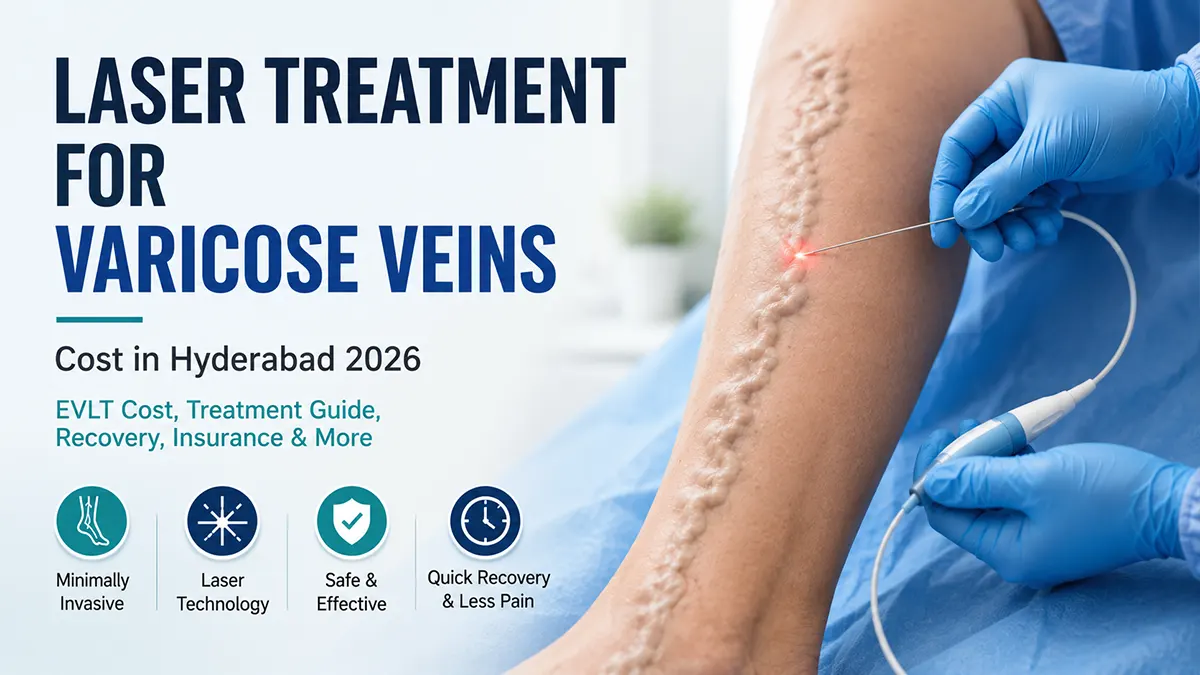
The cost of laser treatment for varicose veins depends on the treatment approach recommended after evaluating the affected veins. At My Health Hospitals, the published estimated range for Laser Treatment (EVLT) is ₹60,000 to ₹1,50,000.
| Varicose Vein Treatment | Estimated Cost | Typical Approach |
|---|---|---|
| Laser Treatment (EVLT) | ₹60,000 – ₹1,50,000 | Minimally invasive vein closure |
| Sclerotherapy | ₹20,000 – ₹80,000* | Injection-based treatment for selected veins |
| Radiofrequency Ablation (RFA) | ₹80,000 – ₹2,00,000* | Heat-based closure of the affected vein |
| Vein Stripping Surgery | ₹50,000 – ₹1,20,000* | Surgical removal or ligation of affected veins |
*Indicative figures only. Treatment costs vary between hospitals and individual patients. The appropriate treatment should be selected after vascular assessment.
Laser treatment for varicose veins is a minimally invasive procedure designed to close an abnormal vein that is allowing blood to flow improperly. One commonly used technique is Endovenous Laser Therapy (EVLT).
During EVLT, a thin laser fiber is introduced into the affected vein under image guidance. Laser energy is then used to close the vein. Blood can subsequently flow through other healthy veins.
The treatment approach is not identical for every patient. A vascular surgeon may recommend EVLT, radiofrequency ablation, sclerotherapy, phlebectomy, compression treatment, or another option depending on the vein anatomy and clinical findings.
Laser treatment may be considered for selected patients with symptomatic varicose veins caused by problems with blood flow through the superficial veins. A vascular specialist usually evaluates the symptoms, vein anatomy and circulation before recommending treatment.
Aching, heaviness, burning or discomfort in the legs may require evaluation when symptoms are persistent or interfere with daily activities.
Swelling around the ankles or legs can occur with chronic venous problems and should be assessed to identify the underlying cause.
Enlarged, twisted or prominent veins may be evaluated when they are associated with symptoms or other signs of venous disease.
Changes in skin colour, irritation or other changes around the lower leg may indicate a more advanced venous problem requiring medical assessment.
When faulty valves allow blood to flow backward, a vascular specialist may consider endovenous treatment after appropriate assessment.
Patients with persistent or recurring symptoms may need a detailed vascular assessment to determine whether an intervention is appropriate.
Varicose veins can appear as enlarged, twisted veins close to the surface of the skin. Some people have visible veins without significant symptoms, while others may experience discomfort or swelling.
Symptoms can become more noticeable after prolonged standing or sitting and may improve when the legs are elevated.
Diagnosis begins with a medical history and examination of the legs. The vascular specialist assesses visible veins, swelling, skin changes and other symptoms.
A duplex ultrasound scan is commonly used to evaluate blood flow and identify venous reflux. The findings can help determine whether laser treatment, another procedure, or conservative management is more appropriate.
Assessment of visible veins, swelling and other physical findings.
Review of symptoms, previous treatment and relevant health factors.
Helps assess blood flow and venous reflux.
Results help determine the most suitable treatment approach.
Varicose veins and spider veins are different types of visible veins. Their treatment depends on their size, location, symptoms and the underlying venous problem.
Varicose veins are typically larger, swollen and twisted veins. When venous reflux is present, treatments such as endovenous laser ablation may be considered for appropriate patients.
Spider veins are smaller superficial blood vessels that can appear as red, blue or purple lines or web-like patterns on the skin.
Endovenous Laser Therapy (EVLT) is a minimally invasive procedure used to close a selected abnormal vein. The exact technique depends on the patient's vein anatomy and the findings of the vascular assessment.
The specialist evaluates the affected veins and reviews the results of the clinical examination and duplex ultrasound.
Local anaesthesia is commonly used around the treatment area to improve comfort during the procedure.
A thin catheter or laser fibre is guided into the targeted vein using imaging guidance.
Laser energy is delivered to the vein, causing the targeted vein to close.
Once the treated vein is closed, blood is redirected through other functioning veins. The body gradually absorbs the treated vein over time.
EVLT is an established minimally invasive treatment for selected patients with symptomatic varicose veins and venous reflux. However, there is no single success rate that applies to every patient.
Treatment outcomes can depend on the vein treated, severity of venous disease, technique used, follow-up duration and the patient's individual health factors.
Therefore, when searching for the varicose veins laser treatment success rate, patients should look at the type of procedure and the clinical circumstances rather than relying on one percentage advertised for all cases.
For appropriately selected patients, endovenous treatment can provide a minimally invasive alternative to traditional vein surgery.
EVLT is performed through a small access point rather than a large surgical incision.
The procedure generally requires a small entry point for the catheter or laser fibre.
Many appropriately selected patients can return to normal activities relatively quickly, based on their doctor's advice.
Laser therapy can be a safe and effective treatment for appropriately selected patients when performed by a qualified vascular specialist. As with any medical procedure, however, it has potential risks.
Before treatment, the doctor should review the patient's medical history, medications and vascular findings and explain the expected benefits, alternatives and possible complications.
Most patients do not experience serious complications, but no procedure is completely risk-free. The risks can vary according to the patient's health, the veins being treated and the technique used.
Contact your treating doctor promptly if you develop significant or worsening leg swelling, severe pain, increasing redness, fever, chest pain, breathing difficulty or other concerning symptoms after treatment.
Recovery after laser treatment for varicose veins is generally shorter than recovery from traditional vein surgery, although the exact timeline varies according to the procedure, vein condition, and individual health.
Patients are generally encouraged to walk after treatment. Your doctor will provide specific instructions about activity and exercise.
Compression stockings may be recommended after treatment depending on the procedure and your doctor's advice.
Follow-up evaluation helps the doctor assess healing and determine whether additional treatment or monitoring is required.
Laser treatment for varicose veins can be an effective option for appropriately selected patients with venous reflux. The outcome depends on the underlying vein problem, treatment technique, anatomy, and long-term vein health.
It is important to understand that there is no single success rate that applies to every patient. A vascular specialist may recommend an ultrasound examination before treatment to identify the affected veins and determine the most appropriate approach.
Endovenous laser therapy is a minimally invasive treatment used for selected varicose veins. Like any medical procedure, it can have potential risks and side effects.
Possible complications may include bruising, temporary discomfort, skin changes, inflammation along the treated vein, nerve irritation, infection, or blood-clot-related complications. Your vascular specialist should discuss the potential benefits and risks before treatment.
Spider veins are smaller visible blood vessels that may appear on the legs, ankles, or feet. Their treatment differs from treatment of larger varicose veins, so proper evaluation is important before choosing laser or another vein procedure.
Certain small superficial veins may be treated with laser-based techniques. The appropriate treatment depends on the size, location, appearance, and underlying cause of the veins.
The cost of spider vein treatment can vary considerably depending on the number and size of veins, treatment method, number of sessions, and clinical assessment.
Consider medical evaluation if visible varicose veins are associated with leg pain, swelling, heaviness, skin changes, itching, or symptoms that interfere with daily activities. Sudden leg swelling or severe pain requires prompt medical assessment.
The cost of varicose veins laser treatment in Hyderabad can vary depending on the affected veins, severity of venous disease, treatment technique, diagnostic evaluation, and hospital requirements.
This is an indicative estimated range for varicose veins laser treatment. It should not be considered a fixed package price.
The selected laser or endovenous treatment method can influence the overall cost.
The number and size of affected veins and the severity of venous reflux may affect treatment requirements.
A venous Doppler ultrasound may be recommended to identify abnormal blood flow and guide treatment planning.
Some patients may require additional procedures or more than one treatment session.
Important: The final treatment cost should be confirmed with the hospital after clinical evaluation and discussion of the recommended treatment plan.
Several factors may contribute to the final cost of laser treatment for varicose veins.
The initial vascular assessment helps determine whether laser treatment is appropriate.
Venous imaging may be required to assess reflux and identify the veins responsible for symptoms.
The procedure itself may include operating-room, equipment, specialist, and anesthesia-related charges.
The extent of venous disease and number of veins requiring treatment may influence the overall expense.
Many minimally invasive procedures involve limited hospitalization, but individual requirements can vary.
Additional vein procedures may be recommended when clinically appropriate and can affect the final cost.
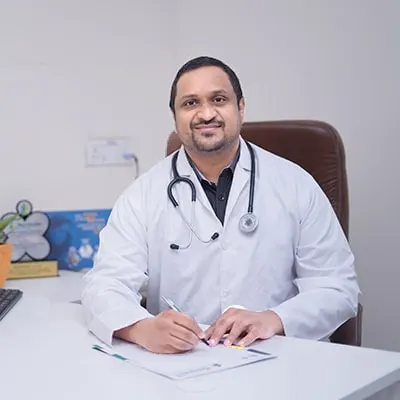
Dr. Puneeth Joopalli provides evaluation and treatment planning for patients with vascular and vein-related conditions. Patients with varicose veins can undergo clinical assessment to determine the underlying venous problem and the most appropriate treatment option.
For patients considering laser treatment for varicose veins, appropriate evaluation is important before selecting an endovenous procedure. Treatment decisions may take into account symptoms, physical examination findings, and venous Doppler results.
No. The most suitable treatment depends on the type and extent of venous disease. Some patients may be candidates for endovenous laser therapy, while others may benefit from different minimally invasive or conventional treatments.
A proper vascular assessment can help identify the source of abnormal blood flow and determine which treatment is appropriate.
Insurance coverage for varicose veins treatment depends on the patient's policy and whether the procedure is considered medically necessary. Coverage may differ when treatment is performed primarily for cosmetic reasons.
Patients should check their policy conditions, exclusions, waiting periods, pre-authorization requirements, and network-hospital eligibility before treatment.
The hospital billing or insurance team can help patients understand the documentation and approval process applicable to their policy.
Your doctor will provide individualized instructions before the procedure. Preparation can vary depending on your medical history, medications, and the treatment planned.
Discuss your symptoms, medical history, medicines, and previous vein treatments.
A vascular examination and Doppler ultrasound may be recommended when clinically appropriate.
Tell your doctor about all medicines and supplements you take. Do not stop prescribed medicines without medical advice.
Follow the hospital's instructions regarding food, clothing, transportation, and procedure-day preparation.
Following the treating specialist's instructions can support recovery and help identify potential complications early.
Laser therapy is one of several treatment options available for varicose veins. Depending on the underlying vein problem, a specialist may consider endovenous laser therapy, other catheter-based procedures, sclerotherapy, or conventional surgery.
The choice should be based on the patient's symptoms, vein anatomy, Doppler findings, overall health, and expected benefits and risks rather than cost alone.
Uses a laser catheter to treat selected abnormal veins from inside the vessel.
A solution is injected into selected veins and may be used for certain smaller superficial veins.
Traditional surgical approaches may be considered in selected situations when other treatments are unsuitable.
Find answers to common questions about laser treatment, EVLT, cost, recovery, safety, effectiveness, and spider vein treatment in Hyderabad.
This page provides general educational information about varicose veins and available treatment options. Treatment suitability, expected outcomes, risks, and costs vary from patient to patient. A qualified vascular specialist should evaluate your condition before any treatment decision.
Find the Best Hospital Near You
H.No 15-24-212, MIG-212, Rd Number 1, K P H B Phase 1, Kukatpally, Hyderabad, Telangana 500072
H.No:-12-5-30, WhiteHouse, Moula Ali Rd, South Lalaguda, Tarnaka, Secunderabad, Telangana 500017