

General Medicine
Viral Fever Guide
Fever & Infections
Viral Fever: Symptoms, Causes, Types, Prevention & Treatment
Medically reviewed by Dr. Ch. Srujith, General Physician & Diabetologist
Viral fever is a fever caused by a viral infection. The illness can range from a short, self-limited infection to a condition that needs testing and medical treatment. Symptoms and the appropriate evaluation depend on the virus, age, medical history and severity.
What is viral fever? It is a rise in body temperature associated with a viral infection. Fever may occur with fatigue, headache, body aches, chills, reduced appetite, cough, sore throat, vomiting or diarrhoea depending on the infection.
How is it treated? Many uncomplicated viral illnesses are managed with rest, fluids and symptom relief. Some specific viral infections have antiviral medicines, while antibiotics do not treat viruses.
Important: Fever should not automatically be assumed to be viral. Dengue, malaria, typhoid, bacterial infections and other conditions can also cause fever and may require testing.
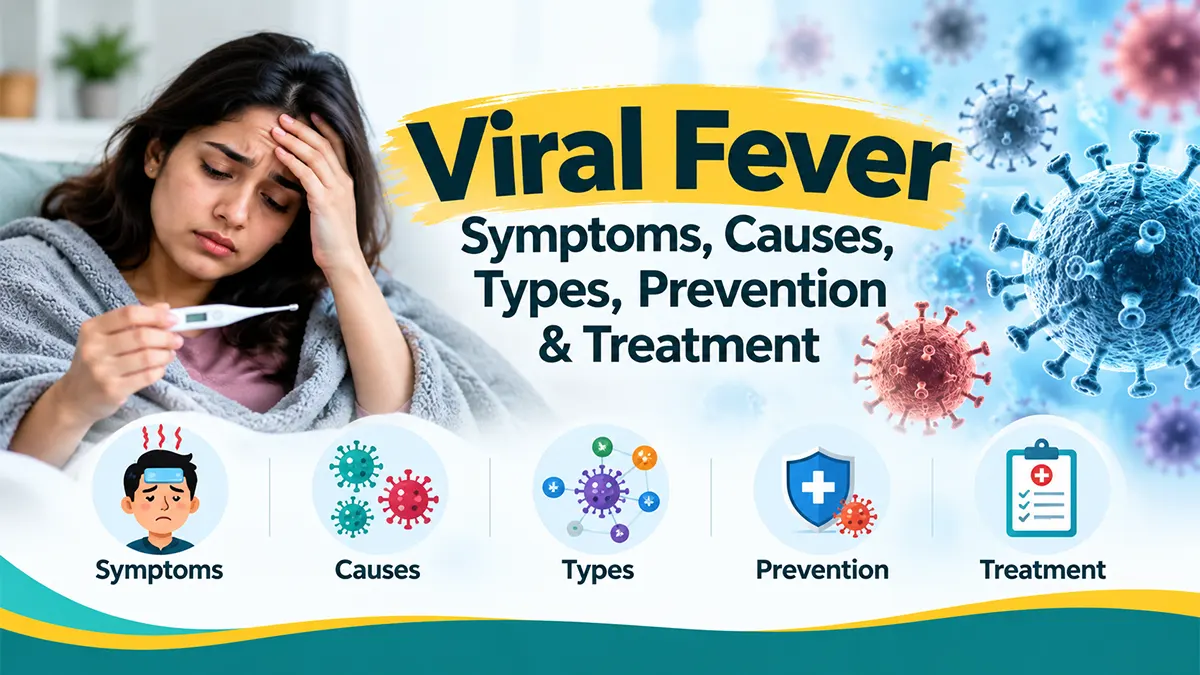
Viral Fever at a Glance
Cause
Viral infections can trigger fever as part of the body's immune response.
Symptoms vary
Respiratory, gastrointestinal, mosquito-borne and other viral infections can produce different symptom patterns.
Treatment depends on cause
Supportive care is common, but selected viral infections may require a specific antiviral or hospital monitoring.
Add My Health Hospitals as a Preferred Source on Google to make it easier to see more of our health content in relevant Google Search experiences.
What Are the Symptoms of Viral Fever?
Viral fever does not have one fixed symptom pattern. Fever may occur alone or alongside symptoms related to the affected body system. Respiratory viruses, for example, can cause cough, sore throat, congestion, headache, body aches and fatigue, while gastrointestinal viral infections may cause vomiting or diarrhoea.
Temperature elevation with or without chills or sweating.
Tiredness, reduced energy and a general feeling of being unwell.
Head pain may occur with several viral infections.
Muscle and joint discomfort can accompany some viral illnesses.
More suggestive of a respiratory viral infection when present with fever.
May occur with certain viral infections, particularly gastrointestinal infections.
Loss of appetite can occur during acute infections.
Common with several respiratory viral infections.
What Causes Viral Fever?
Viral fever is a symptom rather than a single disease. Different viruses can cause fever, and the route of infection varies. Common examples include respiratory viruses such as influenza viruses and other viruses that cause respiratory illness, as well as mosquito-borne viruses such as dengue and chikungunya.
Respiratory viruses
Influenza and other respiratory viruses may cause fever with cough, sore throat, congestion, fatigue and body aches.
Mosquito-borne viruses
Dengue and chikungunya are examples in which mosquitoes transmit a virus to people.
Gastrointestinal viruses
Some viruses primarily affect the digestive system and can cause fever with vomiting or diarrhoea.
How Does Viral Fever Spread?
The route of spread depends on the virus. Some respiratory viruses spread through respiratory particles and close contact. Other viral infections can spread through contaminated food or water, direct contact, body fluids or insect bites.
| Route | Examples / situations | Helpful prevention |
|---|---|---|
| Respiratory spread | Coughing, sneezing, talking or close contact with an infected person. | Stay away from others when sick, improve ventilation and use appropriate respiratory precautions. |
| Contact / contaminated surfaces | Touching contaminated hands or surfaces and then touching the face. | Hand hygiene and regular cleaning of frequently touched surfaces. |
| Food or water | Some gastrointestinal viruses can spread through contaminated food or water. | Safe water, food hygiene and handwashing. |
| Mosquito bites | Dengue and chikungunya are transmitted by infected mosquitoes. | Repellent, protective clothing, screens and mosquito-control measures. |
Types of Viral Fever
"Viral fever" is a broad clinical description rather than one specific diagnosis. Examples of viral illnesses that can cause fever include:
Influenza
Often causes fever, chills, cough, sore throat, body aches, headache and fatigue.
Dengue
A mosquito-borne viral illness that may cause high fever, headache, body aches, nausea or rash and can sometimes become severe.
Chikungunya
A mosquito-borne viral illness often associated with fever and prominent joint pain.
COVID-19
Can cause fever with respiratory symptoms, fatigue, headache, body aches and other symptoms.
Viral gastroenteritis
May cause vomiting, diarrhoea, abdominal symptoms and sometimes fever.
Other viral infections
Many other viruses can cause fever, with symptoms depending on the virus and the body system affected.
How Is Viral Fever Diagnosed?
A doctor may diagnose a viral illness from the history and examination when the pattern is straightforward. Testing is considered when symptoms are severe, prolonged, atypical, the patient has important risk factors, or another infection needs to be ruled out.
History and examination
Duration of fever, associated symptoms, exposures, travel, mosquito exposure, medicines and medical conditions can guide the assessment.
Blood tests
Depending on the suspected illness, a clinician may request a CBC or other laboratory tests.
Specific infection tests
Targeted tests may be needed for infections such as dengue, influenza or COVID-19 when clinically appropriate.
Viral Fever Treatment
For many uncomplicated viral infections, treatment focuses on rest, adequate fluids and relief of symptoms while the infection resolves. The treatment plan changes when a specific viral infection has an available antiviral medicine or when complications develop.
Rest and hydration
Rest and regular fluid intake can help reduce dehydration and support recovery.
Fever relief
Paracetamol/acetaminophen may be used when appropriate. Follow the label or clinician's dosing instructions.
Antiviral treatment
Some specific viral infections have antiviral medicines, but these are not needed for every viral illness.
Medical monitoring
Persistent, severe or worsening illness may require examination, laboratory testing or hospital care.
Antibiotics
Antibiotics do not treat viruses. They are used when a clinician diagnoses or strongly suspects an appropriate bacterial infection.
Treatment of complications
Dehydration, breathing problems, severe dengue or other complications may require specific medical management.
What Can You Do at Home for Viral Fever?
Drink enough fluids
Water and suitable fluids help reduce the risk of dehydration. If vomiting or diarrhoea is present, oral rehydration may be appropriate.
Rest
Reduce strenuous activity while you are unwell and allow time for recovery.
Monitor symptoms
Track fever, hydration, breathing and new symptoms rather than focusing only on the temperature reading.
How Can Viral Fever Be Prevented?
Hand hygiene
Wash hands regularly, especially before eating and after coughing, sneezing or caring for someone who is sick.
Respiratory precautions
Stay home when acutely ill, improve indoor ventilation and reduce close contact with others when contagious.
Vaccination
Use recommended vaccines for preventable viral infections such as influenza and COVID-19 according to current public-health advice.
Food and water safety
Use safe drinking water and food-handling practices to reduce infections that spread through contaminated food or water.
Mosquito protection
Use repellent, protective clothing, screens and mosquito-control measures where dengue or chikungunya is present.
Follow local health advice
During outbreaks or seasonal increases, follow guidance from local health authorities and healthcare professionals.
When Should You See a Doctor for Fever?
Medical assessment is appropriate when fever is persistent, worsening, unusually high, associated with significant dehydration or accompanied by concerning symptoms. The threshold for evaluation is also lower for infants, older adults, pregnant people and people with significant chronic illnesses or weakened immunity.
Seek urgent medical care for:
- Difficulty breathing, shortness of breath or bluish lips/face
- Persistent chest or abdominal pain or pressure
- Confusion, inability to stay awake, seizures or severe weakness
- Very little or no urine, severe dehydration or inability to keep fluids down
- Unusual bleeding, severe abdominal pain or repeated vomiting when dengue is possible
- A fever or cough that improves and then returns or becomes worse
- Any fever in an infant younger than 12 weeks (100.4°F / 38°C or higher)
Persistent or Worsening Fever Needs the Right Diagnosis
Not every fever is viral. If symptoms are persistent, severe or unusual, a general physician can assess the pattern, consider conditions such as dengue or malaria when relevant, and decide whether testing or further treatment is needed.
Fever Care in HyderabadMedically Reviewed By