

Vitamin Deficiency Symptoms: 10 Warning Signs, Causes & Tests
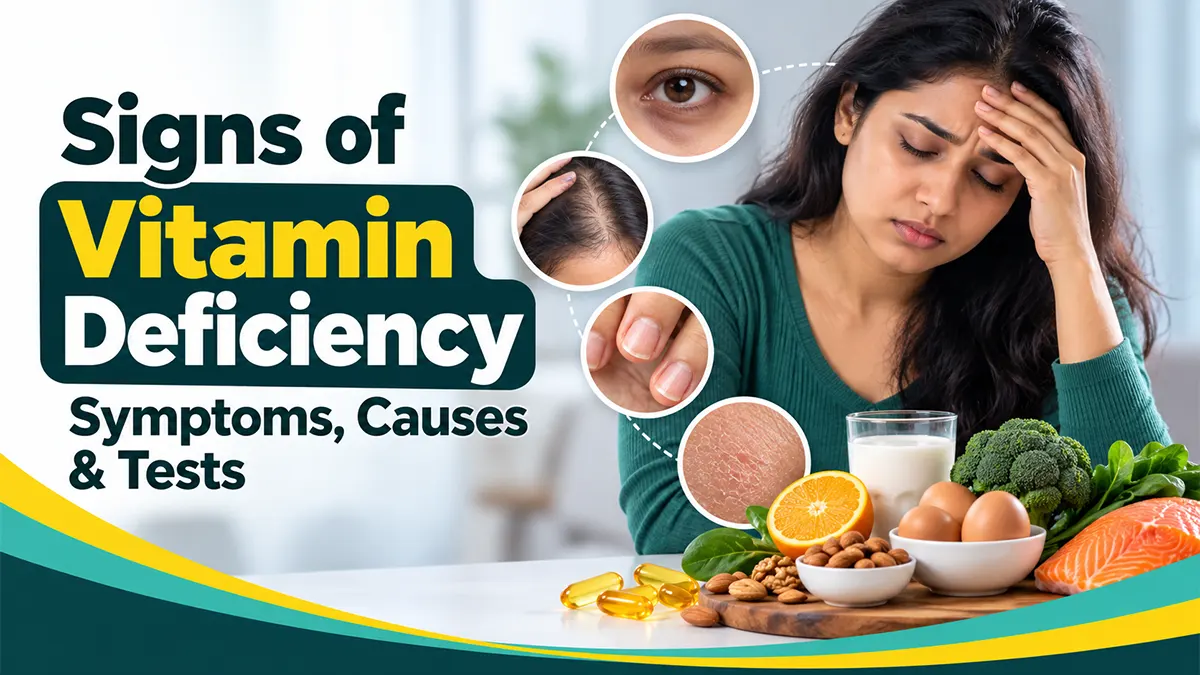
Vitamin deficiency can develop gradually and may cause symptoms such as persistent tiredness, weakness, hair or skin changes, mouth problems, numbness, vision changes or bone and muscle symptoms. These signs are not specific to vitamin deficiency, so proper medical evaluation and targeted testing are important.
Add My Health Hospitals as a Preferred Source on Google to see more of our latest health information.
What Is a Vitamin Deficiency?
A vitamin deficiency occurs when the body does not have enough of a particular vitamin to meet its needs. There are 13 essential vitamins, including vitamins A, B1, B2, B3, B5, B6, B7, B9, B12, C, D, E and K. Each has different roles in normal blood formation, nerve function, vision, immunity, metabolism, skin health and other body processes.
A deficiency can result from inadequate intake, increased nutritional requirements, problems absorbing nutrients, certain medical conditions or some medicines. The symptoms depend on the specific vitamin, how low the level is and how long the deficiency has been present.
10 Warning Signs of Vitamin Deficiency
1Persistent Fatigue or Weakness
Ongoing tiredness or weakness can occur with several deficiencies, including vitamin B12, folate and vitamin C. Vitamin D deficiency can also be associated with fatigue and muscle weakness. Because fatigue is nonspecific, other causes should also be considered.
2Hair Loss or Skin Changes
Hair thinning, brittle hair, dry or rough skin and certain rashes can occur with nutritional deficiencies. However, thyroid disorders, hormonal changes, stress, infections and other conditions can cause similar changes.
3Mouth Ulcers or Tongue Changes
A sore or red tongue, mouth ulcers or cracks at the corners of the mouth may occur with some B-vitamin deficiencies. Recurrent oral symptoms deserve evaluation rather than self-treatment with high-dose supplements.
4Numbness or Tingling
Pins-and-needles sensations, numbness, weakness or balance problems can occur with vitamin B12 deficiency because the nervous system can be affected.
5Bone Pain or Muscle Weakness
Vitamin D deficiency can be associated with bone pain, muscle weakness, muscle aches or cramps. Significant or persistent symptoms should be evaluated rather than assumed to be due to low vitamin D.
6Vision Problems
Difficulty seeing in low light or night blindness is a classic sign of vitamin A deficiency. New vision changes have many possible causes and should be assessed promptly.
7Frequent Illness
Some vitamin deficiencies can affect immune function. Recurrent infections or unusually slow recovery should be assessed in the context of diet, medical history and other possible causes.
8Easy Bruising or Slow Wound Healing
Vitamin C and vitamin K have important roles in connective tissue and blood clotting. Easy bruising or delayed healing can have many causes and may require medical evaluation.
9Concentration or Memory Changes
Vitamin B12 and folate deficiency can be associated with cognitive or neurological symptoms. Persistent memory or concentration changes should not automatically be attributed to nutrition.
10Mood Changes
Changes in mood can occur with some nutritional deficiencies, including deficiencies involving B vitamins. Depression and anxiety have many possible causes, so persistent symptoms deserve proper assessment.
Vitamin Deficiency Symptoms by Vitamin
| Vitamin | Possible deficiency symptoms | Important point |
|---|---|---|
| Vitamin A | Poor night vision, dry eyes and impaired vision in severe deficiency | Night blindness is a classic sign of vitamin A deficiency. |
| Vitamin B12 | Fatigue, weakness, anaemia, numbness, tingling, balance or memory problems, sore tongue | Neurological symptoms can occur and should not be ignored. |
| Folate (B9) | Fatigue, weakness, anaemia, sore tongue and mouth changes | Blood testing can help evaluate suspected deficiency. |
| Vitamin C | Fatigue, bleeding gums, easy bruising and slow wound healing | Severe deficiency can cause scurvy. |
| Vitamin D | Bone pain, muscle weakness, muscle aches or cramps and sometimes fatigue | 25-hydroxyvitamin D is the main blood marker used to assess vitamin D status. |
| Vitamin K | Easy bleeding or bruising when deficiency is significant | Vitamin K is important for normal blood clotting. |
| Vitamin B2, B6 and other B vitamins | Mouth or tongue changes, skin changes and neurological or metabolic symptoms depending on the vitamin | Symptoms overlap, so testing and clinical assessment may be needed. |
Why Do Vitamin Deficiencies Happen?
Vitamin deficiency is not always caused by simply eating too little. A person may have an adequate calorie intake but still have a nutritional gap because of a restrictive diet, increased requirements, poor absorption or another health condition.
Inadequate Dietary Intake
A diet with limited variety or prolonged restriction of food groups can reduce intake of specific vitamins.
Limited Sun Exposure
Limited exposure to sunlight can increase the risk of low vitamin D status because sunlight contributes to vitamin D production in the skin.
Malabsorption
Conditions affecting the gastrointestinal tract, including some disorders of fat absorption, can reduce absorption of certain vitamins.
Increased Requirements
Pregnancy, breastfeeding, childhood and some medical situations can increase nutritional requirements and may require individual assessment.
Medicines
Some medicines can affect nutrient absorption or blood levels. This does not mean a prescribed medicine should be stopped; discuss possible monitoring with your doctor.
Chronic Health Conditions
Kidney, liver, gastrointestinal and other chronic conditions can influence nutritional status or the way nutrients are absorbed or used.
Who Is at Higher Risk of Vitamin Deficiency?
- People following restrictive diets with limited food variety
- People with conditions that affect nutrient absorption
- Older adults with reduced dietary intake or absorption
- Pregnant or breastfeeding women with increased nutritional requirements
- People with limited sunlight exposure who may be at higher risk of low vitamin D status
- People with chronic illnesses or previous gastrointestinal surgery
- People taking medicines that can affect specific nutrient levels
Vitamin B12 Deficiency: Symptoms You Should Not Ignore
Vitamin B12 is important for normal red blood cell formation and nervous-system function. Deficiency can cause fatigue and weakness, but it can also produce neurological symptoms such as numbness, tingling, balance problems or cognitive changes.
Vitamin B12 status is usually assessed using a blood B12 measurement. In some situations, methylmalonic acid or other tests may help clarify an uncertain result. The appropriate testing strategy depends on the clinical situation and laboratory reference ranges.
Vitamin D Deficiency: Symptoms and Testing
Vitamin D deficiency may cause bone pain, muscle weakness, muscle aches or cramps and, in some people, fatigue. Some people have few or no obvious symptoms.
The main blood marker used to assess vitamin D status is serum 25-hydroxyvitamin D, also written as 25(OH)D. Interpretation should use the laboratory's reference range and clinical context rather than relying on a single internet cutoff.
How Is Vitamin Deficiency Diagnosed?
There is no single blood test that detects every vitamin deficiency. Diagnosis starts with a medical history, dietary review, symptoms, examination and risk assessment. Testing is then selected according to what is clinically suspected.
- Complete blood count (CBC): may help identify anaemia or other blood abnormalities.
- Vitamin B12: may be measured when fatigue, anaemia or neurological symptoms raise concern.
- Folate: may be checked when folate deficiency is suspected.
- 25-hydroxyvitamin D: is the main blood marker used to assess vitamin D status.
- Additional tests: may be considered when symptoms suggest another nutritional, endocrine, gastrointestinal or systemic condition.
Testing every vitamin routinely is usually unnecessary. A targeted approach can reduce unnecessary testing and help identify the actual cause of symptoms.
What Tests May Be Needed for Vitamin Deficiency?
| Clinical concern | Possible evaluation | Why it may be considered |
|---|---|---|
| Fatigue or weakness | CBC, B12, folate and other tests based on history | To evaluate anaemia and possible nutritional or medical causes |
| Numbness or tingling | Vitamin B12 and selected neurological or metabolic tests | To assess possible B12-related nerve involvement and other causes |
| Bone pain or muscle weakness | 25(OH)D and other tests when indicated | To assess vitamin D status and alternative causes |
| Night-vision problems | Clinical eye assessment and targeted nutritional evaluation | Vitamin A deficiency is one possible cause, but eye disorders must also be considered |
| Recurrent mouth changes | Clinical examination, CBC, B12, folate or other tests as indicated | To distinguish nutritional deficiencies from oral, inflammatory or infectious causes |
How Is Vitamin Deficiency Treated?
Treatment depends on the specific deficiency and why it developed. The goal is to correct the deficiency safely while addressing the underlying cause.
1. Improve the Diet
A varied diet containing vegetables, fruits, whole grains, legumes, appropriate protein sources, dairy or fortified alternatives, nuts and seeds can help meet many nutritional needs.
2. Use Fortified Foods When Appropriate
Fortified foods can be useful for people who have difficulty meeting specific nutrient requirements through ordinary foods, particularly with restrictive diets.
3. Take Supplements Only When Appropriate
A clinician may recommend oral supplements or, for selected deficiencies and circumstances, other forms of replacement. The dose and duration depend on the nutrient, severity, cause and individual health factors.
4. Treat the Underlying Cause
If deficiency is related to malabsorption, chronic illness, medication effects or another medical problem, correcting the underlying issue may be an important part of treatment.
Should You Take High-Dose Vitamin Supplements?
Not without medical guidance. More is not always better. Excessive intake of some vitamins can cause toxicity, and supplements may interact with medicines or be inappropriate for certain medical conditions.
If you have symptoms of deficiency, the safer approach is to identify the likely nutrient problem and follow a clinician-guided treatment plan rather than taking multiple high-dose products at the same time.
What Foods Help Prevent Vitamin Deficiency?
Vegetables & Fruits
Provide a wide range of vitamins, minerals, fibre and other beneficial nutrients. Different colours and varieties provide different nutrients.
Legumes & Whole Grains
Beans, lentils and whole grains contribute folate and other nutrients and can support a varied dietary pattern.
Dairy or Fortified Alternatives
Depending on the product, these can provide nutrients such as vitamin D and other micronutrients.
Protein-Rich Foods
Eggs, fish, meat, dairy and fortified foods can contribute vitamin B12; plant-based diets may require planned fortified foods or supplements for B12.
Vitamin Deficiency Symptoms in India: Why Evaluation Matters
Vitamin and broader nutritional deficiencies can occur in India because of dietary patterns, limited dietary diversity, reduced sunlight exposure, restrictive diets, increased nutritional requirements and conditions that affect absorption. However, symptoms alone cannot establish a diagnosis.
For example, persistent fatigue may result from anaemia, thyroid disease, sleep disorders, diabetes, infections, medication effects or other conditions. A structured medical evaluation helps distinguish nutritional deficiency from these alternatives.
When Should You See a Doctor?
- Persistent fatigue or unexplained weakness
- Recurrent mouth ulcers or a sore/red tongue
- Persistent hair loss or unexplained skin changes
- Numbness, tingling, balance problems or muscle weakness
- Bone pain, recurrent muscle symptoms or unexplained fractures
- New or worsening vision problems
- Recurrent infections or unusually slow recovery
- Symptoms that continue despite reasonable dietary changes
When Is Vitamin Deficiency an Emergency?
Vitamin deficiency itself is not usually an emergency, but severe deficiency or its complications can sometimes require urgent care. Seek urgent medical attention for severe breathlessness, chest pain, fainting, confusion, rapidly worsening weakness, new severe neurological symptoms, major bleeding or another rapidly deteriorating condition.
Vitamin Deficiency: What Should You Do Next?
If you suspect a deficiency, do not try to diagnose yourself from a symptom list alone. Write down your symptoms, how long they have been present, your usual diet, relevant medical conditions and medicines or supplements you take. A general physician can then decide whether targeted blood tests or other investigations are appropriate.
- Identify the main symptoms and their duration.
- Review your diet and any restrictive eating pattern.
- Discuss medicines that may affect nutrient status.
- Ask whether targeted blood testing is appropriate.
- Do not start multiple high-dose supplements without advice.
- Follow up if symptoms persist even when initial tests are normal.
Related My Health Hospitals Guides
Medical Review & General Medicine Reference

Dr. Ch. Srujith
Frequently Asked Questions About Vitamin Deficiency
Concerned About Vitamin Deficiency?
If persistent fatigue, weakness, numbness, hair changes, mouth symptoms, bone or muscle problems or other unexplained symptoms are affecting your daily life, a General Medicine consultation can help identify whether vitamin testing or another medical evaluation is appropriate. For appointments at My Health Hospitals, call +91 91116 74111 for Kukatpally or +91 91000 01201 for Tarnaka.
Key Takeaway
Vitamin deficiency symptoms can be subtle and overlap with many other health conditions. Common warning signs include fatigue, weakness, hair or skin changes, mouth or tongue changes, numbness or tingling, muscle or bone symptoms and vision problems.
The most reliable next step is not to guess the vitamin from symptoms. A qualified healthcare professional can review the pattern of symptoms, diet, medical history and medicines and select appropriate tests before recommending treatment or supplements.
Medical Disclaimer
This article is for general health education and does not replace diagnosis, emergency care or individualized medical advice. Vitamin deficiency symptoms can have many causes, and treatment depends on the specific nutrient, severity, underlying cause and individual health factors. Always follow the advice of your treating healthcare professional.
Sources & Further Reading
- Cleveland Clinic – Vitamin Deficiency: Types, Symptoms & Diagnosis
- NIH Office of Dietary Supplements – Vitamin B12
- NIH Office of Dietary Supplements – Vitamin D
- NIH Office of Dietary Supplements – Vitamin A
- NHS – Vitamin B12 or Folate Deficiency Anaemia
- Mayo Clinic – Vitamin Deficiency Anaemia: Diagnosis & Treatment