My Health Hospitals logo

Varicose Veins

Early Signs of Varicose Veins

My Health Hospitals – Tarnaka & KPHB

10 Early Signs of Varicose Veins You Shouldn’t Ignore

The early signs of varicose veins often start silently with mild symptoms like leg heaviness, spider veins, or slight swelling. Recognising these changes can help you decide when a vascular assessment is appropriate.
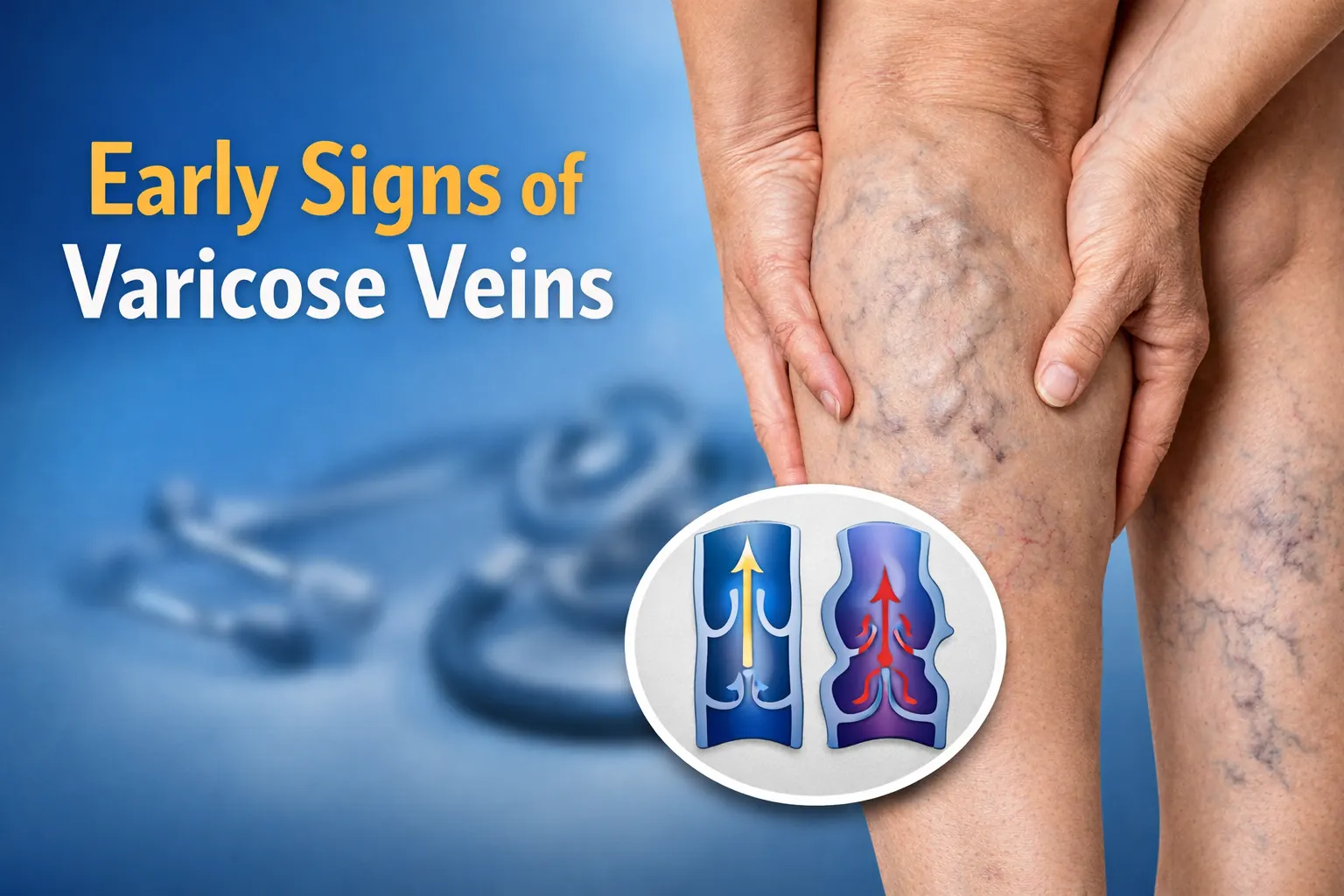
Early signs may include visible blue or purple veins, leg heaviness, aching, ankle swelling, itching and cramps. These symptoms are not specific to varicose veins, so persistent or new symptoms should be assessed.
Early Signs of Varicose Veins You Shouldn’t Ignore
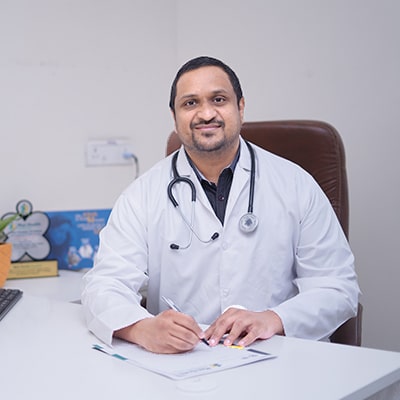
Dr Puneeth Joopalli Vascular Surgeon Hyderabad

πŸ‘¨β€βš•οΈ Expert Care for Varicose Veins

At My Health Hospitals, varicose vein treatment is led by Dr. Puneeth Joopalli, a highly experienced Senior Consultant Vascular Surgeon with over 18+ years of expertise in diagnosing and treating vein disorders.

  • βœ”οΈ 18+ Years Experience
  • βœ”οΈ Evaluation and Treatment of Venous Disorders
  • βœ”οΈ Specialist in Varicose Veins Care
  • βœ”οΈ Trusted Vascular Expert in Hyderabad
  • βœ”οΈ Patient-Centered Treatment Approach
  • βœ”οΈ Individualised Treatment Planning

β€œEarly signs of varicose veins should never be ignored. Timely treatment helps prevent complications and ensures better long-term vascular health.”

β€” Dr. Puneeth Joopalli

🚨 10 Early Signs of Varicose Veins

Recognizing the early signs of varicose veins helps prevent complications. Symptoms vary from person to person and are not always proportional to how visible the veins look.

1️⃣ Spider Veins

Small red or blue veins visible on the skin are often the first signs of varicose veins.

2️⃣ Leg Heaviness

A feeling of tired or heavy legs after standing for long hours.

3️⃣ Mild Swelling

Swelling in feet and ankles, especially in the evening.

4️⃣ Leg Pain

Aching or throbbing pain in the legs due to poor circulation.

5️⃣ Burning Sensation

Burning or throbbing discomfort can occur around affected veins; this symptom can also have other causes.

6️⃣ Itchy Skin

Itching or irritation around visible veins can occur with venous disease and should be considered with other symptoms.

7️⃣ Night Cramps

Night-time leg cramps can occur with venous symptoms, although cramps also have many other possible causes.

8️⃣ Visible Veins

Slightly raised or visible veins appearing under the skin.

9️⃣ Skin Discoloration

Skin colour or texture changes around the lower leg can occur in more advanced venous disease and warrant medical assessment.

πŸ”Ÿ Restless Legs

A restless or uncomfortable feeling in the legs may occur, but it is not specific to varicose veins.

Early signs of varicose veins include spider veins, leg heaviness, swelling, pain, and visible veins. Early detection helps prevent complications.

🩺 Early Signs and Symptoms of Varicose Veins

The early signs and symptoms of varicose veins often begin with mild discomfort and gradually progress. Identifying these warning signs early helps prevent complications.
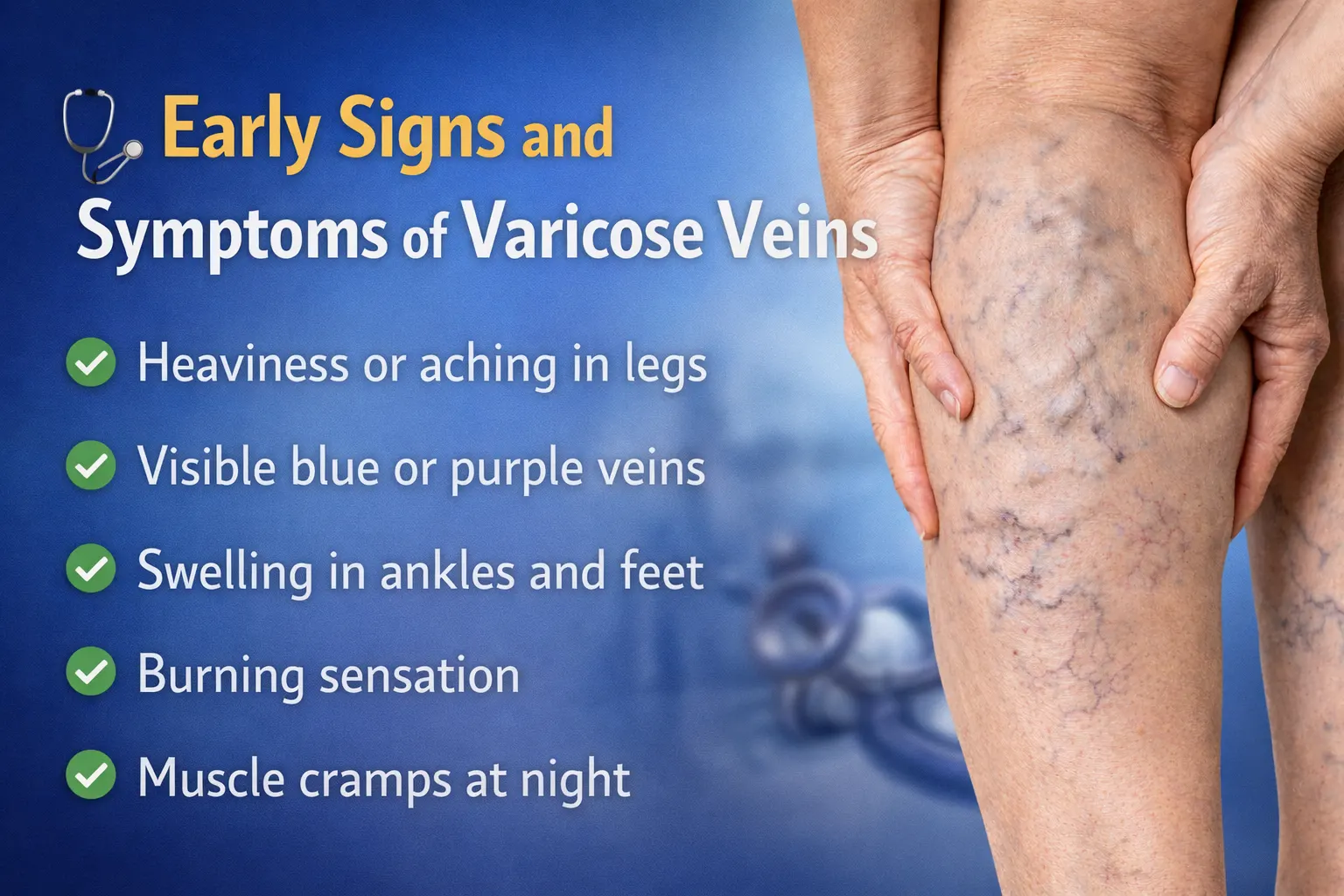
βœ”οΈ Heaviness or aching in legs
βœ”οΈ Visible blue or purple veins
βœ”οΈ Swelling in ankles and feet
βœ”οΈ Burning sensation in legs
βœ”οΈ Muscle cramps at night
Early stage varicose veins symptoms include leg heaviness, swelling, visible veins, pain, and discomfort after long standing.
early signs and symptoms of varicose veins in legs swelling veins
what causes early varicose veins weak valves pregnancy obesity sitting standing

🧠 What Causes Early Varicose Veins?

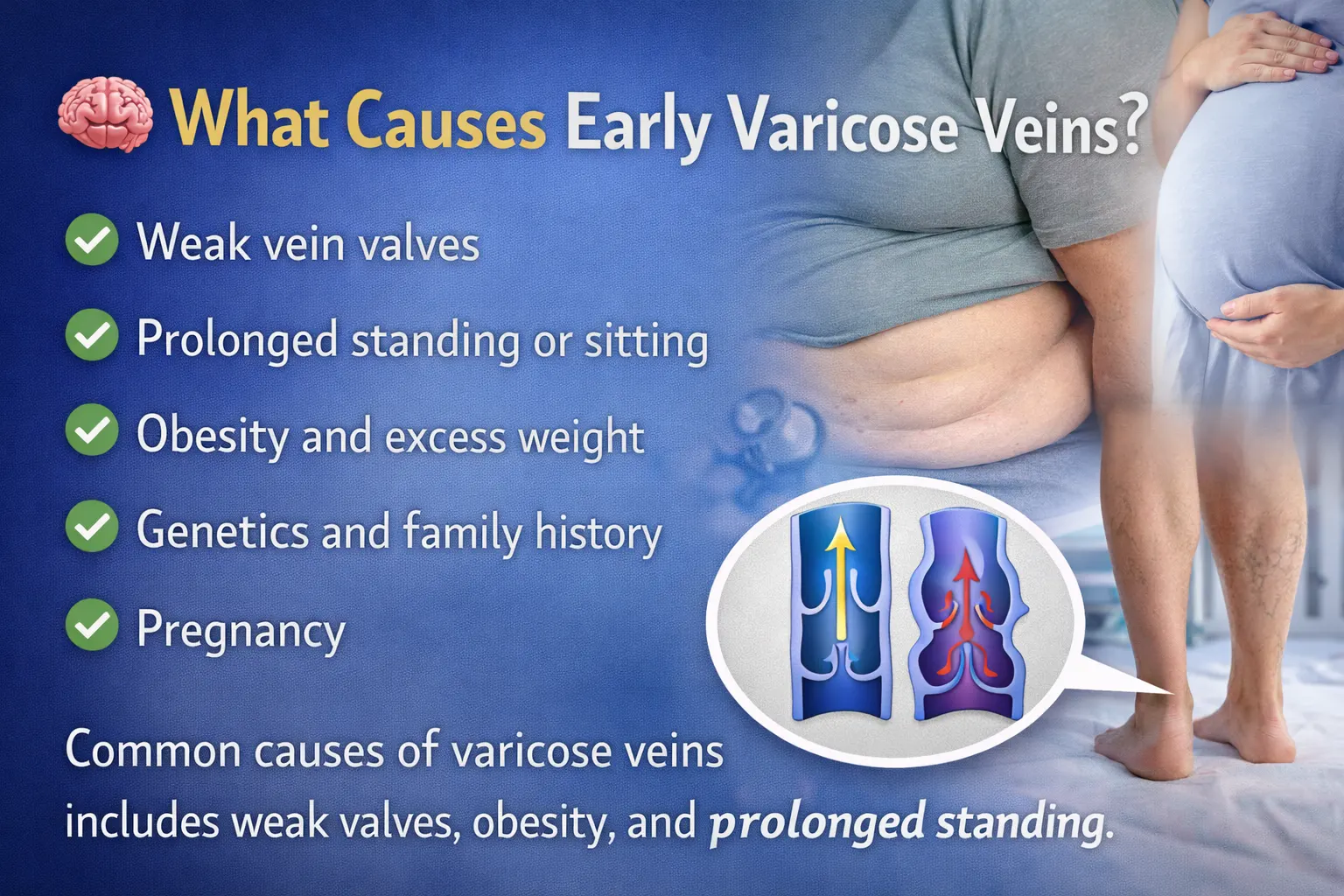
Understanding the causes of early varicose veins helps in prevention and early treatment. Varicose veins develop when vein walls or valves become less effective, allowing blood to pool in superficial veins.

βœ”οΈ Weak or damaged vein valves
βœ”οΈ Prolonged standing or sitting
βœ”οΈ Obesity and excess body weight
βœ”οΈ Family history (genetics)
βœ”οΈ Pregnancy and hormonal changes
Risk factors include family history, increasing age, pregnancy or hormonal changes, prolonged standing or sitting, and excess body weight. Valve dysfunction can allow blood to pool in leg veins.

πŸ’Š How to Treat Early Signs of Varicose Veins

Treatment depends on symptoms, examination findings and whether there is underlying venous reflux or another problem. Lifestyle measures may help symptoms, while procedures are considered when appropriate.
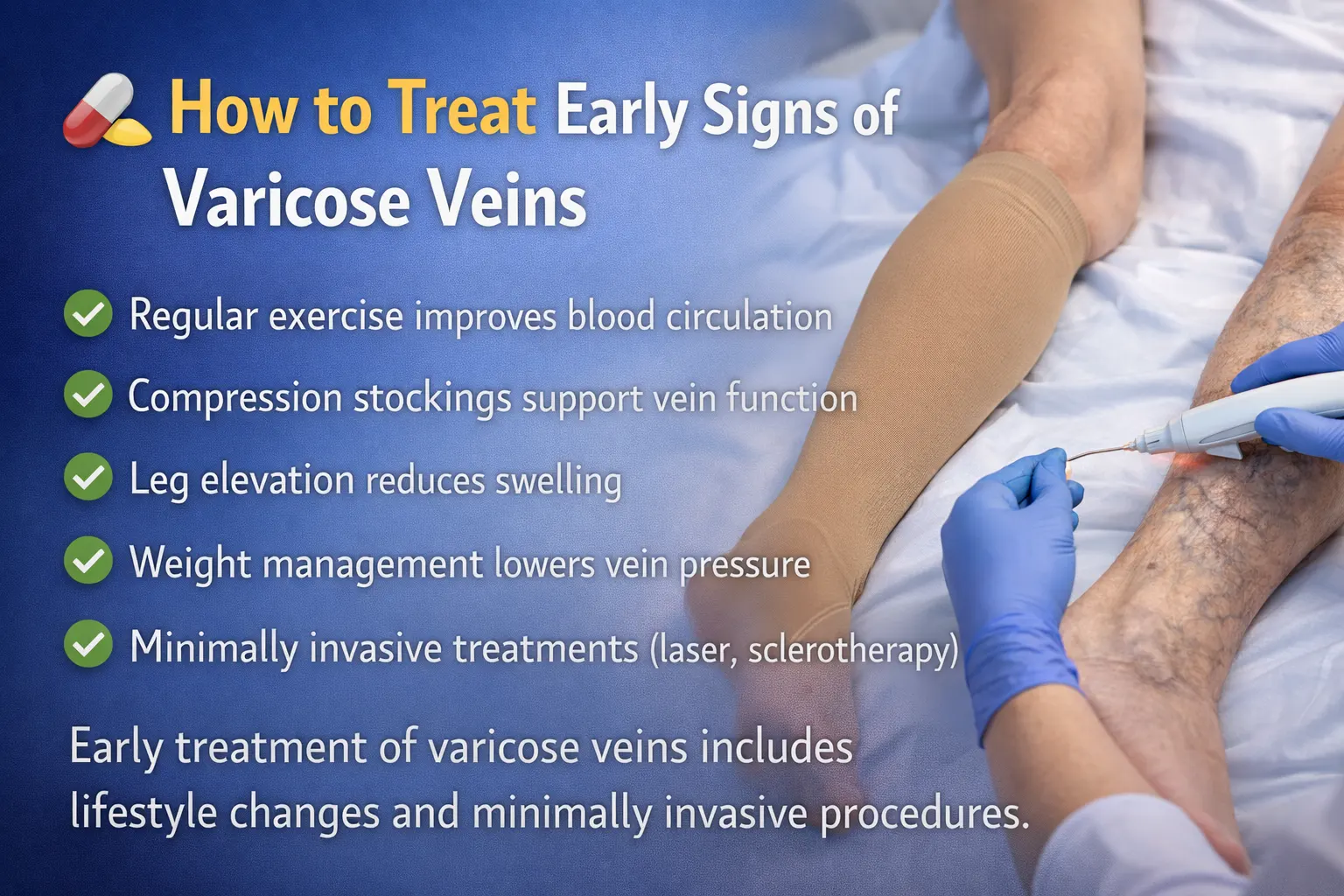
βœ”οΈ Regular movement and walking can support venous circulation
βœ”οΈ Compression stockings may help selected patients when recommended by a clinician
βœ”οΈ Leg elevation may help reduce leg swelling
βœ”οΈ Maintaining a healthy weight may reduce pressure on leg veins
βœ”οΈ Procedures such as sclerotherapy or endovenous treatment may be considered when indicated
Early signs of varicose veins can be treated with exercise, compression therapy, lifestyle changes, and minimally invasive procedures for long-term relief.
early varicose veins treatment compression stockings exercise laser treatment

πŸ›‘οΈ How to Stop Early Signs of Varicose Veins

You cannot prevent every case of varicose veins, but regular movement and healthy habits may help manage symptoms and reduce prolonged venous pressure.

πŸšΆβ€β™‚οΈ Stay Active

Break up long periods of sitting or standing with regular movement.

πŸƒ Exercise Daily

Regular walking and physical activity support healthy leg circulation.

βš–οΈ Maintain Weight

Maintaining a healthy weight may reduce pressure on the leg veins.

πŸ›οΈ Elevate Legs

Leg elevation can help reduce swelling for some people.

Early signs of varicose veins can be prevented by staying active, exercising regularly, maintaining a healthy weight, and elevating legs.
βœ… Medical Author

Dr. Puneeth Joopalli
Senior Consultant – Vascular Surgery
18+ Years Experience
My Health Hospitals


β€œEarly signs of varicose veins should never be ignored. Timely treatment prevents complications and improves quality of life.”

πŸ” Conclusion

Recognising early signs can help you seek appropriate evaluation before symptoms interfere with daily life. Not every visible vein needs treatment, and the right approach depends on symptoms and examination findings.

Persistent pain, swelling, skin changes, bleeding or ulcers should not be ignored and may require vascular evaluation.
---- FAQs ----

Early Signs of Varicose Veins

Early signs can include visible blue or purple veins, leg heaviness, aching, mild swelling, itching and cramps, especially after prolonged standing or sitting.

Early symptoms may feel like tired, heavy or aching legs. Some people notice burning, itching, cramps or mild ankle swelling.

Varicose veins usually develop gradually. A sudden change in leg pain, swelling, warmth or redness should not automatically be blamed on varicose veins and needs prompt medical assessment.

Look for new visible or raised veins together with heaviness, aching, swelling, itching or cramps. A clinician can determine whether the symptoms are actually due to venous disease.

Established varicose veins generally do not disappear on their own, although symptoms may improve with movement, leg elevation and other supportive measures. Procedures may be considered when appropriate.

Treatment depends on the severity and cause. Movement, leg elevation and selected compression therapy may help symptoms; procedures such as sclerotherapy or endovenous treatment may be considered after evaluation.

Varicose veins are associated with weakened vein walls or valves that allow blood to pool. Risk factors include family history, age, pregnancy or hormonal changes, prolonged sitting or standing, and excess body weight.

Warning signs include increasing pain or heaviness, swelling, itching, skin colour or texture changes, bleeding, or a sore or ulcer near the ankle.

Pregnancy can increase the likelihood of varicose veins because of hormonal changes, increased blood volume and pressure on pelvic and leg veins.

Early assessment can help identify symptoms and complications sooner. Treatment is not necessary for every visible vein, but persistent or troublesome symptoms should be evaluated.

Common early signs include small visible veins, leg heaviness or aching, ankle swelling, itching, burning or cramps.

Spider veins and varicose veins are different types of superficial vein changes. Having spider veins does not mean they will necessarily become varicose veins.

They can be, but not everyone has pain. Early symptoms may instead be heaviness, fatigue, itching, swelling or visible vein changes.

Yes, swelling of the ankles, feet or lower legs can occur with varicose veins, particularly later in the day or after prolonged standing.

Long periods of sitting or standing can increase the risk of venous problems. Regular movement and breaks can help maintain leg circulation.

Prolonged standing is a recognised risk factor because it can increase venous pressure in the legs. Symptoms may become more noticeable after long periods upright.

A physical examination is often enough to identify visible varicose veins. A duplex or Doppler ultrasound may be recommended to assess blood flow and vein valves when clinically indicated.

Consider evaluation for persistent pain, swelling, heaviness, itching, skin changes, bleeding, ulcers or worsening visible veins. Sudden one-sided swelling or severe pain needs prompt assessment.

Yes. More advanced venous disease can cause skin colour or texture changes and, in some cases, ulcers around the lower leg or ankle.

Treatment options may include lifestyle measures, compression therapy for selected patients, sclerotherapy, endovenous thermal ablation and other procedures. The appropriate option depends on examination and ultrasound findings.

Latest Health Blogs

Expert-written medical articles from My Health Hospital

Our Branch Locations

Find the Best Hospital Near You

My Health Hospitals – Kukatpally

H.No 15-24-212, MIG-212, Rd Number 1, K P H B Phase 1, Kukatpally, Hyderabad, Telangana 500072

Get Directions

My Health Hospitals – Tarnaka

H.No:-12-5-30, WhiteHouse, Moula Ali Rd, South Lalaguda, Tarnaka, Secunderabad, Telangana 500017
Get Directions
My Health Assistant