
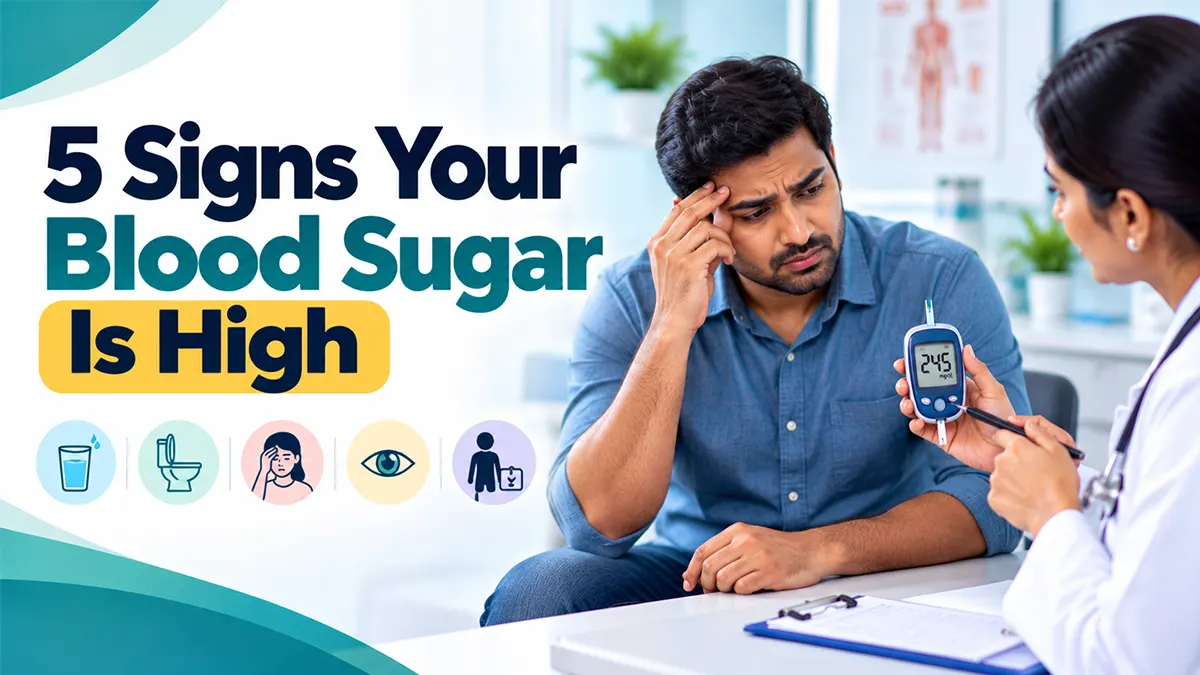
5 Signs Your Blood Sugar May Be Too High
High blood sugar, also called hyperglycemia, can develop when the body does not have enough insulin or cannot use insulin effectively. Symptoms may build up gradually, and some people have few or no obvious warning signs. Knowing what to look for—and checking your glucose when needed—can help you seek care before the problem becomes serious.
Symptoms can suggest high blood sugar, but they cannot confirm a diagnosis by themselves. A blood glucose test and clinical assessment are needed.
Quick Answer: What Are 5 Signs of High Blood Sugar?
Five common signs that blood sugar may be too high are increased thirst, frequent urination, unusual tiredness or weakness, blurred vision, and unexplained weight loss. Some people may also notice increased hunger, headaches, dry mouth or recurrent infections. Symptoms vary, and diabetes can sometimes be present without noticeable symptoms.
5 Signs Your Blood Sugar May Be Too High
High glucose affects the body in different ways. The following symptoms are common, but none is specific to diabetes on its own. Pay attention to new, persistent or worsening symptoms, especially if several occur together.
Feeling Very Thirsty
When glucose is high, the kidneys try to remove excess sugar through urine. This can increase fluid loss and leave you unusually thirsty, with a dry mouth. Drinking more than usual without feeling satisfied may be a clue, particularly when accompanied by frequent urination.
Look for: persistent thirst, dry mouth or needing to refill your water bottle more often than usual.
Urinating More Often
Extra glucose in the blood can pass into urine and pull more water with it. As a result, you may visit the toilet more frequently or wake during the night to urinate. Urinary frequency can also be caused by urinary infection, pregnancy, prostate problems or other conditions, so the symptom needs context.
Look for: a clear change in urination along with thirst or other possible high-glucose symptoms.
Unusual Tiredness or Weakness
When glucose is not moving into cells effectively, the body may struggle to use it for energy. Fluid loss can also contribute to weakness and fatigue. Tiredness has many other causes—including poor sleep, anaemia, infection and thyroid conditions—but persistent fatigue deserves attention when glucose may be high.
Look for: feeling drained despite adequate rest, especially with increased thirst or urination.
Blurred Vision
Changes in glucose can affect the fluid balance in the lens of the eye and temporarily change focus, making vision appear blurry. Do not assume sudden or severe visual changes are caused only by blood sugar; eye problems and other conditions can also be responsible.
Look for: vision that becomes hazy or changes alongside other high-glucose symptoms. Sudden vision loss requires emergency assessment.
Unexplained Weight Loss
If the body cannot use glucose effectively, it may begin breaking down stored fat and muscle for energy. Weight loss without trying can occur, particularly when diabetes is developing or blood sugar has stayed high. It is not present in everyone and can have many other causes.
Look for: weight dropping without a planned change in diet or activity, especially alongside thirst, frequent urination or increased hunger.
Why Does Blood Sugar Become Too High?
Blood sugar rises when there is not enough insulin for the body's needs or when the body cannot respond to insulin effectively. People who already have diabetes may notice higher readings for several reasons, including:
- Meal-related rises: larger-than-usual portions of carbohydrate-rich foods or sugary drinks may raise glucose.
- Missed or insufficient medication: not taking diabetes medicines as prescribed or problems with insulin delivery can lead to high readings.
- Illness or infection: the body's stress response during a cold, flu or other illness can raise glucose.
- Stress and poor sleep: stress hormones and disrupted sleep may affect glucose regulation.
- Less activity than usual: muscles use glucose for energy, so changes in activity can affect glucose levels.
- Other medicines or health conditions: corticosteroids and some other medicines can increase glucose in some people.
High blood sugar is not caused by one food or one missed walk alone. If readings are repeatedly higher than your agreed target, a clinician can help identify the cause and review your treatment plan.
How Can You Check Whether Your Blood Sugar Is High?
Symptoms are a reason to check, not a substitute for testing. If you have a glucose meter or continuous glucose monitor (CGM), follow the instructions from your healthcare team and record the result, time and symptoms. With a finger-stick meter, wash and dry your hands before testing because food residue can affect a reading.
| Test or situation | What it can tell you | Important note |
|---|---|---|
| Home blood glucose meter | Shows glucose at that moment. | Useful for monitoring, but meter readings alone are not usually used to make a first diagnosis. |
| Fasting plasma glucose | Measures glucose after at least 8 hours without calories. | A laboratory result of 126 mg/dL or higher is in the diabetes range and generally requires confirmation if there are no unequivocal symptoms. |
| HbA1c test | Estimates average glucose over roughly the last 2–3 months. | An HbA1c of 6.5% or higher is in the diabetes range; testing limitations and confirmation requirements matter. |
| Random plasma glucose | Measures glucose without fasting. | A laboratory value of 200 mg/dL or higher with classic symptoms may meet diagnostic criteria; a clinician must interpret the result. |
These are diagnostic thresholds for laboratory testing, not universal home treatment goals. Your glucose targets may differ depending on pregnancy, age, medicines, other conditions and the risk of low blood sugar.
For a related explanation, read our HbA1c Chart: Normal, Prediabetes and Diabetes Levels.
What Should You Do If You Think Your Blood Sugar Is Too High?
- Check your glucose if you can. Use your meter or CGM according to the instructions you were given. If the result seems unexpected, repeat the measurement as directed by the device guidance or care plan.
- Follow your personal diabetes plan. If your clinician has provided a high-glucose or sick-day plan, follow it. Do not double a medicine dose or change insulin on your own unless your prescribed plan specifically tells you to.
- Drink water if it is safe for you. Water may help replace fluid lost through urination, unless you have been told to restrict fluids. It is not a substitute for medical treatment.
- Consider illness, medicines and recent meals. Record possible triggers and readings. Contact your care team if high results persist, recur or do not respond to your prescribed plan.
- Ask about ketone testing when advised. People at risk of diabetic ketoacidosis—particularly those with type 1 diabetes—may need ketone checks when glucose is high or they are sick. Follow the advice you were given.
For practical food guidance, see our Diabetes Diet Plan in English. For meal-related glucose changes, read Why Blood Sugar Spikes After Eating.
When Is High Blood Sugar an Emergency?
Very high glucose can sometimes lead to a life-threatening complication such as diabetic ketoacidosis (DKA) or hyperosmolar hyperglycemic state (HHS). DKA is more common in type 1 diabetes but can also occur in type 2 diabetes.
Do not wait for a routine appointment if these symptoms are present. Serious illness can sometimes occur even when the glucose reading is not extremely high, particularly in certain situations including pregnancy or some medicines.
Contact your healthcare professional promptly if readings repeatedly exceed your personal target or if you develop persistent thirst, urination, weakness, blurred vision or unexplained weight loss, even if you otherwise feel well.
How Do Doctors Diagnose High Blood Sugar or Diabetes?
Your healthcare professional will consider symptoms, medical history, medicines and glucose results. Tests may include fasting plasma glucose, HbA1c, a random plasma glucose test or an oral glucose tolerance test. Depending on the circumstances, an abnormal result may need repeating to confirm the diagnosis.
Tell the clinician when symptoms began, how often they occur, whether you have lost weight without trying, any recent illness, and all medicines or supplements you take. If you already have diabetes, bring your recent meter or CGM readings and details of your medication plan.
Gestational diabetes often causes no obvious symptoms. Pregnancy screening and follow-up therefore matter even if you feel well; do not rely on this symptom list to rule it out.
Everyday Steps That Support Blood Sugar Management
- Follow an individualized meal plan with appropriate portions and fibre-rich foods.
- Choose water or unsweetened drinks more often than sugar-sweetened beverages.
- Build regular physical activity into your routine when it is safe and suitable for your health.
- Take prescribed medication as directed and keep a plan for sick days.
- Try to maintain a regular sleep schedule and seek support for ongoing stress.
- Attend recommended diabetes screening and follow-up appointments, including HbA1c checks when advised.
There is no single food, drink or home remedy that safely replaces diabetes assessment and treatment. A care plan should fit the person, the type of diabetes, other medical conditions and the medication being used.
Medical Review
This educational draft should be reviewed and approved by a qualified My Health Hospitals clinician before publication. Add the reviewer's verified name, credentials and actual review date after clinical approval.
Medical information checked against CDC, NIDDK and American Diabetes Association guidance. Last content update: October 21, 2026.
Frequently Asked Questions About High Blood Sugar
These answers provide general guidance. If you have symptoms or readings outside your individual target, seek advice tailored to your situation.
Medical References
- Centers for Disease Control and Prevention (CDC): Symptoms of Diabetes
- American Diabetes Association: Hyperglycemia (High Blood Glucose)
- National Institute of Diabetes and Digestive and Kidney Diseases (NIDDK): Managing Diabetes
- CDC: Diabetic Ketoacidosis
- American Diabetes Association: Standards of Care in Diabetes—2026, Diagnosis and Classification
Need Help With Blood Sugar Management?
Speak with a qualified healthcare professional about symptoms, glucose readings, diabetes screening and a plan suited to your health needs.
Explore Diabetes CareBook an AppointmentMedical disclaimer: This article is for education only and does not replace a medical consultation, diagnosis or treatment. Symptoms alone cannot determine blood glucose levels. Do not change diabetes medication based on this article. Seek emergency care for severe symptoms described above.