
Dr. Swetha Reddy
Obstetrician & Gynecologist
Qualification: MBBS, DNB


+91 9111674111
+91 9100001201
OBS and Gynecology
Understand the estimated cost of fibroid surgery in Hyderabad, including myomectomy, laparoscopic and hysteroscopic procedures, hospital expenses, diagnosis, recovery and insurance considerations.
Fibroid surgery in Hyderabad may cost approximately ₹70,000 to ₹4.5 lakh or more, depending on the procedure. A simpler myomectomy may fall toward the lower end, while laparoscopic, complex or multiple-fibroid procedures can cost more. These are indicative planning ranges based on published healthcare estimates and are not a fixed My Health Hospitals tariff or quotation. The final amount depends on the fibroid size, number and location, surgical approach, investigations, surgeon and anaesthesia charges, hospital stay, medicines and other treatment needs.
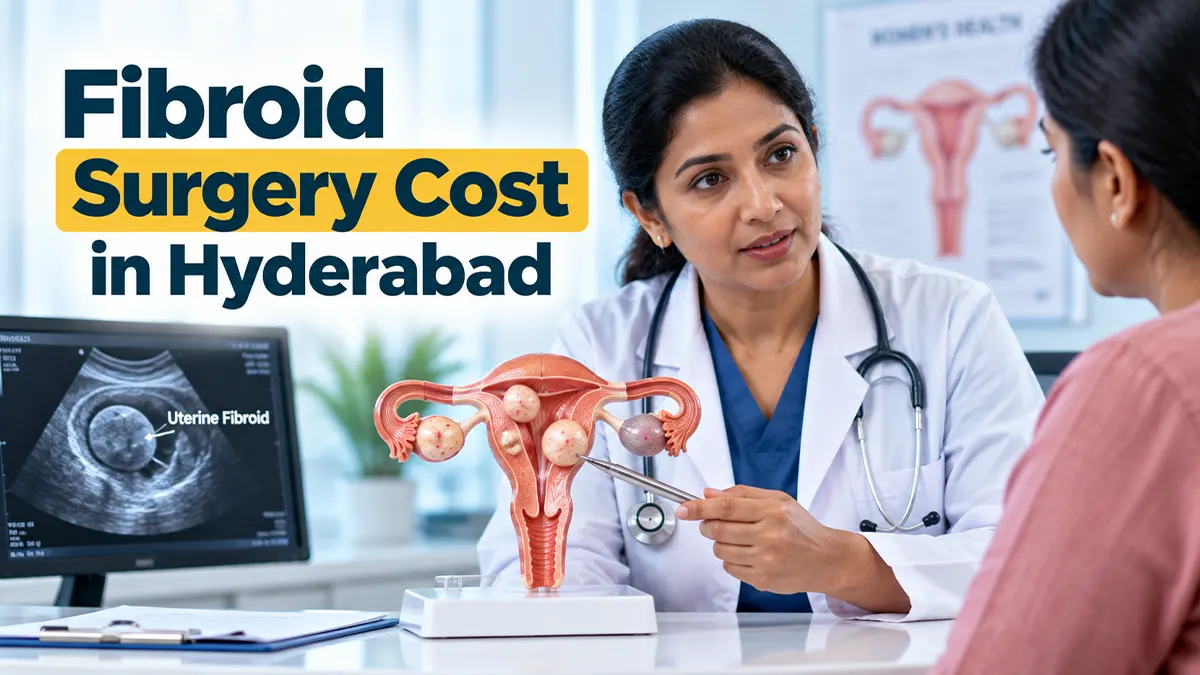
There is no single price for uterine fibroid surgery. Published Hyderabad estimates for myomectomy vary substantially by surgical method and case complexity. For planning purposes, a broad range is more useful than presenting one number as a guaranteed price. Current published estimates include approximately ₹40,000–₹1.80 lakh for myomectomy overall and higher ranges for laparoscopic myomectomy; another Hyderabad hospital price archive lists myomectomy at about ₹70,000–₹1.90 lakh.
| Procedure / Treatment | Indicative Planning Range | What Can Change the Cost |
|---|---|---|
| Myomectomy – general range | ₹70,000 – ₹1.90 lakh* | Procedure type, fibroid size and number, hospital stay and investigations |
| Laparoscopic myomectomy | ₹1.8 lakh – ₹4.5 lakh* | Minimally invasive equipment, complexity, number and location of fibroids |
| Hysteroscopic myomectomy | Case-dependent* | Submucosal fibroid size, number, operating time and day-care/hospital requirements |
| Open / abdominal myomectomy | Case-dependent* | Large or multiple fibroids, operative complexity, hospital stay and blood-loss management |
Uterine fibroids, also called leiomyomas or myomas, are non-cancerous growths that develop in or around the uterus. Some women have no symptoms, while others may experience heavy or prolonged menstrual bleeding, pelvic pressure or pain, frequent urination, or fertility-related concerns.
Treatment is not always necessary when fibroids are small and asymptomatic. When symptoms are significant, treatment may include medicines, procedures or surgery depending on the person's symptoms, fibroid characteristics and reproductive plans.
The decision is individualized. The size, number and location of fibroids and whether future pregnancy is desired can influence the treatment approach.
An open surgical approach through an abdominal incision. It may be considered when fibroids are large, numerous or difficult to remove through minimally invasive techniques.
A minimally invasive approach using small abdominal incisions and a laparoscope. Suitability depends on fibroid size, number, location and the surgeon's assessment.
The surgeon accesses the inside of the uterus through the vagina and cervix. It is mainly used for suitable fibroids that project into the uterine cavity.
Depending on the case, doctors may discuss medicines or non-surgical options such as uterine artery embolization. These are not interchangeable with myomectomy and have different effects on fertility and recovery.
Published clinical guidance describes abdominal, laparoscopic and hysteroscopic myomectomy as surgical approaches, with the choice depending on fibroid characteristics and the patient's circumstances.
Not every estimate includes every item. Ask for an itemized estimate before admission so that included and excluded charges are clear.
Larger or multiple fibroids may require more operating time and a more complex surgical plan.
Submucosal, intramural and subserosal fibroids can require different surgical approaches.
Open, laparoscopic and hysteroscopic procedures have different equipment, operating-time and recovery requirements.
Room category, length of stay and post-operative monitoring can change the final bill.
Ultrasound, MRI, blood tests and other investigations may add to the total expense when clinically required.
Anaemia, other medical conditions, complications or additional procedures may affect treatment costs.
Myomectomy removes the fibroids while preserving the uterus. It may therefore be discussed when uterine preservation or future pregnancy is important. Hysterectomy removes the uterus and is a different operation with different implications for fertility.
The choice should be made after discussing symptoms, age, fibroid characteristics, reproductive plans and alternative treatments with a gynecologist. A treatment that is appropriate for one patient may not be appropriate for another.
Evaluation usually starts with the symptoms and gynecological examination. Ultrasound is commonly used to identify the number, size and location of fibroids. MRI may be recommended in selected cases when more detailed mapping is useful for treatment planning.
Procedure duration and hospital stay vary according to the approach and complexity. Published clinical information notes that recovery can range from a short period after hysteroscopic surgery to several weeks after abdominal myomectomy.
Recovery depends on the type of procedure. Minimally invasive procedures often allow earlier return to routine activities than open abdominal surgery, but individual recovery varies.
Myomectomy is a surgical procedure and can involve risks such as bleeding, infection, injury to nearby organs, blood clots, anaesthesia-related complications or the need for additional treatment. The individual risk depends on the procedure and the patient's health.
Seek urgent medical attention for heavy bleeding, high fever, severe or worsening pain, breathing difficulty, fainting, or other symptoms that your surgical team identifies as concerning.
Without insurance, the patient generally pays for consultations, investigations, surgeon and anaesthesia charges, operating-room expenses, room and nursing charges, medicines and follow-up care as applicable.
Ask for a written cash estimate that clearly separates the surgery package from investigations, medicines, room upgrades and possible additional charges.
Insurance coverage depends on the policy, medical indication, waiting periods, exclusions, network status and insurer authorization. If surgery is planned, ask the insurance or TPA desk about pre-authorization, room-rent limits, co-pay, deductibles and non-payable items before admission.
Patients in Kukatpally, KPHB and nearby Hyderabad areas can consult the Obstetrics & Gynecology department for evaluation of fibroids, abnormal bleeding, pelvic symptoms and treatment planning. My Health Hospitals lists Obstetrics & Gynecology among its services and currently lists gynecology specialists at the Kukatpally branch.
Branch: My Health Hospitals, H.No 15-24-212, MIG-212, Road Number 1, KPHB Phase 1, Kukatpally, Hyderabad, Telangana 500072.
Gynecology consultations are available at both Kukatpally and Tarnaka. Choose the branch that is convenient for you and confirm the doctor's current schedule before visiting.
H.No 15-24-212, MIG-212, Road Number 1, KPHB Phase 1, Kukatpally, Hyderabad – 500072
Gynecology: Dr. Hima Sindhu
☎ +91 9111674111H.No 12-5-30, WhiteHouse, Moula Ali Road, South Lalaguda, Tarnaka, Secunderabad – 500017
Gynecology: Dr. Swetha Reddy
☎ +91 9100001201
Qualification: MBBS, DNB

Qualification: MBBS, MS (OBG)
Branch phone numbers: Kukatpally +91 9111674111 • Tarnaka +91 9100001201. Doctor schedules can change, so please confirm availability before visiting.
A broad planning range is about ₹70,000 to ₹4.5 lakh or more, depending on the procedure. This is an indicative market range, not a fixed My Health Hospitals quotation.
Published estimates vary. General myomectomy estimates can be around ₹40,000–₹1.80 lakh, while laparoscopic myomectomy estimates can be substantially higher. The final price depends on the individual case and hospital services.
It can be. Published estimates for laparoscopic myomectomy in Hyderabad are higher than some general myomectomy estimates because the procedure can require specialized equipment and has different operating and hospital costs.
Important factors include fibroid size, number and location, surgical approach, investigations, anaesthesia, surgeon charges, room category, length of stay and any additional medical needs.
No. Myomectomy is designed to remove fibroids while preserving the uterus. Hysterectomy is the operation that removes the uterus.
Yes. Treatment may include observation, medicines or selected non-surgical procedures depending on symptoms, fibroid characteristics and reproductive plans. Not every fibroid requires surgery.
Myomectomy may be considered when uterine preservation and future pregnancy are important, but suitability depends on the fibroid's size, number, location and the individual's reproductive situation. Discuss fertility goals with a gynecologist before choosing treatment.
Depending on the case, evaluation may include pelvic ultrasound, MRI, blood tests and other pre-operative investigations. The exact tests are determined by the treating clinician.
Duration varies by surgical approach and complexity. Published clinical information describes many myomectomy procedures as taking roughly 1–3 hours, but individual cases can take longer.
Recovery varies. Hysteroscopic procedures can have a short recovery, laparoscopic procedures often require a few weeks, and open abdominal myomectomy can require several weeks for recovery.
Yes. Removing existing fibroids does not necessarily prevent new fibroids from developing later. Follow-up should be based on symptoms and your gynecologist's advice.
It depends on the insurance policy, medical indication, waiting period, exclusions, authorization and other policy terms. Confirm coverage and pre-authorization before admission.
Myomectomy removes fibroids and preserves the uterus. Hysterectomy removes the uterus. They are different procedures with different implications, particularly for future pregnancy.
It is a surgical procedure performed through the vagina and cervix for selected fibroids inside the uterine cavity. The suitability and extent of surgery depend on the fibroid characteristics.
Without insurance, the patient pays applicable consultation, investigation, surgical, anaesthesia, hospital, medicine and follow-up charges. Ask for an itemized estimate before surgery.
Sometimes, but not every large fibroid is suitable for a minimally invasive approach. The decision depends on size, number, location and the surgeon's assessment.
No. Fibroids that do not cause symptoms may not require treatment. Monitoring may be appropriate in selected cases.
My Health Hospitals lists Obstetrics & Gynecology services and gynecology specialists at its Kukatpally branch. Confirm the current doctor schedule and appointment availability before visiting.
If you have heavy menstrual bleeding, pelvic pain, pressure symptoms or a diagnosed uterine fibroid, a gynecology consultation can help determine whether monitoring, medication, a procedure or surgery is appropriate.
Book an AppointmentFind the Best Hospital Near You
H.No 15-24-212, MIG-212, Rd Number 1, K P H B Phase 1, Kukatpally, Hyderabad, Telangana 500072
H.No:-12-5-30, WhiteHouse, Moula Ali Rd, South Lalaguda, Tarnaka, Secunderabad, Telangana 500017