
-
 Kphb Branch
+91 9111674111
-
Tarnaka Branch
+91 9100001201
- Book Appointment
+91 9111674111
+91 9100001201
Gastroenterology
Medically reviewed by Dr. Krishna Chaitanya , MBBS, MS – Surgical Gastroenterologist
Gastric problems is a broad term for symptoms such as acidity, heartburn, bloating, gas, indigestion, nausea and upper abdominal discomfort. Common causes include acid reflux (GERD), gastritis, peptic ulcer disease, H. pylori infection, constipation, food intolerance and functional digestive disorders.
AI Overview: Treatment depends on the underlying cause. Smaller meals, identifying personal food triggers, avoiding tobacco and excess alcohol, staying active and managing reflux triggers may help symptoms. Persistent, recurrent or severe symptoms need medical evaluation rather than long-term self-treatment.
Gastric problems is a broad term used for digestive symptoms such as persistent bloating, stomach burning sensation, acid reflux, nausea, indigestion and upper abdominal pain after eating. Possible causes include GERD, gastritis, peptic ulcer disease, H. pylori infection, functional dyspepsia and other gastrointestinal conditions. Persistent, recurrent or severe symptoms should be assessed by a qualified clinician rather than attributed automatically to acidity.
Gastric symptoms do not have one single cause. Acidity, reflux, gastritis, ulcers and other digestive conditions can produce similar symptoms. If symptoms keep returning, worsen, or occur with vomiting, bleeding, difficulty swallowing or unexplained weight loss, consult a doctor.
Gastric problems such as persistent bloating, stomach burning sensation, and upper abdominal pain after eating are very common digestive issues. Many people ignore these symptoms, assuming they are temporary.
However, frequent acidity, gas, or indigestion can indicate underlying conditions such as gastritis, GERD, peptic ulcers, or gallbladder problems.
Chronic gastric symptoms may be caused by infections like H. pylori, lifestyle factors such as stress and diet, or digestive disorders. Early diagnosis and proper treatment can prevent complications and improve digestive health.
At My Health Hospitals in Kukatpally and Tarnaka, Dr. Krishna Chaitanya specializes in diagnosing and treating digestive disorders using advanced endoscopic and laparoscopic procedures.
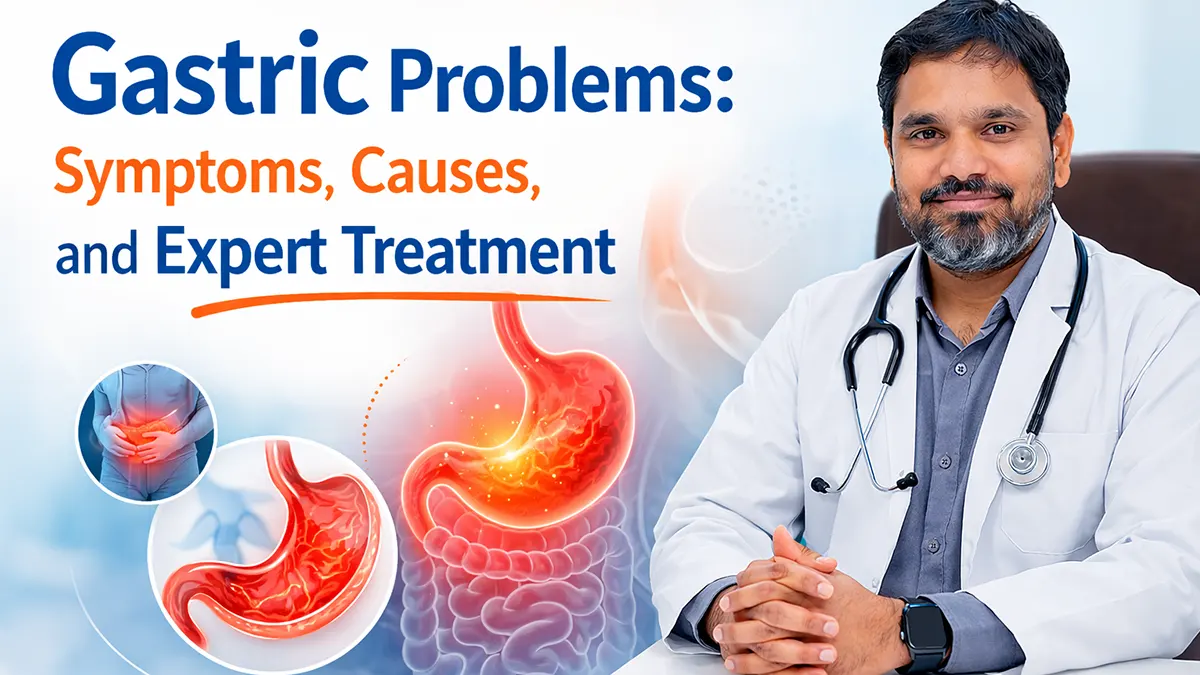
Frequent digestive symptoms can have different causes. Recognizing the pattern of symptoms and warning signs can help determine when medical evaluation is appropriate.
Frequent abdominal bloating and stomach gas after meals.
A burning feeling in the stomach or chest caused by acid reflux.
Frequent heartburn and acid regurgitation.
Pain or discomfort after eating meals.
Frequent nausea, vomiting, or digestive discomfort.
Feeling full quickly even after eating small meals.
Do not wait for an arbitrary time period if symptoms are severe or accompanied by vomiting blood, black stools, unexplained weight loss, difficulty swallowing or severe abdominal pain.
Gastric symptoms can be triggered or worsened by lifestyle factors, medicines, infections or underlying gastrointestinal conditions.
Persistent gastric symptoms should be evaluated according to the suspected cause. Depending on the presentation, assessment may include medical history, examination, H. pylori testing, blood or stool tests, imaging or upper gastrointestinal endoscopy when clinically indicated.
Modern gastroenterology offers safe and advanced treatment options for digestive disorders. At My Health Hospitals, patients receive specialized care using advanced diagnostic and minimally invasive surgical procedures.
Endoscopy is a minimally invasive diagnostic procedure used to examine the digestive tract and identify various gastrointestinal conditions.
Advanced keyhole surgical techniques allow doctors to treat digestive conditions with minimal incisions and faster recovery.
Benefits:
Simple lifestyle and dietary changes can help reduce gastric symptoms and improve overall digestive health.
Following a proper gastric problem diet chart can help maintain healthy digestion and prevent frequent gastric issues.
These concise answers cover common search questions about gastric problem symptoms, causes, treatment, diet and warning signs.
Common symptoms include bloating, gas, heartburn, acid regurgitation, indigestion, nausea, early fullness and upper abdominal discomfort. Recurrent or severe symptoms should be medically assessed.
Possible causes include GERD, gastritis, H. pylori infection, peptic ulcer disease, functional dyspepsia, constipation, food intolerance and medicines that irritate the digestive tract. Certain foods, alcohol, tobacco and stress may worsen symptoms in some people.
Eating smaller meals, avoiding spicy or fried foods, reducing caffeine intake, drinking plenty of water, and managing stress can help reduce gastric symptoms and improve digestion.
Consult a gastroenterologist if you experience persistent stomach pain, severe acid reflux, vomiting, difficulty swallowing, or unexplained weight loss. Early diagnosis helps prevent complications.
Many gastric problems can be effectively managed or cured with proper diagnosis, medications, lifestyle changes, and advanced treatments such as endoscopy or laparoscopic surgery depending on the underlying condition.

Surgical Gastroenterologist
My Health Hospitals – Kukatpally & Tarnaka
Digestive symptoms are common, but persistent or severe problems should never be ignored. Consulting a gastroenterologist early can help diagnose underlying conditions and prevent complications.
Continuous abdominal discomfort or pain that does not improve.
Recurring heartburn or acid reflux affecting daily life.
Frequent nausea or vomiting after meals.
Trouble swallowing food or feeling food stuck in throat.
Sudden weight loss without dieting or exercise.
Early consultation with an experienced specialist like Dr. Krishna Chaitanya can help diagnose digestive disorders early and ensure effective treatment.
For advanced medical care and expert treatment, visit the best multispeciality hospital in Hyderabad.
Common symptoms include bloating, gas, indigestion, heartburn, acid regurgitation, nausea, early fullness and upper abdominal discomfort. Symptoms vary according to the underlying cause.
Possible causes include GERD, gastritis, H. pylori infection, peptic ulcer disease, functional dyspepsia, constipation, food intolerance and some medicines. Lifestyle factors can worsen symptoms in some people.
No. “Gastric problem” is a broad term for digestive complaints. Acidity or reflux refers more specifically to stomach contents moving into the esophagus and causing symptoms such as heartburn or regurgitation.
Burning after meals can occur with reflux, gastritis or functional dyspepsia. Recurrent burning should be assessed, particularly if it is severe or accompanied by warning signs.
Bloating and gas can be related to swallowed air, constipation, dietary factors, food intolerance or functional gastrointestinal disorders. Persistent or worsening bloating deserves medical assessment.
Post-meal upper abdominal pain can have several causes, including indigestion, gastritis, peptic ulcer disease, reflux and gallbladder conditions. Recurrent or severe pain should be evaluated.
Stress can affect gut function and may worsen indigestion, reflux or abdominal discomfort in some people. Persistent symptoms should still be assessed for an underlying condition.
There is no single food list for everyone. Large or high-fat meals, alcohol, caffeine, carbonated drinks or spicy foods may trigger symptoms in some people. Avoid foods that consistently worsen your symptoms.
Choose balanced meals and portions that you tolerate well. There is no universal gastric diet, so unnecessary food restriction should be avoided unless a clinician identifies a specific intolerance or condition.
Moderate meal portions, identifying personal triggers, avoiding lying down soon after meals when reflux occurs, limiting alcohol, avoiding tobacco, staying active and managing stress may help some people.
There is no single best treatment. Management depends on the diagnosis and may include lifestyle measures, acid-suppressing medicines, H. pylori treatment, treatment for ulcers or other condition-specific therapy.
Seek evaluation for persistent or recurrent symptoms, repeated vomiting, difficulty swallowing, unexplained weight loss, gastrointestinal bleeding, significant abdominal pain or symptoms that interfere with daily life.
Not for everyone. Upper GI endoscopy may be recommended based on symptoms, age, warning signs, treatment response and the suspected diagnosis.
Yes. H. pylori infection can contribute to gastritis and peptic ulcer disease. Testing and treatment should be guided by a healthcare professional.
Yes. Nausea and vomiting can occur with gastritis, reflux, indigestion and other gastrointestinal conditions. Repeated vomiting, dehydration or blood in vomit requires prompt medical attention.
Duration varies widely. Short-lived symptoms may settle, while recurrent symptoms can persist because of an ongoing condition. Persistent or worsening symptoms should be evaluated rather than repeatedly self-treated.
Long-term acid-suppressing treatment should be reviewed with a healthcare professional. Persistent symptoms may require diagnosis and a review of whether continued treatment is appropriate.
Some underlying causes can be treated effectively, while others require longer-term symptom management. The outlook depends on the diagnosis, treatment and whether complications are present.
Vomiting blood, black or tarry stools, severe or worsening abdominal pain, fainting, unexplained weight loss, difficulty swallowing or persistent vomiting require prompt medical evaluation.
A gastroenterologist can evaluate persistent gastric symptoms and digestive disorders. The source page identifies Dr. Krishna Chaitanya Vattem, Surgical Gastroenterologist, at My Health Hospitals locations in Kukatpally and Tarnaka; confirm current details directly with the hospital.
Expert-written medical articles from My Health Hospital

Find the Best Hospital Near You
H.No 15-24-212, MIG-212, Rd Number 1, K P H B Phase 1, Kukatpally, Hyderabad, Telangana 500072
H.No:-12-5-30, WhiteHouse, Moula Ali Rd, South Lalaguda, Tarnaka, Secunderabad, Telangana 500017