
-
 Kphb Branch
+91 9111674111
-
Tarnaka Branch
+91 9100001201
- Book Appointment
+91 9111674111
+91 9100001201
Urology
Medically reviewed by Dr. Jayanth Reddy, Urologist
Knowing the foods to avoid with kidney stones can help reduce the risk of developing stones again. Foods high in sodium, excessive animal protein, and certain high-oxalate or high-purine foods may increase the risk depending on the type of kidney stone.
There is no single kidney stone diet for everyone. Dietary recommendations depend on the stone type, urine test results and individual health needs. Adequate hydration and reducing excess sodium are important parts of prevention for many people.
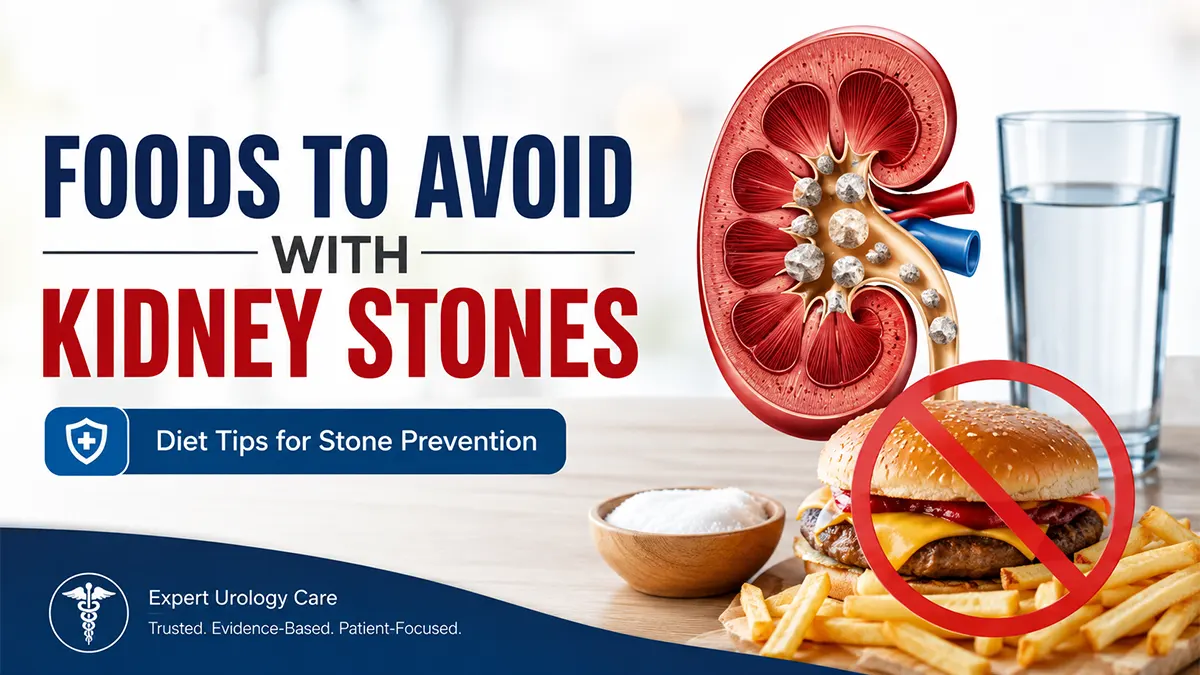
The main foods to avoid with kidney stones are those that contain excessive sodium, large amounts of animal protein, and, for some people, high levels of oxalate or purines. The right diet depends on whether your stone is made of calcium oxalate, uric acid, or another type.
Do not completely eliminate calcium or healthy fruits and vegetables without medical advice. For recurrent kidney stones, your urologist may recommend stone analysis and urine testing to identify the dietary changes most suitable for you.
If you are looking for foods to avoid with kidney stones, the most important choices depend on your stone type and individual risk factors. These five food categories are commonly worth limiting as part of a kidney-stone prevention diet.
Excess sodium can increase calcium levels in the urine. Limit packaged snacks, pickles, instant noodles, processed meats and heavily salted foods.
Large amounts of animal protein may increase certain stone-forming risk factors. Keep red meat, organ meat and other animal proteins in moderate portions.
Foods such as spinach, beetroot, rhubarb and some nuts are high in oxalate. People with calcium oxalate stones and high urinary oxalate may need to limit them.
People with uric acid stones may need to reduce high-purine foods such as organ meats, large amounts of red meat, sardines and anchovies.
Frequent intake of sugar-sweetened beverages can be unfavorable for people prone to kidney stones. Choose water as your main beverage whenever appropriate.
Do not follow a highly restrictive kidney stone diet without knowing your stone type. A urologist can use stone analysis, blood tests and urine testing to identify which dietary changes are most appropriate for you.
A kidney stone prevention diet is not only about knowing foods to avoid with kidney stones. Choosing nutritious foods and maintaining adequate hydration can also help reduce the risk of future stones. The best choices depend on your stone type and individual dietary needs.
Water is one of the most important choices for kidney stone prevention. Drinking enough fluid helps dilute urine and reduce the concentration of substances that can form stones.
Lemons, oranges and other citrus fruits provide citrate, a substance that can help prevent some types of kidney stones. Choose whole fruits or unsweetened options where possible.
Milk, yogurt and other calcium-rich foods can be part of a kidney-stone-friendly diet. Adequate dietary calcium can bind oxalate in the digestive tract and may reduce its absorption.
A balanced intake of fruits and vegetables provides potassium, fiber and other nutrients. They can be part of a healthy dietary pattern for many people with kidney stones.
Fresh, minimally processed foods make it easier to control sodium intake. Choose fresh vegetables, fruits, whole grains and appropriately portioned protein instead of highly processed meals.
Do not assume that every healthy food is suitable in large amounts for every type of kidney stone. If you have recurrent stones, ask your urologist about stone analysis and urine testing so your diet can be tailored to your specific risk factors.
Kidney stones develop when certain minerals and substances become concentrated in the urine and form crystals. Diet, hydration and other health factors can influence this process.
Drinking too little water makes urine more concentrated, which can allow stone-forming minerals to crystallize more easily.
A high-sodium diet can increase calcium excretion in the urine and may contribute to calcium-based kidney stones.
Large amounts of animal protein can affect urine chemistry and may increase the risk of certain kidney stones.
High urinary oxalate can combine with calcium and contribute to calcium oxalate stones in susceptible people.
Citrate can help prevent crystals from growing into stones. Low urinary citrate may increase the risk of some kidney stones.
If kidney stones keep coming back, stone analysis and a 24-hour urine test can help identify the specific factors contributing to stone formation and guide personalized dietary changes.
Many people focus only on foods to avoid with kidney stones and overlook other important factors. These common mistakes can make kidney stone prevention less effective.
Avoiding calcium-rich foods without medical advice is usually unnecessary. Adequate dietary calcium can help bind oxalate in the digestive tract.
Dehydration makes urine more concentrated and can increase the chance of stone-forming crystals developing.
Not every fruit or vegetable needs to be avoided. A balanced diet containing healthy plant foods is important for overall health.
Excessive animal protein can affect urine chemistry and may increase the risk of certain types of kidney stones.
High-dose supplements, including vitamin C, may not be suitable for everyone who is prone to kidney stones. Discuss supplements with your doctor.
A restrictive diet is not always the best approach. The right dietary plan should be based on your kidney stone type, medical history and, when appropriate, blood and 24-hour urine test results.
The best kidney stone diet depends on the type of stone you have. Knowing the stone type can help your urologist identify which foods and lifestyle factors may be contributing to stone formation.
These are the most common type of kidney stone. Prevention may include reducing excess sodium, maintaining adequate dietary calcium and limiting very high-oxalate foods when urinary oxalate is high.
These stones are associated with acidic urine. Limiting excessive animal protein and high-purine foods may help reduce risk in people prone to uric acid stones.
Dietary sodium and other metabolic factors may influence calcium phosphate stone formation. Individual evaluation is important when planning dietary changes.
Cystine stones are linked to an inherited condition called cystinuria. Maintaining adequate fluid intake and specialist follow-up are particularly important.
If a passed or removed stone is available, stone analysis can help determine its composition. Blood tests and a 24-hour urine evaluation may also be recommended for people with recurrent stones.
Drinking enough fluid is one of the most important steps in preventing many kidney stones. Adequate hydration dilutes the urine and can reduce the concentration of substances that form crystals.
Many adults with recurrent kidney stones are advised to produce around 2.5 liters of urine per day. The amount of fluid needed to achieve this varies between individuals.
Hot weather and sweating can increase fluid loss. People living in hot climates may need additional fluids to maintain adequate hydration.
Physical activity can increase fluid loss through sweating. Drink appropriate fluids before and after exercise to avoid becoming dehydrated.
The amount you should drink depends on your health, activity level, climate and kidney function. People with certain kidney, heart or liver conditions may have fluid restrictions and should follow their doctor's advice.
Diet and hydration can help reduce the risk of future kidney stones, but they cannot replace medical evaluation when a stone causes significant symptoms or blocks urine flow. Seek medical attention if you develop any of the following warning signs.
Severe pain in the side, back or lower abdomen that does not improve should be evaluated by a healthcare professional.
Pink, red or brown urine can indicate blood in the urinary tract and should be assessed, particularly when accompanied by pain.
Fever or chills with suspected kidney stones can indicate a urinary infection and may require urgent medical treatment.
Difficulty or inability to pass urine can occur when a stone obstructs the urinary tract and requires prompt medical evaluation.
Repeated vomiting can cause dehydration and may make it difficult to maintain adequate fluid intake while passing a kidney stone.
A kidney stone accompanied by fever, chills or signs of urinary obstruction can be an emergency. Do not rely on home remedies alone. Seek prompt medical care if these symptoms occur.

Urologist
This article on foods to avoid with kidney stones has been medically reviewed by Dr. Jayanth Reddy, Urologist at My Health Hospitals. The dietary information is intended to provide general education about kidney stone prevention.
Kidney stone dietary recommendations can vary depending on the stone composition, urine findings, kidney function, medications and other individual health factors. Patients with recurrent stones may require further evaluation to identify the underlying cause.
Medical information should always be interpreted in the context of an individual's symptoms, diagnosis and medical history.
Depending on your stone type, you may need to limit high-sodium foods, excessive animal protein, very high-oxalate foods, high-purine foods and sugar-sweetened drinks.
A kidney-stone-friendly diet generally includes adequate fluids, moderate protein, lower sodium and adequate dietary calcium. Specific changes depend on the type of stone.
Spinach is high in oxalate. People with calcium oxalate stones and high urinary oxalate may need to limit it after discussing their diet with a healthcare professional.
Usually not. Adequate dietary calcium can help bind oxalate in the digestive tract. Calcium restriction should only be considered when medically indicated.
Milk can provide dietary calcium, which is important for many people with calcium oxalate stones. Your individual calcium requirement should be discussed with your doctor.
Eating excessive amounts of red meat can increase animal-protein and purine intake. Moderation is particularly important for people with uric acid stones.
Eggs do not automatically need to be avoided. They provide animal protein, so portion size and your overall protein intake should be considered.
Some nuts contain significant amounts of oxalate. People with calcium oxalate stones and elevated urinary oxalate may need to limit certain nuts.
Tea does not automatically need to be eliminated. However, people with calcium oxalate stones may need individualized advice about high-oxalate beverages and overall fluid intake.
Coffee can be part of the diet for many people. Avoid excessive sugar and make sure your overall daily fluid intake remains adequate.
Lemon provides citrate, which can help inhibit the formation of some stones. Unsweetened lemon water can also help increase fluid intake.
Many recurrent stone formers are advised to produce around 2.5 liters of urine daily. The amount of fluid needed to achieve this varies by climate, activity and individual health.
Frequent consumption of sugar-sweetened beverages may increase kidney stone risk in some people. Water is generally a better primary beverage.
Yes. Excess sodium can increase calcium excretion in urine and may increase the risk of calcium-based kidney stones.
People with uric acid stones may need to limit excessive animal protein and high-purine foods such as organ meats and certain seafood.
Depending on urinary oxalate levels, limiting very high-oxalate foods may be recommended. Excess sodium should also generally be reduced while maintaining adequate dietary calcium.
High-dose vitamin C supplementation may increase urinary oxalate in some people. Avoid taking large doses without discussing them with your doctor.
A balanced diet containing fruits and vegetables can support overall health and may provide nutrients such as citrate and potassium. Individual restrictions depend on stone type.
Yes. Kidney stones can recur even after a stone has passed or been removed. Identifying the underlying risk factors can help with long-term prevention.
See a urologist for recurrent stones, severe or persistent pain, blood in the urine or difficulty passing urine. Fever or chills with a suspected obstructing stone require urgent medical evaluation.
Knowing the foods to avoid with kidney stones is an important part of preventing future stones, but there is no single diet that works for everyone. The right approach depends on your stone type, urine chemistry and overall health.
For many people, the key steps include drinking enough water, reducing excess sodium, moderating animal protein and getting adequate calcium from food. People with calcium oxalate or uric acid stones may need additional dietary changes.
If you have recurrent kidney stones, consult a urologist for appropriate evaluation. Stone analysis and urine testing can help identify your individual risk factors and guide a more personalized prevention plan.
This article is provided for general educational purposes only and does not replace professional medical advice, diagnosis or treatment. Kidney stone dietary recommendations may vary based on stone composition, urine test results, kidney function, medications and other health conditions. Always consult a qualified healthcare professional before making significant dietary or treatment changes.
Expert-written medical articles from My Health Hospital
Find the Best Hospital Near You
H.No 15-24-212, MIG-212, Rd Number 1, K P H B Phase 1, Kukatpally, Hyderabad, Telangana 500072
H.No:-12-5-30, WhiteHouse, Moula Ali Rd, South Lalaguda, Tarnaka, Secunderabad, Telangana 500017