

HbA1c Chart: Normal, Prediabetes and Diabetes Levels
The HbA1c test can help show whether your average blood glucose has been within the normal range, in the prediabetes range, or in the diabetes range. This guide explains the HbA1c chart, what the percentages mean, how estimated average glucose relates to A1C, and what to discuss with your doctor.
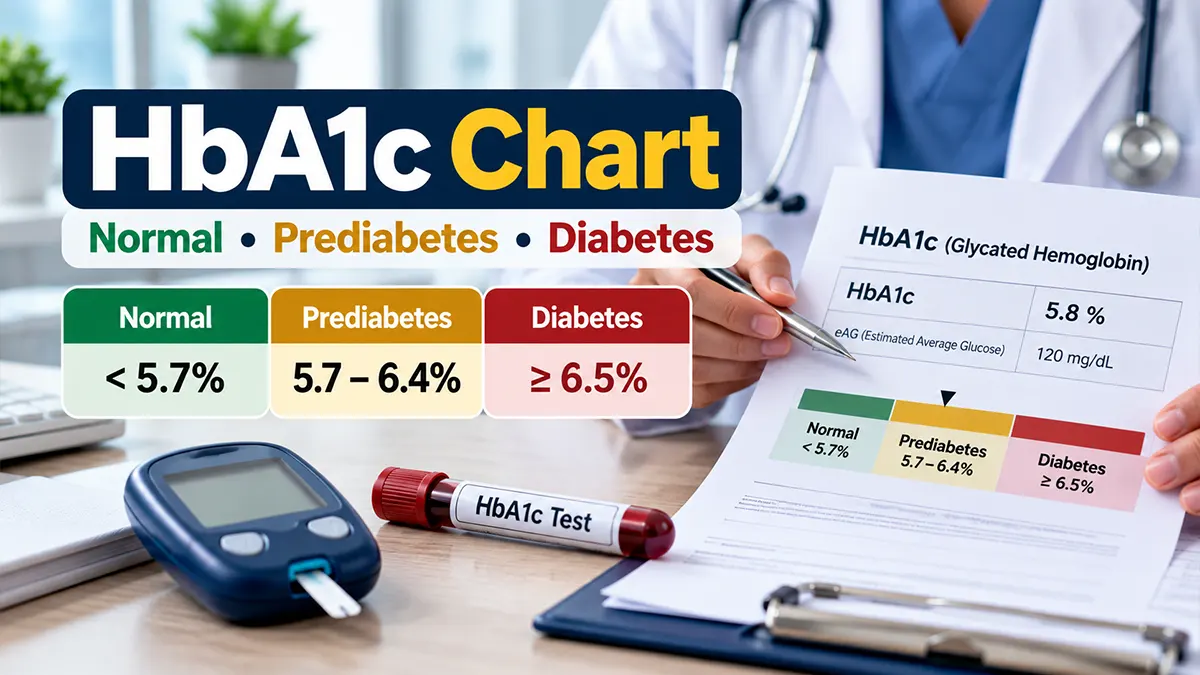
The chart is for general education. A clinician should interpret your result alongside your history and, when needed, other blood tests.
Quick Answer: What Is a Normal HbA1c Level?
For diagnosing diabetes and prediabetes in nonpregnant adults: an HbA1c below 5.7% is considered normal, 5.7%–6.4% is the prediabetes range, and 6.5% or higher is in the diabetes range. In someone without clear symptoms, an abnormal result generally needs confirmation with a repeat test or another diagnostic test.
HbA1c Chart: Normal, Prediabetes and Diabetes Levels
The following cutoffs are commonly used to diagnose prediabetes and diabetes in nonpregnant adults. They describe diagnostic ranges, not an individual person's treatment target.
Below 5.7%
Usually indicates an HbA1c level below the prediabetes threshold. Your overall risk still depends on other health factors.
5.7%–6.4%
Higher-than-normal average glucose and increased risk of developing type 2 diabetes. Early lifestyle and medical support can help reduce risk.
6.5% or higher
Meets the HbA1c threshold used for diabetes diagnosis, but confirmation is generally needed unless there are clear clinical symptoms.
| HbA1c result | Common interpretation | What to do |
|---|---|---|
| Below 5.7% | Normal range | Discuss screening frequency based on age, risk factors and clinician advice. |
| 5.7%–5.9% | Prediabetes range | Review diabetes risk factors and practical prevention steps with a clinician. |
| 6.0%–6.4% | Prediabetes range | Arrange follow-up and ask about an individualized plan and repeat testing. |
| 6.5% or higher | Diabetes range | Seek a medical review; a second test is usually needed to confirm diagnosis when symptoms are absent. |
These diagnostic ranges are consistent with the National Institute of Diabetes and Digestive and Kidney Diseases (NIDDK) and the American Diabetes Association's diagnostic criteria. Read the NIDDK HbA1c guidance.
What Is an HbA1c Test?
HbA1c stands for glycated haemoglobin, also written as A1C or haemoglobin A1c. Haemoglobin is a protein in red blood cells that carries oxygen. Glucose naturally attaches to haemoglobin; when glucose levels stay higher over time, a greater proportion of haemoglobin becomes glycated.
The HbA1c test measures the percentage of haemoglobin with glucose attached. Because red blood cells circulate for several months, the result reflects average blood glucose over roughly the previous 2–3 months, with more recent weeks contributing substantially to the result.
Do You Need to Fast Before an HbA1c Test?
Usually, no. You generally do not need to fast before an HbA1c test, and the blood sample can usually be collected at any time of day. However, if your clinician orders fasting glucose, cholesterol or other tests at the same visit, those tests may have separate preparation instructions.
HbA1c Compared With a Fasting Blood Sugar Test
A fasting blood glucose test measures glucose at one point in time after fasting, while HbA1c estimates a longer-term average. The tests can sometimes give different results because they measure different aspects of glucose regulation. A clinician may use both tests to clarify a diagnosis or assess your health.
HbA1c to Estimated Average Glucose (eAG) Chart
Some laboratory reports also show estimated average glucose (eAG), expressed in mg/dL. eAG translates an HbA1c percentage into an approximate average glucose value that is easier to compare with home glucose meter readings. It is an estimate—not a prediction of every reading during the day.
| HbA1c (%) | Estimated average glucose (mg/dL) | How to read it |
|---|---|---|
| 6.0% | 126 | Estimated long-term average |
| 7.0% | 154 | Estimated long-term average |
| 8.0% | 183 | Estimated long-term average |
| 9.0% | 212 | Estimated long-term average |
| 10.0% | 240 | Estimated long-term average |
| 11.0% | 269 | Estimated long-term average |
| 12.0% | 298 | Estimated long-term average |
These are approximate eAG values. Your blood glucose meter or continuous glucose monitor may show higher and lower readings throughout the day, even when the HbA1c is unchanged.
What Does Your HbA1c Result Mean?
If Your HbA1c Is Below 5.7%
This falls below the usual prediabetes cutoff. It does not mean diabetes risk is zero, especially if you have risk factors such as a family history, previous gestational diabetes, polycystic ovary syndrome, higher body weight or a history of elevated glucose. Ask your clinician when screening should be repeated.
If Your HbA1c Is 5.7%–6.4%
This is the prediabetes range. It means your average glucose is higher than normal but below the HbA1c threshold for diabetes. It is an opportunity to discuss sustainable changes to eating habits, physical activity, sleep and weight management if appropriate. Your clinician may recommend follow-up tests based on your individual risk.
If Your HbA1c Is 6.5% or Higher
This meets the commonly used HbA1c threshold for diabetes. It does not always establish the diagnosis by itself: when there are no clear symptoms, a clinician usually confirms the result with a repeat HbA1c or another diagnostic blood test. Do not start or change medication based on a chart alone.
What Is a Good HbA1c Target for Someone Who Already Has Diabetes?
The diagnostic threshold and treatment goal are different. For many nonpregnant adults already diagnosed with diabetes, an HbA1c goal around 7% or lower may be appropriate, but targets must be individualized. Age, duration of diabetes, other health conditions, medicines and risk of low blood sugar can change the safest goal. A lower number is not automatically better for every person.
Can Anything Affect HbA1c Accuracy?
Yes. HbA1c reflects glucose exposure over time, but the test depends on red blood cells and haemoglobin. Some medical conditions can make the result appear higher or lower than expected.
- Anaemia or iron deficiency: some forms can alter HbA1c results.
- Haemoglobin variants: conditions such as sickle cell disease or thalassaemia, and some carrier states, may interfere with certain tests.
- Recent blood loss or transfusion: can affect the relationship between HbA1c and average glucose.
- Kidney or liver disease: may affect interpretation in some circumstances.
- Pregnancy and changes in red blood cell turnover: may make HbA1c less suitable for particular diagnostic decisions.
If your HbA1c result does not fit your home glucose readings or symptoms, tell your clinician about anaemia, blood disorders, kidney or liver disease, pregnancy, recent transfusion or other relevant circumstances. They may recommend a different assay or another type of glucose test.
Reference: NIDDK — The A1C Test and Diabetes.
How to Improve Blood Sugar and HbA1c Safely
The right approach depends on whether your result is in the normal, prediabetes or diabetes range, as well as your other health needs. Consider discussing the following steps with your healthcare professional:
- Choose balanced meals. Combine suitable portions of carbohydrates with vegetables, fibre-rich foods and a source of protein. You usually do not need to eliminate all carbohydrates.
- Limit sugary drinks. Prefer water or unsweetened drinks more often and pay attention to added sugar in packaged products.
- Be physically active. Build regular walking or other activity into your routine at a level appropriate to your health and mobility.
- Follow your treatment plan. Take prescribed medicines as instructed. Do not change doses or stop medication without medical advice.
- Track trends. HbA1c is useful alongside home glucose readings, symptoms and other clinical information.
- Plan follow-up. Ask your clinician when to repeat the test and whether additional checks are needed.
For practical support, read our Diabetes Diet Plan in English and our guide to blood sugar spikes after eating.
Who Should Consider an HbA1c Test?
A healthcare professional may recommend HbA1c screening based on age, symptoms, medical history and risk factors. People with increased risk can include those with a family history of type 2 diabetes, excess body weight, physical inactivity, previous gestational diabetes, polycystic ovary syndrome or high blood pressure. Screening recommendations differ by age and clinical guideline, so ask your clinician whether the test is appropriate for you.
If you already have diabetes, HbA1c is commonly used to review longer-term glucose management. Many people have it checked about twice a year, while those whose treatment has changed or who are not meeting their goals may need more frequent monitoring.
Medical Review
This educational draft should be reviewed by a qualified My Health Hospitals clinician before publication. Insert the reviewer's verified name, qualification and actual review date after clinical approval.
Medical information checked against NIDDK, CDC and American Diabetes Association guidance. Last content update: October 13, 2026.
Frequently Asked Questions About HbA1c
These answers explain common HbA1c questions. Your personal result should always be interpreted in context by a healthcare professional.
Medical References
- National Institute of Diabetes and Digestive and Kidney Diseases (NIDDK): The A1C Test & Diabetes
- Centers for Disease Control and Prevention (CDC): A1C Test for Diabetes and Prediabetes
- American Diabetes Association: Standards of Care in Diabetes—2026, Diagnosis and Classification
Need Help Understanding Your HbA1c Result?
Discuss your result with a qualified healthcare professional who can interpret it with your symptoms, medical history and other glucose tests.
Explore Diabetes CareBook an AppointmentMedical disclaimer: This article is for education only and does not replace a medical consultation, diagnosis or treatment. Do not change your medicines based on an HbA1c chart. Diagnostic testing and treatment targets may differ in pregnancy and in people with certain blood, kidney or liver conditions.