

High TSH: Symptoms, Causes, Normal Range & Treatment
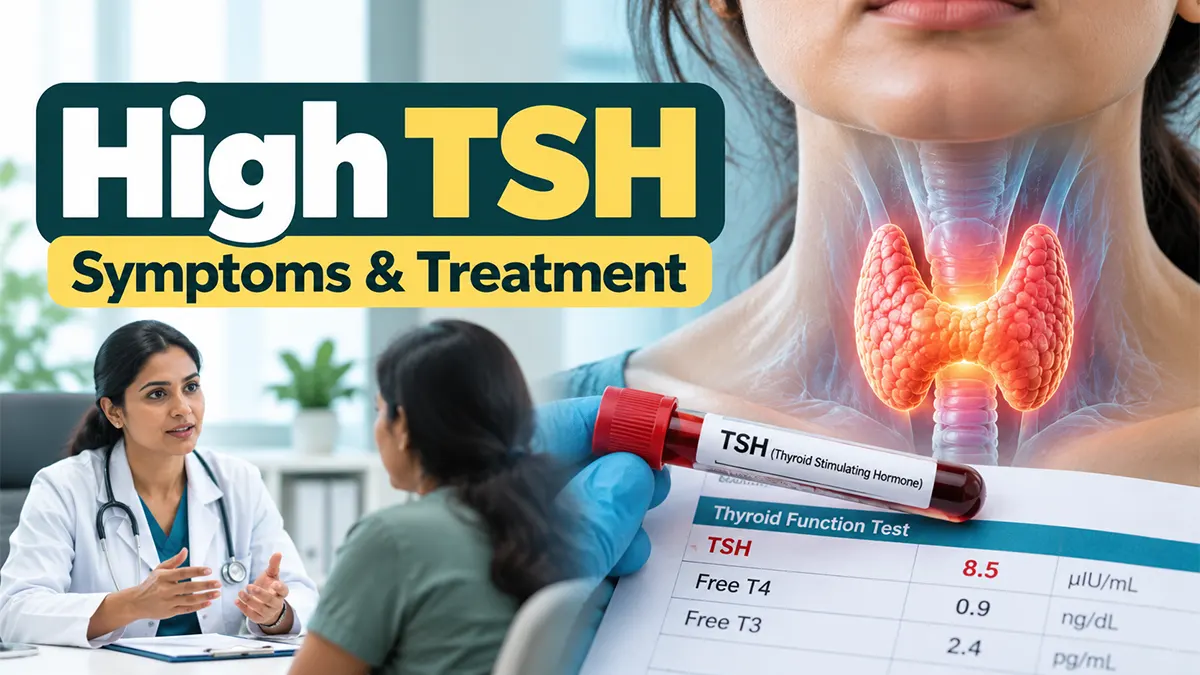
A high thyroid-stimulating hormone (TSH) result often points toward an underactive thyroid, but the meaning depends on free T4, the laboratory reference range, symptoms, pregnancy status and other clinical factors.
What does high TSH usually mean?
When the thyroid makes too little hormone, the pituitary gland usually increases TSH to stimulate the thyroid. A high TSH is therefore commonly associated with primary hypothyroidism.
- High TSH + low free T4: usually overt primary hypothyroidism
- High TSH + normal free T4: often subclinical hypothyroidism
- Pregnancy requires pregnancy-specific interpretation
A high TSH level does not automatically mean you need medicine. Doctors usually interpret TSH together with free T4, symptoms, thyroid antibodies, pregnancy status, age and other health factors. A persistent or markedly elevated TSH should be medically evaluated.
Add My Health Hospitals as a Preferred Source on Google to see more of our latest health information.
What Is TSH?
TSH stands for thyroid-stimulating hormone. It is produced by the pituitary gland and signals the thyroid gland to make thyroid hormones, mainly thyroxine (T4) and triiodothyronine (T3). Because the pituitary and thyroid work together through feedback mechanisms, a fall in circulating thyroid hormone commonly causes TSH to rise.
TSH
A pituitary hormone that tells the thyroid how much thyroid hormone to produce. It is commonly the first test used to screen for thyroid dysfunction.
Free T4
Measures the unbound form of thyroxine available to tissues. It helps distinguish overt hypothyroidism from subclinical hypothyroidism when TSH is high.
TPO Antibodies
Thyroid peroxidase antibodies can support the diagnosis of autoimmune thyroid disease such as Hashimoto’s thyroiditis when clinically appropriate.
What Does a High TSH Level Mean?
In adults with suspected primary thyroid dysfunction, a TSH above the laboratory reference range commonly indicates that the thyroid is not making enough hormone. However, the diagnosis cannot safely be made from TSH alone. Current clinical guidance recommends checking free T4 when TSH is above the reference range, unless a different clinical pathway is needed.
| TSH / FT4 pattern | What it may suggest | Typical next step |
|---|---|---|
| High TSH + low FT4 | Overt primary hypothyroidism in the right clinical context | Medical assessment and usually thyroid hormone replacement |
| High TSH + normal FT4 | Subclinical hypothyroidism | Repeat testing and assess symptoms, TPO antibodies and individual risk |
| High TSH in pregnancy | Possible maternal thyroid dysfunction | Prompt assessment using pregnancy-specific reference ranges where available |
| High TSH during/after illness or medication changes | Possible temporary or medication-related variation | Review timing, medicines, supplements and repeat testing when appropriate |
High TSH: Symptoms
High TSH itself does not usually produce a unique symptom pattern. Symptoms are more often related to the underlying hypothyroidism when thyroid hormone levels are too low. Symptoms can develop slowly and are not specific to thyroid disease.
- Persistent tiredness or low energy
- Unexplained or gradual weight gain
- Increased sensitivity to cold
- Dry skin
- Dry, thinning or brittle hair
- Constipation
- Muscle aches, cramps or joint pain
- Low mood or depression
- Slower heart rate
- Heavy or irregular menstrual periods
- Difficulty conceiving in some people
- Difficulty concentrating or feeling mentally slowed
These symptoms overlap with many other conditions. A blood test is needed to determine whether thyroid dysfunction is contributing.
Common Causes of High TSH
- Hashimoto’s thyroiditis: an autoimmune condition and a common cause of hypothyroidism.
- Thyroiditis: inflammation of the thyroid can alter thyroid function.
- Previous thyroid surgery: removing part or all of the thyroid can reduce hormone production.
- Radioactive iodine or neck radiation: treatment may result in reduced thyroid function.
- Some medicines: certain medications can affect thyroid function.
- Iodine imbalance: both too little and too much iodine can affect thyroid function in susceptible people.
- Congenital or long-standing thyroid disease: some people develop hypothyroidism from birth or early life.
- Less common pituitary or hypothalamic disorders: these usually produce a different TSH/free T4 pattern and require specialist interpretation.
High TSH in Hashimoto’s Thyroiditis
Hashimoto’s disease is an autoimmune condition in which the immune system attacks thyroid tissue. Over time, thyroid hormone production may fall, causing TSH to rise. Thyroid peroxidase antibodies may be measured when autoimmune thyroid disease is suspected.
High TSH With Normal T4: Is It Serious?
High TSH with a normal free T4 is commonly called subclinical hypothyroidism. Some people have symptoms, while others have no symptoms at all. Management is individualized because mild TSH elevation does not automatically mean lifelong treatment.
Factors that may affect the decision include the degree and persistence of TSH elevation, symptoms, age, thyroid antibodies, pregnancy or plans for pregnancy, previous thyroid disease and cardiovascular risk. NICE guidance, for example, recommends considering levothyroxine in adults with TSH of 10 mIU/L or higher on two occasions three months apart, while management below 10 mIU/L is more individualized.
What Does TSH 5, 10, 20, 50 or 100 Mean?
| TSH result | General interpretation | What matters next |
|---|---|---|
| About 5 mIU/L | Mild elevation in many adult laboratory systems | Check the lab range, free T4, symptoms and whether the result persists |
| About 10 mIU/L | Clearly elevated in many adult laboratory systems | Confirm when appropriate and assess for treatment based on the complete clinical picture |
| About 20 mIU/L | Substantially elevated | Prompt medical evaluation, including free T4 and cause assessment |
| About 50 mIU/L | Markedly elevated | Medical assessment is important because overt hypothyroidism is possible |
| About 100 mIU/L | Very markedly elevated | Requires prompt medical evaluation and assessment of thyroid hormone levels and symptoms |
How Is High TSH Diagnosed?
Review the TSH result
The clinician checks the laboratory's reference interval, the degree of elevation and whether the test was done during a relevant illness or medication change.
Measure free T4
When TSH is above the reference range, free T4 helps determine whether thyroid hormone is actually low.
Review symptoms and history
Doctors ask about fatigue, weight change, cold intolerance, periods, fertility, neck swelling, previous thyroid treatment and family history.
Consider thyroid antibodies
TPO antibodies may help identify autoimmune thyroid disease in adults with an elevated TSH.
Check medicines and supplements
Biotin and some medicines can interfere with testing or thyroid function. Tell the doctor about every prescription, over-the-counter product and supplement you use.
Can Biotin Affect Thyroid Test Results?
Yes. High-dose biotin supplements used in some hair, skin and nail products can interfere with laboratory immunoassays. NICE specifically recommends asking people with suspected thyroid dysfunction about biotin intake. Tell your clinician and laboratory if you use biotin before thyroid testing; follow their advice about whether and when to pause it.
High TSH Treatment
Treatment depends on the cause and on whether thyroid hormone levels are actually low. For primary hypothyroidism, levothyroxine is the usual first-line thyroid hormone replacement in major clinical guidance. The dose is individualized and then adjusted using follow-up thyroid tests.
People with mild or subclinical hypothyroidism do not all need immediate or lifelong medication. Clinicians may repeat tests, assess symptoms, check TPO antibodies and consider factors such as age, pregnancy, cardiovascular risk and the degree of TSH elevation before recommending treatment.
How to Take Levothyroxine
- Take it consistently at the same time each day.
- It is commonly taken on an empty stomach, often 30–60 minutes before breakfast.
- Food can reduce absorption, so consistency is important.
- Calcium and iron supplements can interfere with absorption and should not be taken at the same time unless your clinician advises otherwise.
- Do not stop or change the dose on your own.
Can High TSH Go Down Naturally?
A mildly elevated TSH can sometimes return toward the reference range, particularly when the abnormality is temporary or borderline. However, persistent elevation can reflect an ongoing thyroid disorder. Diets, iodine supplements or “thyroid detox” products should not be used as substitutes for proper testing and medical assessment.
High TSH and Pregnancy
Pregnancy changes thyroid physiology, so TSH must be interpreted using pregnancy-specific reference ranges when available. Untreated or inadequately treated maternal hypothyroidism can be associated with maternal and fetal complications, and thyroid hormone requirements often increase during pregnancy.
Women with known hypothyroidism who become pregnant should contact their clinician promptly for thyroid testing and medication review. Levothyroxine is the preferred thyroid hormone replacement during pregnancy.
High TSH in Women: Periods and Fertility
Hypothyroidism can contribute to heavy or irregular menstrual periods and may be associated with fertility problems. If TSH is elevated in someone trying to conceive, pregnant or experiencing menstrual changes, thyroid evaluation should be part of the medical assessment.
High TSH and Cholesterol
Hypothyroidism can contribute to an unhealthy cholesterol profile. When a person has high cholesterol together with symptoms or laboratory findings suggestive of hypothyroidism, thyroid testing may be appropriate. Treatment of the thyroid disorder may improve lipid levels, although cholesterol management may still be needed separately.
High TSH and Weight Gain
Low thyroid hormone levels can reduce energy expenditure and contribute to weight gain. However, thyroid dysfunction is only one possible cause of weight change. A large or persistent change in weight should be evaluated rather than assuming it is caused by TSH.
When Should You See a Doctor?
- Your TSH is repeatedly above the laboratory reference range.
- You have symptoms such as persistent fatigue, cold intolerance, constipation or unexplained weight gain.
- You are pregnant, planning pregnancy or having fertility problems.
- You have a thyroid swelling, lump or previous thyroid surgery.
- You are already taking levothyroxine but your TSH remains abnormal.
- You have a strong personal or family history of thyroid or autoimmune disease.
Medical Review

Dr. Ch. Srujith
Frequently Asked Questions About High TSH
Need Help Understanding a High TSH Report?
Discuss your TSH and free T4 results with a qualified healthcare professional, especially when the result is persistent, markedly elevated or associated with symptoms or pregnancy. For appointments at My Health Hospitals, call +91 91116 74111.
Medical Disclaimer
This article is for general health education. It does not replace diagnosis, treatment or personalized medical advice. TSH interpretation and treatment decisions depend on laboratory ranges, thyroid hormone results and individual clinical circumstances.