1
Weight changes
Unexplained weight gain can occur with hypothyroidism, while unintentional weight loss can occur with hyperthyroidism.


+91 9111674111
+91 9100001201
Endocrinology & General Medicine
Thyroid disorders can affect metabolism, energy, heart rate, mood, digestion, temperature regulation and reproductive health. This guide explains the common warning signs, how thyroid problems are diagnosed, and when medical evaluation is important.
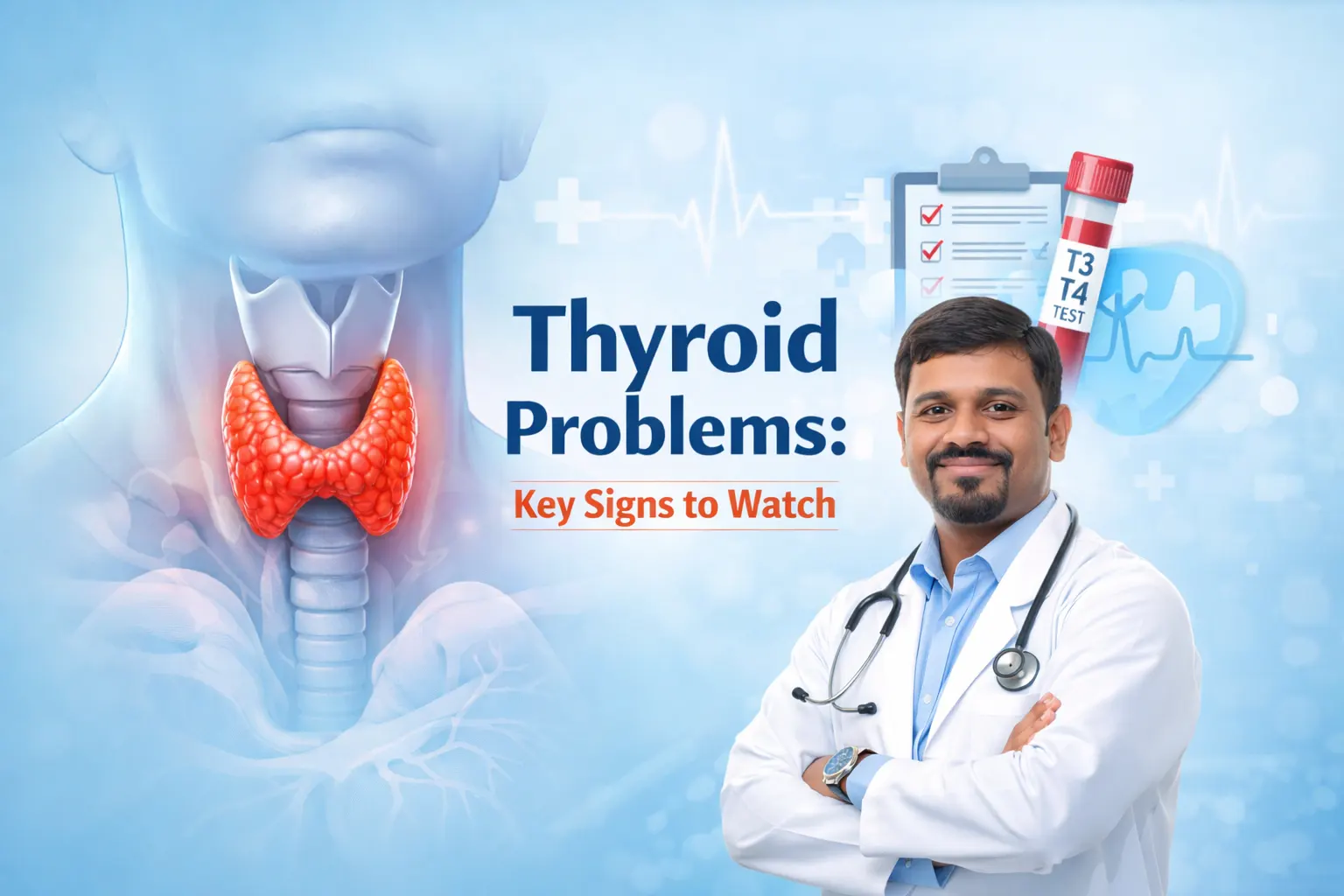
The thyroid is a small, butterfly-shaped gland at the front of the neck. It produces hormones that help regulate how the body uses energy and influences several important functions. Thyroid disorders occur when the gland produces too little or too much thyroid hormone, or when the immune system affects thyroid function.
The two broad patterns are hypothyroidism, in which thyroid hormone production is too low, and hyperthyroidism, in which thyroid hormone production is too high. Some people have only a few symptoms, while others notice several changes at the same time. Because many thyroid symptoms overlap with other medical conditions, testing is important before starting treatment.
These symptoms can occur with thyroid disorders, but they are not specific to thyroid disease. Persistent or unexplained symptoms deserve medical assessment.
Unexplained weight gain can occur with hypothyroidism, while unintentional weight loss can occur with hyperthyroidism.
Low energy, unusual tiredness or reduced stamina can occur when thyroid hormone levels are abnormal.
Changes in thyroid function can affect the normal hair-growth cycle and may contribute to thinning.
Low thyroid activity may be associated with low mood, while excess thyroid hormone can contribute to anxiety or irritability.
Heavy, irregular or less frequent periods can occur with thyroid dysfunction and may affect fertility.
An enlarged thyroid, called a goiter, or a thyroid nodule may cause visible or palpable neck swelling.
Feeling unusually cold can occur with hypothyroidism; excessive heat sensitivity or sweating may occur with hyperthyroidism.
A slow pulse can occur with hypothyroidism, while a fast or irregular heartbeat can occur with hyperthyroidism.
Dry or rough skin and changes in nails can accompany low thyroid activity.
Difficulty concentrating, slower thinking or forgetfulness may occur, particularly with hypothyroidism.
Constipation is more commonly associated with hypothyroidism, while increased bowel frequency can occur with hyperthyroidism.
Thyroid hormone imbalance may contribute to muscle weakness, cramps, aches or reduced exercise tolerance.
Excess thyroid hormone may cause difficulty sleeping; low thyroid function can be associated with increased sleepiness or fatigue.
Facial puffiness can occur with hypothyroidism, although other causes of swelling should also be considered.
A goiter, thyroid enlargement or other neck conditions can sometimes contribute to a changed or hoarse voice.
Thyroid dysfunction can affect menstrual cycles, ovulation and reproductive function and can also affect male fertility.
Hypothyroidism can contribute to abnormal lipid levels, including elevated cholesterol in some people.
Headache or dizziness is nonspecific, but it may occur alongside other symptoms and should not be used alone to diagnose thyroid disease.
Excessive sweating may occur with hyperthyroidism, while reduced sweating can occur with hypothyroidism.
The pattern of symptoms can provide clues, but laboratory testing is needed to confirm a thyroid disorder.
Hypothyroidism means the thyroid does not produce enough thyroid hormone. Symptoms may develop gradually and can include:
Hyperthyroidism means there is too much thyroid hormone activity. Possible symptoms include:
Thyroid disease can affect people of all ages. The symptoms and clinical concerns can differ depending on age, sex, pregnancy status and the underlying disorder.
Thyroid dysfunction may be associated with menstrual changes, fertility difficulties, pregnancy-related concerns, fatigue, weight changes and hair changes. Persistent menstrual or fertility problems warrant medical evaluation rather than assuming thyroid disease is the only cause.
Men can develop the same thyroid disorders as women. Possible symptoms include fatigue, weight changes, mood changes, heat or cold intolerance and changes in sexual or reproductive health. A clinical assessment can help identify the underlying cause.
In children, thyroid disorders can affect growth, development, school performance, energy, bowel habits and puberty. Unusual growth patterns or persistent symptoms should be discussed with a qualified pediatric or medical professional.
Symptoms raise suspicion, but thyroid disorders are diagnosed using clinical assessment and appropriate laboratory tests.
TSH is commonly used as an initial blood test to assess thyroid function. The result is interpreted together with the clinical picture and, when needed, other thyroid tests.
Free thyroid hormone measurements may be ordered when additional information is needed or when hyperthyroidism or other thyroid disorders are suspected.
Antibody testing can help evaluate autoimmune thyroid conditions such as Hashimoto thyroiditis or Graves' disease when clinically appropriate.
Ultrasound can evaluate thyroid structure, enlargement and nodules when a neck lump, goiter or other structural concern is present.
Depending on the findings, a doctor may recommend additional tests or specialist assessment. Test selection should be based on symptoms, examination and the suspected thyroid condition.
Treatment depends on whether the thyroid is underactive, overactive, enlarged, affected by nodules, or involved in an autoimmune disorder. There is no single treatment that is appropriate for every thyroid condition.
Thyroid hormone replacement is commonly used when hypothyroidism is confirmed. The dose and follow-up schedule are individualized, and blood tests are used to assess whether treatment is achieving the intended thyroid hormone balance.
Depending on the cause and severity, treatment may involve medicines, radioactive iodine or surgery. The appropriate approach depends on the underlying diagnosis, symptoms, age, pregnancy status and other health factors.
Some nodules only need observation, while others require ultrasound-based assessment, additional testing or treatment. A neck lump that is growing, persistent or associated with swallowing or voice changes should be medically evaluated.
Avoid starting, stopping or changing thyroid medicine based only on symptoms or an online test result. Thyroid medicines require appropriate diagnosis, dosing and follow-up.
The risks depend on the type and severity of thyroid disease and how long it remains uncontrolled.
Abnormal thyroid hormone levels can affect heart rate and cardiovascular function. Persistent symptoms such as palpitations should be assessed, particularly in people with existing heart disease.
Thyroid dysfunction can affect menstrual cycles, fertility and pregnancy. Appropriate testing and treatment can be especially important when planning pregnancy or during pregnancy.
Thyroid disorders can affect energy, weight, bowel function, mood and concentration. Managing the underlying disorder may improve these symptoms when they are thyroid-related.
Consider a medical evaluation if symptoms are persistent, unexplained, worsening, or affecting daily life. A consultation is especially appropriate when several thyroid-type symptoms occur together or when there is a visible or palpable neck swelling.
My Health Hospitals provides medical evaluation and thyroid-related care through its general medicine team in Hyderabad.
Call to RegisterMedical evaluation should be tailored to the patient's symptoms, test results and overall health.

General Physician & Diabetologist – KPHB
Provides general medical care including evaluation and management of thyroid-related symptoms and metabolic conditions.
Book Appointment
General Physician – Tarnaka
Provides general medical evaluation including thyroid-related symptoms, hormonal concerns and preventive healthcare.
Book AppointmentClear answers to common questions people search before getting a thyroid evaluation.
If you have persistent symptoms or an abnormal thyroid report, a clinical evaluation can help identify the cause and the next appropriate step.
Book a ConsultationExpert-written medical articles from My Health Hospitals
Find the Best Hospital Near You
H.No 15-24-212, MIG-212, Rd Number 1, K P H B Phase 1, Kukatpally, Hyderabad, Telangana 500072
H.No:-12-5-30, WhiteHouse, Moula Ali Rd, South Lalaguda, Tarnaka, Secunderabad, Telangana 500017