
-
 Kphb Branch
+91 9111674111
-
Tarnaka Branch
+91 9100001201
- Book Appointment
+91 9111674111
+91 9100001201
Urology
Kidney stone pain can start suddenly in the side or back and may move toward the lower abdomen, pelvis or groin as the stone travels through the urinary tract. Knowing the typical pain pattern can help you recognize symptoms, but pain location alone cannot confirm a kidney stone.
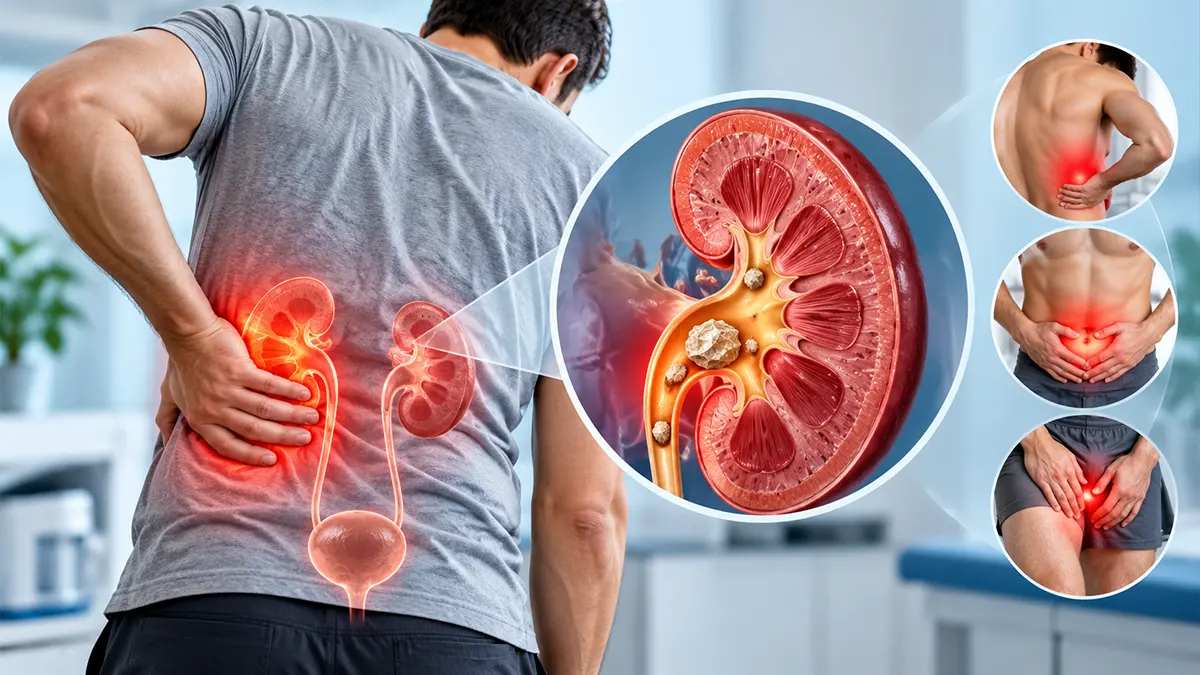
Kidney stone pain most commonly starts in the side or back below the ribs, an area called the flank. As a stone moves through the ureter, the pain may travel toward the lower abdomen, pelvis or groin.
Kidney stone pain can be sharp, severe, cramping or wave-like. Nausea, vomiting, blood in the urine, burning urination or urinary urgency may also occur.
However, pain location alone cannot confirm a kidney stone. Other conditions can cause similar symptoms, so medical evaluation may be necessary.
Seek urgent medical care if suspected kidney stone pain occurs with:
A blocked urinary tract together with infection can become a serious medical problem and requires prompt medical assessment.
Kidney stone pain is commonly felt on one side of the body in the flank, the area between the lower ribs and the hip.
The location can change as a stone travels from the kidney into the ureter.
| Possible Stone Location | Where Pain May Be Felt | Possible Associated Symptoms |
|---|---|---|
| Kidney | Side or back below the ribs | Flank discomfort |
| Upper ureter | Flank or side of the back | Severe or wave-like pain |
| Middle ureter | Side or lower abdomen | Pain may move downward |
| Lower ureter | Lower abdomen or groin | Urinary urgency or discomfort |
| Near bladder | Pelvis or groin | Frequent urge to urinate |
This pattern can help explain kidney stone pain, but it does not allow a person to determine the exact stone location or size without appropriate medical assessment and imaging.
Kidney stone pain may feel different from ordinary muscle or joint pain.
The flank is the area on either side of the back below the ribs and above the hip. This is one of the most common areas associated with kidney stone pain.
Kidney stones can cause pain around the back below the ribs. However, other kidney, abdominal and musculoskeletal problems can cause pain in this area.
As a stone travels down the ureter, pain may shift toward the lower abdomen and can sometimes be mistaken for digestive or abdominal pain.
Pain can radiate from the flank or lower abdomen toward the groin when a stone moves farther down the ureter.
A lower ureteral stone can cause pelvic discomfort and may be associated with urinary urgency or frequency.
Pain from a lower ureteral stone may radiate toward the testicle. Sudden severe testicular pain needs urgent evaluation.
When a stone approaches the bladder, urinary urgency, frequency or burning may occur along with lower abdominal or pelvic discomfort.
The kidneys and bladder are connected by narrow tubes called ureters.
When a stone leaves the kidney and enters the ureter, it can interfere with urine flow and trigger contractions of the ureter. This can produce intense, wave-like pain.
As the stone travels downward, the perceived location of pain may also change.
| Feature | Kidney Stone Pain | Common Musculoskeletal Back Pain |
|---|---|---|
| Typical location | Flank or side below ribs | Back or lower back |
| Pain pattern | May be severe and wave-like | Often aching or stiff |
| Radiation | May move toward abdomen or groin | Often remains localized, although exceptions occur |
| Urinary symptoms | May occur | Usually absent |
| Blood in urine | Can occur | Not typical |
| Nausea/vomiting | Can occur | Less typical |
This comparison is only a general guide. Back pain has many possible causes, and a healthcare professional may need to evaluate the symptoms.
Yes. A stone affecting the right kidney or right ureter can cause pain on the right side or right flank.
However, right-sided abdominal pain can also occur with conditions such as appendicitis, gallbladder disease and gastrointestinal problems. Do not assume that right-sided pain is a kidney stone without appropriate evaluation.
Yes. A stone affecting the left kidney or left ureter can cause left-sided flank pain.
The pain may move toward the left lower abdomen or groin as the stone travels through the ureter.
Men may experience kidney stone pain in the:
Sudden or severe testicular pain should not automatically be attributed to kidney stones because other urgent conditions can cause similar symptoms.
Women may experience kidney stone pain in the flank, back, lower abdomen, pelvis or groin.
Because pelvic and abdominal conditions can produce similar symptoms, pain location alone cannot confirm a kidney stone.
If pregnancy is possible, tell your healthcare professional because pregnancy affects the choice of diagnostic imaging.
Yes.
Visible blood does not have to be present for someone to have a kidney stone. Blood may sometimes be detected only through urine testing.
No.
Pain intensity and location cannot reliably tell you how large a kidney stone is.
Imaging may be used to determine:
A urine test can check for blood, signs of infection and other abnormalities.
Blood tests may help assess kidney function, infection and certain factors associated with stone formation.
Ultrasound can identify many kidney stones and can also show evidence of urinary obstruction.
CT imaging can provide detailed information about stone size, location and obstruction when clinically appropriate.
Treatment depends on the stone's size, location, symptoms, degree of obstruction, kidney function and whether infection is present.
Some smaller stones pass naturally. Depending on the individual situation, a healthcare professional may recommend appropriate pain management, hydration advice and observation.
Shock-wave lithotripsy uses focused shock waves to break selected kidney stones into smaller fragments.
During ureteroscopy, a thin instrument is passed through the urinary tract to locate and treat a stone.
Percutaneous nephrolithotomy, or PCNL, may be used for larger or complex kidney stones. It involves accessing the kidney through a small opening in the back.
The appropriate treatment depends on the individual stone and clinical situation.
Prevention depends on the type of kidney stone and individual risk factors.
Usually in the flank or side of the back below the ribs. It may spread toward the lower abdomen or groin.
Yes. Pain may shift downward as the stone travels through the ureter.
Yes. Kidney stones can cause flank or back pain below the ribs, although many other conditions can cause similar pain.
Flank or side pain that may become severe and move toward the lower abdomen or groin is a common pattern.
Severe uncontrolled pain, fever or chills, persistent vomiting, inability to pass urine or suspected infection with obstruction requires urgent medical assessment.
Kidney stone pain commonly occurs in the flank or side of the back below the ribs. As a stone moves through the ureter, the pain may spread toward the lower abdomen, pelvis or groin.
Kidney stone pain often starts in the side or back below the ribs, particularly when a stone moves into the ureter.
Yes. Kidney stone pain may move from the flank or back toward the lower abdomen, pelvis or groin as the stone travels through the ureter.
Kidney stone pain may be sharp, severe, cramping or wave-like. Some people have difficulty finding a comfortable position during severe pain.
Yes. Kidney stones can cause pain in the side or back, particularly below the ribs. However, many other conditions can also cause back pain.
Yes. As a stone moves down the ureter, pain may shift toward the lower abdomen or pelvis.
Yes. Pain can radiate toward the groin when a stone moves farther down the ureter.
Yes. A stone affecting the right kidney or right ureter can cause right-sided flank or abdominal pain and may radiate toward the right groin.
Yes. A stone affecting the left kidney or left ureter can cause left-sided flank or abdominal pain and may radiate toward the left groin.
In men, pain from a stone in the lower ureter may radiate toward the testicle. Sudden or severe testicular pain needs urgent medical assessment because other conditions can cause similar symptoms.
Yes. Visible blood does not have to be present when someone has a kidney stone. Blood may sometimes be detected only through urine testing.
Yes. Severe kidney stone pain can be accompanied by nausea and vomiting.
Fever or chills with suspected kidney stone symptoms can indicate a urinary infection and requires prompt medical assessment.
Kidney stone pain may be severe, wave-like and may move toward the abdomen or groin. Urinary symptoms may also occur. However, symptoms can overlap and medical evaluation may be needed.
Kidney stone pain can come in waves, particularly when the ureter contracts around a moving stone.
No. Pain location and severity cannot reliably determine stone size. Imaging is used to determine the stone's size and location.
Diagnosis may involve a medical history, physical examination, urine testing, blood tests and imaging such as ultrasound or CT, depending on the clinical situation.
No. Some smaller stones pass naturally. Larger, obstructing, infected or otherwise problematic stones may require a procedure.
Severe uncontrolled pain, fever or chills, persistent vomiting, inability to pass urine or suspected infection with urinary obstruction requires urgent medical attention.
Seek medical assessment for significant or persistent pain. Seek urgent care if severe pain occurs with fever, chills, persistent vomiting, difficulty passing urine or feeling seriously unwell.
Persistent, severe or recurring flank, abdominal or groin pain should be properly evaluated. Seek urgent medical attention if severe pain occurs with fever, chills, persistent vomiting or difficulty passing urine.
Contact My Health HospitalsThis article is intended for general health education and does not replace examination, diagnosis or treatment by a qualified healthcare professional. Kidney stone pain can resemble other abdominal, urinary or back conditions. Seek appropriate medical care for persistent, severe or unexplained symptoms.
Medical information is provided for education and does not replace an examination or advice from a qualified healthcare professional.
Find the Best Hospital Near You
H.No 15-24-212, MIG-212, Rd Number 1, K P H B Phase 1, Kukatpally, Hyderabad, Telangana 500072
H.No:-12-5-30, WhiteHouse, Moula Ali Rd, South Lalaguda, Tarnaka, Secunderabad, Telangana 500017