
-
 Kphb Branch
+91 9111674111
-
Tarnaka Branch
+91 9100001201
- Book Appointment
+91 9111674111
+91 9100001201
Obstetrics & Gynecology
Medically reviewed by Dr Swetha Reddy, Obstetrician & Gynecologist.
The first month of pregnancy generally covers weeks 1 to 4. Because pregnancy is dated from the first day of the last menstrual period, the first couple of weeks are usually counted before conception. By around week 4, implantation may have occurred and pregnancy hormone levels can begin producing early signs.
Early pregnancy care includes folic acid, a varied diet, avoiding alcohol and tobacco, reviewing medicines with a clinician, and arranging antenatal care. Symptoms vary widely, and some people have few or no symptoms at first.
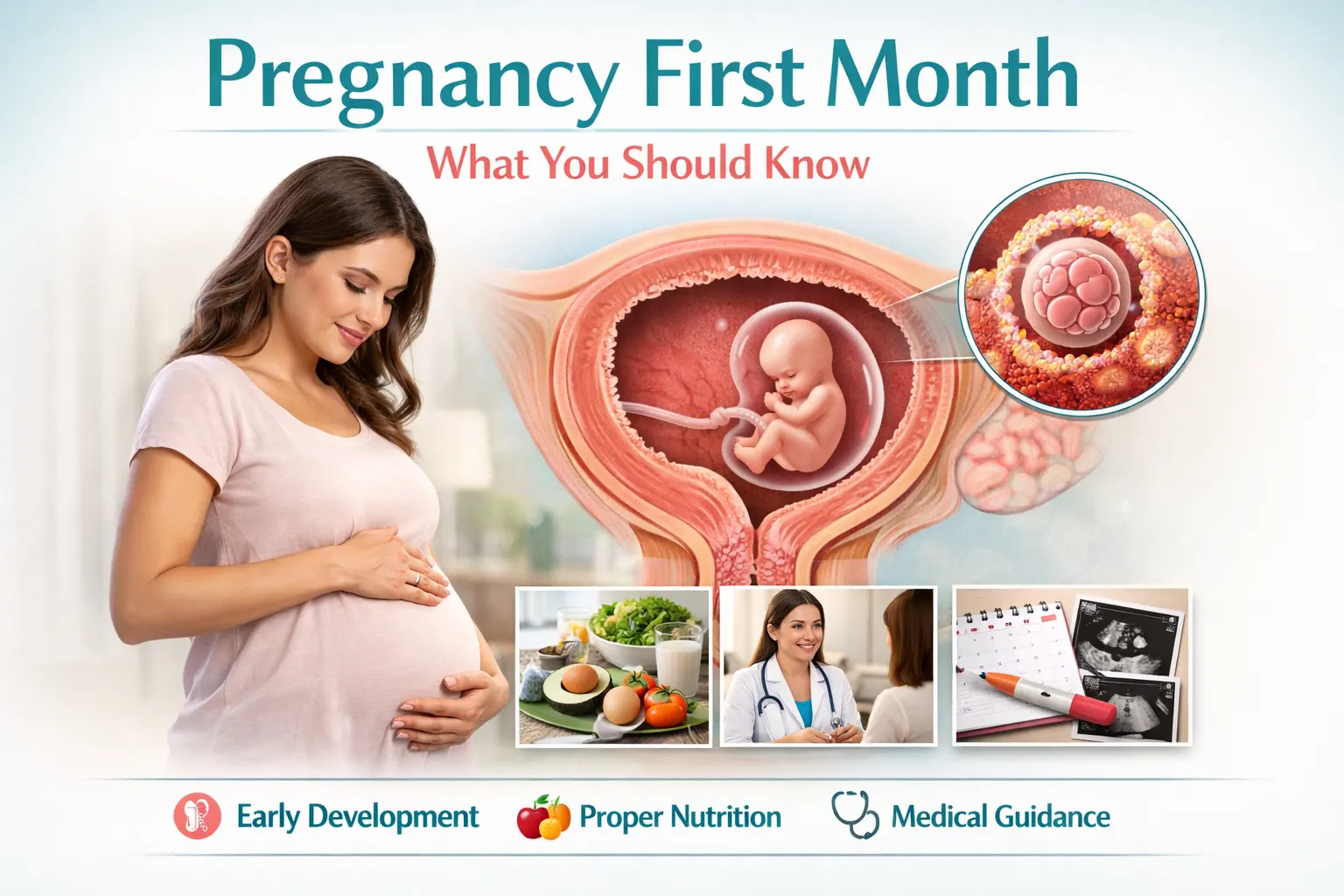
The first month of pregnancy covers weeks 1 to 4. Pregnancy is dated from the first day of the last menstrual period, so weeks 1 and 2 usually occur before conception. By around week 4, a missed period may be the first noticeable sign, although some people have no symptoms.
Common 1 month pregnant symptoms include a missed period, breast tenderness, tiredness, nausea, frequent urination, bloating, mild cramps, smell sensitivity and mood changes. Symptoms are not a reliable way to confirm pregnancy; a home pregnancy test is generally most reliable from the first day of a missed period.
For most people, 400 micrograms of folic acid daily through the first 12 weeks is recommended. Eat a varied diet, avoid alcohol and tobacco, choose food-safe well-cooked foods, review medicines with a clinician, and arrange antenatal care after a positive test. Seek urgent medical assessment for heavy bleeding, severe or one-sided abdominal pain, fainting, severe dizziness or other concerning symptoms.
Pregnancy is calculated from the first day of the last menstrual period (LMP). Weeks 1 and 2 are therefore usually counted before conception. Ovulation and fertilization generally occur later in the cycle.
After fertilization, the developing embryo travels toward the uterus and implantation occurs in the uterine lining. Around week 4, pregnancy hormone hCG may rise enough for a home pregnancy test to detect it, although timing and test sensitivity matter.
Hormonal changes can cause early symptoms such as a missed period, tiredness, breast tenderness, nausea, increased urination, bloating, smell sensitivity or mood changes. Having no symptoms in the first month does not by itself mean something is wrong.
Early pregnancy symptoms often begin around 4 to 6 weeks, although some people notice changes earlier and others have no symptoms. Common first month pregnancy symptoms include:
Important: Light spotting can occur, but bleeding during pregnancy should be discussed with a healthcare professional. Severe or one-sided abdominal pain, heavy bleeding, fainting or marked dizziness needs urgent medical assessment.
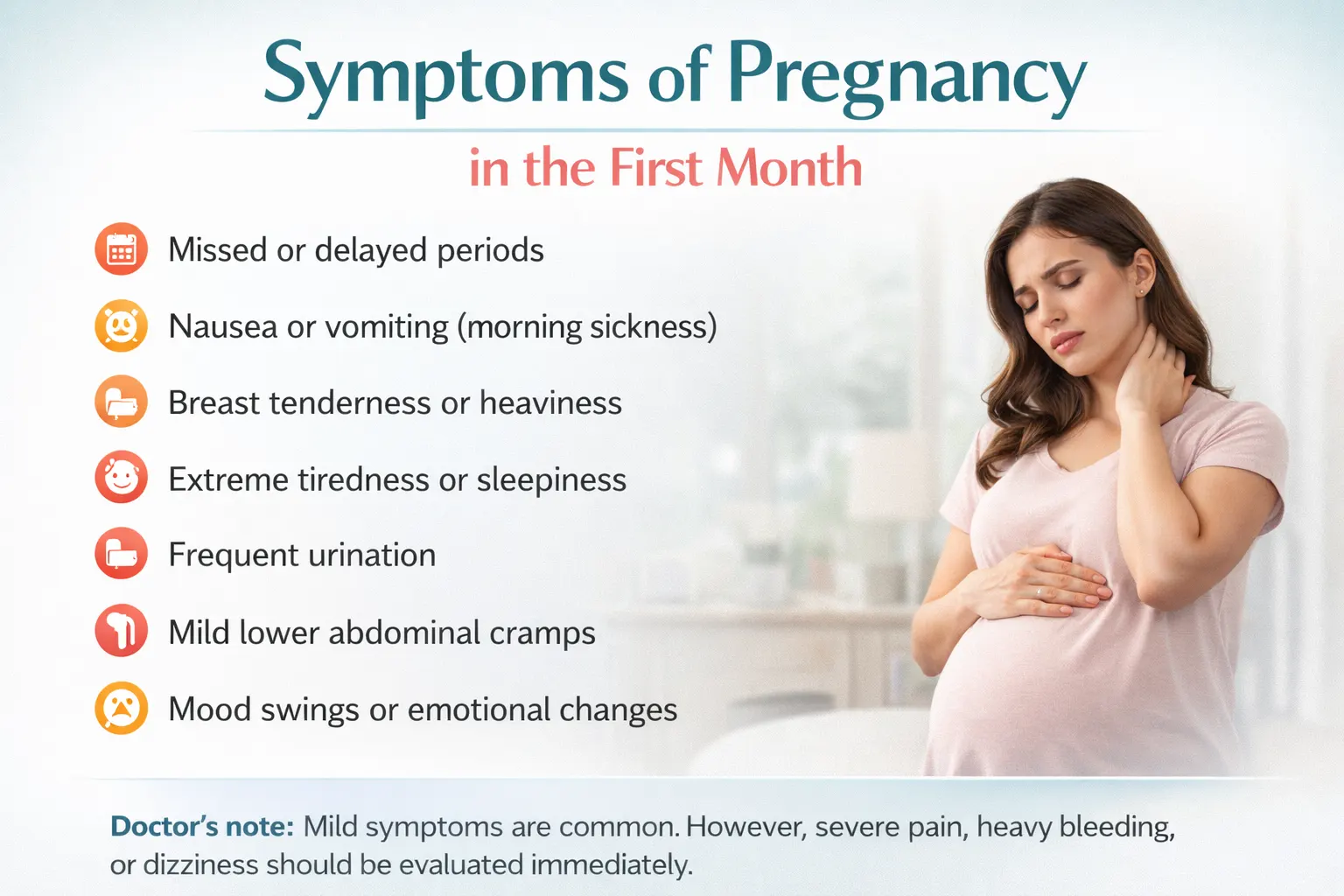
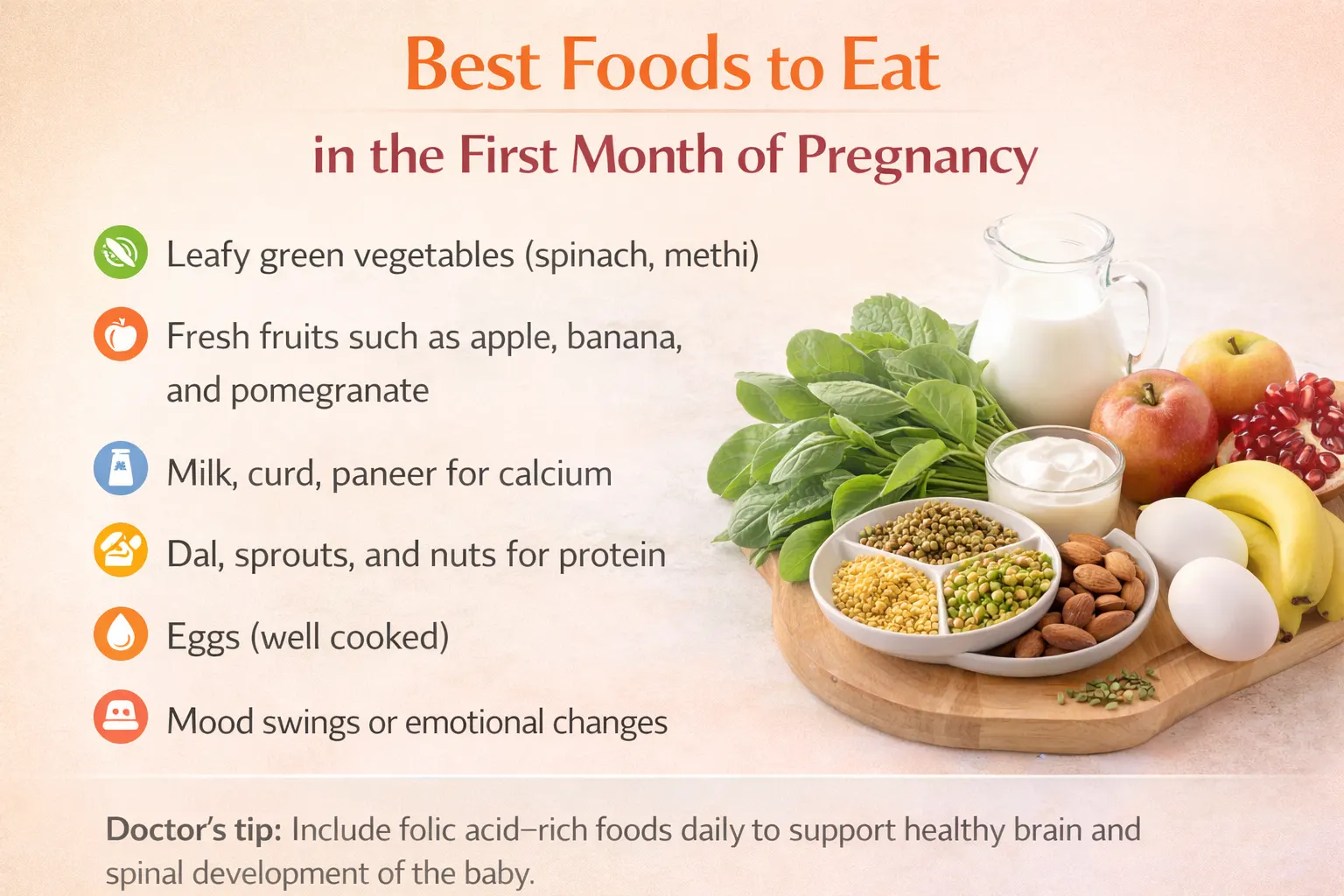
A healthy first month pregnancy diet should be varied and nutrient-rich rather than focused on eating for two. Include vegetables and fruits, whole grains, pulses and beans, protein foods, pasteurized dairy or suitable alternatives, and adequate fluids.
Doctor’s tip: Ask your doctor about folic acid. For most people, 400 micrograms daily is recommended through the first 12 weeks, while some need a higher prescribed dose.
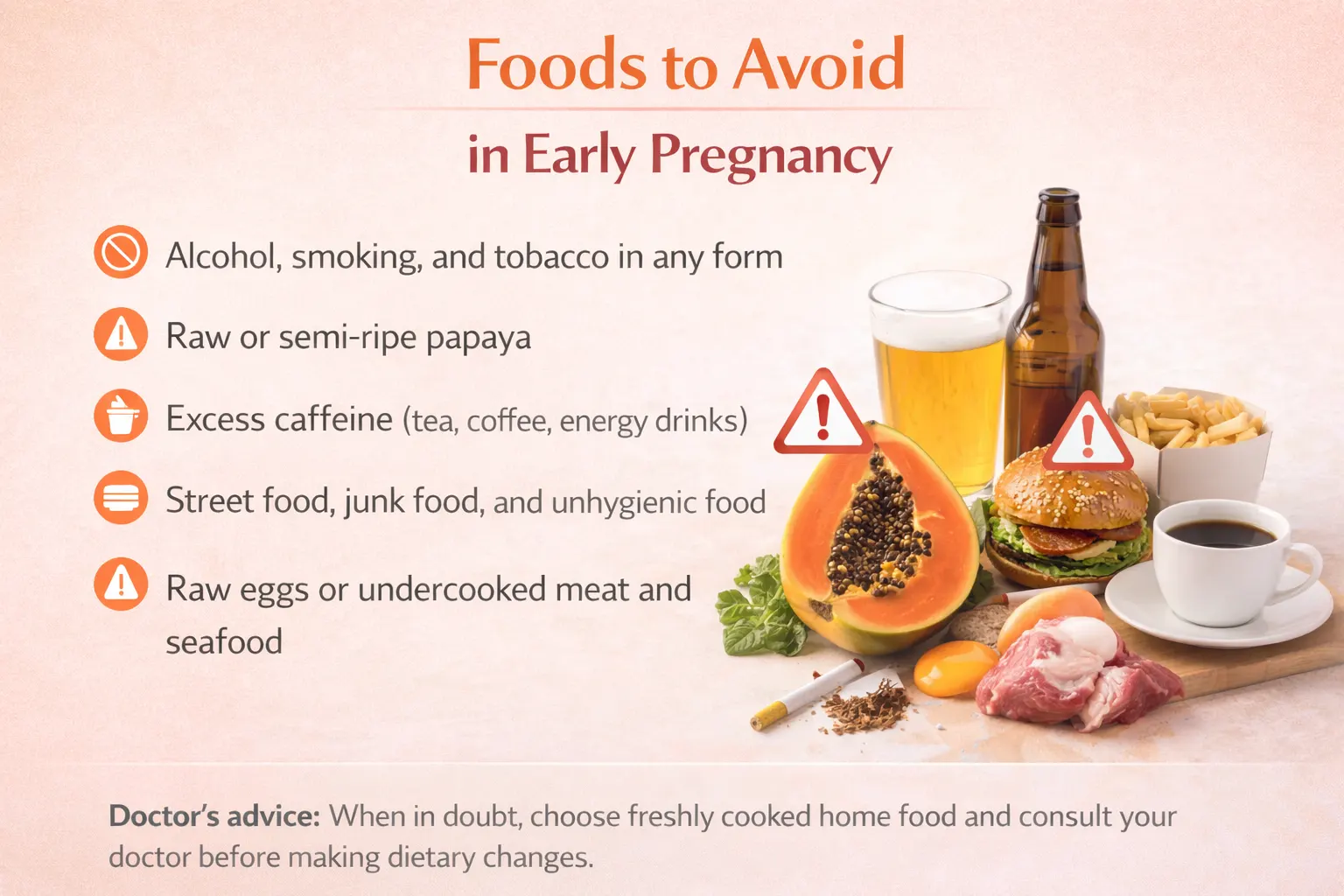
During early pregnancy, food safety and avoiding harmful substances are more important than following a long list of traditional food restrictions. Choose well-cooked foods and avoid products that may carry infection risks.
Doctor’s advice: Food restrictions should be evidence-based. Traditional claims about individual foods should not replace medical guidance.
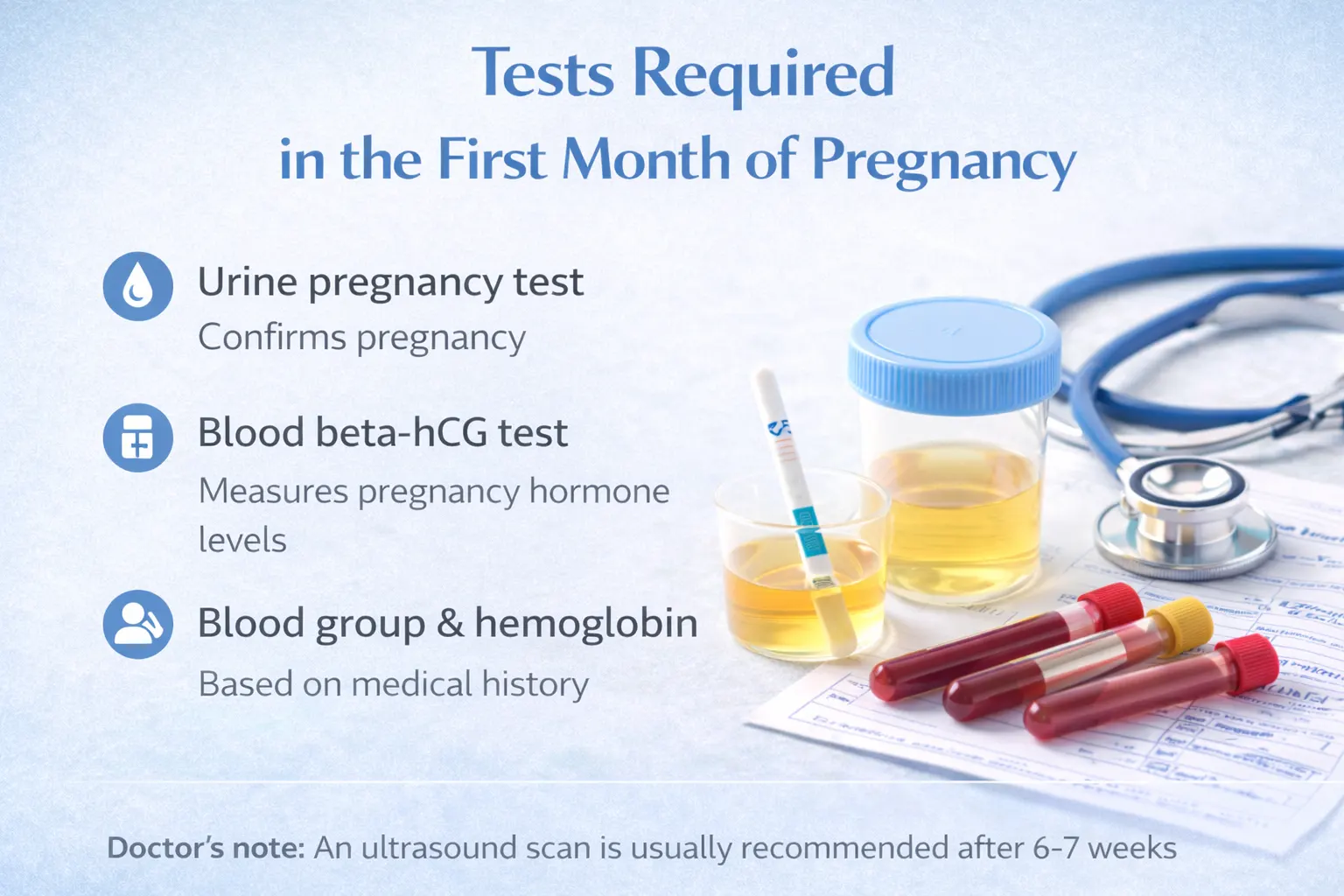
The first step is usually confirming pregnancy with a home urine pregnancy test or clinician-ordered test. A home test is generally most reliable from the first day of a missed period; if you do not know when your period is due, testing at least 21 days after the last unprotected sex is advised.
Doctor’s note: An ultrasound is not necessarily required in every person during the first month. Earlier assessment may be needed for pain, bleeding or ectopic-pregnancy risk.
Doctor’s advice: Simple lifestyle changes during the first month can greatly reduce pregnancy-related risks and support healthy fetal development.
Myth: No symptoms means no pregnancy
Fact: Many women do not experience noticeable symptoms in the first month, and this can still be completely normal.
Myth: Exercise causes miscarriage
Fact: Light physical activity such as walking is generally safe and can be beneficial during early pregnancy.
Doctor’s guidance: Always rely on medical advice rather than myths when it comes to pregnancy care.
While mild discomfort is common in early pregnancy, certain symptoms require immediate medical attention to ensure the safety of both mother and baby.
Important: Do not ignore warning signs. Early consultation can prevent complications.
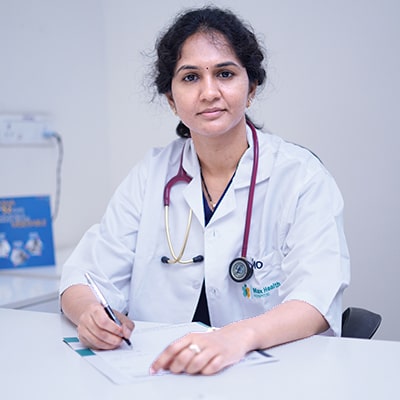
Obstetrician & Gynecologist
Experience: 10+ Years
Hospital: My Health Hospitals, Hyderabad
Specializes in antenatal care, high-risk pregnancies, and comprehensive women’s health services.
The first month of pregnancy is a crucial phase that sets the foundation for your baby’s overall growth and development. Even small lifestyle and dietary choices during this period can have a long-term impact on pregnancy health.
With early medical guidance, balanced nutrition, adequate rest, and awareness of warning signs, most women can experience a safe and healthy pregnancy journey. Always consult your doctor for personalized advice and care.
Common early pregnancy symptoms include a missed period, tiredness, sore breasts, nausea, frequent urination, bloating, mild cramps, smell sensitivity and mood changes. Some people have few or no symptoms.
Possible signs include a missed period, breast tenderness, fatigue, nausea, frequent urination, bloating and changes in smell or food preferences. Symptoms alone cannot confirm pregnancy.
At around 4 weeks, you may notice a missed period, tiredness, sore breasts, nausea, increased urination, mild cramps, bloating, mood changes or increased smell sensitivity. Everyone is different.
Yes. Some people have few or no noticeable symptoms in early pregnancy. A pregnancy test is more useful for confirmation than symptoms alone.
Home pregnancy tests are generally most reliable from the first day of a missed period. If you do not know when your period is due, test at least 21 days after the last unprotected sex.
Some sensitive tests can be used earlier, but testing too soon can give a false-negative result. Testing from the first day of a missed period is generally more reliable.
Choose vegetables, fruits, whole grains, pulses, beans, protein foods, pasteurized dairy or suitable alternatives and adequate fluids. There is no need to eat for two.
Avoid alcohol, raw or undercooked animal foods, unpasteurized products and foods prepared in poor hygiene conditions. Avoid vitamin A or retinol supplements unless specifically prescribed.
Avoiding all papaya as a universal rule is not evidence-based. Discuss individual dietary concerns with your obstetrician rather than relying on traditional food restrictions.
For most people, 400 micrograms daily is recommended through the first 12 weeks. Some people need a higher prescribed dose based on individual risk factors.
A urine pregnancy test commonly confirms pregnancy. Depending on symptoms and medical history, a clinician may advise blood tests, beta-hCG, ultrasound or routine antenatal investigations.
Not everyone needs an ultrasound in the first month. Timing depends on gestational age, symptoms, pregnancy history and clinical need. Earlier assessment may be advised for pain or bleeding.
Arrange antenatal care, take folic acid as advised, review medicines with a clinician, avoid alcohol and tobacco, follow food-safety precautions and discuss existing health conditions with your doctor.
For many people, moderate activity such as walking is appropriate. Exercise should be individualized if you have complications, significant pain, bleeding or other medical concerns.
Mild cramps can occur in early pregnancy. Severe, persistent or one-sided abdominal pain needs medical assessment, especially with bleeding, dizziness or fainting.
Light spotting can occur, but bleeding during pregnancy should be discussed with a healthcare professional. Heavy bleeding or bleeding with severe pain or fainting needs urgent assessment.
Avoid alcohol and tobacco, do not self-medicate, avoid unsafe foods and supplements, and review regular medicines with a clinician. Avoid retinol-containing supplements unless prescribed.
Heavy bleeding, severe or one-sided abdominal pain, fainting, marked dizziness, fever, severe vomiting or rapidly worsening symptoms need prompt medical assessment.
Arrange pregnancy care after a positive test so your medical history, medicines, supplements and care plan can be reviewed. Seek earlier assessment for pain, bleeding or other risk factors.
Pregnancy is dated from the last menstrual period. Ovulation and fertilization generally occur after the first two dated weeks, followed by embryo development and implantation. By around week 4, hCG may be detectable.
Expert-written medical articles from My Health Hospital
Find the Best Hospital Near You
H.No 15-24-212, MIG-212, Rd Number 1, K P H B Phase 1, Kukatpally, Hyderabad, Telangana 500072
H.No:-12-5-30, WhiteHouse, Moula Ali Rd, South Lalaguda, Tarnaka, Secunderabad, Telangana 500017