-
 Kphb Branch
+91 9111674111
-
Tarnaka Branch
+91 9100001201
- Book Appointment
+91 9111674111
+91 9100001201
Nutrition & Dietetics
Medically reviewed by T. Roshini , MSc Nutrition & Dietetics
Black coffee is one of the most widely consumed beverages globally and a significant source of antioxidants in modern diets. Scientific research shows that unsweetened black coffee contains powerful bioactive compounds that support metabolism, brain health, liver function, and overall wellness.
From improving mental alertness to aiding weight management, regular moderate consumption of black coffee has been linked with multiple long-term health benefits.
Black coffee contains caffeine, chlorogenic acid, and antioxidants that may help improve metabolic rate, enhance cognitive performance, support liver health, and reduce inflammation when consumed in moderation.
At My Health Hospitals, our nutrition experts emphasize that simple lifestyle habits like balanced coffee consumption can contribute to preventive healthcare and improved quality of life.
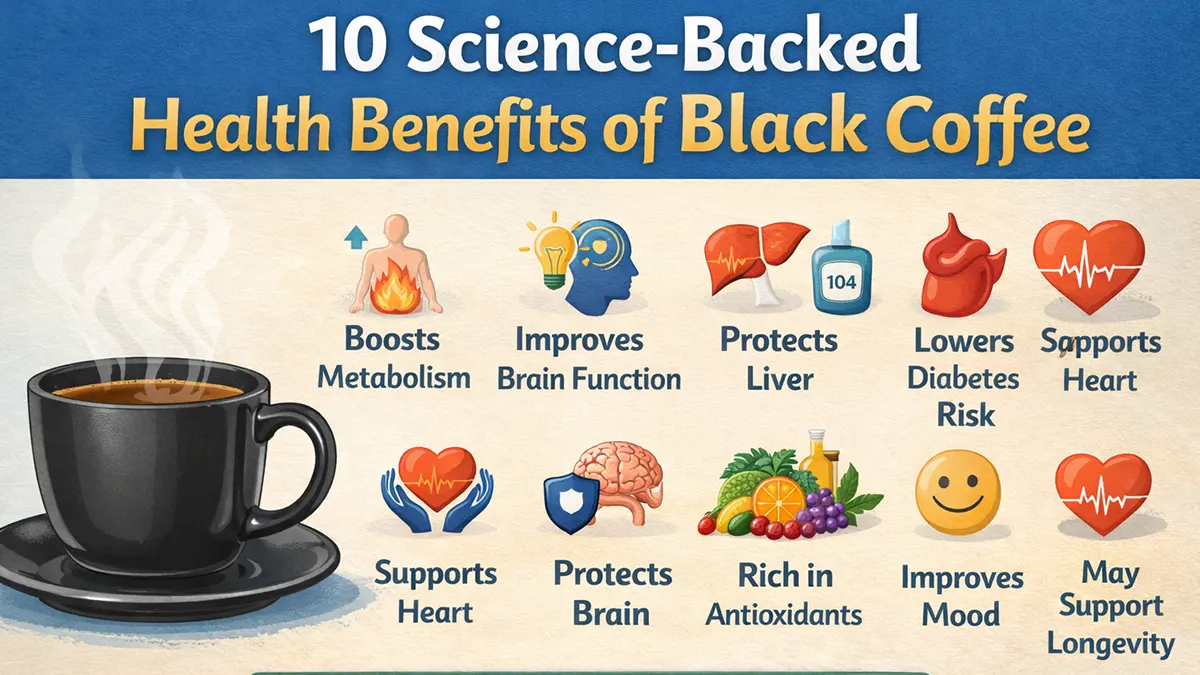
A cup of black coffee contains almost no calories but is rich in beneficial plant compounds.
| Nutrient | Amount (per cup) |
|---|---|
| Calories | 2 kcal |
| Caffeine | 80 – 100 mg |
| Antioxidants | High |
| Chlorogenic Acid | Present |
These compounds contribute to many of coffee’s health benefits, including improved metabolism and reduced inflammation.
Scientific research continues to highlight the powerful health benefits of drinking black coffee in moderation.
Black coffee can increase metabolic rate. Studies show caffeine may increase Basal Metabolic Rate (BMR) by 3–11%, helping the body burn calories more efficiently.
Caffeine blocks adenosine, a neurotransmitter that causes fatigue, leading to increased dopamine and norepinephrine activity.
Research shows that regular coffee drinkers may have a significantly lower risk of liver disease.
Large observational studies have repeatedly found an association between coffee consumption and a lower risk of developing type 2 diabetes. The size of the association varies across studies and does not prove that coffee prevents diabetes.
Research on coffee and cardiovascular health is mixed by outcome and amount consumed. Recent evidence suggests some potentially favorable associations, but higher intake has not been shown to provide universal cardiovascular protection.
Caffeine increases adrenaline levels and releases fatty acids into the bloodstream for energy.
Long-term observational studies have reported associations between coffee consumption and some neurological outcomes, but the evidence is mixed and does not establish that coffee prevents neurodegenerative disease.
Black coffee contains powerful antioxidants that help protect cells from damage.
Coffee stimulates dopamine release in the brain, which may improve mood and reduce fatigue.
Large observational studies have found that moderate coffee consumption is associated with lower all-cause mortality in some populations. This is an association and does not prove that coffee extends lifespan.
The timing of black coffee consumption can influence its benefits and side effects.
Drinking black coffee in the morning can boost energy levels, enhance metabolism, and improve mental alertness.
Consuming black coffee late at night may disrupt sleep patterns and affect recovery. People sensitive to caffeine or prone to sleep problems may benefit from avoiding caffeine later in the day.
Black coffee before exercise may improve endurance, performance, and fat utilization during workouts.
Moderate black coffee intake is generally safe for healthy adults. Most health guidelines recommend limiting caffeine intake to around 300–400 mg per day.
Coffee caffeine content varies substantially, so a cup count is not an exact caffeine limit. Excess consumption may lead to side effects such as anxiety, insomnia, and digestive discomfort.
Although black coffee has several health benefits, it may not be suitable for everyone.
Consult a healthcare professional if you have existing medical conditions before increasing coffee consumption.
Both black coffee and milk coffee have unique nutritional profiles and health effects.
| Factor | Black Coffee | Milk Coffee |
|---|---|---|
| Calories | Very Low | Higher |
| Antioxidants | High | Moderate |
| Weight Loss Support | Better | Less Effective |
| Digestibility | May cause acidity in some | Gentler for sensitive stomach |
While black coffee offers many health benefits, excessive consumption may lead to certain side effects. Understanding these risks helps maintain safe and healthy intake.
Black coffee may increase stomach acid production, leading to heartburn, acid reflux, or gastric discomfort in sensitive individuals.
High caffeine intake can disrupt sleep cycles, causing insomnia, restlessness, and poor sleep quality.
Caffeine stimulates the nervous system, which may cause anxiety, palpitations, or jitteriness in some people.
Regular excessive consumption can lead to caffeine dependence. Sudden reduction may cause headaches, fatigue, and irritability.
Black coffee may temporarily raise blood pressure, especially in individuals with uncontrolled hypertension.
Moderate consumption is key. Most health experts recommend limiting intake to 3–4 cups per day for healthy adults.
Black coffee is often recommended in weight management plans due to its low calorie content and metabolism-boosting properties.
Caffeine stimulates thermogenesis, helping the body burn stored fat more efficiently. This can enhance fat oxidation during physical activity.
Regular black coffee consumption may increase metabolic rate by 3–11%, supporting calorie burning throughout the day.
Black coffee may temporarily reduce hunger cravings, helping control calorie intake.
Consuming black coffee before exercise can improve endurance, energy levels, and fat utilization during workouts.
Black coffee may fit into a weight-management plan because plain coffee is very low in calories and caffeine may modestly affect energy expenditure. Sustainable weight loss still depends on overall diet, activity and sleep.
Answers to common questions about black coffee benefits, caffeine, weight management, liver health and side effects.
For many healthy adults, moderate coffee intake can fit into a healthy diet. The appropriate amount depends on total caffeine intake, individual sensitivity, medications and health conditions.
Research associates coffee consumption with better alertness, exercise performance and several favorable long-term health outcomes, including lower risks of type 2 diabetes and some liver diseases. These are associations, not guarantees.
Caffeine can temporarily increase energy expenditure and fat oxidation, while plain black coffee is very low in calories. It is not a stand-alone weight-loss treatment.
No food or drink can selectively remove belly fat. Sustainable fat loss depends mainly on overall calorie balance, diet, physical activity and sleep.
Observational research links coffee consumption with lower risks of several chronic liver outcomes. Coffee should not be considered a treatment for liver disease.
Many people with diabetes can drink unsweetened coffee, but caffeine can affect blood glucose differently between individuals. Monitor your response and discuss concerns with your clinician.
The FDA cites 400 mg of caffeine per day as an amount not generally associated with negative effects for most adults. Coffee strength varies widely.
Coffee can worsen heartburn or reflux symptoms in some people. If it repeatedly triggers symptoms, reducing the amount or changing timing may help.
There is no universal rule that coffee must be taken with food. Some people experience stomach discomfort or reflux when drinking it on an empty stomach.
Caffeine can increase alertness and reduce perceived fatigue. Evidence for long-term protection against neurodegenerative diseases is more complex and is not proof of prevention.
Caffeine may improve alertness and aspects of endurance or exercise performance in some people. Individual response varies.
Research is generally reassuring at moderate intake, but results differ by cardiovascular outcome and amount consumed. Coffee is not a treatment for heart disease.
Plain brewed black coffee contains very few calories. Sugar, syrups, cream and other additions can substantially increase calories.
If reducing added sugar and calories is the goal, unsweetened coffee has an advantage. Milk or other additions can still fit depending on dietary needs.
Yes. Caffeine can cause jitteriness, anxiety, a fast heartbeat or palpitations in susceptible people, particularly at higher intakes.
Yes. Caffeine can interfere with sleep, and sensitivity varies. People with sleep problems may benefit from avoiding caffeine later in the day.
Pregnancy requires a lower caffeine limit than the general adult limit. Follow your obstetric clinician’s advice about total daily caffeine.
Moderate coffee intake contributes fluid and is not generally considered dehydrating in habitual coffee drinkers. Water should still remain a regular source of hydration.
Some people use caffeine before exercise because it may improve alertness and performance. Dose and timing should be individualized.
People with significant caffeine sensitivity, sleep problems, troublesome reflux, certain heart rhythm concerns, pregnancy-related caffeine restrictions or medication interactions may need to limit caffeine.

MSc Nutrition & Dietetics
Experience: 5+ Years
Specialization: Weight Management, Gastrointestinal Health, Clinical Nutrition
T. Roshini is a clinical nutritionist specializing in dietary management for digestive disorders, weight management, and preventive health nutrition. She provides evidence-based nutritional guidance to support patient wellness and long-term lifestyle improvement.
Black coffee is more than just a daily beverage. It contains powerful antioxidants and bioactive compounds that can support metabolism, brain function, liver health, and overall wellness when consumed in moderation.
For personalized nutrition advice and expert medical guidance, consult specialists at My Health Hospitals – Best Multi Speciality Hospital in Hyderabad .
Expert-written medical articles from My Health Hospital
Find the Best Hospital Near You
H.No 15-24-212, MIG-212, Rd Number 1, K P H B Phase 1, Kukatpally, Hyderabad, Telangana 500072
H.No:-12-5-30, WhiteHouse, Moula Ali Rd, South Lalaguda, Tarnaka, Secunderabad, Telangana 500017