My Health Hospitals logo

Urology

Kidney Stone Symptoms

Blog

Kidney Stone Symptoms: Pain Location, Early Signs & Warning Signs

Kidney stone symptoms can range from no symptoms at all to sudden, severe pain. Symptoms often appear when a stone moves into the ureter or interferes with urine flow. Knowing the first symptoms of kidney stones, typical kidney stone pain location, and urinary warning signs can help you seek appropriate medical care.

Kidney stones are hard deposits that form when certain minerals in urine become concentrated and crystallize. They can occur in both men and women. Some stones cause little or no symptoms and pass on their own, while stones that become stuck may cause pain, bleeding, urinary obstruction or infection. Treatment depends on the stone’s size, location, composition and the patient’s symptoms.

At My Health Hospitals, urology services include evaluation and treatment of kidney stones. Depending on the clinical situation, treatment may include observation, medicines, shock-wave treatment or endoscopic and surgical stone removal. Learn more about Kidney Stone Treatment in Hyderabad.

What Are Kidney Stones?

Kidney stones are hard deposits made from minerals such as calcium, oxalate, uric acid, or cystine that form inside the kidneys. These crystals gradually stick together and grow into stones of varying sizes. Some remain inside the kidney without causing symptoms, while others move into the ureter and block the flow of urine.

Kidney stone risk can increase with low fluid intake, a family history of stones, previous stones, obesity, recurrent urinary infections and certain metabolic or medical conditions. Diet, medicines and some health conditions can also influence the type of stone that forms.
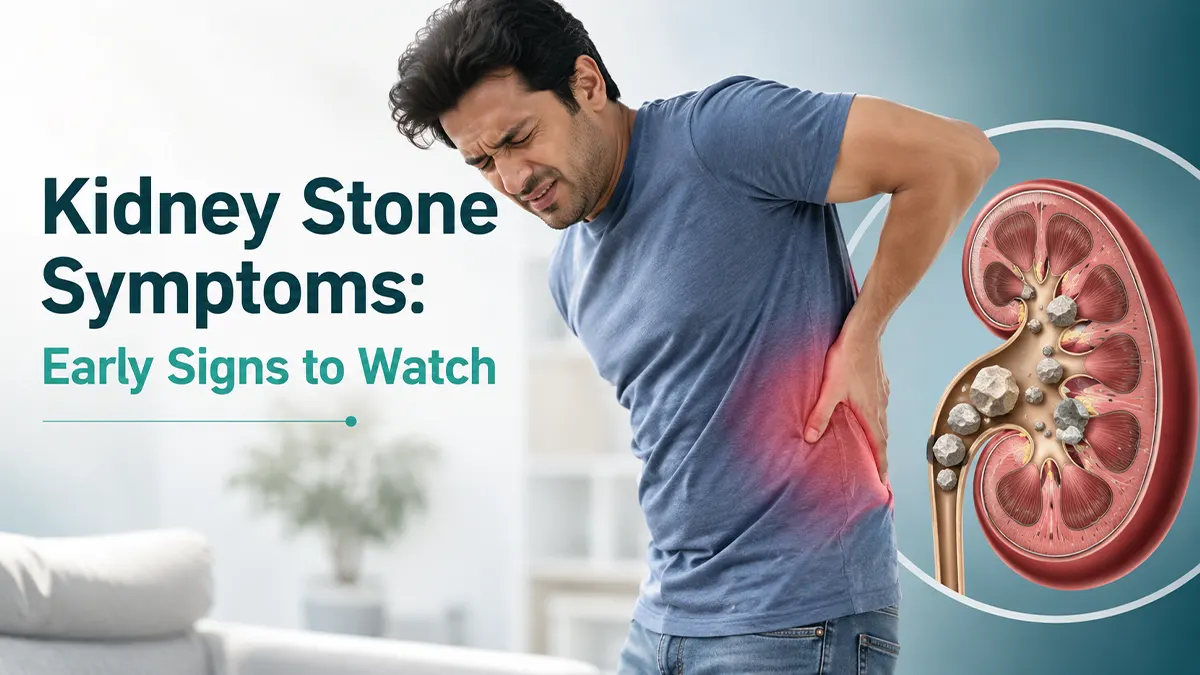
Common Types of Kidney Stones

  • Calcium Stones – The most common type caused by calcium oxalate or calcium phosphate crystals.
  • Uric Acid Stones – Frequently seen in people consuming high-protein diets or suffering from gout.
  • Struvite Stones – Usually develop after recurrent urinary tract infections.
  • Cystine Stones – Rare stones caused by inherited genetic disorders.
Kidney Stone Symptoms

What Are the Early Symptoms of Kidney Stones?

People often ask, "What are the first symptoms of kidney stones?" Symptoms depend on whether the stone is still in the kidney or has moved into the ureter. A small stone may cause no symptoms, while a moving or obstructing stone can cause pain, blood in the urine, urinary symptoms, nausea or vomiting.

The most common kidney stone symptoms include:

  • Sharp or severe pain in the back, side, lower abdomen or groin.
  • Pain that moves from the side or back toward the lower abdomen or groin.
  • Burning or pain while passing urine.
  • Blood in the urine, which may make urine look pink, red or brown.
  • Frequent or urgent need to urinate.
  • Passing only a small amount of urine or having difficulty urinating.
  • Cloudy or foul-smelling urine, particularly when infection is also present.
  • Nausea and vomiting.
  • Fever or chills, which can indicate a urinary infection and need prompt medical assessment.
  • Difficulty passing urine, especially when obstruction is suspected.

If symptoms are persistent, severe or accompanied by warning signs, consult an experienced Best Urologist in Hyderabad for accurate diagnosis and personalized treatment.
Kidney Stone Pain Symptoms

Kidney Stone Pain Symptoms

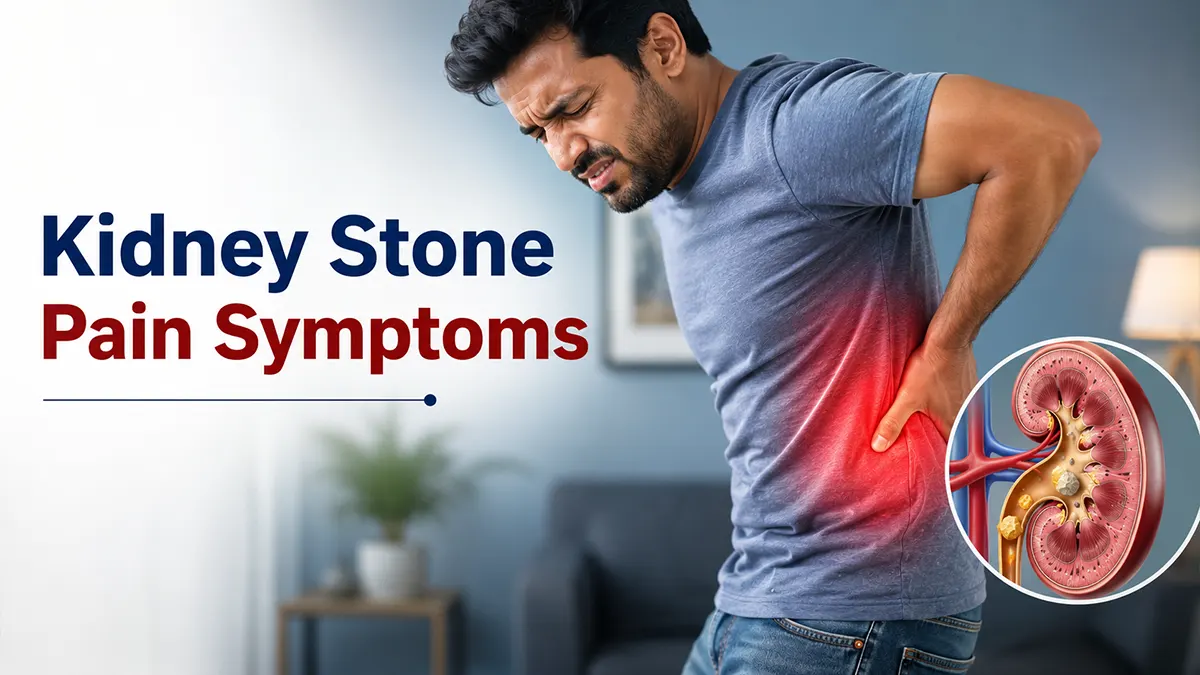
Kidney stone pain is often called renal colic. It commonly occurs when a stone moves through the ureter or obstructs urine flow. Pain may be sharp, severe and difficult to localize, and its position can change as the stone moves.

Kidney stone pain may come in waves and can shift from the flank or back toward the lower abdomen or groin. The pattern varies between people, so symptoms alone cannot confirm that pain is caused by a stone.

Characteristics of Kidney Stone Pain

  • Sudden onset of severe pain.
  • Pain starts in the back or side.
  • Pain radiates to the lower abdomen and groin.
  • Pain may change location as the stone moves.
  • Pain or burning may occur during urination, particularly when the stone is closer to the bladder.
  • Associated nausea and vomiting are common.

Persistent or severe pain should be assessed by a healthcare professional. Diagnosis can identify the stone’s size and location and whether there is urinary obstruction or infection. See our guide to Kidney Stone Treatment in Hyderabad.

Symptoms of Kidney Stones in Men and Women

The core symptoms of kidney stones are similar in men and women. Pain location and urinary symptoms depend more on the stone’s position than on sex. In women, symptoms may overlap with urinary or gynaecological conditions, so evaluation is important when the cause is unclear.

Kidney Stone Symptoms in Men

Men may experience flank or side pain that travels toward the lower abdomen or groin. Pain that reaches the testicle can occur when a ureteric stone irritates nearby structures, but other causes of testicular pain also require consideration.

  • Severe pain in the lower back or side
  • Pain radiating to the groin or testicles
  • Burning sensation while urinating
  • Blood in the urine
  • Frequent urination
  • Difficulty passing urine
  • Nausea and vomiting

Kidney Stone Symptoms in Women

Women may have symptoms that overlap with a urinary tract infection or gynaecological condition. Blood in the urine, flank pain, urinary symptoms, fever or vomiting should be medically evaluated rather than assumed to be a kidney stone.

  • Pain in the lower abdomen or pelvis
  • Back or side pain
  • Painful urination
  • Frequent urge to urinate
  • Blood in urine
  • Fever with chills (infection)
  • Nausea or vomiting

Small Kidney Stone Symptoms

Small kidney stones may pass naturally, but the likelihood of passage depends on factors such as stone size, location and anatomy. Even a small stone can cause significant symptoms if it becomes lodged or contributes to obstruction.

Common Symptoms Include

  • Mild lower back pain
  • Occasional burning while urinating
  • Blood in urine
  • Frequent urination
  • Mild abdominal discomfort
  • Pain that comes and goes

The need for treatment cannot be decided from size alone. A clinician may recommend observation for some small stones and active treatment for others, depending on symptoms, obstruction, infection, stone location and the likelihood of spontaneous passage.

What Causes Kidney Stones?

Kidney stones develop when urine contains high concentrations of minerals and salts that crystallize inside the kidneys. Several lifestyle and medical conditions can increase your risk of developing kidney stones.

  • Not drinking enough water
  • High salt intake
  • Obesity
  • Type 2 diabetes
  • Family history of kidney stones
  • Recurrent urinary tract infections
  • High animal protein diet
  • Excess oxalate-rich foods
  • Certain medications
  • Gout
  • Hyperparathyroidism
  • Previous kidney stones

Drinking enough fluid is an important part of kidney stone prevention, but the right amount varies with health conditions, climate and activity. People with kidney, heart or other conditions that restrict fluids should ask their clinician how much to drink. Diet changes should be tailored to the type of stone.

How Are Kidney Stones Diagnosed?

Accurate diagnosis helps determine the size, location, and type of kidney stone, allowing your doctor to recommend the most effective treatment plan.

Diagnostic Tests May Include

  • Physical examination and medical history
  • Urine routine and urine culture
  • Blood investigations
  • Ultrasound KUB
  • CT KUB scan, when clinically appropriate
  • X-Ray KUB
  • Stone composition analysis

The appropriate imaging test depends on symptoms, age, pregnancy status, stone history and the clinician’s assessment. Urine and blood tests can also help identify bleeding, infection and factors associated with stone formation.

When Should You See a Urologist?

Some small kidney stones pass naturally, but persistent or severe symptoms need medical assessment. A stone that blocks urine flow or occurs with infection can become a serious problem and may require urgent treatment.

Consult a Urologist Immediately If You Have:

  • Severe or worsening pain that does not settle
  • Blood in urine
  • Difficulty passing urine
  • High fever with chills
  • Persistent vomiting
  • Repeated kidney stone episodes
  • Known kidney stones that are not passing or are causing ongoing symptoms

If you are experiencing these symptoms, consult a Best Urologist in Hyderabad for a complete evaluation and personalized treatment plan. Evaluation can help identify obstruction, infection and the most appropriate treatment.

Kidney Stone Treatment in Hyderabad

Treatment depends on the stone’s size, location, composition, whether it is blocking urine flow, and the severity of symptoms. Some stones can be observed while they pass naturally; others may need medication, shock-wave treatment, ureteroscopy or other stone-removal procedures.

Treatment Options Available

  • Medical management – Observation, pain control, hydration advice and selected medicines when appropriate.
  • ESWL (Shock Wave Lithotripsy) – Uses shock waves to break a suitable stone into smaller fragments.
  • URS / Laser Lithotripsy – A scope is passed through the urinary tract to remove or fragment a suitable stone, often using a laser.
  • RIRS – A flexible scope is used to reach kidney stones through the urinary tract and fragment or remove them when appropriate.
  • PCNL – A procedure that accesses the kidney through a small skin incision and is commonly considered for larger or complex stones.

At My Health Hospitals, treatment options are selected according to the patient’s stone characteristics and clinical needs. Available Kidney Stone Treatment in Hyderabad procedures may include endoscopic and laser-based stone treatment when clinically appropriate.

Kidney Stone Surgery Cost in Hyderabad

The kidney stone surgery cost in Hyderabad varies by procedure and clinical complexity. Factors can include stone size and location, the procedure selected, anaesthesia, investigations, hospital stay, medicines and insurance coverage.

  • Stone size and complexity
  • Laser or minimally invasive surgery
  • Hospital admission duration
  • Diagnostic investigations
  • Type of anesthesia
  • ICU requirement (if needed)
  • Post-operative medications
  • Insurance coverage

For patients searching for kidney stone surgery cost in Hyderabad, the final estimate depends on the procedure recommended after evaluation. See our Kidney Stone Surgery Cost in Hyderabad guide for the factors that can affect treatment expenses.

How to Prevent Kidney Stones

Not every kidney stone can be prevented, but recurrence risk can often be reduced by identifying the stone type and addressing relevant fluid, dietary and medical factors.

  • Drink enough fluid to keep urine adequately diluted, unless your doctor has advised a fluid restriction.
  • Reduce salt intake.
  • Maintain a healthy body weight.
  • Limit sugar-sweetened beverages.
  • Moderate excessive animal protein when advised for your stone type.
  • Get calcium in appropriate amounts rather than avoiding calcium automatically.
  • Limit high-oxalate foods only when this is appropriate for your stone type and advised by a clinician.
  • Manage conditions such as diabetes and high blood pressure.
  • Attend regular follow-up appointments.
  • Follow your urologist's dietary advice.

Read our complete guide on Best Diet for Kidney Stones to learn which foods to eat and avoid.

Why Choose My Health Hospitals for Kidney Stone Treatment?

My Health Hospitals provides urology evaluation and treatment in Hyderabad. Treatment decisions are based on clinical assessment, imaging, stone characteristics and the patient’s individual needs.

  • Experienced Urology Care
  • Laser and Endoscopic Stone Treatment
  • Endourology and Diagnostic Facilities
  • Diagnostic Imaging
  • Individualized Treatment Planning
  • Emergency Assessment When Required
  • NABH-related quality information where applicable
  • Cost and Insurance Guidance
  • Follow-up and Post-procedure Care
  • Patient-centred Follow-up

Looking for the Best Urologist in Hyderabad? Our urology team evaluates kidney stone symptoms, imaging findings and treatment options and provides follow-up based on the individual clinical situation.

Dr. Jayanth Reddy - Consultant Urologist
MEDICALLY REVIEWED BY

Dr. Jayanth Reddy

Senior Consultant Urologist & Andrologist

This article has been medically reviewed by Dr. Jayanth Reddy, Senior Consultant Urologist & Andrologist at My Health Hospitals. He specializes in the diagnosis and treatment of kidney stones, enlarged prostate (BPH), urinary tract disorders, male infertility, and minimally invasive urological surgery.

Dr. Jayanth Reddy ensures that the information published on this page is medically accurate, evidence-based, and aligned with current clinical guidelines. However, this content is intended for educational purposes only and should not replace professional medical consultation, diagnosis, or treatment.

  • Speciality: Urology & Andrology
  • Expertise: Kidney Stones, Laser Stone Surgery, RIRS, URSL, PCNL, Enlarged Prostate (BPH), Urological Disorders
  • Hospital: My Health Hospitals, Hyderabad
  • Content Reviewed: July 2026

Frequently Asked Questions About Kidney Stone Symptoms

Find answers to the most commonly asked questions about kidney stone symptoms, diagnosis, treatment, and prevention.

The first symptoms can include pain in the back or side, pain that moves toward the lower abdomen or groin, blood in the urine, burning during urination, urinary urgency, nausea or vomiting. Some small stones cause no symptoms.
Kidney stone pain commonly starts in one side of the back or flank below the ribs and may move toward the lower abdomen or groin as the stone travels through the ureter.
Kidney stone pain may be sudden, severe and one-sided and can come in waves or move toward the abdomen or groin. Back pain has many other causes, so symptoms alone cannot confirm a kidney stone.
Yes. A kidney stone can irritate the urinary tract and cause blood in the urine. The urine may look pink, red or brown, or blood may only be detected on testing.
Yes. Burning or pain while urinating can occur, particularly when a stone is near the lower urinary tract. A urinary infection can cause similar symptoms and should be considered.
Yes. A stone moving toward the bladder can cause urinary urgency or frequency. These symptoms can also occur with urinary tract infections and other conditions.
Men may have flank or side pain that radiates toward the lower abdomen or groin, blood in the urine, painful urination, urinary frequency, nausea or vomiting. Testicular pain can have other causes and should be evaluated.
Women may experience flank or back pain, lower abdominal pain, blood in the urine, painful or frequent urination, nausea or vomiting. Symptoms can overlap with urinary or gynaecological conditions.
Some small stones pass naturally, but the likelihood depends on their size, location and the individual clinical situation. A doctor may recommend observation, medicines and follow-up imaging when appropriate.
Doctors may use a medical history, physical examination, urine and blood tests, ultrasound, X-ray or CT imaging. The best test depends on symptoms and the clinical situation.
No. Imaging is selected according to symptoms, age, pregnancy status, previous stone history and the need to confirm stone size, location or obstruction. Ultrasound may be appropriate in some situations.
Treatment depends on stone size, location, composition, obstruction and symptoms. Options may include observation, medicines, shock-wave lithotripsy, ureteroscopy with or without laser treatment, RIRS or PCNL.
Laser stone treatment is usually performed through a scope passed through the urinary tract. The laser can fragment a suitable stone so it can be removed or pass as smaller pieces.
RIRS, or retrograde intrarenal surgery, uses a flexible scope passed through the urinary tract to reach kidney stones. The stone may then be fragmented or removed using appropriate instruments.
PCNL, or percutaneous nephrolithotomy, accesses the kidney through a small skin incision and is commonly considered for larger or complex kidney stones.
There is no single price for kidney stone surgery. Cost can vary with the stone’s size and location, procedure, anaesthesia, investigations, hospital stay, medicines and insurance coverage.
Adequate fluid intake is important for prevention, unless you have been told to restrict fluids. Depending on the stone type, a clinician may also advise changes in sodium, animal protein, calcium or oxalate intake.
Diet depends on the stone type. Some people may need to reduce sodium or excessive animal protein, while those with certain calcium oxalate stones may need advice about oxalate-rich foods. Do not eliminate calcium without medical guidance.
Seek medical assessment for severe or persistent pain, blood in the urine, repeated vomiting, difficulty passing urine, fever or chills, or suspected urinary obstruction. Fever with urinary symptoms can require urgent evaluation.
A stone can cause urinary obstruction, infection, bleeding and severe pain. Untreated obstruction or infection can affect kidney function, so persistent or severe symptoms should be evaluated promptly.

Experiencing Kidney Stone Symptoms?

Early diagnosis can prevent serious complications. Book a consultation with our experienced urologists for accurate diagnosis and advanced kidney stone treatment.

Book an Appointment

Our Branch Locations

Find the Best Hospital Near You

My Health Hospitals – Kukatpally

H.No 15-24-212, MIG-212, Rd Number 1, K P H B Phase 1, Kukatpally, Hyderabad, Telangana 500072

Get Directions

My Health Hospitals – Tarnaka

H.No:-12-5-30, WhiteHouse, Moula Ali Rd, South Lalaguda, Tarnaka, Secunderabad, Telangana 500017

Get Directions
My Health Assistant