
-
 Kphb Branch
+91 9111674111
-
Tarnaka Branch
+91 9100001201
- Book Appointment
+91 9111674111
+91 9100001201
Gastroenterology
Medically reviewed by Dr. Krishna Chaitanya, MBBS, MS – Surgical Gastroenterologist
Antral gastritis is inflammation affecting the antrum, the lower portion of the stomach. Symptoms can include upper-abdominal discomfort, nausea, early fullness and indigestion, but some people have no symptoms. The right evaluation depends on the suspected cause, including H. pylori, medicines such as NSAIDs, alcohol-related irritation, bile reflux or less common conditions.
It is inflammation of the stomach lining in the antral region. It is not diagnosed from symptoms alone; a clinician may use the history, medicines, H. pylori testing and, when appropriate, upper-GI endoscopy with biopsy to identify the cause and check for complications.
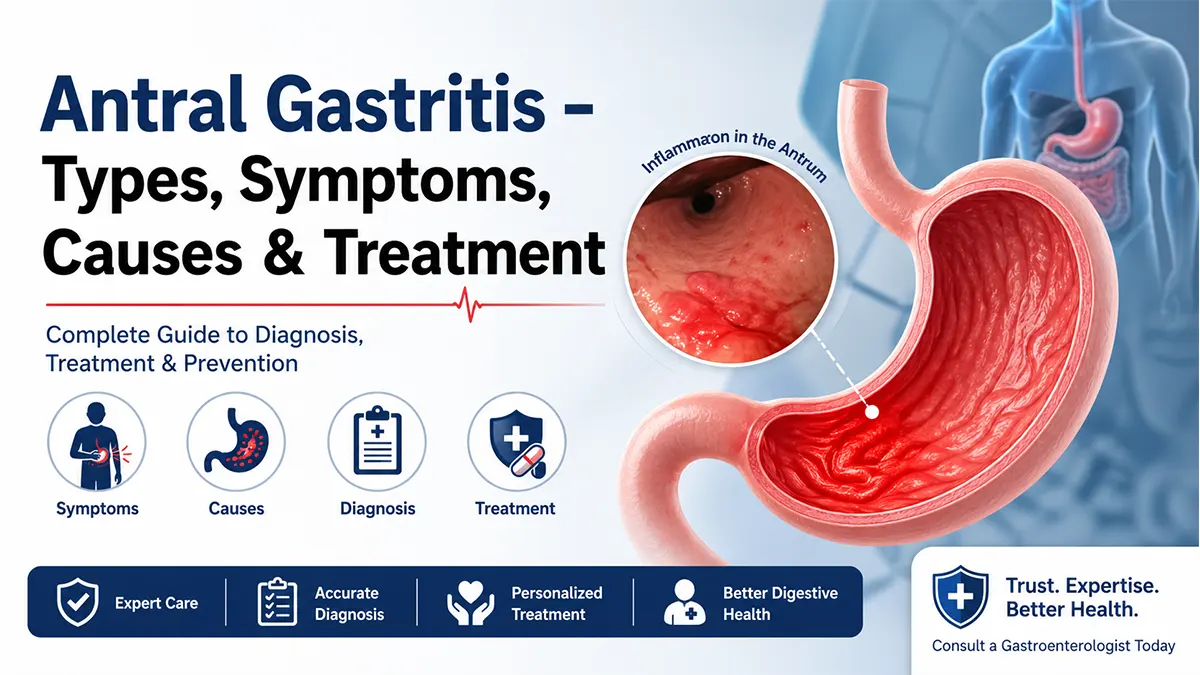
The antrum is the lower part of the stomach. Gastritis means inflammation of the stomach lining, while gastropathy refers to stomach-lining damage with little or no inflammation. These conditions can have different causes and require different treatment.
The antrum is involved in the final stage of gastric digestion and helps regulate the movement of stomach contents into the small intestine. Inflammation in this area may occur as part of broader gastritis, particularly with H. pylori infection.
Spicy or acidic foods may aggravate symptoms for some people, but diet is not considered the main cause of most gastritis cases. H. pylori infection, NSAIDs, alcohol-related irritation and other medical conditions can be more important causes.
Gastritis can develop suddenly or over a longer period, and some forms can damage the stomach lining enough to produce erosions or ulcers.
Acute inflammation or stomach-lining injury can develop over a relatively short period. The cause may include irritating medicines, alcohol or serious illness, depending on the clinical setting.
Chronic gastritis persists over time. H. pylori and autoimmune gastritis are important causes. Long-standing inflammation can sometimes lead to atrophic changes and nutritional problems.
Erosive disease involves breaks in the stomach lining and may cause ulcers or bleeding. NSAIDs, alcohol and severe physical illness can contribute in appropriate circumstances.
Symptoms vary widely. Many people with gastritis have no symptoms, while others develop dyspepsia or signs related to stomach-lining injury.
Pain, burning or discomfort in the upper abdomen may occur with gastritis or other digestive conditions.
Nausea and vomiting can occur, particularly when stomach irritation is significant.
Some people feel full sooner than expected during a meal or uncomfortably full after eating.
Indigestion, bloating and meal-related discomfort can overlap with several upper-GI conditions.
Loss of appetite may occur when ongoing stomach discomfort makes eating unpleasant.
Black, tarry stools or vomiting blood can indicate gastrointestinal bleeding and require urgent medical attention.
Vomiting blood or material that looks like coffee grounds, black or tarry stools, significant dizziness or fainting, severe persistent abdominal pain, or symptoms suggesting substantial blood loss should not be managed as simple acidity at home.
The underlying cause determines what treatment is appropriate. Common causes include infection, medicines and direct irritation of the stomach lining.
Helicobacter pylori is an important cause of chronic gastritis. If testing confirms infection, eradication treatment is generally needed rather than treating symptoms alone.
Long-term or frequent use of nonsteroidal anti-inflammatory drugs such as ibuprofen or naproxen can damage the stomach lining and increase ulcer and bleeding risk.
Alcohol can irritate and damage the stomach lining, particularly with heavy exposure. Individual triggers vary, so treatment should focus on the underlying cause.
Bile reflux can contribute to reactive gastropathy. Your clinician may consider this when symptoms and examination findings suggest it.
In autoimmune gastritis, the immune system attacks cells in the stomach lining. It may be associated with iron or vitamin B12 deficiency and needs appropriate evaluation.
Other conditions, infections, radiation, chemotherapy, celiac disease and inflammatory disorders can cause gastritis or gastropathy in selected patients.
A doctor first reviews symptoms, medical history and medicines. Testing is selected according to the suspected cause and the patient's risk factors.
Your doctor reviews pain pattern, meal relation, vomiting, bleeding symptoms and medicines such as NSAIDs.
Breath, stool or other appropriate tests may be used to detect H. pylori infection.
Endoscopy allows direct examination of the esophagus, stomach and duodenum and may include biopsies.
Blood or stool tests and other investigations may be used to look for anemia, bleeding or alternative diagnoses.
Treatment is cause-specific. There is no single “best” treatment for every patient with antral gastritis.
Confirmed H. pylori infection is treated with a combination of medicines, commonly including antibiotics and an acid-suppressing medicine. The exact regimen depends on current guidance and previous antibiotic exposure.
Doctors may use PPIs or other acid-suppressing medicines when clinically appropriate to reduce symptoms and help selected stomach-lining injuries heal.
If NSAIDs are contributing to stomach injury, a clinician may recommend changing, reducing or stopping them when medically appropriate. Do not stop prescribed medicines without advice.
Autoimmune disease, bile reflux, nutritional deficiencies or another underlying condition may require targeted treatment rather than routine acidity medicines alone.
There is no universal gastritis diet. If particular foods or drinks consistently worsen your symptoms, reducing those triggers may improve comfort while the underlying cause is evaluated.
After H. pylori treatment, follow-up testing may be recommended to confirm that the infection has been eradicated, using the timing and test advised by your clinician.
Dietary advice should be individualized. Research does not support a single food list that causes or cures most cases of gastritis.
Persistent, recurrent or unexplained upper-abdominal symptoms deserve clinical evaluation, particularly when they interfere with eating or daily activities.

This article is medically reviewed by Dr. Krishna Chaitanya for clinical accuracy, patient safety and appropriate gastroenterology terminology.
Last reviewed: June 17, 2026
Editorial & Medical Review PolicyMy Health Hospitals provides gastroenterology evaluation in Hyderabad. A clinician can assess symptoms and decide whether H. pylori testing, endoscopy or another investigation is appropriate.
Answers to common questions around symptoms, causes, diagnosis, treatment, diet and recovery.
Symptoms can include upper-abdominal pain or discomfort, nausea, bloating, indigestion, early fullness and reduced appetite. Some people have no symptoms.
Important causes include H. pylori infection, NSAID-related stomach injury, alcohol-related irritation, bile reflux and autoimmune gastritis. Other causes are possible.
No. Acidity and reflux describe symptoms or conditions involving stomach acid, while gastritis refers to inflammation of the stomach lining. Symptoms can overlap, so they should not be diagnosed from symptoms alone.
Yes. H. pylori is an important cause of chronic gastritis. If testing confirms the infection, appropriate eradication treatment is generally required.
Depending on the situation, doctors may use a urea breath test, stool test or testing of stomach tissue obtained during endoscopy.
Not everyone with indigestion needs endoscopy. A doctor decides based on symptoms, alarm features, age, medical history and the suspected diagnosis. Endoscopy can directly examine the stomach and allow biopsies when indicated.
Treatment depends on the cause. Doctors may use acid-suppressing medicines, medicines for H. pylori eradication, or other treatment directed at the underlying condition.
Yes. Medicines such as ibuprofen and naproxen can damage the stomach lining, particularly with long-term or frequent use, and can increase ulcer and bleeding risk.
There is no universal gastritis diet. If particular foods, alcohol or drinks repeatedly worsen your symptoms, reducing those triggers may help. A balanced diet is preferable to unnecessary restriction.
Spicy food can aggravate symptoms in some people, but it is not considered the main cause of most gastritis. Infection, medicines and other medical factors can be more important.
Yes. Alcohol can irritate and damage the stomach lining and can contribute to erosive stomach injury, especially with heavy exposure.
Everyday psychological stress is not the main cause of most gastritis. Severe physical illness can cause a form of acute stress-related stomach injury, while stress can also make digestive symptoms feel worse.
There is no single recovery time. It depends on the cause, severity and treatment. H. pylori gastritis requires eradication therapy, while medicine-related injury improves when the offending factor is appropriately addressed.
Yes. Bloating, indigestion, upper-abdominal discomfort and early fullness can occur with gastritis, although these symptoms can also have other digestive causes.
Gastritis or related stomach injury can sometimes bleed. Vomiting blood, coffee-ground material or passing black, tarry stools requires urgent medical assessment.
Reduced appetite, early fullness or persistent symptoms can contribute to weight loss. Unexplained weight loss should be evaluated because it can have causes other than gastritis.
Many cases are manageable, but some forms can lead to ulcers, bleeding, atrophic changes or nutritional deficiencies. The risk depends on the underlying cause and whether it is appropriately treated.
Some forms of gastritis or gastropathy can cause erosions or ulcers, particularly when H. pylori or NSAID-related injury is involved.
A gastroenterologist is the appropriate specialist when symptoms are persistent, recurrent, complicated or require further investigation.
Arrange medical evaluation for persistent or recurrent symptoms, unexplained weight loss, recurrent vomiting, anemia or symptoms that interfere with daily life. Seek urgent care for vomiting blood, black stools, fainting or severe persistent abdominal pain.
This page is for general health information and does not replace an individual medical assessment or treatment plan.
More patient-friendly articles covering common health conditions, symptoms, tests and treatments.


Find the Best Hospital Near You
H.No 15-24-212, MIG-212, Rd Number 1, K P H B Phase 1, Kukatpally, Hyderabad, Telangana 500072
H.No:-12-5-30, WhiteHouse, Moula Ali Rd, South Lalaguda, Tarnaka, Secunderabad, Telangana 500017