
-
 Kphb Branch
+91 9111674111
-
Tarnaka Branch
+91 9100001201
- Book Appointment
+91 9111674111
+91 9100001201
BMI Calculator
Calculate your Body Mass Index (BMI) from height and weight, then use the result as a screening measure—not a diagnosis—to understand the standard adult BMI categories.
Important: The adult BMI categories below apply to adults aged 20 years and older. Children and teenagers need BMI-for-age percentiles based on age and sex rather than adult BMI cut-offs.
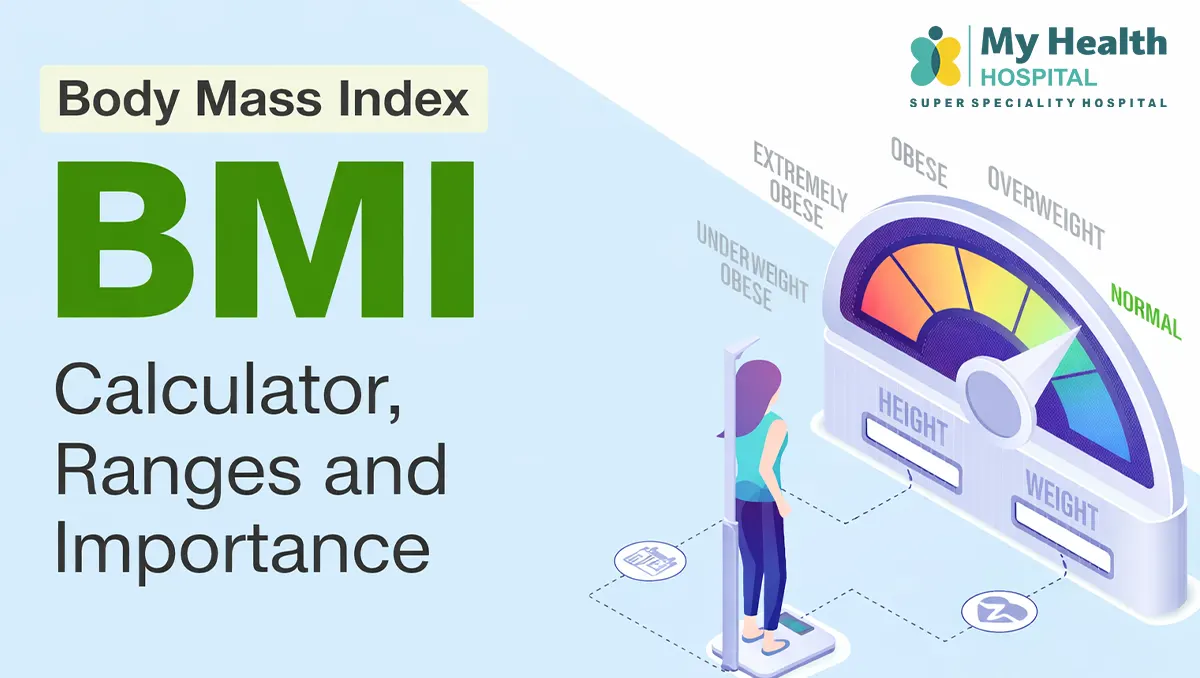
BMI is a calculation based on weight and height. For adults, it is commonly used to screen for weight categories such as underweight, healthy weight, overweight and obesity. A BMI result should be interpreted alongside medical history, physical examination, lifestyle, waist circumference and relevant laboratory findings.
BMI can provide a quick estimate of weight status from two measurements: height and weight.
BMI does not directly measure body fat and cannot diagnose diabetes, heart disease or another illness by itself.
Muscle mass, fat distribution, age, medical history and other health measurements can change how a BMI result should be interpreted.
For adults aged 20 years and older.
For children and teens: do not use these adult cut-offs. BMI from age 2 through 19 is interpreted using age- and sex-specific BMI percentiles.
Adult BMI is calculated by dividing weight in kilograms by height in metres squared.
BMI = weight (kg) ÷ [height (m) × height (m)]
For example, if an adult weighs 70 kg and is 1.70 m tall, the BMI is approximately 24.2 kg/m². The calculator on this page performs the same mathematical calculation.
The number is only a starting point. A healthcare professional may consider waist circumference, blood pressure, blood glucose, cholesterol, medications, physical activity, nutrition, sleep, muscle mass and existing medical conditions.
The standard adult categories below are used for adults aged 20 years and older. BMI is a screening measure and should be considered with other health information.
| BMI range | Adult category | What it means |
|---|---|---|
| Below 18.5 | Underweight | May warrant assessment of nutrition, recent weight change and possible underlying causes. |
| 18.5 to less than 25 | Healthy weight | Falls within the standard adult healthy-weight BMI category. |
| 25 to less than 30 | Overweight | Associated with increased risk for several chronic conditions, depending on the overall health picture. |
| 30 or higher | Obesity | Associated with higher risk of several chronic health conditions and may require a broader clinical assessment. |
One of the adult obesity classes. Risk should be assessed alongside other clinical factors.
A higher BMI category in which assessment of related health conditions may be particularly important.
Also called severe obesity in standard adult classifications and warrants appropriate medical assessment.
Adult BMI cut-offs should not be applied to children and teenagers. Because children and adolescents are still growing, BMI from age 2 through 19 is interpreted using sex-specific BMI-for-age percentiles.
Parents should discuss a child's growth pattern and BMI percentile with a pediatrician or qualified healthcare professional rather than relying on an adult BMI chart.
A child's height, weight and body composition change during growth. The same BMI value can have a different interpretation at different ages and for different sexes.
A BMI outside the standard healthy-weight range can be associated with health risks, but BMI alone does not determine an individual's disease risk.
Higher BMI can be associated with conditions such as high blood pressure, abnormal cholesterol and cardiovascular disease.
Excess body weight is associated with greater risk of insulin resistance and type 2 diabetes.
Adults with obesity have a higher likelihood of developing high blood pressure and related complications.
Excess body weight can increase the risk of obstructive sleep apnea and other breathing-related problems.
Higher body weight can increase mechanical stress on weight-bearing joints and is associated with osteoarthritis.
Obesity is associated with several other chronic conditions. Individual risk varies with genetics, age, lifestyle and medical history.
BMI is useful because it is simple and inexpensive, but it does not tell you exactly how much body fat you have or where fat is distributed.
People with substantial muscle mass may have a higher BMI without having excess body fat.
Waist measurement can provide additional information about central fat distribution and health risk.
Diabetes, hypertension, thyroid disorders, medications and family history can affect the overall interpretation.
Blood glucose, cholesterol and other appropriate tests may help assess cardiometabolic health when clinically indicated.
Consider medical advice when your BMI result is outside the healthy-weight category, especially if you have symptoms, unexpected weight change or other health concerns.
Unexpected weight loss or persistent difficulty maintaining weight deserves assessment.
Rapid or unexplained weight gain may have lifestyle, medication or medical causes.
High blood sugar, cholesterol or blood pressure can warrant a broader health assessment.
Breathlessness during sleep, significant fatigue or other persistent symptoms should not be attributed to BMI alone.
A general physician can help interpret BMI together with blood pressure, glucose, cholesterol, medical history and other relevant findings.

Qualification: MBBS, MD (General Medicine)
General medicine consultation can be useful when BMI is accompanied by diabetes risk, high blood pressure, abnormal cholesterol, unexplained weight changes or other metabolic concerns. The appropriate evaluation depends on the individual patient.
My Health Hospitals provides general medicine services at its Kukatpally and Tarnaka locations.
Patients can seek general medical evaluation at either My Health Hospitals branch.
H.No 15-24-212, MIG-212, Rd Number 1, K P H B Phase 1, Kukatpally, Hyderabad, Telangana 500072
Phone: +91 9111674111
H.No 12-5-30, WhiteHouse, Moula Ali Rd, South Lalaguda, Tarnaka, Secunderabad, Telangana 500017
Phone: +91 9100001201
Answers to common questions about adult BMI, BMI categories, children, health risks and interpretation.
BMI, or Body Mass Index, is a calculation based on weight and height that is used as a screening measure for weight status.
For adults aged 20 years and older, a BMI from 18.5 to less than 25 is classified as healthy weight in the standard adult categories.
The adult BMI formula and standard categories are the same for men and women. However, body composition and fat distribution can differ, so BMI should be interpreted in clinical context.
For adults aged 20 years and older, BMI from 25 to less than 30 is classified as overweight.
For adults, BMI of 30 or higher falls in the obesity category. Obesity is further divided into Class 1, Class 2 and Class 3.
No. BMI is a screening measure. A healthcare professional may consider other measurements and clinical information before making an assessment.
Yes. BMI does not distinguish muscle from fat, so people with high muscle mass may have a higher BMI without having excess body fat.
BMI cannot predict or diagnose diabetes by itself, but higher BMI is associated with increased risk of type 2 diabetes. Blood glucose testing may be appropriate depending on individual risk.
Yes. BMI is only one health measure. A person can have metabolic or cardiovascular risk even when BMI is in the standard healthy-weight range.
Yes, but children and teenagers aged 2 through 19 should be assessed using BMI-for-age percentiles based on age and sex rather than adult BMI ranges.
BMI equals weight in kilograms divided by height in metres squared: BMI = kg ÷ m².
For adults aged 20 and older, the standard BMI categories do not change by age. For children and teenagers, BMI is interpreted using age-specific percentiles.
BMI does not directly measure body fat. It is a weight-for-height screening measure, so other assessments may be needed for a fuller picture.
A low BMI can have many explanations, including inadequate nutrition or an underlying medical condition. Unintentional weight loss should be discussed with a healthcare professional.
Weight management should be individualized. Nutrition, physical activity, sleep and medical factors can all be considered, and some people may benefit from professional support.
There is no single interval that is appropriate for everyone. BMI can be reviewed during routine health assessments or when weight changes or health concerns occur.
Consider discussing the result with a healthcare professional, particularly if you have high blood pressure, abnormal glucose, sleep problems, joint symptoms or other concerns.
Pregnancy requires a different approach to weight assessment. Standard adult BMI categories should not be used to judge weight changes during pregnancy without obstetric guidance.
Yes. Waist circumference can provide additional information about abdominal fat distribution and may help with overall risk assessment.
Consider medical advice if your BMI is outside the standard healthy-weight category, especially with unexplained weight changes, diabetes risk, high blood pressure, abnormal laboratory results or persistent symptoms.
Medical disclaimer: This calculator is for general educational screening only. It does not diagnose disease, determine body-fat percentage or replace individualized medical advice. BMI categories are intended for standard adult screening and are not appropriate for children, pregnancy or every individual clinical situation without additional assessment.
If your BMI result is concerning or you also have weight changes, high blood pressure, abnormal blood sugar, cholesterol problems or other symptoms, a general medicine consultation can help put the number into context.
Expert-written medical articles from My Health Hospital
Find the Best Hospital Near You
H.No 15-24-212, MIG-212, Rd Number 1, K P H B Phase 1, Kukatpally, Hyderabad, Telangana 500072
H.No:-12-5-30, WhiteHouse, Moula Ali Rd, South Lalaguda, Tarnaka, Secunderabad, Telangana 500017