

Can a 4 mm Kidney Stone Pass Naturally? Chances, Time & Treatment
Yes, a 4 mm kidney stone can often pass naturally, particularly when it has entered the ureter and there is no dangerous obstruction or infection. The chance of passage depends on more than size alone: location, symptoms, obstruction and individual factors all matter.
Add My Health Hospitals as a Preferred Source on Google to see more of our latest health information.
What Does a 4 mm Kidney Stone Mean?
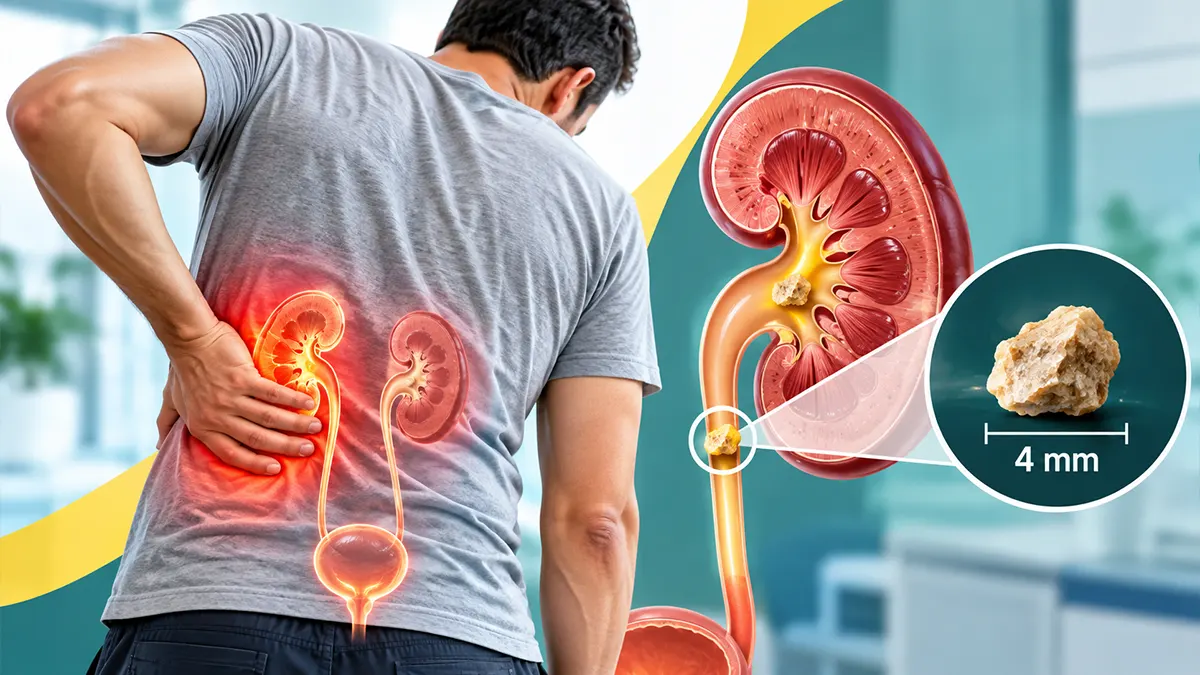
A kidney stone is a hard deposit that forms when certain minerals and salts become concentrated in urine. A stone measuring 4 mm is relatively small, but its clinical importance depends on where it is located and whether it interferes with urine flow.
A 4 mm stone may remain inside the kidney without causing symptoms. If it moves into the ureter, the narrow tube connecting the kidney to the bladder, it can cause pain as it travels toward the bladder.
This is why two people with stones of the same size can have very different symptoms and treatment plans.
Can a 4 mm Kidney Stone Pass Naturally?
Yes, many 4 mm ureteral stones can pass naturally. Stone size is one of the most important factors, but it is not the only factor. The stone's location within the ureter, whether urine is obstructed, the severity of symptoms and whether infection is present all influence the decision to observe or treat.
1Small Size
A 4 mm stone is within the smaller-than-5-mm range. Smaller ureteral stones generally have a better chance of spontaneous passage than larger stones.
2Location Matters
A 4 mm stone in the distal ureter generally has a better chance of passing than a 4 mm stone that remains higher in the ureter.
3No Dangerous Obstruction
Observation is more reasonable when urine is flowing adequately and there is no serious obstruction or kidney-function concern.
4No Infection
Fever, chills or infection together with urinary obstruction changes the situation and requires prompt medical assessment.
What Is the Chance of Passing a 4 mm Kidney Stone?
A 4 mm stone belongs to the less-than-5-mm group. EAU guideline evidence reports spontaneous passage for approximately 75% of ureteral stones smaller than 5 mm overall, with passage varying substantially according to location.
The important point is that this is a population estimate, not a personal guarantee. A urologist can give a more individualized assessment after reviewing the scan and the stone's exact location.
| Stone factor | What it means | General passage implication |
|---|---|---|
| 4 mm size | Small ureteral stone | Generally favorable compared with larger stones |
| Upper ureter | Closer to the kidney | Passage may be less likely than with a distal stone |
| Middle ureter | Between kidney and bladder | Passage varies with exact location and patient factors |
| Distal ureter | Closer to the bladder | Generally the most favorable location for spontaneous passage |
| Persistent obstruction | Stone interferes with urine flow | May require closer monitoring or active treatment |
| Infection | Urinary infection with obstruction | Can become an urgent medical problem |
How Long Does a 4 mm Kidney Stone Take to Pass?
There is no exact number of days that applies to every person. Some stones pass quickly, while others take several weeks.
Published guideline data report an average expulsion time of around 17 days for stones that pass spontaneously, although individual passage time can vary considerably.
The time can be influenced by stone location, anatomy, stone shape, ureteral swelling and whether the stone continues moving toward the bladder.
Does the Location of a 4 mm Stone Matter?
Yes. Location is one of the strongest practical factors affecting the likelihood of spontaneous passage.
Upper Ureter
A stone near the kidney has a lower spontaneous-passage probability than a similar stone that has already traveled farther down the ureter.
Middle Ureter
Passage remains possible, but the probability depends on the exact location, anatomy and other clinical findings.
Distal Ureter
Small stones in the lower ureter generally have the best chance of spontaneous passage before entering the bladder.
Inside the Kidney
A 4 mm stone inside the kidney is not the same as a 4 mm ureteral stone. It may remain in the kidney and may not cause symptoms unless it moves or causes obstruction.
What Does a 4 mm Kidney Stone Feel Like?
A 4 mm stone can cause significant pain despite being small. Pain commonly occurs when the stone moves through the ureter or temporarily blocks urine flow.
- Sharp pain in one side of the back or flank below the ribs
- Pain that may move toward the lower abdomen or groin
- Pain that comes and goes in waves
- Blood in the urine
- Frequent or urgent urination
- Burning or pain while urinating
- Nausea or vomiting
Some small stones can also pass with mild symptoms or without being noticed.
Can Drinking Water Help a 4 mm Stone Pass?
Adequate hydration is important while a small stone is being observed, unless your doctor has advised fluid restriction. Maintaining appropriate fluid intake helps prevent dehydration and supports normal urine flow.
However, drinking very large amounts of water rapidly does not guarantee that the stone will pass faster. If you are vomiting, have significant obstruction, kidney disease or another condition affecting fluid balance, follow your healthcare professional's instructions.
Can Tamsulosin Help a 4 mm Stone Pass?
Tamsulosin is an alpha-blocker that may be used as medical expulsive therapy in selected patients with ureteral stones. Whether it is appropriate depends on the stone's location, size, symptoms and clinical circumstances.
A 4 mm stone does not automatically require tamsulosin. Do not start prescription medication without discussing the risks and benefits with a qualified healthcare professional.
When Does a 4 mm Kidney Stone Need Treatment?
Because many small ureteral stones can pass naturally, observation may be appropriate for selected patients. Active treatment becomes more important when the stone causes complications or fails to progress.
Persistent Obstruction
A stone that continues to obstruct urine flow may need intervention depending on the severity, duration and effect on kidney function.
Uncontrolled Pain
Severe pain that cannot be adequately controlled may be a reason to consider active stone treatment.
Infection
Fever or chills with urinary obstruction can indicate infection and requires prompt medical evaluation.
Failure to Pass
If the stone remains stuck or does not progress as expected, your urologist may discuss a procedure rather than continued observation.
What Treatments Are Available If a 4 mm Stone Does Not Pass?
1. Observation
When spontaneous passage is considered likely and there are no complications, the urologist may recommend observation, symptom control and follow-up.
2. Shock Wave Lithotripsy
Shock wave lithotripsy, or SWL/ESWL, uses focused shock waves to break a suitable stone into smaller fragments that can pass through the urinary tract.
3. Ureteroscopy
Ureteroscopy uses a thin endoscope passed through the urinary tract to reach the stone. The stone may be removed or fragmented, often with laser energy.
4. Other Procedures
Procedures such as percutaneous nephrolithotomy are generally reserved for larger or more complex kidney stones. The appropriate treatment depends on the stone's size, location and clinical situation.
What Happens If a 4 mm Stone Does Not Pass?
If the stone remains in the urinary tract, your urologist may reassess your symptoms and repeat imaging when appropriate. The aim is to determine whether the stone has moved, passed, remained stuck or continues to obstruct urine flow.
If spontaneous passage is no longer considered appropriate, active treatment can be discussed. The choice depends on the stone location, symptoms, obstruction, kidney function and patient preferences.
Can a 4 mm Kidney Stone Damage the Kidney?
A 4 mm measurement alone does not mean that permanent kidney damage will occur. The greater concern is persistent obstruction, particularly when it occurs together with infection or impaired kidney function.
This is why a diagnosed stone should not simply be ignored if symptoms continue or if follow-up has been recommended.
When Should You Seek Emergency Medical Care?
- Fever or chills with suspected kidney stone symptoms
- Inability to urinate or very little urine
- Severe or uncontrolled pain
- Repeated vomiting or inability to keep fluids down
- Known urinary obstruction with signs of infection
- Rapidly worsening symptoms
How Is a 4 mm Kidney Stone Diagnosed?
A healthcare professional may use your symptoms, medical history, physical examination, urine testing, blood tests and imaging to evaluate a suspected kidney stone.
- Urine testing: may look for blood, infection and other abnormalities.
- Blood tests: may assess kidney function and other relevant findings.
- Ultrasound: can identify many kidney stones and signs of urinary obstruction.
- CT imaging: may provide detailed information about stone size, location and obstruction when clinically appropriate.
4 mm Kidney Stone: What Should You Do Next?
If a scan has shown a 4 mm stone, the next step is not automatically surgery. A urologist can review the stone's exact location, whether it is obstructing urine, your symptoms, kidney function and whether there are signs of infection.
- Confirm whether the stone is in the kidney or ureter.
- Find out whether there is urinary obstruction.
- Discuss appropriate pain control.
- Maintain appropriate hydration unless medically restricted.
- Follow the recommended imaging or clinical follow-up plan.
- Seek urgent care if fever, inability to urinate, severe uncontrolled pain or repeated vomiting develops.
Related My Health Hospitals Guides
Urology Reference

Dr. Jayanth Reddy
Frequently Asked Questions About 4 mm Kidney Stones
Have a 4 mm Kidney Stone?
A urology consultation can help determine whether your stone is likely to pass naturally or whether active treatment is safer based on its size, location, symptoms, obstruction and infection risk. For appointments at My Health Hospitals, call +91 91116 74111 for Kukatpally or +91 91000 01201 for Tarnaka.
Key Takeaway
A 4 mm kidney stone can often pass naturally, especially when it is already in the ureter and there are no complications. Smaller stones generally have a better chance of spontaneous passage, while stones in the distal ureter tend to pass more readily than stones higher in the ureter.
However, a 4 mm measurement does not guarantee natural passage. Persistent obstruction, infection, uncontrolled pain, kidney-function concerns or failure of the stone to progress may require active treatment.
Medical Disclaimer
This article is for general health education and does not replace diagnosis, emergency care or individualized medical advice. Kidney stone management depends on stone size, location, symptoms, obstruction, infection risk, kidney function and other clinical factors. Always follow the advice of your treating healthcare professional.