

Chest Pain: Gas vs Heart Problem — Key Differences, Warning Signs & When to Act
Chest pain can come from the digestive system, muscles, lungs or the heart. The symptoms can overlap, so the safest approach is to recognize warning signs and avoid trying to diagnose the cause at home.
Add My Health Hospitals as a Preferred Source on Google to see more of our latest health information.
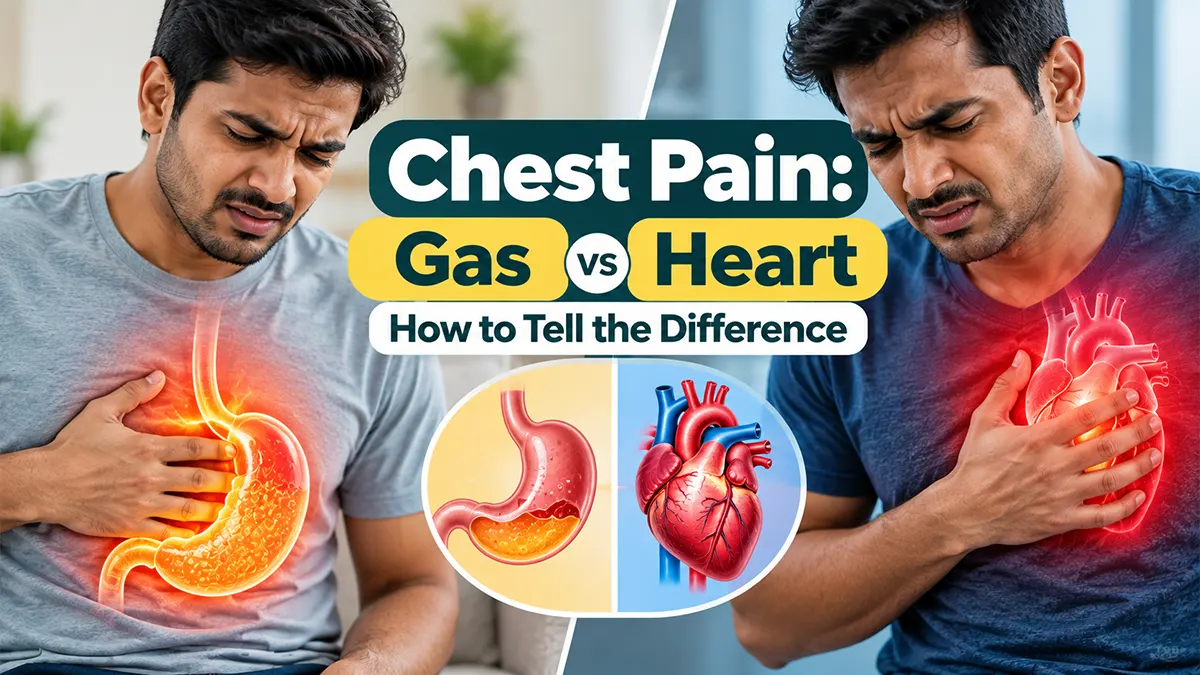
Why It Can Be Difficult to Tell Gas From Heart Pain
There is no single symptom that can reliably separate digestive chest discomfort from a heart problem. Acid reflux may cause a burning sensation behind the breastbone, while heart-related pain may feel like pressure, squeezing, fullness, heaviness or discomfort. Both may occur in the chest and may be accompanied by nausea.
For acute chest pain, clinicians focus on quickly identifying or excluding life-threatening causes. Structured risk assessment and appropriate cardiac testing are used when a heart-related cause is possible.
Gas, Indigestion or Acid Reflux: Clues That May Point to a Digestive Cause
Gas & Bloating
- Belching or passing gas
- Bloating or abdominal distension
- Fullness or discomfort around meals
- Symptoms may occur after swallowing air or certain foods
Acid Reflux / Heartburn
- Burning behind the breastbone
- Acid or food coming back toward the throat
- Symptoms may worsen after meals or when lying down
- Some people can have chest pain without classic heartburn
Gas commonly causes belching, bloating and distension, while GERD can cause heartburn, regurgitation and chest pain. These findings may suggest a digestive cause but do not prove the pain is harmless.
Heart-Related Chest Pain: Warning Features
- Pressure, squeezing, fullness, heaviness or pain in the center or left side of the chest
- Symptoms lasting several minutes or going away and coming back
- Discomfort spreading to one or both arms, the back, neck, jaw or upper abdomen
- Shortness of breath
- Cold sweating
- Nausea or vomiting
- Light-headedness, weakness or fainting
Women can have the same major heart-attack symptoms as men, but may also have accompanying symptoms such as unusual fatigue, nausea, shortness of breath or back, neck, jaw or upper-abdominal discomfort.
Gas vs Heart Problem: Side-by-Side Comparison
| Feature | Digestive causes may suggest | Heart-related concern may suggest |
|---|---|---|
| Type of discomfort | Burning, bloating-related or upper-abdominal discomfort | Pressure, squeezing, heaviness or fullness |
| Associated symptoms | Belching, bloating, regurgitation, nausea | Breathlessness, sweating, faintness, nausea, marked weakness |
| Radiation | Less typical to spread widely | May spread to arm, shoulder, back, neck, jaw or upper abdomen |
| Timing | May relate to meals or lying down | May occur with exertion, but can also occur at rest |
| Safety point | Digestive symptoms do not prove the pain is harmless | Possible heart-attack symptoms need urgent evaluation |
Chest Pain Causes Other Than Gas or Heart Disease
Chest pain can also come from muscle or chest-wall strain, costochondral inflammation, anxiety or panic, lung infections, pulmonary embolism and other conditions. The correct evaluation depends on the symptoms, examination and risk factors.
Risk Factors That Can Make Heart-Related Chest Pain More Concerning
Important cardiovascular risk factors include diabetes, high blood pressure, high cholesterol, smoking, obesity, chronic kidney disease, increasing age and a family history of premature cardiovascular disease. Having no obvious risk factors does not completely exclude a heart problem.
What Tests May Be Used for Chest Pain?
- ECG: evaluates the heart's electrical activity and may identify important abnormalities.
- High-sensitivity cardiac troponin: helps detect myocardial injury when acute coronary syndrome is suspected.
- Physical examination and vital signs: help identify cardiac, respiratory and other causes.
- Echocardiogram: may assess heart structure and function when clinically indicated.
- Stress testing or coronary imaging: may be considered for selected patients according to risk and presentation.
A normal ECG does not by itself rule out every cardiac cause of chest pain, so clinicians may combine symptoms, examination, serial testing and structured risk assessment.
What Should You Do During Sudden Chest Pain?
- Stop exertion and sit or rest in a safe position.
- Seek emergency medical services for severe, persistent or concerning chest pain.
- Do not drive yourself when a heart attack may be occurring.
- Follow instructions from emergency professionals while help is coming.
- Do not delay evaluation by repeatedly trying antacids, gas medicines or home remedies to see whether the pain disappears.
If the Cause Is Gas or Acid Reflux, What Can Help?
Once serious causes have been excluded, treatment depends on the digestive diagnosis. For gas symptoms, clinicians may review eating habits, swallowing air, food triggers and underlying gastrointestinal conditions. For GERD, lifestyle measures and acid-reducing medicines may be used when appropriate.
When Should You See a Cardiologist?
- Chest discomfort repeatedly occurs with walking, exercise or emotional stress.
- You have known coronary artery disease or multiple cardiovascular risk factors.
- You have recurrent unexplained chest pain even when previous symptoms improved.
- You have palpitations, breathlessness, dizziness or fainting with chest discomfort.
- You need assessment of cardiovascular risk or appropriate cardiac testing.
Related My Health Hospitals Guides
Cardiology Reference

Dr Vijay Soorampally
Frequently Asked Questions About Chest Pain: Gas vs Heart Problem
Chest Pain Should Never Be Self-Diagnosed
For new, severe, persistent or unexplained chest pain, seek urgent medical evaluation. For routine cardiology consultations at My Health Hospitals, call +91 9100001201 for Tarnaka or +91 9111674111 for Kukatpally.
Medical Disclaimer
This article is for general health education and does not replace diagnosis or emergency medical care. Symptoms of heart attack, reflux, gas and other conditions can overlap. A clinician should evaluate new or concerning chest pain.