
-
 Kphb Branch
+91 9111674111
-
Tarnaka Branch
+91 9100001201
- Book Appointment
+91 9111674111
+91 9100001201
Varicose Veins
A small cut, blister, or wound on the foot may seem harmless. However, for people living with diabetes, even a minor injury can develop into a serious diabetic foot ulcer if left untreated.
Diabetic foot ulcers are one of the most common complications of diabetes and can lead to severe infections, hospitalization, or even amputation when not managed properly. The good news is that early diagnosis, proper wound care, blood sugar control, and specialist treatment can significantly improve healing outcomes.
In this comprehensive 2026 guide, you'll learn how to identify diabetic foot ulcers, understand their stages, discover the fastest ways to promote healing, and find expert diabetic foot care in Hyderabad.

A diabetic foot ulcer is an open sore or wound that develops on the feet of people with diabetes, usually due to poor blood circulation, nerve damage (diabetic neuropathy), and delayed wound healing.
These ulcers commonly occur on the bottom of the foot, heel, toes, or pressure points. Without timely treatment, they can become infected and lead to serious complications. Early diagnosis, proper wound care, and good blood sugar control are essential for faster healing and preventing amputation.
A Stage 1 diabetic foot ulcer is the earliest and mildest stage of ulcer development. At this stage, the skin may still appear intact, but underlying tissue damage can begin due to prolonged pressure, poor circulation, or diabetic nerve damage.
Identifying a Stage 1 ulcer early allows healthcare providers to start treatment before the condition progresses into deeper wounds or serious infections.
Understanding the stages of diabetic foot ulcers helps patients seek timely treatment and prevent serious complications such as infection, gangrene, and amputation.
Skin remains intact but redness, swelling, calluses, or pressure damage may be present.
An open sore develops, affecting the outer layers of the skin without deep tissue involvement.
The ulcer extends deeper into tissues and may involve fat, tendons, or surrounding structures.
Infection spreads deeper and may affect muscles, joints, or bones.
Extensive tissue damage, gangrene, and a high risk of limb amputation.
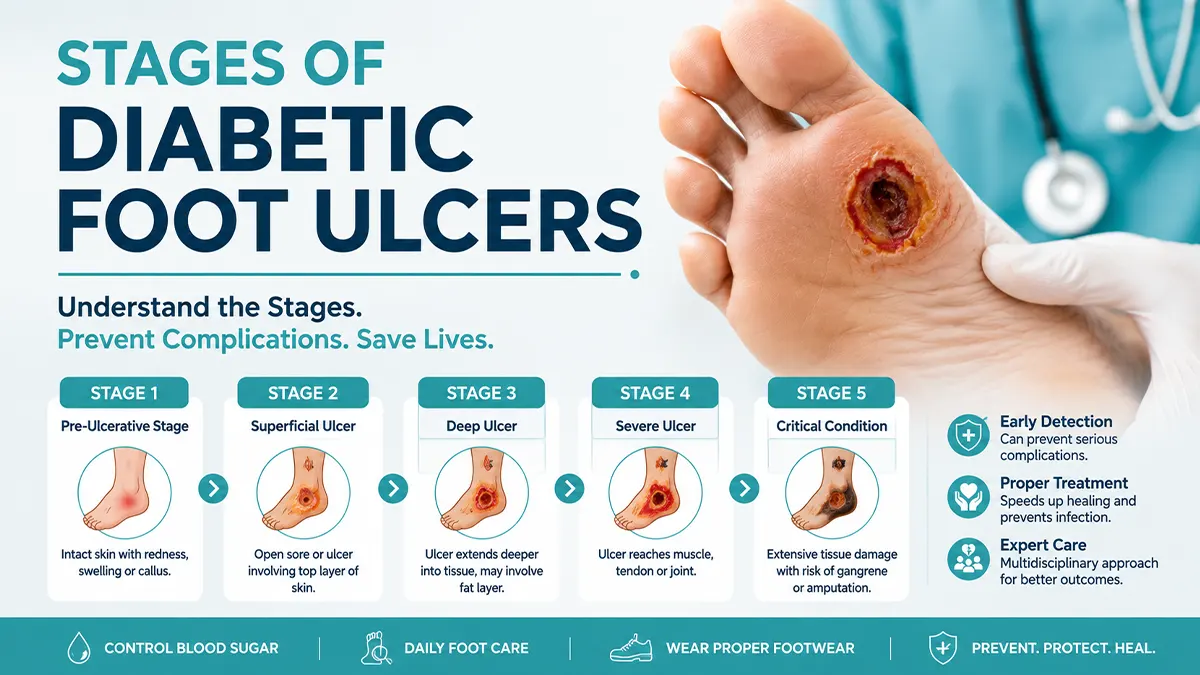
Diabetic foot ulcers often develop because diabetes damages nerves and blood vessels, reducing sensation and slowing the body's natural healing process.
A cut, blister, or sore that does not heal within 1–2 weeks.
Fluid or discharge staining socks, footwear, or dressings.
Inflammation around the wound indicating tissue irritation.
An unpleasant smell may suggest infection within the wound.
Dark or black skin can indicate reduced blood supply and tissue damage.
Reduced sensation caused by diabetic neuropathy.
Many people discover they have diabetes only after complications develop. Recognizing the early warning signs can help you seek treatment sooner and reduce the risk of diabetic foot ulcers and other health problems.
High blood sugar forces the kidneys to work harder, leading to increased urination, especially during the night.
Frequent urination causes fluid loss, resulting in persistent thirst and dehydration.
The body starts breaking down fat and muscle for energy when it cannot properly use glucose.
A diabetic foot ulcer should never be ignored. What begins as a small wound can rapidly progress into a severe infection if left untreated.
Early diagnosis and professional wound care significantly reduce the risk of hospitalization, surgery, and amputation.
A bacterial skin infection that can spread quickly.
Infection can spread beneath the skin into muscles and tissues.
A serious bone infection requiring advanced treatment.
Tissue death caused by severe infection or poor circulation.
A life-threatening body-wide response to infection.
Severe untreated ulcers may ultimately require amputation.
Faster healing depends on proper wound care, diabetes management, and specialist supervision. Follow these medically recommended strategies.
Keeping blood glucose levels stable promotes faster healing and reduces infection risk.
Proper cleaning removes bacteria and supports healthy tissue growth.
Modern wound dressings help maintain the ideal healing environment.
Use diabetic footwear, custom insoles, walking boots, or offloading devices.
Protein, Vitamin C, Zinc, Iron, and Vitamin A help repair damaged tissues.
Regular wound care visits help identify complications before they worsen.
The fastest way is not a home remedy—it is professional diabetic wound care and early medical intervention.
Healing times vary depending on the size, depth, infection status, blood sugar control, and overall health of the patient. Early treatment generally leads to faster recovery.
| Ulcer Severity | Estimated Healing Time |
|---|---|
| Mild Ulcer | 2–6 Weeks |
| Moderate Ulcer | 6–12 Weeks |
| Deep Ulcer | 3–6 Months |
| Severe Infected Ulcer | Longer Depending on Complications |
There is no scientifically proven home remedy that can replace professional diabetic wound care. However, certain healthy habits can support the body's natural healing process.
The "3-hour rule" generally refers to avoiding long gaps between meals to help maintain more stable blood sugar levels throughout the day.
Many diabetes specialists recommend wearing soft, breathable diabetic socks during sleep to protect sensitive feet.
Prevention is always better than treatment. Following a daily foot care routine can significantly reduce the risk of diabetic foot ulcers.
Looking for treatment costs? Read our detailed guide on Diabetic Foot Ulcer Surgery Cost in Hyderabad to understand surgical options, expenses, and factors that influence treatment costs.
Hyderabad offers advanced diabetic wound care through multidisciplinary teams that include diabetologists, vascular surgeons, endocrinologists, wound care specialists, and podiatry experts.
Diabetic foot ulcers are among the most serious complications of diabetes, but they are also largely preventable with proper foot care, blood sugar control, and timely medical attention.
Identify wounds and warning signs before complications develop.
Professional wound care helps speed healing and prevent infections.
Ongoing diabetic foot care reduces the risk of future ulcers.

At My Health Hospitals, diabetic foot ulcer management is led by Dr. Puneeth Joopalli, a highly experienced Senior Consultant Vascular Surgeon with over 18+ years of expertise in treating diabetic foot complications, peripheral arterial disease, non-healing wounds, and vascular conditions.
Early diagnosis and specialized vascular care play a critical role in improving blood circulation, accelerating wound healing, preventing infections, and reducing the risk of limb loss in patients with diabetic foot ulcers.
“A diabetic foot ulcer should never be ignored. Early intervention, proper wound care, and improved circulation can significantly reduce complications and help preserve limb function.”
— Dr. Puneeth Joopalli, Senior Consultant Vascular Surgeon
Senior Consultant
Vascular & Endovascular Surgeon
This article has been medically reviewed by Dr. Puneeth Joopalli, Senior Consultant Vascular & Endovascular Surgeon with 18+ years of experience in diabetic foot care, vascular disorders, and limb salvage treatments.
"Early diagnosis and proper diabetic foot care can help prevent serious complications and improve wound healing outcomes."
— Dr. Puneeth JoopalliFind answers to common questions about diabetic foot ulcers, wound healing, prevention, and treatment options.
Expert-written medical articles from My Health Hospital


Find the Best Hospital Near You
H.No 15-24-212, MIG-212, Rd Number 1, K P H B Phase 1, Kukatpally, Hyderabad, Telangana 500072
H.No:-12-5-30, WhiteHouse, Moula Ali Rd, South Lalaguda, Tarnaka, Secunderabad, Telangana 500017