
My Health Hospitals logo

Rheumatology & Clinical Nutrition

15 Foods to Avoid with Arthritis

Blog

Foods to Avoid with Arthritis in 2026: Indian Diet Tips for Joint Pain

Medically reviewed by Orthopaedic & Rheumatology Specialists

Quick Answer:

There is no single food list that causes arthritis, and diet cannot replace prescribed treatment. However, many people with arthritis benefit from limiting highly processed foods, sugary drinks and sweets, excess saturated fat, refined carbohydrates, excess salt and alcohol. A balanced pattern built around vegetables, fruits, whole grains, pulses, nuts, seeds, fish or other suitable protein and unsaturated fats is generally a better choice. For gout, purine-rich foods such as organ meats and some red meats need more specific guidance.

Why Diet Matters for Arthritis

Arthritis includes different conditions, so the effect of food varies. Osteoarthritis is strongly influenced by overall diet quality, body weight and activity, while rheumatoid arthritis is an inflammatory autoimmune disease. Gout requires a different approach because uric acid and purine intake matter. There is no proven “arthritis cure diet,” but a balanced eating pattern can support healthy weight, cardiovascular health and overall wellbeing.

For people with rheumatoid or other inflammatory arthritis, evidence supports a Mediterranean-style pattern rich in vegetables, fruits, legumes, whole grains, nuts, fish and unsaturated fats, while limiting highly processed foods, excess sugar, unhealthy fats and large amounts of red or processed meat. Some individuals may also notice personal food triggers, but these should not be assumed to apply to everyone.

Medical Insight:

Current guidance does not support claiming that one specific food universally “causes” an arthritis flare. If you repeatedly notice a food-related symptom pattern, discuss it with a clinician or dietitian rather than unnecessarily eliminating major food groups.

At My Health Hospitals, arthritis care may include diagnosis, medication management, physiotherapy, activity advice and individualized nutrition guidance when appropriate.

Foods to avoid with arthritis and Indian diet guide

What Is Arthritis?

Arthritis is a condition that causes inflammation in one or more joints, leading to pain, swelling, stiffness, and reduced mobility. It can affect people of all ages, but it becomes more common as we get older.

The severity of arthritis varies from mild discomfort to significant joint damage that can interfere with daily activities such as walking, climbing stairs, or even holding objects.

  • ✔ Osteoarthritis
  • ✔ Rheumatoid Arthritis
  • ✔ Gout
  • ✔ Psoriatic Arthritis
  • ✔ Ankylosing Spondylitis
Medical Insight:

Inflammatory foods can aggravate the autoimmune response, disrupt synovial fluid health, and increase joint pain, stiffness, and swelling.

What is arthritis and types of arthritis
Arthritis Diet Guide

15 Foods to Avoid with Arthritis

Certain foods can increase inflammation, worsen joint pain, and aggravate arthritis symptoms. Here are the major foods arthritis patients should limit or avoid.

01

Processed Sugars

Sugar increases inflammatory markers and may worsen swelling and pain.

Avoid
  • Soft drinks
  • Sweets
  • Cakes
  • Packaged juices
Better Options
  • Fresh fruits
  • Dates
  • Jaggery (limited)
02

Refined Carbohydrates

Highly processed carbs spike blood sugar and trigger inflammation.

Avoid
  • White bread
  • Noodles
  • Bakery products
  • Maida snacks
Better Options
  • Whole wheat roti
  • Jowar roti
  • Ragi dosa
03

White Rice

Excessive white rice may promote inflammation because of its high glycemic index.

Better Alternatives
  • Brown rice
  • Foxtail millet
  • Little millet
  • Quinoa
04

Deep-Fried Foods

Reheated oils create harmful compounds that increase inflammation.

Avoid
  • Samosas
  • Pakodas
  • Poori
  • Chips
Better Options
  • Air-fried snacks
  • Roasted makhana
  • Steamed foods
05

Processed Meat

Processed meats contain preservatives and unhealthy fats that worsen inflammation.

Avoid
  • Sausages
  • Salami
  • Frozen kebabs
06

Red Meat & Mutton

Excess red meat may raise uric acid levels and worsen arthritis symptoms.

Better Protein Sources
  • Fish
  • Skinless chicken
  • Lentils
  • Paneer
07

Organ Meats

Organ meats are high in purines and can trigger gout attacks.

Avoid
  • Liver fry
  • Brain curry
  • Kidney masala
08

Excess Salt

Too much sodium can increase fluid retention and joint swelling.

Avoid
  • Pickles
  • Papads
  • Instant soups
  • Namkeen
09

Refined Oils

Excess omega-6 rich oils may contribute to inflammation.

Limit
  • Sunflower oil
  • Corn oil
  • Soybean oil
Better Oils
  • Groundnut oil
  • Mustard oil
  • Olive oil
10

Alcohol

Alcohol may worsen inflammation and interfere with arthritis medicines.

11

Excess Dairy

Some arthritis patients experience worsening symptoms with full-fat dairy.

Try Instead
  • Low-fat curd
  • Almond milk
12

MSG

MSG-containing foods may trigger inflammation in sensitive individuals.

Common Sources
  • Instant noodles
  • Chinese takeaways
  • Packaged soups
13

Very Spicy Foods

Extremely spicy foods may irritate digestion and indirectly worsen inflammation.

14

Gongura (Excess)

Gongura is healthy, but excess acidity may irritate sensitive stomachs.

15

Fast Foods

Fast foods contain refined carbs, unhealthy fats, and excess salt.

Avoid
  • Burgers
  • Fries
  • Fried chicken
  • Instant foods

Why These Foods Trigger Arthritis Symptoms

Certain foods can increase inflammation and worsen joint pain, swelling, and stiffness.

Inflammatory foods can affect your immune system, gut health, and cartilage, making arthritis symptoms more severe over time.

  • ✔ Increase C-reactive protein (CRP) levels
  • ✔ Trigger autoimmune responses
  • ✔ Disrupt gut microbiome balance
  • ✔ Damage cartilage
  • ✔ Reduce synovial fluid lubrication
  • ✔ Promote weight gain
Medical Insight:

Reducing inflammatory foods may help lower CRP levels and improve joint function naturally.
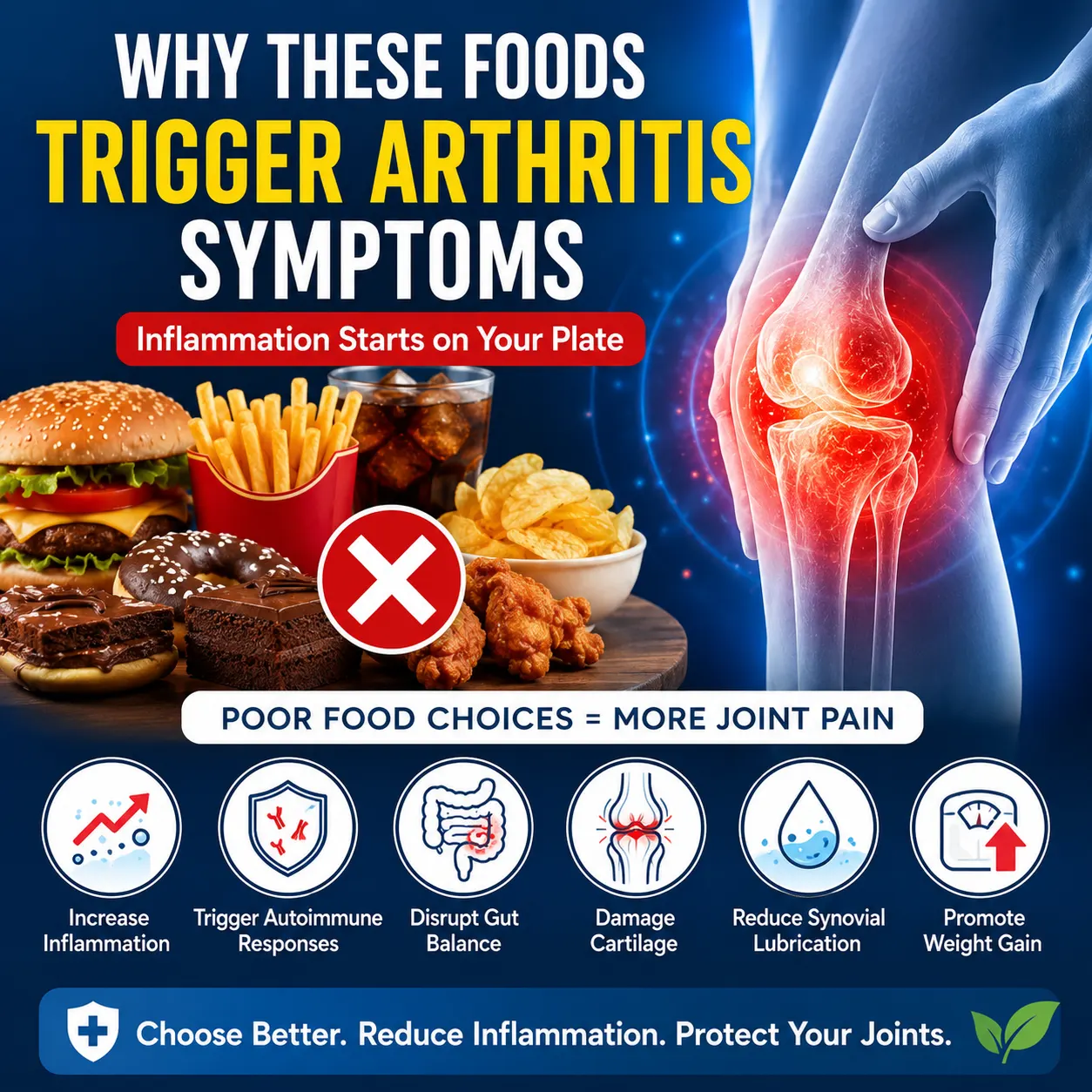
How foods trigger arthritis inflammation

Arthritis-Friendly Indian Diet Tips

Follow an anti-inflammatory Indian diet to help reduce joint pain, stiffness, and inflammation naturally.

Eat More

Include nutrient-rich foods that help fight inflammation.

  • ✔ Turmeric
  • ✔ Ginger
  • ✔ Garlic
  • ✔ Leafy vegetables
  • ✔ Walnuts
  • ✔ Fatty fish
  • ✔ Millets

Drink

Hydrating beverages can support joint lubrication and recovery.

  • ✔ Warm water
  • ✔ Green tea
  • ✔ Turmeric milk

Limit

Reduce foods that may worsen inflammation and joint pain.

  • ✔ Sugar
  • ✔ Fried foods
  • ✔ Red meat
  • ✔ Excess salt
Diet Tip:

Combining anti-inflammatory foods with regular exercise and a healthy weight can significantly improve arthritis symptoms and overall joint health.

Arthritis-Safe Biryani Alternatives

Love biryani? You can still enjoy it with a few healthier modifications.

  • ✔ Brown rice or millet biryani
  • ✔ Less oil
  • ✔ More vegetables
  • ✔ Skinless chicken
  • ✔ No fried onions

Foods That Help Reduce Arthritis Pain

These anti-inflammatory foods may help reduce joint pain, stiffness, and swelling naturally.

Turmeric

Contains curcumin, a natural compound known for its powerful anti-inflammatory properties.

Ginger

May help reduce joint pain and morning stiffness in people with arthritis.

Salmon

Rich in omega-3 fatty acids that help lower inflammation and support joint health.

Walnuts

Provide healthy fats and antioxidants that may reduce inflammatory responses.

Spinach

Loaded with vitamins, minerals, and antioxidants that support healthy joints.

Flaxseeds

A plant-based source of omega-3 fats that may help ease inflammation.

Healthy Eating Tip:

Include these foods regularly as part of a balanced anti-inflammatory diet to support long-term joint health.

Consult Our Arthritis Specialists in Hyderabad

If you are experiencing persistent joint pain, swelling, stiffness, or difficulty walking, consult our experienced orthopaedic and rheumatology specialists for accurate diagnosis and personalized treatment.

Expert Care at My Health Hospitals:

We offer comprehensive arthritis care, including advanced diagnostics, medication management, physiotherapy, lifestyle guidance, and personalized anti-inflammatory diet plans.

Call Us to Register

Book your appointment at My Health Hospitals for expert arthritis treatment and long-term joint care.

Meet Our Arthritis Care Experts

Consult experienced specialists for arthritis diagnosis, treatment, and joint pain management.

Dr Vishwanath Karne Orthopaedic Surgeon Tarnaka Hyderabad

Dr. Vishwanath Karne

Orthopaedic Surgeon – Tarnaka

15+ years of experience in treating arthritis, joint pain, fractures, sports injuries, and musculoskeletal disorders.

Book Appointment

Dr Sandeep Manthena Orthopaedic Surgeon Hyderabad

Dr. Sandeep Manthena

Orthopaedic Specialist - Kukatpally

Expert in knee pain, arthritis treatment, joint replacement, and sports injury management.

Book Appointment

At My Health Hospitals, our specialists provide comprehensive arthritis care with advanced diagnostics, personalized treatment plans, physiotherapy, and nutrition guidance.

Dr Vishwanth Karne Orthopedic Surgeon
Medically Reviewed

Dr. Vishwanth Karne

Senior Orthopedic Surgeon | 15+ Years Experience

This article has been medically reviewed by Dr. Vishwanth Karne, an experienced Orthopedic Surgeon specializing in joint pain, arthritis management, sports injuries, trauma care, knee disorders, and advanced orthopedic treatments.

The medical information presented in this article has been reviewed for clinical accuracy and is based on current orthopedic practices and evidence-based healthcare guidelines.

Last Medical Review: June 2026
Arthritis Diet FAQs

20 Frequently Asked Questions About Arthritis Diet

Clear answers to common questions about foods to avoid with arthritis, Indian diet choices, joint pain, rheumatoid arthritis, osteoarthritis and gout.

There is no universal arthritis food list. In general, limit highly processed foods, sugary drinks and sweets, excess saturated fat, refined carbohydrates, excess salt and alcohol. Your arthritis type and medical conditions should guide more specific restrictions.
Foods high in added sugar, heavily processed foods, fried foods and excess saturated fat may be less helpful for inflammatory health. Some people also report individual triggers, but a food that bothers one person may not bother another.
Build meals around vegetables, fruits, dal and other pulses, whole grains or millets, nuts and seeds, suitable protein and unsaturated oils. Fish can provide omega-3 fats for people who eat it. Keep highly processed, sugary and heavily fried foods occasional.
White rice does not automatically cause arthritis or flares. Large portions can make it harder to manage weight and overall diet quality. You can vary meals with brown rice, millets or other whole grains according to your preferences and health needs.
Mutton is not a universal trigger for arthritis. However, frequent large portions of red meat can increase saturated-fat intake, and gout requires special attention to purine-rich foods. People with gout should follow individualized advice about meat and uric acid.
There is no rule that every person with rheumatoid arthritis must completely avoid red meat. However, diets lower in processed foods, saturated fat and large amounts of red meat are generally favored for overall inflammatory and cardiovascular health.
High intakes of added sugar and sugar-sweetened drinks are generally discouraged because they add excess calories and are associated with an overall less healthy dietary pattern. Some people with inflammatory arthritis report that sugary foods worsen symptoms, but this is not universal.
Frequent fried and highly processed foods are best limited because they can be high in unhealthy fats and calories. Choosing grilled, steamed, baked or lightly cooked foods more often can support a balanced diet.
No single oil is a treatment for arthritis. Unsaturated fats such as extra-virgin olive oil can fit an anti-inflammatory eating pattern. In Indian cooking, use oils in moderate amounts and vary sources rather than relying on large quantities of any one oil.
Most people do not need to eliminate dairy solely because they have arthritis. Choose suitable lower-fat or unsweetened options if preferred, and discuss elimination with a clinician if you repeatedly notice symptoms after a specific dairy food.
There is no strong evidence that nightshade vegetables such as tomatoes or peppers universally cause arthritis flares. If you consistently notice symptoms after a particular food, keep a food-and-symptom record and discuss it with a healthcare professional.
There is not strong evidence that MSG itself universally causes arthritis inflammation. The bigger dietary issue may be the overall nutritional quality and sodium content of heavily processed foods that contain MSG.
A balanced pattern rich in vegetables, fruits, whole grains, legumes, nuts, seeds and suitable sources of omega-3 fats may support overall inflammatory health. Food is supportive care and does not replace arthritis medicines or physiotherapy when prescribed.
Turmeric is a commonly used spice and can be part of a balanced diet. Evidence for concentrated curcumin supplements is different from evidence for culinary turmeric, and supplements may interact with medicines. Ask your clinician before using high-dose supplements.
Millets can be a nutritious whole-grain option and may help add fiber and dietary variety. They are not a specific treatment for arthritis, but they can fit a balanced Indian diet when tolerated.
Focus on a balanced diet that supports a healthy weight: vegetables, fruits, whole grains, pulses, nuts, seeds, suitable protein and unsaturated fats. For people who are overweight, gradual weight loss can reduce stress on weight-bearing joints.
Gout has more specific dietary considerations than osteoarthritis. Organ meats and some high-purine foods can raise uric acid, while alcohol can also be a concern. A gout diet should be individualized with medical advice and should not replace urate-lowering treatment when prescribed.
No. There is no diet proven to cure rheumatoid arthritis. Healthy eating may support general health and may help some people manage symptoms, but disease-modifying treatment should be continued as prescribed.
For people with overweight or obesity, gradual weight loss can reduce mechanical stress on weight-bearing joints and may improve osteoarthritis symptoms. A sustainable eating pattern plus appropriate physical activity is usually more useful than a restrictive diet.
Seek medical evaluation for persistent or worsening joint pain, significant swelling, prolonged morning stiffness, recurrent attacks, fever with a hot swollen joint, or difficulty walking or using the affected joint. Early diagnosis matters because different types of arthritis require different treatments.

Latest Health Blogs

Expert-written medical articles from My Health Hospital

Our Branch Locations

Find the Best Hospital Near You

My Health Hospitals – Kukatpally

H.No 15-24-212, MIG-212, Rd Number 1, K P H B Phase 1, Kukatpally, Hyderabad, Telangana 500072

Get Directions

My Health Hospitals – Tarnaka

H.No:-12-5-30, WhiteHouse, Moula Ali Rd, South Lalaguda, Tarnaka, Secunderabad, Telangana 500017

Get Directions
My Health Assistant