
-
 Kphb Branch
+91 9111674111
-
Tarnaka Branch
+91 9100001201
- Book Appointment
+91 9111674111
+91 9100001201
Gastroenterology
Every November, the world observes Pancreatic Cancer Awareness Month to shed light on one of the deadliest forms of cancer. Despite medical advances, pancreatic cancer remains one of the most challenging cancers to detect early and treat effectively. In 2025, the campaign continues to emphasize the importance of early detection, innovative treatments, and patient support. This awareness month unites patients, survivors, healthcare professionals, and organizations to promote education, advocacy, and research funding aimed at saving lives. Understanding its history, theme, and prevention strategies is key to spreading awareness and hope.

Pancreatic cancer begins in the tissues of the pancreas, an organ located behind the stomach that plays an essential role in digestion and blood sugar regulation. The most common type is pancreatic ductal adenocarcinoma, which originates in the ducts that carry digestive enzymes.
What makes pancreatic cancer particularly dangerous is its silent progression. Symptoms often appear only when the disease has reached an advanced stage, making early detection crucial yet difficult.
The Pancreatic Cancer Awareness Month initiative began in the early 2000s, driven by advocacy groups and foundations seeking to raise awareness for an often-overlooked disease.
In 2011, the United States Senate officially declared November as Pancreatic Cancer Awareness Month to honor those affected and to inspire collective efforts for research and education.
Globally, organizations such as the Pancreatic Cancer Action Network (PanCAN) and World Pancreatic Cancer Coalition (WPCC) have since expanded awareness efforts across continents. The movement gained more traction with World Pancreatic Cancer Day, observed every third Thursday of November, bringing together people worldwide in a unified fight against the disease.
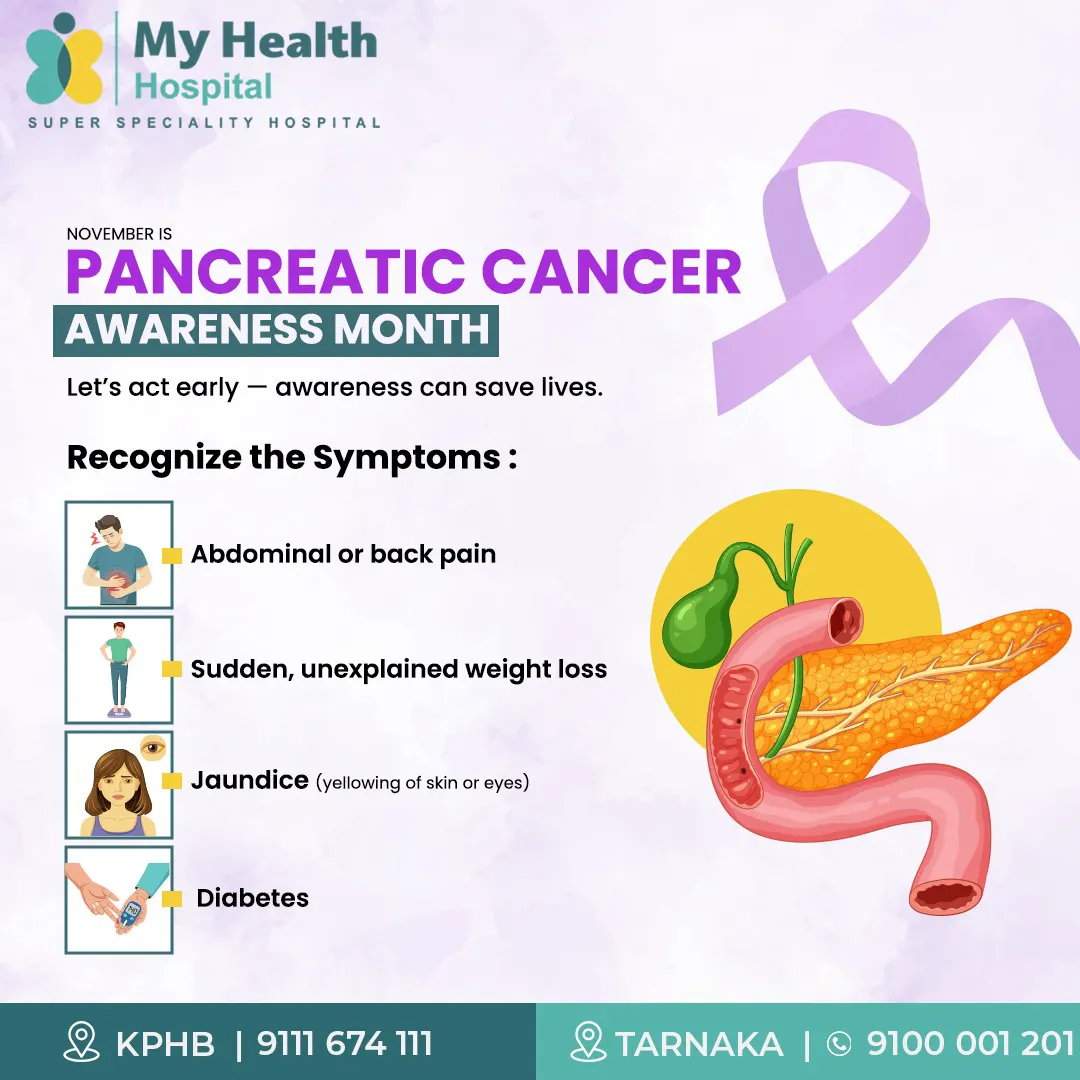
The Pancreatic Cancer Awareness Month 2025 theme is “Shine a Light: Early Detection Saves Lives.”
This theme emphasizes the importance of recognizing symptoms early, supporting screening programs, and encouraging open conversations about digestive and pancreatic health.
Pancreatic cancer has one of the lowest survival rates among major cancers — with a five-year survival rate of less than 12%. Awareness plays a vital role in improving outcomes through:
Recognizing the symptoms of pancreatic cancer early can make a huge difference in treatment success.
If any of these symptoms persist, it’s important to consult a gastroenterologist or oncologist for further evaluation.
The exact cause of pancreatic cancer is not always clear, but several risk factors have been identified:
Understanding these risks can help in prevention and early intervention.
Early detection remains the biggest challenge in pancreatic cancer management. Since the pancreas is located deep within the abdomen, tumors often go unnoticed.
Researchers are currently working on biomarker tests and liquid biopsies that may detect pancreatic cancer earlier in the future.
Treatment depends on the stage and overall health of the patient. A multidisciplinary approach is often recommended.
While not all cases can be prevented, certain lifestyle choices can significantly reduce your risk:
A proactive approach to overall health is a powerful defense against pancreatic and other cancers.
Every year, landmarks around the world — from the Empire State Building to the London Eye — are lit up in purple, the official color of pancreatic cancer awareness.
Non-profit organizations organize Purple Runs, educational webinars, community screenings, and social media campaigns under hashtags like:
#PancreaticCancerAwarenessMonth #ShineALight2025 #PurpleForPancreas
You can contribute to the cause in multiple ways:
Every action, big or small, helps strengthen the global fight against this disease.
Pancreatic Cancer Awareness Month 2025 is a reminder that awareness saves lives. The theme “Shine a Light: Early Detection Saves Lives” inspires hope and action toward early diagnosis, research advancement, and patient care.
By spreading awareness, supporting research, and promoting healthy lifestyles, we can collectively reduce the impact of this devastating disease.
Together, let’s make November 2025 a month of education, empathy, and empowerment for all those affected by pancreatic cancer.
Expert-written medical articles from My Health Hospital
Find the Best Hospital Near You
H.No 15-24-212, MIG-212, Rd Number 1, K P H B Phase 1, Kukatpally, Hyderabad, Telangana 500072
H.No:-12-5-30, WhiteHouse, Moula Ali Rd, South Lalaguda, Tarnaka, Secunderabad, Telangana 500017