

AUB treatment in Tarnaka, Secunderabad
Heavy periods, unexpected spotting and unpredictable cycles can interrupt work, sleep and daily activities. Abnormal uterine bleeding (AUB) describes a bleeding pattern; it does not identify the cause. Assessment looks at where bleeding is coming from, how much blood is being lost and which treatment fits your health and pregnancy plans.
At My Health Hospitals, Tarnaka, you can consult Dr. Swetha Reddy for an individual assessment. This page explains what to bring to the visit, why tests may be suggested and the choices to discuss before agreeing to a procedure.
Call Tarnaka: +91 9100001201
When bleeding needs urgent help
Seek emergency care for heavy bleeding with fainting, chest pain, breathlessness, severe dizziness or marked weakness. Rapidly soaking pads repeatedly also needs urgent assessment, even before these symptoms develop. Possible pregnancy with bleeding and severe or one-sided abdominal pain needs urgent care. Do not wait for a routine clinic slot or an online reply.
Bleeding after menopause needs prompt assessment even if it happens once or is only spotting. It is not always cancer, but the cause must be checked. Heavy ongoing bleeding or feeling unwell makes it urgent.
Your Tarnaka consultation
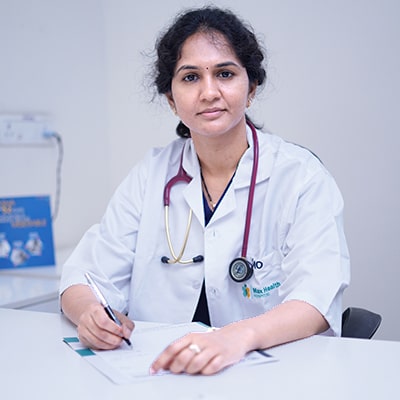
Dr. Swetha Reddy
MBBS, DNB
Obstetrician & Gynecologist
10+ years of experience
Tarnaka consultation: 10:00 AM–5:00 PM
Call to confirm the day's availability before travelling. Tell the reception team if bleeding is heavy or you feel dizzy so that appropriate urgent care can be advised.
My Health Hospitals, H.No. 12-5-30, White House, Moula Ali Road, South Lalaguda, Tarnaka, Secunderabad, Telangana 500017.
Which bleeding changes should you report?
- Flow that is heavier than your usual periods, frequent protection changes, flooding or bleeding through clothes.
- Periods that last unusually long, come unpredictably or interfere with everyday activities.
- Bleeding between periods or after sex.
- New bleeding after menopause, including pink or brown discharge.
- Fatigue, palpitations, reduced exercise tolerance or dizziness alongside bleeding.
You do not need to measure an exact volume of blood before asking for help. Mention changes from your usual pattern and their effect on your life. Vaginal, cervical, urinary or rectal bleeding can be confused with uterine bleeding; an assessment helps identify the source.
What can cause abnormal bleeding?
Possible explanations include fibroids, polyps, adenomyosis, changes in ovulation such as PCOS or perimenopause, bleeding disorders, and medicines or contraceptive devices. Less commonly, abnormal changes in the uterine lining, including cancer, may be responsible. Several causes can coexist.
The PALM-COEIN classification groups structural and non-structural causes in people who are not pregnant. Pregnancy-related bleeding needs a separate assessment. Do not assume that irregular bleeding is only a hormonal imbalance or that every fibroid seen on a scan explains it.
Tell the doctor about blood thinners, hormonal contraception, HRT, tamoxifen, copper IUD use and supplements. Do not stop prescribed blood thinners on your own. Heavy bleeding since the first periods, easy bruising, frequent nosebleeds or a family bleeding history are also important.
What to bring and expect at the first visit
- A record of recent bleeding dates, duration, flooding, clots, pain and protection changes, if available. Do not delay urgent care to complete a diary.
- Last menstrual period, any possibility of pregnancy, contraception, previous pregnancies and future pregnancy plans.
- Previous ultrasound, blood-count, biopsy or cervical screening reports and a list of treatments already tried.
- Your medicines, relevant medical conditions and any personal or family history of bleeding or uterine cancer.
The clinician will discuss your symptoms and may offer an abdominal, vaginal or cervical examination where appropriate. Ask what each examination involves, request a chaperone, and say if you wish to pause or stop. Internal examination and transvaginal scanning require your consent.
Tests depend on your symptoms and risk factors
| Assessment | What it helps clarify |
|---|---|
| Pregnancy testing | If pregnancy is possible, this changes how bleeding is investigated and treated. |
| Full blood count | Checks for anaemia with heavy bleeding. Further iron studies may be selected according to the findings and clinical circumstances. |
| Ultrasound | Assesses the uterus and pelvis when indicated. Discuss an abdominal alternative if an internal scan is declined or unsuitable, including its limitations. |
| Hysteroscopy and selected tissue sampling | May be advised for suspected polyps, uterine cavity problems, persistent bleeding or concern about the lining. The reason, pain relief, setting and results plan should be explained. |
| Other blood tests | Thyroid or clotting tests are selected when the history suggests a reason. A routine broad hormone panel is not necessary for every patient with heavy periods. |
A Pap smear or HPV screening test checks the cervix; it does not rule out disease in the uterine lining and does not replace an investigation of symptoms. A reassuring scan also does not automatically end the assessment if bleeding persists. Confirm where recommended investigations are performed and whether a separate appointment or referral is needed.
Treatment choices: bleeding control, cause and pregnancy plans
The initial plan may control blood loss and treat anaemia while further assessment is arranged. Options depend on the cause, severity, other illnesses, previous response and whether you want pregnancy now or later.
- Medicines: non-hormonal bleeding-control medicines, suitable anti-inflammatory medicines or hormonal options may be considered. These are not appropriate for everyone; clotting history, kidney problems, stomach ulcers and other medicines can affect safety. Do not copy someone else's prescription.
- Hormone-releasing intrauterine system: may suit selected patients. Discuss insertion, contraception, early irregular bleeding and the expected review period.
- Cause-directed procedures: hysteroscopic removal may be considered for a suitable polyp or fibroid within the uterine cavity. It is still a procedure even without an abdominal incision. Not every fibroid needs removal.
- Endometrial ablation: may reduce bleeding for selected people who do not want future pregnancy. It is not contraception; pregnancy afterward can be dangerous, so effective contraception is needed. It is unsuitable when future pregnancy is desired.
- Hysterectomy: permanently removes the possibility of carrying a pregnancy and is generally considered after discussing alternatives, or for specific serious disease. Removing the uterus does not automatically mean removing the ovaries; those decisions require separate discussion.
Keeping the uterus does not guarantee fertility. If pregnancy is a priority, say so before choosing medication or a procedure. A treatment option listed here does not confirm its availability at this branch; ask about the treating team, facilities and any referral needed.
Follow-up, results and cost questions
Before leaving, agree when bleeding should improve, how side effects will be managed, when anaemia will be rechecked and how scan or biopsy results will reach you. Do not assume that no phone call means a normal result. Contact the clinic if results have not arrived by the agreed date.
Return for persistent or recurrent bleeding, including bleeding that continues despite a reassuring initial test. If symptoms worsen, seek earlier assessment instead of waiting for the scheduled review.
There is no single AUB treatment price because consultation, investigations, medicines and procedures differ. Request an itemised estimate after assessment, including any pathology, anaesthesia, admission and follow-up charges. Confirm insurance authorisation and exclusions directly; coverage cannot be assumed.
Frequently asked questions
What is abnormal uterine bleeding (AUB)?
AUB describes uterine bleeding that is unusually heavy, prolonged, irregular or occurs at unexpected times. The pattern alone does not identify the cause.
Who can I consult for AUB in Tarnaka?
Dr. Swetha Reddy, MBBS, DNB, consults at My Health Hospitals, Tarnaka. Her listed timing is 10:00 AM–5:00 PM; call +91 9100001201 to confirm availability.
What symptoms should I mention?
Describe heavy or prolonged flow, spotting between periods, bleeding after sex, changes in cycle timing, pain, and symptoms such as fatigue or dizziness. Any bleeding after menopause should be assessed.
Does everyone need all the tests listed?
No. The clinician selects tests from your history, examination and risk factors. Heavy bleeding warrants a blood count, but broad hormone tests, hysteroscopy and biopsy are not automatically needed for everyone.
What causes abnormal bleeding?
Possible causes include polyps, fibroids, adenomyosis, ovulation changes, bleeding disorders, medicines and abnormalities of the uterine lining. Pregnancy-related bleeding must be considered separately if pregnancy is possible.
Can AUB be treated without surgery?
Often medicines or a suitable hormone-releasing intrauterine system can help. The right option depends on the cause and your health. Persistent symptoms or specific findings may require a procedure or specialist referral.
Is AUB serious?
Some causes are benign, but blood loss can cause anaemia and some bleeding patterns need investigation for serious disease. Severe bleeding with faintness, chest pain or breathing difficulty needs emergency care.
Can a normal Pap smear explain or rule out AUB?
No. Cervical screening does not assess the uterine lining or replace an evaluation of bleeding symptoms. Persistent or recurrent symptoms need follow-up.
Can I have treatment if I want a future pregnancy?
Tell the gynecologist before choosing treatment. Some choices preserve the uterus, while ablation is unsuitable for future pregnancy and hysterectomy permanently prevents carrying a pregnancy. Fertility cannot be guaranteed.
Should I wait if bleeding happens only once after menopause?
No. Arrange prompt assessment even for a small amount of spotting or brown or pink discharge. Seek urgent care if bleeding is heavy or you feel unwell.
Related information and appointments
- General guide to abnormal uterine bleeding
- Hysteroscopy consultation in Tarnaka
- Adenomyosis assessment in Tarnaka
- Hysterectomy options and decisions
For a routine appointment, call +91 9100001201 or use the contact form. The contact form is not an emergency service.
Further reading
ACOG: abnormal uterine bleeding; NICE: heavy menstrual bleeding; NHS: bleeding after menopause. General information supports a consultation and does not establish your diagnosis.