
-
 Kphb Branch
+91 9111674111
-
Tarnaka Branch
+91 9100001201
- Book Appointment
+91 9111674111
+91 9100001201
Gastrointestinal Health
Learn where appendicitis pain commonly begins, why it may move to the lower right abdomen, which symptoms can occur alongside pain, how doctors diagnose appendicitis, and when urgent medical care is needed.
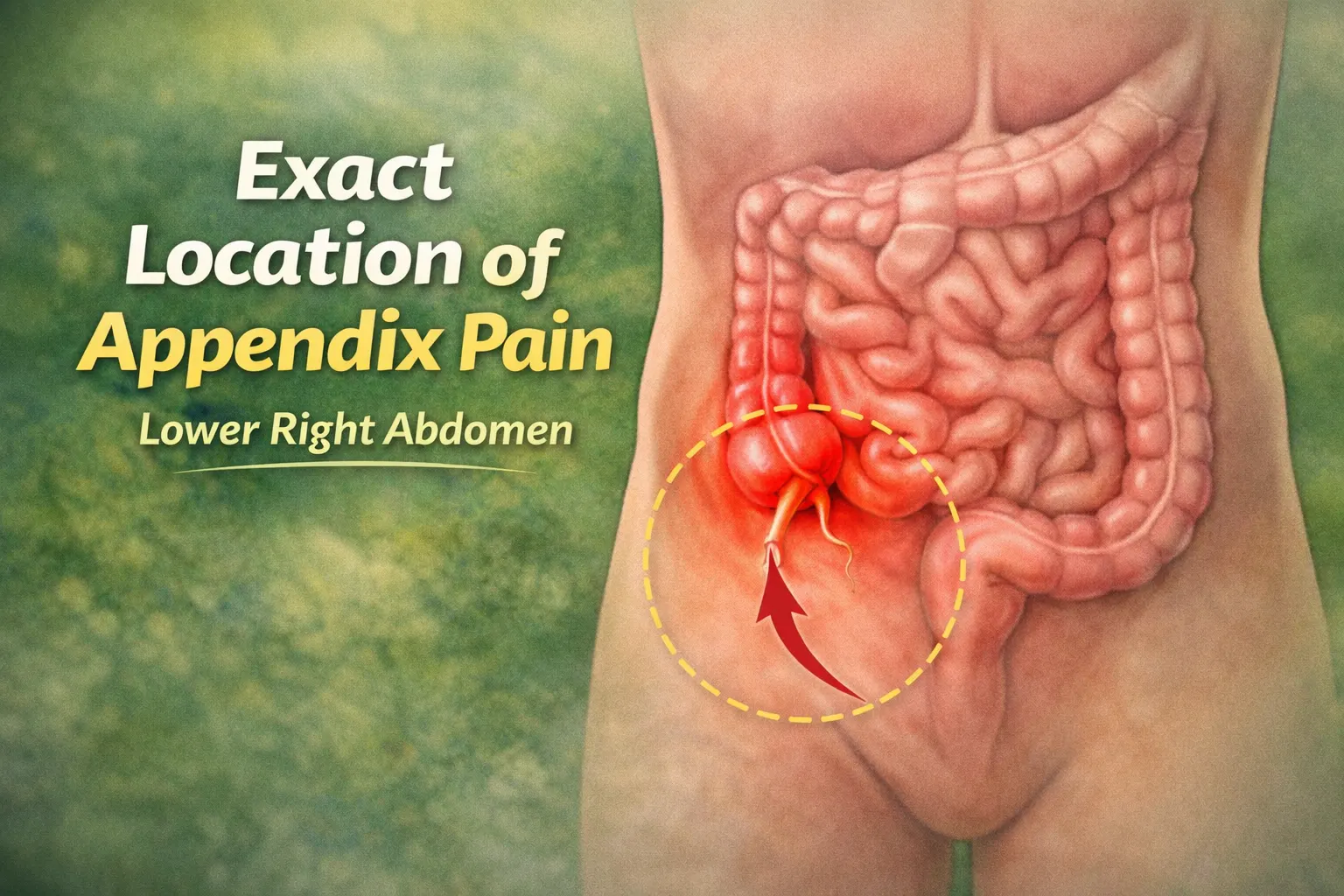
Appendicitis pain often starts around the belly button and may move to the lower right abdomen. It can become more persistent or severe and may worsen with movement, coughing, sneezing or deep breathing. Not everyone has the classic pattern, so pain location alone cannot diagnose appendicitis.
Add My Health Hospitals as a Preferred Source on Google to see more of our latest health information.
The appendix is a small, finger-like pouch attached to the first part of the large intestine. It is usually located in the lower-right area of the abdomen, near where the small intestine joins the large intestine. Its position can vary, so appendicitis does not always cause pain in exactly the same spot.
Early appendicitis may cause poorly localized pain around the navel. As inflammation progresses and irritates the abdominal lining, the pain may become sharper and more localized in the lower-right abdomen. The timing and pattern vary.
Common symptoms include abdominal pain, loss of appetite, nausea or vomiting, fever and sometimes swelling of the abdomen. Constipation, diarrhoea or difficulty passing gas can also occur. Some people, especially children, do not have the classic combination of symptoms.
Most appendices are in the lower-right abdomen, so classic appendicitis commonly causes right-sided pain. However, appendix position can vary, and many other conditions can cause right- or left-sided abdominal pain.
| Pain pattern | What it can mean |
|---|---|
| Lower-right abdominal pain | Can occur with appendicitis, but also with urinary, bowel, kidney-stone and other conditions. |
| Left-sided abdominal pain | Usually suggests other causes, but unusual appendix position can produce atypical pain. |
| Pain that starts near the navel and shifts right | A classic appendicitis pattern, especially when pain becomes progressively worse. |
Pain location is a clue, not a diagnosis. Persistent or severe abdominal pain should be assessed by a clinician.
In women, appendicitis can resemble pelvic and reproductive conditions such as ovarian cysts, pelvic inflammatory disease or ectopic pregnancy. Pregnancy can make the presentation less typical because abdominal organs shift as pregnancy progresses.
Children may not describe abdominal pain in the classic way. Younger children may not be able to identify a precise location, and some children do not have all typical symptoms.
NIDDK advises seeking medical care right away when you think you or your child may have appendicitis.
Gas, constipation and indigestion can feel similar to early abdominal illness. There is no reliable home test that can rule appendicitis in or out.
| Feature | Appendicitis may cause | Gas / digestive upset may cause |
|---|---|---|
| Location | May become localized to the lower-right abdomen. | May move around or occur in different parts of the abdomen. |
| Course | Often becomes more persistent or severe over hours. | May fluctuate with bloating or bowel movements. |
| Movement | May worsen with walking, coughing or deep breaths. | Variable; movement does not reliably distinguish causes. |
| Other symptoms | Nausea, vomiting, fever and appetite loss can occur. | Bloating, belching and altered bowel movements can occur. |
Feeling better after passing gas does not by itself rule out appendicitis. Severe or worsening abdominal pain should be medically assessed.
Doctors combine the symptom history and physical examination with laboratory tests and, when needed, imaging.
Ultrasound is commonly used first in children, young adults and pregnant women. CT or MRI may be used when more information is needed.
Treatment depends on whether appendicitis is uncomplicated or complicated by perforation, abscess or peritonitis.
An appendectomy removes the inflamed appendix. It can be performed laparoscopically through small incisions or by open surgery when clinically necessary. Laparoscopic appendectomy generally has a shorter recovery and fewer wound-related complications.
Antibiotics are commonly used as part of appendicitis treatment. Some selected uncomplicated cases can be managed with antibiotics alone under medical supervision, but surgery remains standard treatment for many patients.
A perforated appendix can cause peritonitis or an abscess. Treatment may require urgent surgery, antibiotics and, for an abscess, drainage depending on the clinical situation.
Temporary improvement in abdominal pain does not reliably mean appendicitis has resolved. In some cases of perforation, pain can briefly change before more widespread abdominal pain develops. Do not use temporary relief as a reason to delay medical care when appendicitis is suspected.
Seek urgent hospital assessment if appendicitis is suspected. Untreated appendicitis can lead to a burst appendix, abscess, peritonitis and sepsis.
Use Google's Preferred Sources option to see more My Health Hospitals health information in relevant Google experiences.
Patients in Hyderabad with persistent or worsening abdominal pain can seek assessment through General Surgery or Gastrointestinal Surgery. A clinician can evaluate the pain pattern, perform an abdominal examination, arrange appropriate tests and determine whether emergency care is required.

Medical reviewer at My Health Hospitals for gastrointestinal and surgical health content.
Do not rely on home diagnosis when appendicitis is possible. Prompt clinical assessment can help identify appendicitis and other causes of abdominal pain.
My Health Hospitals: +91 9111674111
Find the Best Hospital Near You
H.No 15-24-212, MIG-212, Rd Number 1, K P H B Phase 1, Kukatpally, Hyderabad, Telangana 500072
H.No:-12-5-30, WhiteHouse, Moula Ali Rd, South Lalaguda, Tarnaka, Secunderabad, Telangana 500017