

Heart Attack Early Warning Signs: 10 Key Symptoms & When to Act
A heart attack does not always begin with sudden, severe chest pain. Some people experience warning symptoms hours, days or even weeks beforehand. Recognizing early warning signs can help you understand when symptoms need urgent medical attention.
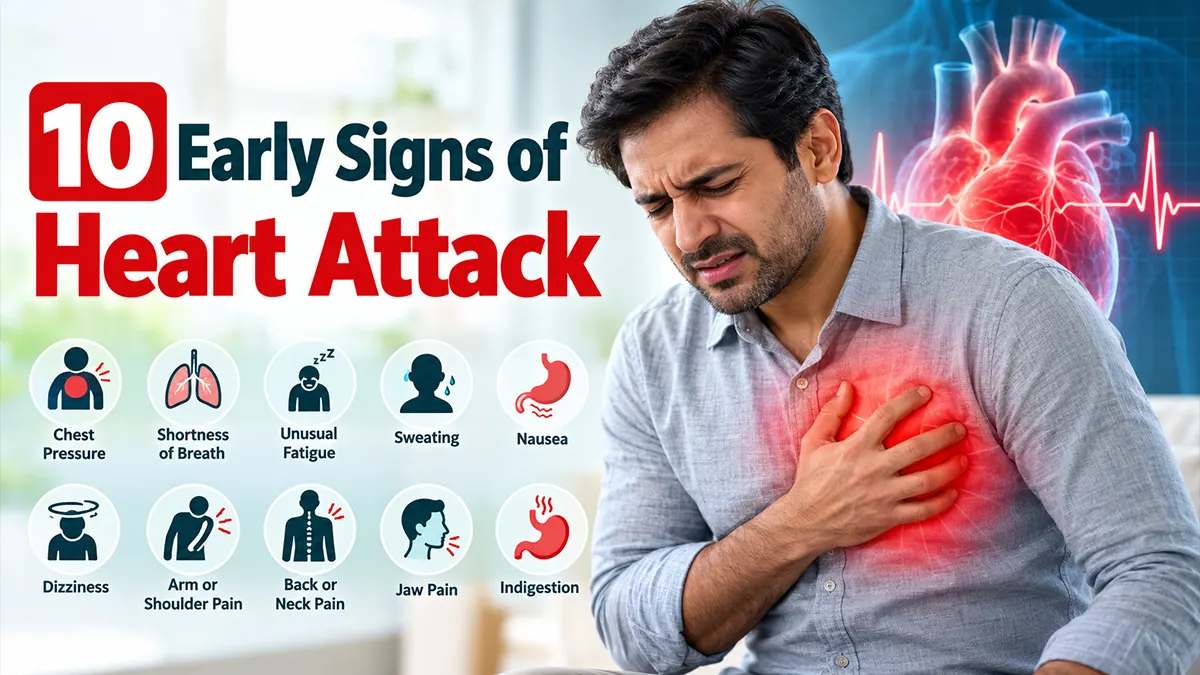
What Are the Early Warning Signs of a Heart Attack?
A heart attack, also called a myocardial infarction, occurs when part of the heart muscle does not receive enough blood and oxygen. Chest discomfort is the most common symptom, but symptoms can vary considerably. Some people develop symptoms suddenly, while others experience warning symptoms hours, days or even weeks before a heart attack.
Warning symptoms can include recurring chest pressure, shortness of breath, unusual tiredness, sweating, nausea, dizziness or discomfort that spreads to the arm, shoulder, back, neck or jaw.
Symptoms may be less obvious in some women, older adults and people with diabetes. Therefore, the absence of severe chest pain does not automatically rule out a serious heart problem.
10 Early Warning Signs of a Heart Attack
Recurring Chest Pressure or Discomfort
Pressure, tightness, squeezing, fullness, heaviness or aching in the chest is one of the most important warning signs.
- May occur in the center of the chest
- Can come and go
- May occur during physical activity
- Can sometimes improve with rest
Shortness of Breath
New or unexplained breathlessness can occur with or without chest discomfort.
- Breathing difficulty during activity
- Unusual breathlessness
- Breathlessness with chest discomfort
- Sudden difficulty breathing
Unusual or Unexplained Fatigue
Some people experience unusual tiredness before or during a heart attack. It may be more concerning when it is new, significant or unexplained.
Cold Sweating
Unexpected cold or clammy sweating can occur during a heart attack, particularly when accompanied by chest discomfort, weakness or nausea.
Nausea or Indigestion
A heart attack can sometimes cause nausea, vomiting, heartburn or indigestion-like discomfort.
These symptoms should not automatically be assumed to be acidity or gas when they occur with other warning signs.
Dizziness or Light-Headedness
Sudden dizziness, light-headedness or feeling faint can accompany a heart attack, particularly when combined with other warning symptoms.
Arm or Shoulder Discomfort
Heart-related discomfort can spread to one or both arms or shoulders.
It can occur together with chest pressure or, in some people, without obvious chest pain.
Back, Neck or Jaw Discomfort
Pain or discomfort may spread from the chest to the back, neck or jaw.
Unexplained upper-body discomfort accompanied by breathlessness, sweating or chest pressure needs urgent assessment.
Weakness or Fainting
Feeling unusually weak, light-headed or close to fainting can occur during a heart attack.
Symptoms That Keep Returning
Repeated chest pressure or discomfort, particularly with physical activity, can be an important warning sign.
Recurring symptoms should be medically evaluated rather than repeatedly treated as gas or acidity at home.
Heart Attack Warning Signs at a Glance
- Chest pressure, squeezing or tightness
- Shortness of breath
- Cold sweating
- Unusual fatigue
- Nausea or indigestion-like discomfort
- Dizziness or faintness
- Arm or shoulder discomfort
- Back, neck or jaw discomfort
- Sudden weakness
- Recurring or worsening symptoms
Can You Have Heart Attack Warning Signs Days Before?
Yes. Some people experience warning symptoms hours, days or even weeks before a heart attack.
One example is recurring chest pressure or discomfort caused by reduced blood flow to the heart. Symptoms may occur with physical activity and improve with rest, although patterns can vary.
Can a Heart Attack Happen Without Chest Pain?
Yes. Although chest discomfort is common, some people have little or no obvious chest pain.
Instead, symptoms may include:
- Shortness of breath
- Nausea
- Unusual fatigue
- Dizziness
- Cold sweating
- Weakness
- Back or neck discomfort
- Jaw discomfort
- Arm or shoulder discomfort
Symptoms may be less obvious in some women, older adults and people with diabetes.
Heart Attack Warning Signs in Women
Women can experience the major symptoms of a heart attack, including chest pressure or discomfort.
However, some women may also experience:
- Shortness of breath
- Nausea or vomiting
- Unusual fatigue
- Cold sweating
- Dizziness
- Back discomfort
- Neck or jaw discomfort
- Shoulder discomfort
- Upper-abdominal discomfort
Less obvious symptoms should not automatically be dismissed as indigestion, stress or ordinary tiredness when they are new or unexplained.
Heart Attack Symptoms in Older Adults
Symptoms can be less obvious in some older adults. Instead of severe chest pain, a person may notice breathlessness, weakness, dizziness, nausea or unusual fatigue.
Because symptoms can vary, sudden or unexplained changes in health should be assessed promptly.
Heart Attack Symptoms in People With Diabetes
People with diabetes can sometimes have less obvious heart attack symptoms.
Possible symptoms include:
- Breathlessness
- Nausea
- Unusual tiredness
- Dizziness
- Sweating
- Mild or less obvious chest discomfort
If symptoms are new or unexplained, medical assessment is important even when there is no severe chest pain.
Heart Attack or Gas? Why Symptoms Can Be Confusing
Heartburn, indigestion and gas can cause discomfort in the chest or upper abdomen. Heart-related symptoms can sometimes feel similar.
| Feature | May occur with digestive problems | May occur with heart-related problems |
|---|---|---|
| Chest sensation | Burning or discomfort | Pressure, squeezing, tightness, fullness or heaviness |
| Digestive symptoms | Belching, bloating, acid taste or regurgitation | Nausea or indigestion-like discomfort can also occur |
| Breathing | Usually not the main symptom | Shortness of breath may occur |
| Radiation | Less typical to spread widely | May spread to arm, shoulder, back, neck or jaw |
| Sweating | Not usually a primary feature | Cold sweating can occur |
| Safety point | Digestive symptoms do not prove the cause is harmless | New or concerning symptoms need urgent evaluation |
Angina vs Heart Attack: What Is the Difference?
| Feature | Angina | Heart Attack |
|---|---|---|
| Basic problem | Temporary reduction in blood flow to the heart muscle | Reduced or blocked blood flow causing heart muscle injury |
| Common symptom | Chest pressure or discomfort | Chest discomfort with or without other symptoms |
| Possible pattern | May occur with exertion | Can occur with activity or at rest |
| Duration | Often temporary | Can persist or recur |
| Urgency | Requires appropriate medical assessment | Medical emergency |
What Causes a Heart Attack?
A heart attack occurs when part of the heart muscle does not receive enough blood and oxygen.
Coronary artery disease is the main cause of heart attack. Plaque can build up inside the coronary arteries. If plaque ruptures, a blood clot can form and reduce or block blood flow to the heart muscle.
Heart Attack Risk Factors
Health Conditions
- High blood pressure
- Diabetes
- High cholesterol
- Chronic kidney disease
- Previous heart disease
Lifestyle and Other Factors
- Smoking or tobacco exposure
- Physical inactivity
- Overweight or obesity
- Unhealthy eating patterns
- Increasing age
- Family history of heart disease
How Is a Heart Attack Diagnosed?
When a heart attack is suspected, doctors combine symptoms, physical examination and cardiac testing.
1. Electrocardiogram (ECG)
An ECG records the electrical activity of the heart and can identify important changes associated with acute coronary syndromes.
2. High-Sensitivity Cardiac Troponin
Cardiac troponin is a blood biomarker used to detect heart muscle injury. Doctors may use serial measurements depending on the clinical situation.
3. Vital Signs and Physical Examination
Blood pressure, heart rate, oxygen level and physical examination findings help clinicians assess the patient's condition and consider other causes of symptoms.
4. Additional Cardiac Testing
Depending on the presentation, doctors may consider echocardiography, coronary imaging or other cardiac investigations.
ACC/AHA chest-pain guidance emphasizes rapid ECG assessment and the use of high-sensitivity cardiac troponin in the evaluation of suspected acute coronary syndromes. :contentReference[oaicite:1]{index=1}
What Should You Do If You Think You Are Having a Heart Attack?
- Stop physical activity. Sit or rest safely while arranging emergency help.
- Seek emergency medical care immediately. Do not wait to see whether symptoms disappear.
- Do not self-diagnose. Do not assume the symptoms are gas, acidity or muscle pain.
- Follow emergency medical instructions. Tell the emergency team when symptoms started and what symptoms you have.
- Do not delay emergency care. Early evaluation allows doctors to determine whether a heart attack is occurring and begin appropriate treatment.
When Should You See a Cardiologist?
- Chest discomfort repeatedly occurs during walking or exercise.
- You have unexplained recurring chest pressure.
- You develop breathlessness with chest discomfort.
- You experience recurrent dizziness, fainting or palpitations.
- You have several cardiovascular risk factors.
- You have a history of heart disease.
- You have unexplained symptoms that keep returning.
How Can You Reduce Your Risk of Heart Attack?
Heart attack prevention focuses on managing cardiovascular risk factors and maintaining healthy lifestyle habits.
- Do not smoke or use tobacco.
- Maintain a heart-healthy eating pattern.
- Stay physically active according to your healthcare professional's advice.
- Maintain a healthy weight.
- Control blood pressure.
- Manage cholesterol levels.
- Manage diabetes when applicable.
- Take prescribed medicines as directed.
- Attend recommended health check-ups.
Related My Health Hospitals Guides
Cardiology Reference

Dr Vijay Soorampally
Frequently Asked Questions About Heart Attack Early Warning Signs
Do Not Ignore Heart Attack Warning Signs
New, severe, persistent or unexplained chest or upper-body symptoms should not be self-diagnosed. If you think a heart attack may be happening, seek emergency medical care immediately. For routine cardiology consultation at My Health Hospitals, contact the appropriate hospital location.
Medical Disclaimer
This article is intended for general health education and does not replace professional medical diagnosis, treatment or emergency care. Heart attack symptoms can vary between individuals. Some people may have mild or less obvious symptoms. If you think you or someone else may be having a heart attack, seek emergency medical help immediately.