-
 Kphb Branch
+91 9111674111
-
Tarnaka Branch
+91 9100001201
- Book Appointment
+91 9111674111
+91 9100001201
Gastroenterology
Medically reviewed by Dr. Ch. Srujith , MBBS, MD – General Medicine & Diabetologist | 10+ Years Experience
Hyperthermia means an abnormally high body temperature when the body cannot lose heat effectively. Heat stroke is the most severe form of heat-related illness and is a medical emergency, especially when overheating is accompanied by confusion, altered mental status, seizures or loss of consciousness. This guide explains causes, symptoms, heat exhaustion vs heat stroke, first aid, emergency treatment and prevention.
At My Health Hospitals, Dr. Ch. Srujith provides emergency evaluation and treatment for heat-related illnesses using advanced medical care.
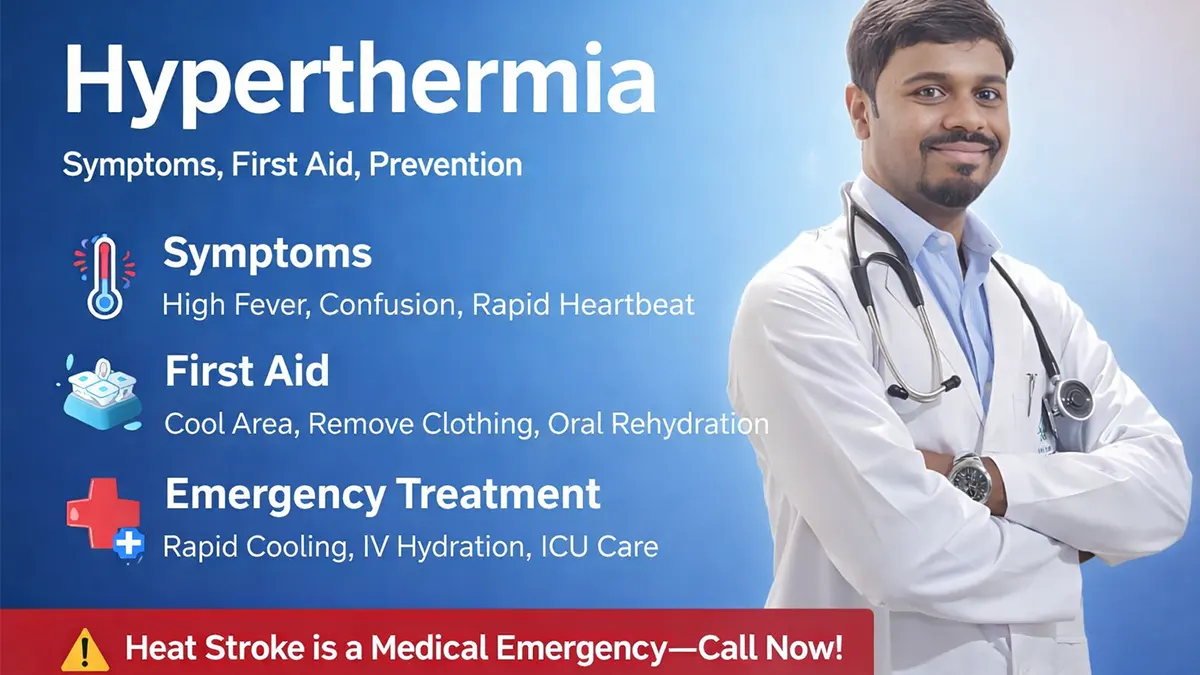
Hyperthermia progresses step-by-step from mild heat stress to life-threatening heat stroke. Early medical care can prevent serious complications.
Hyperthermia can rapidly progress to heat stroke if early symptoms are ignored. Immediate emergency treatment is essential for survival.
Hyperthermia symptoms begin with heat exhaustion and may rapidly progress to heat stroke. Recognizing early warning signs can prevent life-threatening complications.
Feeling lightheaded or mentally disoriented due to overheating.
Skin becomes unusually warm or dry during heat exposure.
Dehydration leading to intense thirst and weakness.
Increased heart rate as body struggles to regulate temperature.
Body temperature rising with confusion or altered mental status is an emergency.
Sweating may decrease or stop in severe heat illness, but sweating can also be present.
Severe neurological reaction due to overheating.
Loss of consciousness requires emergency care.
Immediate cooling measures can save lives while arranging emergency medical care.
Shift the person to a shaded or air-conditioned environment immediately.
Loosen or remove clothing to help reduce body heat.
Use cold wet cloths, ice packs, cold water or another safe rapid-cooling method while emergency help is on the way.
Only offer fluids if the person is fully conscious and can swallow safely; do not give anything by mouth to a confused or unconscious person.
Use fans or wet cloth to cool the body effectively.
Call emergency medical services immediately when heat stroke is suspected; continue cooling while waiting for help.
Severe hyperthermia can damage multiple organs due to prolonged exposure to extreme heat. Without immediate medical treatment, it may lead to life-threatening complications.
High body temperature can cause confusion, seizures, and permanent neurological injury.
Heat increases heart workload, leading to irregular heartbeat or cardiovascular complications.
Loss of fluids and electrolytes disrupts normal body function and blood circulation.
Extreme heat can impair kidney function due to dehydration and reduced blood flow.
Hyperthermia may cause rapid breathing and respiratory distress.
Delayed treatment can result in multi-organ dysfunction and life-threatening complications.
Heat stroke can lead to muscle tissue damage and metabolic complications.
Prolonged overheating disrupts normal cellular processes and enzyme activity.
Severe hyperthermia can cause organ failure and life-threatening complications. Seek immediate medical care at the nearest My Health Hospitals branch.
Clear answers to common searches about hyperthermia, heat exhaustion and heat stroke, including when emergency care is needed.
Hyperthermia is an abnormally high body temperature caused by excessive heat exposure, strenuous activity, certain environmental conditions or reduced ability to lose heat. It is different from fever.
Heat stroke is the most severe heat-related illness. It can cause central nervous system changes such as confusion, delirium, seizures or unconsciousness and requires immediate emergency medical care. Do not wait for a particular thermometer reading before seeking help when these warning signs are present.
Knowing the difference can help families recognize when heat illness has become an emergency.
| Feature | Heat Exhaustion | Heat Stroke |
|---|---|---|
| Severity | Serious heat-related illness | Life-threatening emergency |
| Common symptoms | Heavy sweating, weakness, headache, dizziness, nausea and cramps | Confusion, altered mental status, seizures or unconsciousness, with very high body temperature |
| Mental status | Usually remains normal | May be altered |
| Action | Move to a cool place, cool the body and rehydrate if able to drink | Call emergency medical help and start rapid cooling immediately |
Heat illness can result from environmental heat, physical exertion and individual vulnerability.
High temperatures and humidity can make it harder for the body to lose heat.
Exercise or heavy physical work in hot conditions increases internal heat production.
Infants, older adults and people with some chronic illnesses may be more vulnerable to heat.
Some medicines can affect sweating, hydration, blood pressure or the body's response to heat. Ask your clinician about individual risks.
Hyperthermia and fever can both cause a high temperature, but they have different mechanisms. Fever is generally part of the body's regulated response to infection or another illness. Hyperthermia occurs when heat production or heat exposure overwhelms the body's ability to dissipate heat.
If a person is confused, has seizures, loses consciousness or appears severely overheated, treat the situation as an emergency rather than trying to determine the cause at home.
A temperature number alone should not delay emergency care. The person's mental status, symptoms and circumstances matter, especially after significant heat exposure.
During very hot weather, reduce exposure during the hottest part of the day, use shade or air-conditioned spaces when possible, wear loose lightweight clothing, take regular breaks and drink fluids according to your needs and medical advice.
Prompt medical treatment is essential to prevent organ damage and life-threatening complications caused by severe heat-related illness.
Immediate cooling techniques help reduce dangerously high body temperature.
Intravenous fluids restore hydration and electrolyte balance.
Continuous monitoring of heart rate, blood pressure, and organ function.
Advanced care for severe cases involving organ dysfunction.
Preventing heat stroke and maintaining hydration are essential during extreme summer temperatures. Proper fluid intake and lifestyle precautions can significantly reduce heat-related health risks.
Early medical evaluation and timely treatment at My Health Hospitals can significantly reduce complications associated with severe heat-related illnesses.
Hyperthermia is a serious and potentially life-threatening condition that can affect multiple organs if not treated promptly. Early recognition of symptoms, immediate first aid measures, proper hydration, and timely medical intervention are essential to prevent complications. During extreme summer conditions, preventive care and awareness play a crucial role in protecting vulnerable individuals such as elderly people, children, outdoor workers, and patients with chronic illnesses.
At My Health Hospitals, experienced physicians such as Dr. Ch. Srujith provide advanced evaluation and emergency treatment for hyperthermia and heat-related illnesses using evidence-based medical protocols. Early diagnosis and timely intervention play a crucial role in preventing serious complications and improving recovery outcomes. My Health Hospitals provides medical evaluation and emergency support for severe heat-related illness.
According to the World Health Organization , extreme heat exposure can lead to severe health complications including heat stroke.
Early heat illness can cause heavy sweating, thirst, weakness, headache, dizziness, nausea and muscle cramps. Confusion or altered mental status is a major warning sign of severe heat illness.
Heat exhaustion commonly causes heavy sweating, weakness, dizziness, headache and nausea. Heat stroke is a medical emergency involving severe overheating and central nervous system changes such as confusion, seizures or unconsciousness.
Yes. Extreme indoor heat, high humidity, poor ventilation, dehydration and strenuous activity can contribute to heat illness without direct sunlight.
Heat stroke often involves a very high core body temperature, commonly around or above 40°C (104°F), but emergency care should not be delayed while waiting for a specific temperature reading when severe symptoms such as confusion, seizures or unconsciousness are present.
Older adults, infants and children, outdoor workers, athletes and people with certain chronic illnesses or medication-related risks may be more vulnerable to heat illness.
Reduce exposure to extreme heat, stay hydrated according to individual needs, wear light loose clothing, take breaks in cool or shaded areas, avoid strenuous activity during the hottest periods and check on vulnerable people.
Hospital care focuses on rapid cooling, monitoring vital signs and organ function, correcting fluid and electrolyte problems when needed, and treating complications. Severe cases may require intensive care.
Recovery varies with the severity of heat stroke and whether organs were affected. Some people recover after treatment, while severe cases can require prolonged monitoring and rehabilitation.
Yes. Severe heat stroke can cause brain injury, kidney injury, muscle damage and other organ complications, particularly when treatment is delayed.
Seek emergency help immediately for confusion, altered mental status, seizures, loss of consciousness or suspected heat stroke after heat exposure. Begin cooling while waiting for medical assistance.
Call emergency medical help, move the person to a cool or shaded place, remove unnecessary clothing and begin rapid cooling with cold water, wet cloths, ice packs or another safe method while help is coming.
Yes. Indoor heat, poor ventilation and high humidity can contribute to dangerous overheating, particularly during prolonged heatwaves or in people who cannot cool themselves effectively.
Yes. Severe heat illness can reduce blood flow to the kidneys and contribute to acute kidney injury, especially when dehydration and prolonged overheating occur.
Yes. Seizures can occur in severe heat stroke because extreme overheating can affect the brain and nervous system. Seizures require emergency medical care.
No. Fever is usually a regulated response to illness, while hyperthermia results from excessive heat or impaired heat loss. Heat stroke is a severe heat illness and medical emergency.
For mild heat illness in a person who is awake and able to swallow, water or an oral rehydration solution may help replace fluids and electrolytes. Severe symptoms require medical evaluation rather than relying on drinks alone.
Paracetamol does not treat the overheating that causes heat stroke. Suspected heat stroke requires rapid cooling and emergency medical care.
Yes. Children can develop heat illness, especially during hot weather, physical activity or when left in hot environments. Never leave a child in a parked vehicle and seek urgent care for severe symptoms.
Yes. Older adults may have a reduced ability to regulate body temperature and may be more vulnerable, particularly with chronic conditions or medicines that affect hydration or heat response.
During hot weather, limit strenuous outdoor activity during the hottest periods, use shade or cool indoor spaces, wear light clothing, drink fluids regularly according to your health needs and check on vulnerable family members.
Expert-written medical articles from My Health Hospital
Find the Best Hospital Near You
H.No 15-24-212, MIG-212, Rd Number 1, K P H B Phase 1, Kukatpally, Hyderabad, Telangana 500072
H.No:-12-5-30, WhiteHouse, Moula Ali Rd, South Lalaguda, Tarnaka, Secunderabad, Telangana 500017