-
 Kphb Branch
+91 9111674111
-
Tarnaka Branch
+91 9100001201
- Book Appointment
+91 9111674111
+91 9100001201
Orthopaedics
Medically reviewed by Dr. Vishwanath Karne, MS (Orthopaedics), Senior Consultant Orthopedic Surgeon with 15+ years of experience in joint replacement, arthroscopy, trauma care and complex orthopedic surgery at My Health Hospitals.
Published: July 8, 2026 | Updated: October 7, 2026
Knee replacement surgery can be a good option when advanced arthritis causes persistent pain, stiffness and loss of function despite appropriate non-surgical treatment. The main benefits are pain relief and improved mobility. The main disadvantages are that it is major surgery, recovery requires rehabilitation, and complications such as infection, blood clots, stiffness, persistent pain or implant-related problems can occur. The decision should be based on symptoms, examination, imaging, general health and personal goals—not on age alone.
Severe knee arthritis can gradually change how a person walks, sleeps, works and participates in everyday life. Pain may start during longer walks or stair climbing and later occur during routine activities or even at rest. When pain and stiffness continue despite an appropriate course of non-surgical care, an orthopaedic surgeon may discuss knee replacement as one treatment option.
Knee replacement surgery, also called Total Knee Arthroplasty (TKA) when the entire knee is replaced, removes damaged joint surfaces and replaces them with artificial components. The aim is not to create a completely natural knee, but to reduce arthritis-related pain and improve useful function. A successful result also depends on rehabilitation, muscle strength, realistic expectations and long-term joint care.
This guide focuses on the questions patients commonly ask before surgery: What are the advantages and disadvantages of knee replacement? Is knee replacement worth it? How long does the implant last? What is recovery like? Is partial knee replacement an option? What can I do instead of surgery?
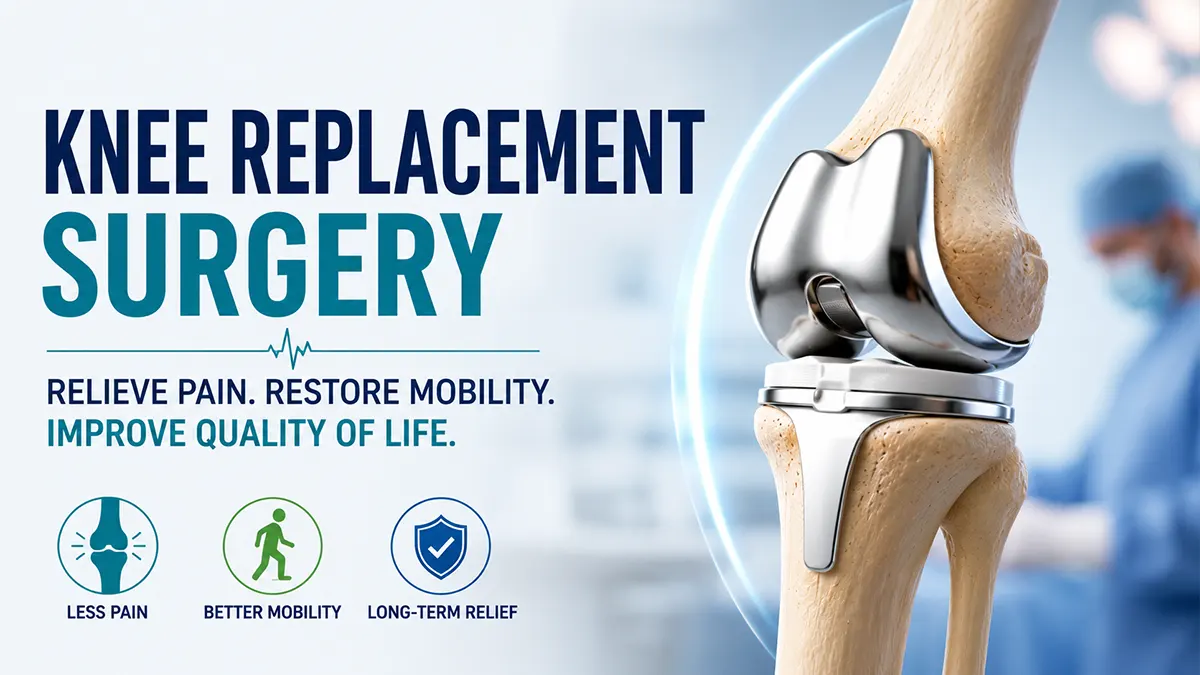
Knee replacement surgery: understanding the potential benefits, risks, recovery and long-term considerations.
Knee replacement is usually considered for people with advanced joint damage that causes significant symptoms and functional limitation. Osteoarthritis is the most common indication, but severe rheumatoid or other inflammatory arthritis, post-traumatic arthritis and selected structural problems can also damage the knee enough to require joint replacement.
The decision should not be based on an X-ray alone. A specialist considers pain severity, walking ability, sleep disruption, stiffness, deformity, response to previous treatment, physical examination findings, imaging and overall health. The goal is to treat the person rather than a scan.
Progressive cartilage and joint-surface damage can cause pain, stiffness, reduced range of motion and difficulty with walking or stairs.
Inflammation can progressively damage the joint and may lead to persistent pain, swelling and loss of function despite medical treatment.
Previous fractures, major injuries or other joint trauma can contribute to later cartilage loss and painful arthritis.
| Finding or problem | Why it matters |
|---|---|
| Persistent knee pain | Especially when pain affects walking, sleep, work or daily activities. |
| Major stiffness or loss of movement | May interfere with standing, stairs, sitting and routine tasks. |
| Advanced cartilage / joint damage | Imaging may show substantial structural change that matches the patient's symptoms. |
| Limited benefit from non-surgical care | Replacement is generally considered after appropriate conservative options have not provided enough relief. |
| Declining independence or quality of life | Functional impact is an important part of shared decision-making. |
Not every person with knee arthritis needs surgery. However, persistent symptoms deserve reassessment when they are progressively limiting your routine. Consider orthopaedic review when knee pain repeatedly interferes with walking, climbing stairs, sleep, work or household activities; when the knee feels unstable or significantly stiff; or when medications, exercise-based therapy and other treatments no longer provide adequate functional improvement.
Walking, standing, shopping, using stairs or getting up from a chair becomes difficult because of knee pain.
Persistent symptoms interfere with sleep or comfort even when the knee is not heavily loaded.
Reduced ability to bend or straighten the knee can limit mobility and function.
Why patients with advanced symptomatic arthritis may consider joint replacement.
The main objective is to reduce pain arising from severely damaged joint surfaces. Many patients experience substantial improvement after recovery.
Improved knee function can make walking, standing and routine movement more manageable.
Tasks such as dressing, shopping, cooking and getting in and out of a chair may become easier after rehabilitation.
When pain and mobility improve, people may be able to return to social activities, travel and hobbies they had been avoiding.
Appropriately selected surgery can improve alignment and stability when arthritis has produced a significant deformity.
Greater mobility can reduce dependence on family members or walking aids over time, although recovery differs among patients.
People whose sleep is disrupted by arthritis pain may sleep more comfortably after successful pain reduction.
After recovery and medical clearance, many patients can participate in activities such as walking, swimming or cycling.
A modern knee replacement is designed as a long-term solution, although implant longevity varies between individuals.
Knee replacement can be highly effective, but it is still major surgery and has limitations.
Infection around the wound or artificial joint can require antibiotics and, in serious cases, additional surgery.
Reduced mobility around surgery can increase clot risk, which is why prevention and early mobilisation are important.
Some people do not regain the desired range of motion. Rehabilitation and timely follow-up are important.
Most patients improve, but some continue to have pain and need assessment for the underlying cause.
Artificial components can wear or become loose over time, potentially leading to additional treatment or revision surgery.
Injury to nearby structures is uncommon but recognized as a possible complication of knee surgery.
Surgery is only one part of recovery. Strengthening, range-of-motion work and gradual activity progression take time.
High-impact or strenuous activities may be restricted while the knee heals and may remain less suitable long term.
Some patients eventually need another procedure because of wear, loosening, infection, instability or other implant-related problems.
| Potential disadvantage | What it means for patients |
|---|---|
| Surgery and anaesthesia | Preoperative assessment is required and recovery is longer than with many non-surgical treatments. |
| Pain and swelling | Expected during early recovery and usually managed with the prescribed care plan. |
| Rehabilitation | Exercises and physiotherapy are important to restore function and confidence. |
| Implant longevity | No artificial joint lasts forever; long-term follow-up remains important. |
| Complications | Uncommon but potentially serious complications should be discussed before surgery. |
| Potential benefits | Potential risks or limitations |
|---|---|
| Lower arthritis-related pain | Early postoperative pain and swelling |
| Improved walking and daily function | Need for structured rehabilitation |
| Improved independence | Temporary activity restrictions |
| Correction of selected deformities | Possible stiffness or persistent pain |
| Long-term treatment for advanced disease | Potential implant wear, loosening or revision |
| Potential quality-of-life improvement | Medical and surgical risks vary by patient |
The right decision is therefore a balance between symptom burden, likely benefit, surgical risk, recovery demands and alternatives. There is no universal rule that says every patient with arthritis should have or avoid knee replacement.
Recovery is progressive rather than a single date on the calendar.
| Recovery stage | Typical priorities | Important note |
|---|---|---|
| Early postoperative period | Safe mobility, pain control, exercises and wound care | Follow the treating team's individual instructions. |
| First several weeks | Walking progression, knee movement and strengthening | Progress is not identical for every patient. |
| 6–12 weeks | Increasing independence and functional activity | Some people recover faster; others need more time. |
| Several months | Strength, endurance and confidence | Maximum improvement can continue beyond the early recovery phase. |
There is no single operation that is best for everyone. Partial knee replacement may be considered when arthritis is limited to one compartment of the knee and the remaining joint structures are appropriate for a partial procedure. Total knee replacement is more often considered when arthritis affects multiple compartments or produces more extensive joint damage.
| Feature | Partial knee replacement | Total knee replacement |
|---|---|---|
| Area treated | Selected damaged compartment | Damaged surfaces across the knee |
| Best suited to | Selected patients with localized disease | More extensive arthritis or multi-compartment disease |
| Natural structures preserved | More of the original knee can be preserved | More of the damaged joint surface is replaced |
| Recovery | May be faster in appropriately selected patients | Recovery varies and is usually more extensive |
| Future treatment | Arthritis can progress in another compartment | Future surgery can still be required for selected problems |
Knee replacement is not automatically the first treatment for every person with knee arthritis. Depending on the severity and cause of symptoms, a doctor may recommend non-surgical management first. These approaches are intended to control symptoms, maintain function and support quality of life; they cannot reliably reverse advanced joint damage.
Strengthening the muscles around the knee and improving movement can support function and reduce symptoms in many patients.
For people carrying excess weight, gradual weight reduction can reduce load on the knee and support overall health.
Pain-relief and anti-inflammatory medicines may be considered when appropriate for the patient's health and other medications.
Selected injections may provide temporary symptom relief for some patients, depending on the clinical situation.
These can sometimes improve confidence, reduce load or support mobility depending on the knee problem.
Changing activities that aggravate symptoms while maintaining safe movement may help some people stay active.
If pain, stiffness or loss of function continues to interfere substantially with everyday life despite an appropriate treatment plan, an orthopaedic review can determine whether continued non-surgical care or joint replacement is more appropriate.
Knee replacement is a well-established operation for advanced symptomatic arthritis, and many patients report major improvements in pain and function. However, success should be defined in terms of the individual's goals: walking more comfortably, sleeping better, performing daily tasks independently and returning to suitable activities.
Outcomes vary. Factors such as accurate patient selection, surgical planning, medical optimisation, rehabilitation, muscle strength, body weight, activity level and long-term follow-up all influence the result. Even after a technically successful replacement, the knee may feel different from a natural joint and may not be suitable for every high-impact activity.
For the right patient, knee replacement can be life-changing because it addresses the damaged joint surfaces responsible for severe arthritis pain. But "worth it" is a personal decision. Someone with moderate symptoms who can still function well may reasonably prefer continued non-surgical treatment. Someone whose pain prevents sleep, walking and routine independence despite appropriate conservative care may place a much higher value on surgery.
A good decision comes from shared decision-making with an orthopaedic specialist. Ask about the expected benefit, alternatives, individual surgical risks, rehabilitation demands, implant expectations and the activities you want to return to.
Answers to common patient questions about benefits, disadvantages, recovery and long-term outcomes.
For people with severe knee arthritis, persistent pain and major functional limitation despite appropriate non-surgical treatment, knee replacement can provide substantial pain relief and better mobility. Whether it is worthwhile depends on the individual's symptoms, imaging findings, general health and treatment goals.
The main benefits are reduction of arthritis-related pain, improved walking and day-to-day function, better sleep for many patients, correction of some painful deformities and improved independence after rehabilitation.
It is major surgery and involves anaesthesia, a period of pain and swelling, rehabilitation, temporary activity restrictions and possible complications such as infection, blood clots, stiffness, persistent pain or implant-related problems.
Some pain and swelling are expected, especially in the early postoperative period. Modern pain-control plans, early movement and physiotherapy are used to make recovery more manageable, but the experience varies between patients.
Many patients are helped to stand and walk with support soon after surgery, often on the first day when medically appropriate. Progression from assisted walking to independent walking varies with strength, balance, pain control and rehabilitation.
Modern knee replacements can remain functional for many years and often 15–20 years or longer, but no specific lifespan is guaranteed. Age, activity level, body weight, implant design, alignment, bone quality and other factors influence longevity.
Yes. Age alone does not decide eligibility. Doctors also consider overall health, heart and lung status, bone quality, mobility, medical conditions, frailty and the patient's expected benefit from surgery.
Yes. Stair climbing is commonly regained during rehabilitation. Early on, patients may need a handrail or walking aid, and the timing depends on strength, knee movement and confidence.
Driving should only restart after the surgeon confirms that strength, mobility, reaction time and medication use make driving safe. The timing varies by patient and by whether the operated leg affects driving.
Important risks include infection, blood clots, bleeding, stiffness, persistent pain, nerve or blood-vessel injury, wound problems, implant wear or loosening, instability and, in some cases, the need for revision surgery.
Partial knee replacement treats arthritis limited to a selected compartment of the knee and preserves more of the natural joint. Total knee replacement replaces the damaged surfaces across the knee and is commonly used when arthritis is more extensive.
Neither is universally better. Partial replacement can be appropriate for carefully selected patients with localized disease, while total replacement is often more suitable when multiple compartments are significantly damaged. Imaging, examination and ligament status guide the decision.
Depending on the severity of arthritis, options may include exercise and physical therapy, weight management, activity modification, pain-relief medicines, selected injections, braces and other non-surgical measures. Suitability depends on the individual condition.
A specialist may discuss replacement when pain and stiffness consistently interfere with walking, sleep, stairs or daily activities, imaging shows advanced joint damage, and an adequate trial of appropriate non-surgical treatment has not provided enough relief.
Recovery is gradual. Many patients make major functional gains during the first 6–12 weeks, while strength, confidence, swelling and maximum functional improvement may continue to change for several months.
Most patients are encouraged to remain active after recovery, with activities chosen to protect the artificial joint. Walking, cycling and swimming are commonly used low-impact options when cleared by the treating team.
High-impact activities such as repetitive running and jumping may place greater stress on an artificial joint and are often discouraged. Your orthopaedic surgeon and physiotherapist can guide activity choices based on your implant and recovery.
Preoperative care may include a clinical examination, review of imaging and medical history, assessment of medicines and other conditions, and planning for rehabilitation and home support. The exact preparation is individualized.
Seek prompt medical advice for fever, increasing redness or drainage from the wound, marked or worsening swelling, severe calf pain, sudden shortness of breath, chest pain or a sudden major decline in function.
Consult an orthopaedic specialist when pain persists, keeps returning, limits walking or sleep, causes instability or stiffness, or does not improve adequately with conservative treatment.
Make an appointment if knee pain persists for several weeks, keeps worsening, interferes with sleep or walking, causes instability or stiffness, or does not improve adequately with reasonable non-surgical care. A consultation does not automatically mean surgery. The purpose is to identify the cause and discuss the full range of treatment options.
Sudden severe swelling after an injury, inability to bear weight, a hot/red joint with fever, severe calf pain or sudden breathing difficulty can require urgent medical assessment rather than a routine clinic visit.

Medical Reviewer
MS (Orthopaedics) • Senior Consultant Orthopedic Surgeon • 15+ Years of Experience
Dr. Vishwanath Karne specializes in joint replacement surgery, arthroscopy, trauma care and the management of complex orthopedic conditions. This article is intended to provide patient education and should be interpreted alongside an individual's clinical evaluation.
Discuss your knee pain, imaging findings, non-surgical treatment history and goals with an orthopaedic specialist before making a decision.
Book an Appointment Knee Replacement Surgery CostThis article is for general educational purposes and does not replace examination, diagnosis or individualized medical advice. Knee replacement decisions should be made with a qualified orthopaedic specialist after reviewing symptoms, physical findings, imaging and overall health. Recovery times, risks, implant longevity and treatment choices vary between patients.
Expert-written medical articles from My Health Hospitals
Find the Best Hospital Near You
H.No 15-24-212, MIG-212, Rd Number 1, K P H B Phase 1, Kukatpally, Hyderabad, Telangana 500072
H.No:-12-5-30, WhiteHouse, Moula Ali Rd, South Lalaguda, Tarnaka, Secunderabad, Telangana 500017