-
 Kphb Branch
+91 9111674111
-
Tarnaka Branch
+91 9100001201
- Book Appointment
+91 9111674111
+91 9100001201
Cardiology
Medically Reviewed by Dr. C. Shashanka , Senior Consultant Neurologist | My Health Hospitals
A paralysis attack is a serious medical condition that causes the sudden loss of muscle movement or muscle function in one or more parts of the body. It often occurs due to damage to the brain, spinal cord, or nerves and can affect the face, arms, legs, or an entire side of the body. In many cases, paralysis is associated with a stroke, making immediate medical evaluation essential to reduce the risk of permanent disability.
Paralysis may develop suddenly or gradually depending on its underlying cause. While some people experience temporary weakness, others may develop partial or complete loss of movement. Recognizing the early warning signs and seeking emergency treatment can significantly improve recovery and long-term outcomes.
Modern advances in neurology, emergency stroke care, rehabilitation medicine, and physiotherapy have improved the prognosis for many patients. Early diagnosis followed by appropriate treatment and rehabilitation offers the best chance of regaining independence and improving quality of life.
A paralysis attack is most commonly caused by a stroke but may also result from spinal cord injury, nerve disorders, brain trauma, infections, or neurological diseases. Sudden weakness, facial drooping, difficulty speaking, or loss of movement should always be treated as a medical emergency requiring immediate hospital care.
In this comprehensive guide, you'll learn about the symptoms of paralysis, common causes, emergency treatment, diagnosis, rehabilitation, recovery timeline, and preventive measures. Understanding these aspects can help you recognize warning signs early and seek timely medical care.
At My Health Hospitals, our experienced neurologists, emergency physicians, rehabilitation specialists, and physiotherapists provide comprehensive care for stroke, paralysis, and other neurological disorders using advanced diagnostic and treatment facilities.
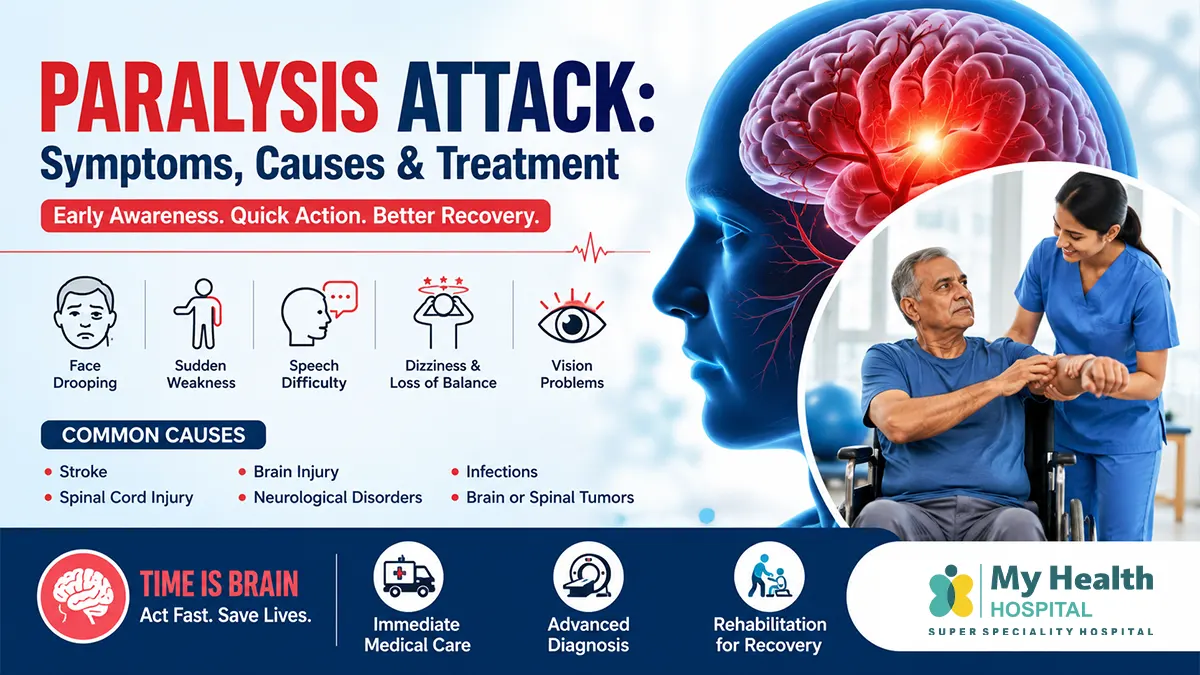
Paralysis is the loss of voluntary muscle movement caused by damage to the nervous system. It occurs when communication between the brain and muscles is interrupted, preventing the affected muscles from moving normally. Depending on the location and severity of nerve damage, paralysis may affect a single limb, one side of the body, both legs, or even the entire body.
Paralysis may be temporary or permanent and can develop suddenly after a stroke or injury, or gradually due to progressive neurological disorders. In addition to muscle weakness, some patients also experience numbness, tingling, loss of sensation, muscle stiffness, or difficulty speaking and swallowing.
Complete paralysis means there is a total loss of muscle movement in the affected area. The person cannot voluntarily move the affected muscles.
Partial paralysis, also known as paresis, means some muscle movement is still present, but strength is significantly reduced.
A paralysis attack refers to the sudden onset of muscle weakness or complete loss of movement, usually affecting one side of the body. It is not a disease itself but a symptom of an underlying medical condition, most commonly a stroke. Because brain cells begin to die within minutes of losing their blood supply, immediate emergency treatment is critical.
A paralysis attack may also result from traumatic brain injury, spinal cord injury, brain tumors, infections, multiple sclerosis, Guillain-Barré syndrome, or certain metabolic disorders. The exact symptoms depend on the part of the nervous system affected.
If someone suddenly develops facial drooping, arm weakness, leg weakness, slurred speech, confusion, vision changes, or difficulty walking, call emergency medical services immediately. Early treatment can save brain tissue and reduce long-term disability.
Requires immediate medical attention.
Most common cause of sudden paralysis.
Improves recovery and reduces disability.
Essential for regaining strength and independence.
Recognizing the early symptoms of a paralysis attack can save lives and significantly improve recovery. In many cases, paralysis develops suddenly due to a stroke, where every minute counts. Prompt medical treatment can restore blood flow to the brain, reduce permanent damage, and improve long-term outcomes.
The symptoms vary depending on the part of the brain or nervous system affected. Some individuals experience mild weakness initially, while others may suddenly lose movement on one side of the body. Any sudden neurological symptom should be treated as a medical emergency.
Call emergency medical services immediately if someone develops sudden facial drooping, arm weakness, slurred speech, vision problems, severe dizziness, or loss of balance. Early treatment can prevent permanent disability.
Since stroke is the leading cause of sudden paralysis, healthcare professionals recommend using the FAST method to recognize warning signs quickly. Acting immediately can increase the chances of successful treatment.
Ask the person to smile. One side of the face may droop.
Ask them to raise both arms. One arm may drift downward.
Speech may become slurred, unclear, or difficult to understand.
Call emergency medical services immediately. Do not wait for symptoms to improve.
Paralysis is classified based on the area of the body affected. Understanding these types helps doctors identify the underlying cause and determine the most appropriate treatment plan.
Paralysis affecting one side of the body. This is the most common type seen after a stroke.
Loss of movement affecting both legs, usually caused by spinal cord injury or neurological disease.
Paralysis involving both arms and both legs, typically resulting from severe cervical spinal cord injury.
Paralysis affecting only one limb, such as a single arm or leg, due to localized nerve or brain injury.
Weakness or paralysis of facial muscles caused by stroke, Bell's palsy, infections, or nerve damage.
Many people confuse stroke and paralysis, but they are not the same. A stroke is a medical condition caused by interrupted blood flow or bleeding in the brain, while paralysis is a symptom that may occur as a result of a stroke or other neurological disorders.
| Stroke | Paralysis |
|---|---|
| A disease affecting the brain. | A loss of muscle movement caused by nerve damage. |
| Usually caused by blocked or ruptured blood vessels. | Can result from stroke, spinal injury, infections, or neurological diseases. |
| Requires emergency treatment immediately. | Treatment depends on the underlying cause. |
| May lead to paralysis, speech problems, or vision loss. | May affect one limb, one side, or the entire body. |
A stroke is one of the leading causes of paralysis, but not all paralysis is caused by stroke. Early diagnosis by a neurologist is essential to identify the exact cause and begin appropriate treatment as quickly as possible.
A paralysis attack occurs when communication between the brain, spinal cord, nerves, and muscles is disrupted. The most common cause is a stroke, but several other neurological, traumatic, infectious, and metabolic conditions can also result in sudden or progressive paralysis. Identifying the underlying cause is essential because treatment varies depending on the condition responsible for the loss of movement.
Some causes require immediate emergency treatment, while others develop gradually over time. Early diagnosis by a neurologist significantly improves the chances of recovery and helps prevent long-term complications.
Stroke remains the leading cause of sudden paralysis worldwide. However, spinal cord injuries, nerve disorders, infections, autoimmune diseases, and brain tumors can also impair nerve signals and lead to muscle weakness or paralysis.
An interruption of blood flow or bleeding in the brain damages brain cells responsible for controlling muscle movement, making stroke the most common cause of sudden paralysis.
Road traffic accidents, falls, sports injuries, or trauma can damage the spinal cord, causing partial or complete paralysis below the level of injury.
Head injuries caused by accidents or falls may affect the areas of the brain responsible for movement, leading to weakness or paralysis.
Conditions such as multiple sclerosis, Parkinson's disease, motor neuron disease, and Guillain-Barré syndrome may affect nerve function and muscle control.
Certain infections involving the brain or spinal cord, including meningitis, encephalitis, and rare viral illnesses, can damage the nervous system and lead to paralysis.
Tumors affecting the brain or spinal cord may compress nerves responsible for movement, causing progressive weakness or paralysis.
Although paralysis can occur at any age, certain medical conditions and lifestyle factors significantly increase the likelihood of developing stroke and other neurological disorders that may result in paralysis.
Many paralysis attacks related to stroke can be prevented by controlling blood pressure, blood sugar, and cholesterol levels, maintaining a healthy weight, exercising regularly, avoiding tobacco, limiting alcohol intake, and undergoing routine health check-ups.
Diagnosing a paralysis attack begins with an emergency neurological evaluation. The neurologist carefully examines muscle strength, sensation, speech, balance, coordination, and reflexes to determine the extent of neurological impairment. Early diagnosis helps identify the underlying cause and allows treatment to begin without delay.
Depending on the patient's symptoms, several investigations may be recommended to evaluate the brain, spinal cord, blood vessels, heart, and nervous system.
Assessment of muscle power, sensation, coordination, reflexes, speech, and cognitive function.
A rapid imaging test used to detect brain bleeding, stroke, or head injuries in emergency situations.
Provides detailed images of the brain and spinal cord to identify stroke, tumors, multiple sclerosis, or nerve damage.
Help detect diabetes, infections, electrolyte imbalances, clotting disorders, and other medical conditions.
ECG, Echocardiography, and other cardiac tests help identify heart conditions that may contribute to stroke.
In selected patients, EMG and nerve conduction studies evaluate peripheral nerve and muscle disorders.
The sooner the cause of paralysis is identified, the sooner appropriate treatment can begin. Rapid diagnosis is especially important for stroke, where timely intervention may reduce brain damage, improve recovery, and lower the risk of permanent disability.
A paralysis attack is a medical emergency. If it is caused by a stroke, every minute without treatment increases the risk of permanent brain damage. Neurologists often use the phrase "Time is Brain", emphasizing that rapid medical intervention can preserve brain function and improve recovery.
If you notice sudden weakness, facial drooping, difficulty speaking, or loss of movement, do not wait for symptoms to improve. Seek immediate emergency medical care. Early diagnosis and treatment can significantly reduce disability and improve survival.
Do not drive yourself to the hospital if stroke is suspected. Call emergency medical services immediately so treatment can begin as quickly as possible.
| Step | What You Should Do |
|---|---|
| 1 | Call emergency medical services immediately. |
| 2 | Note the exact time when symptoms first appeared. |
| 3 | Keep the patient calm and lying comfortably. |
| 4 | Do not give food, water, or medications unless advised by a healthcare professional. |
| 5 | Monitor breathing and consciousness until medical help arrives. |
| 6 | Carry previous medical records and medication details to the hospital if available. |
Treatment depends on the underlying cause of paralysis. The primary goal is to restore blood flow when appropriate, protect brain and nerve function, prevent complications, and maximize recovery through rehabilitation. Treatment is individualized based on the patient's diagnosis, severity of symptoms, and overall health.
Patients with an ischemic stroke may be eligible for clot-dissolving medication or mechanical clot removal, depending on clinical evaluation and timing. These treatments are only suitable for selected patients after specialist assessment.
Medications may be prescribed to address the underlying cause, reduce the risk of future strokes, manage blood pressure, control blood sugar, or treat infections and other neurological conditions.
Some patients may require surgery to treat brain bleeding, spinal cord compression, tumors, or other structural conditions affecting the nervous system.
Recovery does not end after emergency treatment. Rehabilitation plays a crucial role in helping patients regain movement, improve independence, and adapt to daily activities. The rehabilitation plan is personalized and often involves a multidisciplinary team of neurologists, physiotherapists, occupational therapists, speech therapists, rehabilitation physicians, and nursing specialists.
Starting rehabilitation as soon as the patient's medical condition is stable can improve mobility, reduce muscle stiffness, prevent complications, and support greater independence in everyday life. Recovery varies between individuals and depends on the cause, severity of paralysis, overall health, and participation in rehabilitation.
Without timely treatment and rehabilitation, paralysis can lead to several complications. Early medical care, physiotherapy, and ongoing follow-up help reduce these risks and improve long-term outcomes.
Recovery after a paralysis attack varies from person to person and depends on several factors, including the underlying cause, the severity of nerve or brain damage, the speed of emergency treatment, and the patient's participation in rehabilitation. Some individuals regain movement within weeks, while others may require months of physiotherapy, occupational therapy, and speech therapy to improve daily functioning.
Although recovery cannot be predicted with certainty, early treatment combined with a structured rehabilitation program significantly improves the chances of regaining independence and enhancing quality of life.
Recovery is usually greatest during the first three to six months after a stroke or paralysis attack, but improvements may continue for months or even years with consistent rehabilitation and ongoing medical care.
| Recovery Period | Expected Progress |
|---|---|
| First 24 Hours | Emergency diagnosis and treatment begin. |
| First Week | Medical stabilization and early rehabilitation if appropriate. |
| 1–3 Months | Improvements in muscle strength, balance, speech, and mobility may occur with regular therapy. |
| 3–6 Months | Many patients achieve significant functional improvement through rehabilitation. |
| Beyond 6 Months | Continued progress is possible with long-term rehabilitation, home exercises, and follow-up care. |
Whether paralysis can be cured depends entirely on its cause and the extent of damage to the brain, spinal cord, or nerves. Some patients recover almost completely after prompt treatment and rehabilitation, while others may continue to experience weakness or limited movement.
Even when complete recovery is not possible, comprehensive rehabilitation can help improve strength, coordination, independence, and overall quality of life.
Many paralysis attacks caused by stroke can be prevented by maintaining good cardiovascular health and managing chronic medical conditions. Small lifestyle changes can make a significant difference in reducing long-term neurological risk.
At My Health Hospitals, our Department of Neurology provides expert diagnosis and treatment for paralysis, stroke, epilepsy, neuropathy, Parkinson's disease, headaches, and other neurological disorders. Our experienced neurologists, advanced diagnostic facilities, and multidisciplinary rehabilitation team work together to deliver timely and personalized care.
Sudden weakness, facial drooping, difficulty speaking, loss of balance, or numbness require immediate medical attention. Early diagnosis and timely treatment can improve recovery and help reduce long-term disability.
Our neurology team provides comprehensive evaluation, stroke treatment, and rehabilitation services.
Book Appointment Call Now
MBBS, DNB, DM (Neurology)
Senior Consultant Neurologist
12+ Years of Experience
Dr. C. Shashanka specializes in the diagnosis and management of stroke, paralysis, epilepsy, movement disorders, headaches, neuropathies, and other neurological conditions. His clinical approach emphasizes evidence-based treatment, early intervention, and multidisciplinary rehabilitation to optimize patient outcomes.
Expert-written medical articles from My Health Hospital
Find the Best Hospital Near You
H.No 15-24-212, MIG-212, Rd Number 1, K P H B Phase 1, Kukatpally, Hyderabad, Telangana 500072
H.No:-12-5-30, WhiteHouse, Moula Ali Rd, South Lalaguda, Tarnaka, Secunderabad, Telangana 500017