
2026 Women’s Health Guide
PCOD / Polycystic Ovary Disease & PCOS: Symptoms, Causes, Diagnosis and Treatment
PCOD and PCOS are terms commonly used when talking about irregular periods, ovulation problems, acne, excess facial hair, metabolic changes and fertility concerns. The formal medical term used in current guidelines is polycystic ovary syndrome (PCOS).
Quick answer: PCOS is a chronic hormonal and metabolic condition. Diagnosis does not require ovarian cysts, and treatment is individualized according to symptoms, metabolic health and whether pregnancy is desired.
This guide explains PCOD/PCOS symptoms, causes, diagnosis, treatment options, fertility, lifestyle management and long-term health considerations.
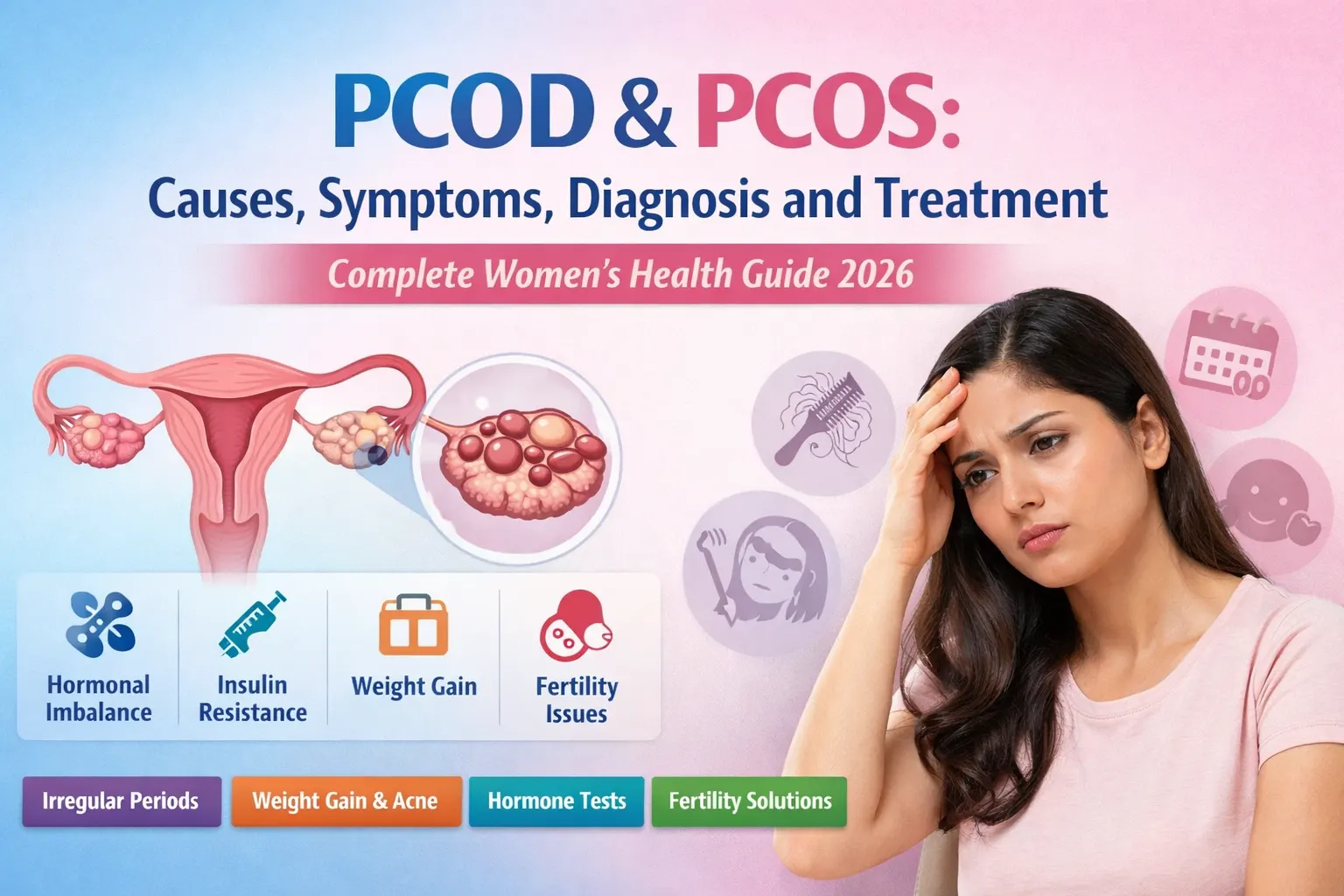
PCOD vs PCOS: What Is the Difference?
The terms are often used interchangeably in everyday conversation, particularly in India. However, PCOS is the established medical term used in current international guidance.
PCOD / Polycystic Ovarian Disease
PCOD is a commonly used term for a pattern of hormonal and ovulatory problems. It is often used to describe irregular periods, ovulation problems and polycystic-appearing ovaries.
- Commonly used term in South Asia
- May refer to irregular ovulation and hormonal changes
- Should not be assumed to mean that ovarian cysts are required
PCOS / Polycystic Ovary Syndrome
PCOS is a recognized hormonal and metabolic syndrome associated with androgen excess, ovulatory dysfunction and, in some people, polycystic ovarian morphology.
- Established medical term
- Can affect reproductive and metabolic health
- Ovarian cysts are not required for diagnosis
Common Symptoms of PCOD & PCOS
Symptoms vary between individuals and can change over time. Having one symptom alone does not confirm PCOS.
Irregular Periods
Periods may become infrequent, unpredictable or absent because ovulation is not occurring regularly.
Excess Hair Growth
Higher androgen activity can cause unwanted facial or body hair in some people.
Acne & Oily Skin
Persistent acne or oily skin can occur when androgen activity is increased.
Scalp Hair Thinning
Some people experience female-pattern hair thinning or increased hair shedding.
Weight or Metabolic Changes
Weight gain and insulin resistance are common in PCOS, but PCOS can also occur at a healthy weight.
Difficulty Conceiving
Irregular ovulation can make conception more difficult, although many people with PCOS can become pregnant with treatment.
What Causes PCOS?
The exact cause is not fully understood. Genetic susceptibility, hormonal signaling and metabolic factors all appear to play roles.
Genetic Factors
PCOS can run in families, suggesting an inherited component. A family history of PCOS or type 2 diabetes can increase risk.
Androgen Excess
Higher-than-usual androgen activity can interfere with normal follicle development and ovulation and may contribute to acne or excess hair growth.
Insulin Resistance
Insulin resistance is common in PCOS and can contribute to higher insulin levels and increased androgen activity.
Weight Is Not the Whole Cause
PCOS can occur at any body size. Weight should not be treated as the sole explanation for hormonal symptoms.
Sleep & Stress
Sleep problems and psychological stress can affect wellbeing and symptom management, but they are not established as the single cause of PCOS.
Metabolic Health
PCOS is associated with higher risks of insulin resistance, type 2 diabetes and other cardiometabolic problems, so long-term monitoring matters.
How Is PCOS Diagnosed?
There is no single blood test that confirms PCOS. A clinician combines symptoms, examination, laboratory findings and, when appropriate, ultrasound or other testing.
1. Menstrual & Ovulation History
The clinician reviews cycle length, missed periods, bleeding pattern, ovulation history and reproductive goals.
2. Androgen Assessment
Clinical signs such as hirsutism or acne and, when appropriate, blood tests for androgen levels can help assess hyperandrogenism.
3. Ultrasound / Ovarian Assessment
Ultrasound can assess ovarian morphology when indicated. Polycystic-appearing ovaries are not required for every diagnosis.
Important: In adults, PCOS is generally diagnosed when at least two of three features are present—ovulatory dysfunction, clinical or biochemical androgen excess, and polycystic ovarian morphology—after other causes have been excluded. Diagnostic criteria can differ for adolescents, so age and life stage matter.
PCOD & PCOS Treatment: A Personalized 2026 Approach
Treatment depends on symptoms, metabolic risk, age, medicines, and whether pregnancy is currently desired.
1. Lifestyle & Wellbeing
- Regular physical activity
- Balanced, sustainable eating pattern
- Adequate sleep
- Stress and mental-health support
- Weight management when appropriate and desired
Healthy lifestyle habits are recommended for all people with PCOS, even when they do not result in weight loss.
2. Menstrual & Androgen Symptoms
- Combined hormonal contraceptives may help regulate cycles
- They may also improve acne or excess hair in suitable patients
- Other treatments can target individual skin or hair symptoms
Choice depends on medical history, preferences and pregnancy plans.
3. Metabolic Management
- Assess diabetes and cardiovascular risk
- Metformin may be considered for selected patients
- Monitor glucose, blood pressure and other risk factors when appropriate
Metformin is not a universal treatment and should be individualized.
4. Fertility Treatment
When pregnancy is desired, treatment focuses on restoring or supporting ovulation and considering other fertility factors. Ovulation-induction medicines may be recommended by a fertility specialist, with assisted reproduction considered when appropriate.
5. Long-Term Follow-Up
PCOS is a long-term condition. Follow-up may include menstrual health, metabolic risk, mental wellbeing, sleep and reproductive goals rather than focusing only on ovarian appearance.
Can PCOS Affect Fertility?
Yes, PCOS can interfere with regular ovulation, but a PCOS diagnosis does not mean pregnancy is impossible.
Why conception can be difficult
Irregular or absent ovulation can reduce the number of opportunities for conception. Other fertility factors may also contribute and should be evaluated when pregnancy does not occur.
When to seek fertility advice
If pregnancy is desired and cycles are very irregular, discussing fertility early with a gynecologist can be useful. The timing of evaluation depends on age, cycle pattern and other individual factors.
Long-Term Health Risks Associated With PCOS
PCOS affects more than periods and fertility. Long-term care should include metabolic and emotional health.
Type 2 Diabetes
PCOS is associated with increased risk of insulin resistance and type 2 diabetes.
High Blood Pressure & Cholesterol
Cardiometabolic risk factors can occur more often and may need periodic assessment.
Endometrial Problems
Long periods without ovulation can increase the risk of endometrial hyperplasia, making appropriate menstrual management important.
Mental Health & Sleep
Anxiety, depression, body-image concerns and sleep problems can affect quality of life and deserve clinical attention.
When Should You See a Doctor for PCOD or PCOS?
Persistent menstrual irregularity, troublesome androgen-related symptoms or fertility concerns deserve professional evaluation rather than self-treatment.
Arrange a gynecology consultation if you have:
- Repeatedly irregular, very infrequent or absent periods
- Heavy or prolonged menstrual bleeding
- Persistent acne, excess facial/body hair or scalp hair thinning
- Difficulty becoming pregnant
- Symptoms suggesting metabolic problems, such as excessive thirst or frequent urination
- Significant anxiety, depression, eating concerns or sleep problems
Urgent care: severe pelvic pain, very heavy bleeding with weakness or fainting, or other acute symptoms should be assessed promptly rather than assumed to be PCOS.
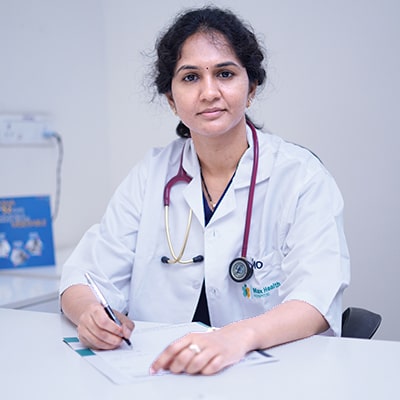
Dr. Swetha Reddy
Consultant Obstetrician & Gynecologist
Specialty: PCOD, PCOS, hormonal disorders and fertility care
Branches: Kukatpally & Tarnaka, Hyderabad
Evaluation and treatment are individualized according to symptoms, medical history and reproductive goals.
Book ConsultationPCOD & PCOS Care at My Health Hospitals
Women looking for PCOS evaluation in Hyderabad can discuss symptoms, menstrual health, metabolic concerns and fertility goals with a gynecology team.
Kukatpally / KPHB
Convenient for women in Kukatpally, KPHB and nearby Hyderabad areas seeking gynecology consultation for irregular periods, PCOS symptoms and fertility planning.
Tarnaka
Women in Tarnaka and surrounding areas can seek evaluation for menstrual irregularities, hormonal symptoms, PCOS-related concerns and reproductive health.
PCOD & PCOS – 20 Common Questions
Short, medically cautious answers to common PCOD and PCOS questions.
1. What is PCOD?
PCOD is a commonly used term for a condition involving irregular ovulation and hormonal changes. PCOS is the established medical term used for the broader syndrome.
2. What is the difference between PCOD and PCOS?
PCOD is a commonly used term in South Asia, while PCOS is the established medical term for a hormonal and metabolic syndrome. Diagnosis should follow accepted PCOS criteria.
3. What are the common symptoms of PCOS?
Irregular periods, ovulation problems, excess facial or body hair, acne, scalp hair thinning and difficulty conceiving are common features. Not everyone has all of them.
4. What causes PCOS?
The exact cause is not fully known. Genetic and hormonal factors are important, and insulin resistance is common.
5. Can you have PCOS without ovarian cysts?
Yes. Polycystic-appearing ovaries are not required for a PCOS diagnosis.
6. How is PCOS diagnosed?
In adults, clinicians generally use at least two of three features—ovulatory dysfunction, androgen excess and polycystic ovarian morphology—after excluding other causes.
7. Does PCOS always cause weight gain?
No. PCOS can occur at any body size. Treatment should address symptoms and metabolic health rather than weight alone.
8. Can PCOS be cured permanently?
There is currently no permanent cure, but symptoms and long-term risks can often be managed effectively.
9. Can women with PCOS get pregnant?
Yes. PCOS can cause irregular ovulation, but fertility treatments can help many people achieve pregnancy.
10. What treatment helps irregular periods?
Treatment depends on pregnancy plans and medical history. Hormonal contraceptives may help regulate cycles when pregnancy is not desired.
11. Is metformin used for PCOS?
Metformin may be considered for selected patients, especially when metabolic features or increased diabetes risk are present.
12. What lifestyle changes help PCOS?
Regular activity, nutritious eating, adequate sleep and sustainable health habits are recommended. Benefits can occur even without weight loss.
13. Can PCOS cause infertility?
PCOS can make ovulation irregular and is a common cause of anovulatory infertility, but many people can conceive with appropriate support.
14. Can PCOS cause irregular periods for months?
Yes. Infrequent or absent periods are common. Persistent gaps should be evaluated because prolonged anovulation can affect the uterine lining.
15. Does PCOS increase diabetes risk?
Yes. PCOS is associated with insulin resistance and an increased risk of type 2 diabetes.
16. Can PCOS cause acne and excess facial hair?
Yes. Increased androgen activity can contribute to acne, oily skin and excess facial or body hair.
17. Can PCOS affect pregnancy?
People with PCOS can have healthy pregnancies, but some pregnancy complications are more common and may require additional monitoring.
18. When should I see a gynecologist?
Seek evaluation for persistent irregular periods, troublesome androgen-related symptoms, fertility concerns or signs of metabolic problems.
19. Do ovarian cysts have to be present for PCOS?
No. Ovarian cysts are not mandatory for the diagnosis.
20. Is there a special PCOS diet?
There is no single diet proven to be best for everyone. A sustainable eating pattern that supports nutrition and metabolic health is generally preferred.
Medical note: This article is educational and does not replace an individual consultation, diagnosis or prescription from a qualified healthcare professional.