
-
 Kphb Branch
+91 9111674111
-
Tarnaka Branch
+91 9100001201
- Book Appointment
+91 9111674111
+91 9100001201
Obstetrics & Gynecology
Medically reviewed by Expert Gynecologist
The third month of pregnancy (weeks 9 to 12) is the final part of the first trimester. During this stage, the baby continues rapid development while pregnancy symptoms may begin to change. This guide explains 3 months pregnant symptoms, baby development, pregnancy diet, tests, precautions and antenatal care.
At My Health Hospitals KPHB and Tarnaka, antenatal care can include routine maternal assessment, pregnancy screening discussions and personalized guidance based on your health and pregnancy. For complete early pregnancy guidance, read our Pregnancy Second Month Guide.
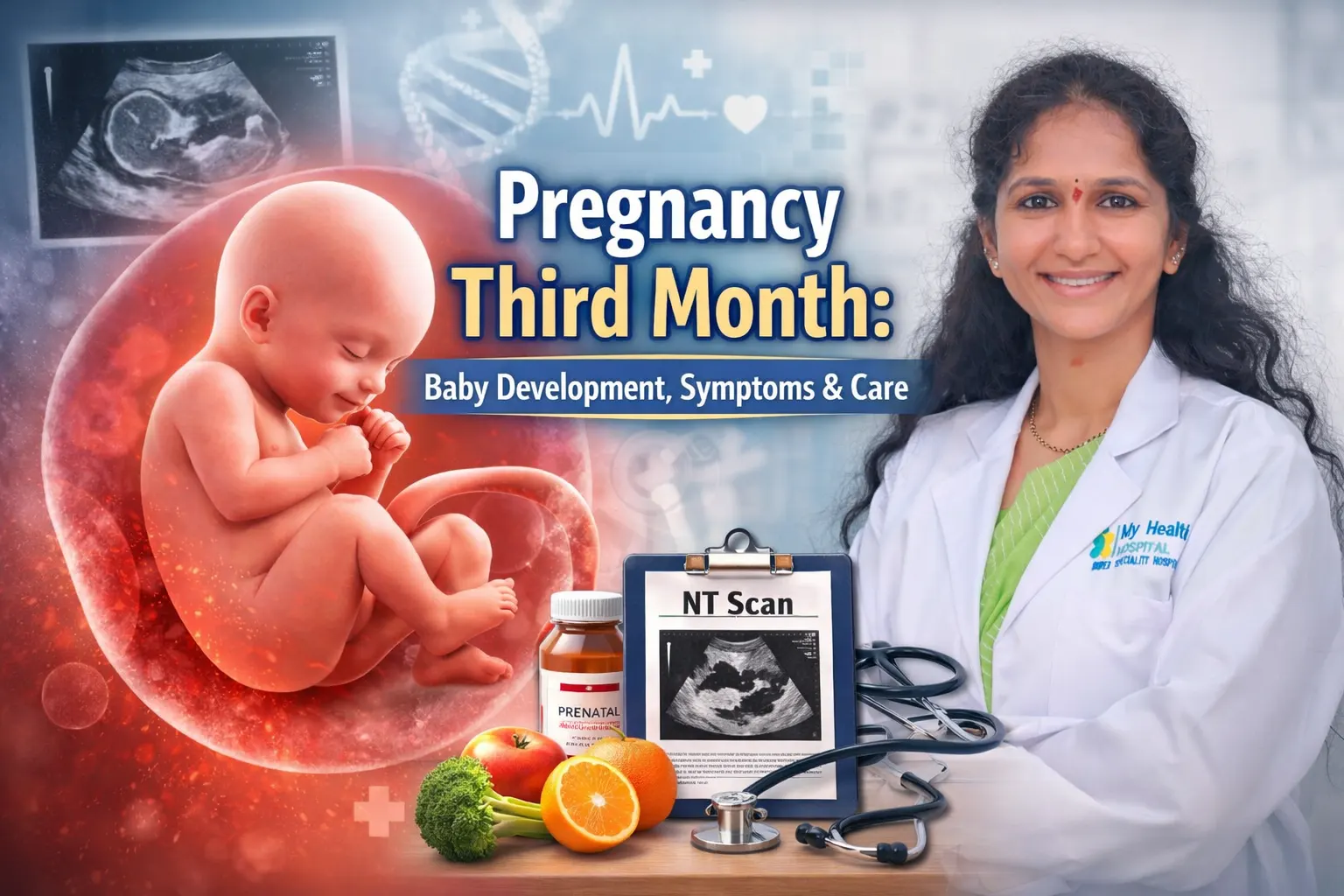
The third month covers weeks 9 to 12 and brings important changes in both fetal development and the mother's body. By the end of this stage, many early pregnancy symptoms may start easing, although every pregnancy is different.
At around 12 weeks pregnant, the first trimester is coming to an end. The exact size and development of the baby vary, so ultrasound findings are more useful than comparisons with fruit or household objects.
Important: Pregnancy symptoms vary widely. Vaginal bleeding, significant abdominal or pelvic pain, fainting, high fever or persistent vomiting should be assessed promptly.
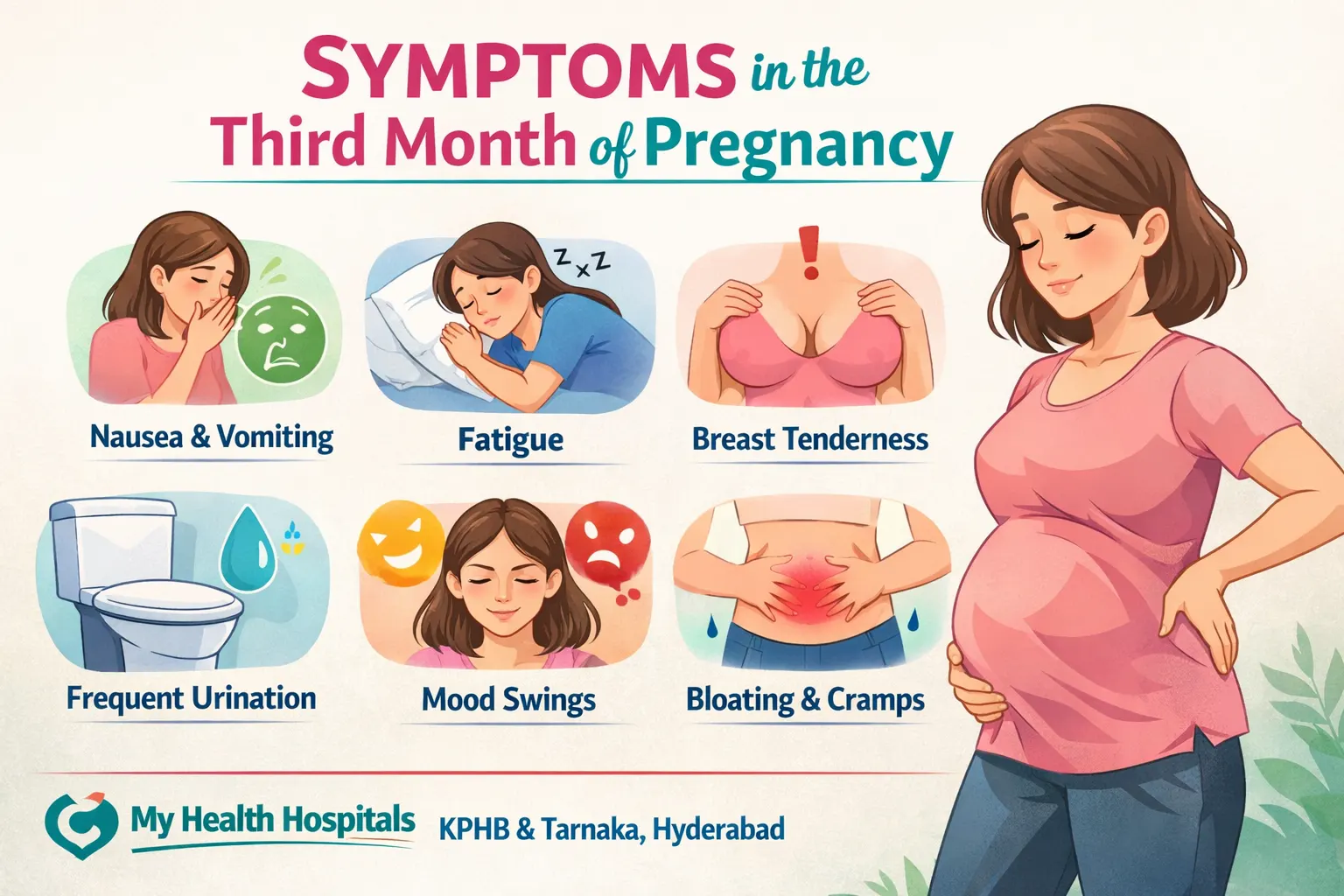
A balanced diet during the third month supports rapid fetal development, strengthens immunity, and prevents complications like anemia.
Choose iron-rich foods such as leafy greens, beans, lentils, meat or other suitable sources. Iron needs during pregnancy should be assessed with your clinician; food alone may not replace a prescribed iron supplement.
Eggs, dal, beans, lentils, dairy foods and other protein sources can help meet increased protein needs during pregnancy.
Milk, curd, paneer and other calcium-rich foods can contribute to maternal calcium intake and fetal bone development. Choose pasteurized dairy products.
A variety of washed fruits can provide vitamins, minerals and fiber. Whole fruit is generally preferable to sugary fruit drinks.
Include a variety of well-washed vegetables, especially leafy greens and other colorful vegetables, as part of a balanced pregnancy diet.
Whole grains such as oats, brown rice and whole-wheat foods provide carbohydrates and fiber that can support energy needs and bowel regularity.
Doctor’s Tip: Maintain a balanced diet and stay hydrated. For personalized pregnancy nutrition plans, consult experts at My Health Hospitals KPHB & Tarnaka.
Food safety remains important throughout pregnancy. Avoid alcohol, tobacco and foods with a higher risk of foodborne infection, and discuss caffeine intake with your clinician.
Alcohol should be avoided during pregnancy. Smoking and exposure to tobacco smoke can also harm pregnancy health.
Raw or undercooked meat, eggs and seafood can increase the risk of foodborne illness. Follow local pregnancy food-safety guidance and choose properly cooked foods.
Keep caffeine intake within the limit recommended by your pregnancy-care clinician. Remember that caffeine can also be present in tea, cola, chocolate and some medicines.
Limit highly processed foods that are high in added sugar, salt or saturated fat and low in essential nutrients. Occasional intake is different from relying on these foods as a main diet.
Doctor’s Advice: Follow a safe pregnancy diet plan and consult experts at My Health Hospitals KPHB & Tarnaka for personalized guidance during the third month of pregnancy.
Testing depends on gestational age, medical history and local antenatal-care protocols. Around the end of the first trimester, clinicians may discuss dating ultrasound, blood screening and the 11–14 week / 12-week scan and combined screening when appropriate.
A nuchal translucency measurement is performed as part of certain first-trimester screening pathways, commonly around 11–14 weeks. It estimates the chance of certain chromosomal conditions and is not, by itself, a diagnostic test.
Depending on your antenatal plan, blood tests may assess hemoglobin and blood group and screen for infections or other conditions. Additional tests may be recommended according to your medical history.
Antenatal visits help review symptoms, blood pressure, weight and other maternal health measures and discuss screening, supplements, medicines and pregnancy concerns.
Doctor’s Advice: Timely pregnancy screening tests improve outcomes. Visit My Health Hospitals KPHB & Tarnaka for advanced diagnostic care and expert antenatal monitoring.
Healthy habits support pregnancy, but there is no single routine that is right for everyone. Follow your obstetrician's advice, especially if you have bleeding, pain, a high-risk pregnancy or another medical condition.
Expert Tip: Follow safe pregnancy practices and consult specialists at My Health Hospitals KPHB & Tarnaka for personalized antenatal care during the third month.
Clear medical guidance for a safe and healthy third month pregnancy.
If symptoms reduce, pregnancy is not progressing well.
Symptoms can change as pregnancy progresses, but a reduction in nausea alone cannot confirm that everything is normal. Routine antenatal care and appropriate ultrasound or screening are more reliable for assessing pregnancy.
Exercise is unsafe during the third month.
Many pregnant people can remain active, but exercise recommendations should be individualized. Your clinician may advise restrictions when complications or specific risks are present.
You should avoid all medications completely.
Some medicines are safe in pregnancy and others are not. Do not stop an essential medicine or start a new medicine without discussing it with your clinician.
Baby development slows in the third month.
Fetal development continues rapidly during the first trimester, including development of organs, limbs and facial structures.
Doctor’s advice: Consult specialists at My Health Hospitals KPHB and Tarnaka for safe antenatal care.
During weeks 9–12 of pregnancy, contact your maternity or obstetric care team promptly if you develop symptoms that are severe, sudden or concerning. Some pregnancy symptoms can be normal, but warning signs should not be self-diagnosed.
Prompt medical assessment can help identify problems early and guide appropriate care for the mother and pregnancy.
Important: Regular checkups at My Health Hospitals KPHB and Tarnaka ensure early detection and safe pregnancy care.
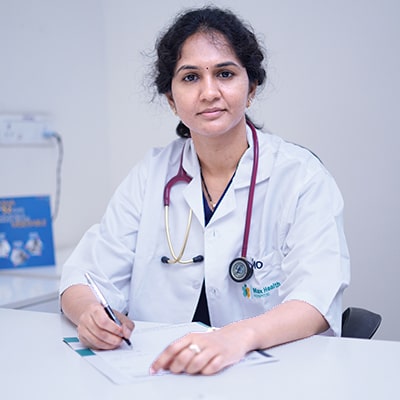
Obstetrician & Gynecologist
Experience: 10+ Years
Hospital: My Health Hospitals KPHB & Tarnaka
Expert in antenatal care, high-risk pregnancy management, and advanced maternal healthcare.
The third month of pregnancy (weeks 9–12) is an important part of the first trimester. Baby development continues rapidly, while symptoms such as nausea and fatigue may change as pregnancy progresses. A healthy diet, appropriate supplements, antenatal appointments and timely screening can support pregnancy care.
Following a varied pregnancy diet, taking prescribed supplements, attending antenatal appointments and avoiding alcohol and smoking are important parts of pregnancy care. Individual advice should come from your obstetrician or gynecologist. Expert care at My Health Hospitals KPHB and Tarnaka ensures safe monitoring and personalized pregnancy support.
According to NHS pregnancy guidelines , the third month is a key milestone in fetal development and overall pregnancy progression.
Expert-written medical articles from My Health Hospital
Find the Best Hospital Near You
H.No 15-24-212, MIG-212, Rd Number 1, K P H B Phase 1, Kukatpally, Hyderabad, Telangana 500072
H.No:-12-5-30, WhiteHouse, Moula Ali Rd, South Lalaguda, Tarnaka, Secunderabad, Telangana 500017