
Gastroenterology • Medically Reviewed
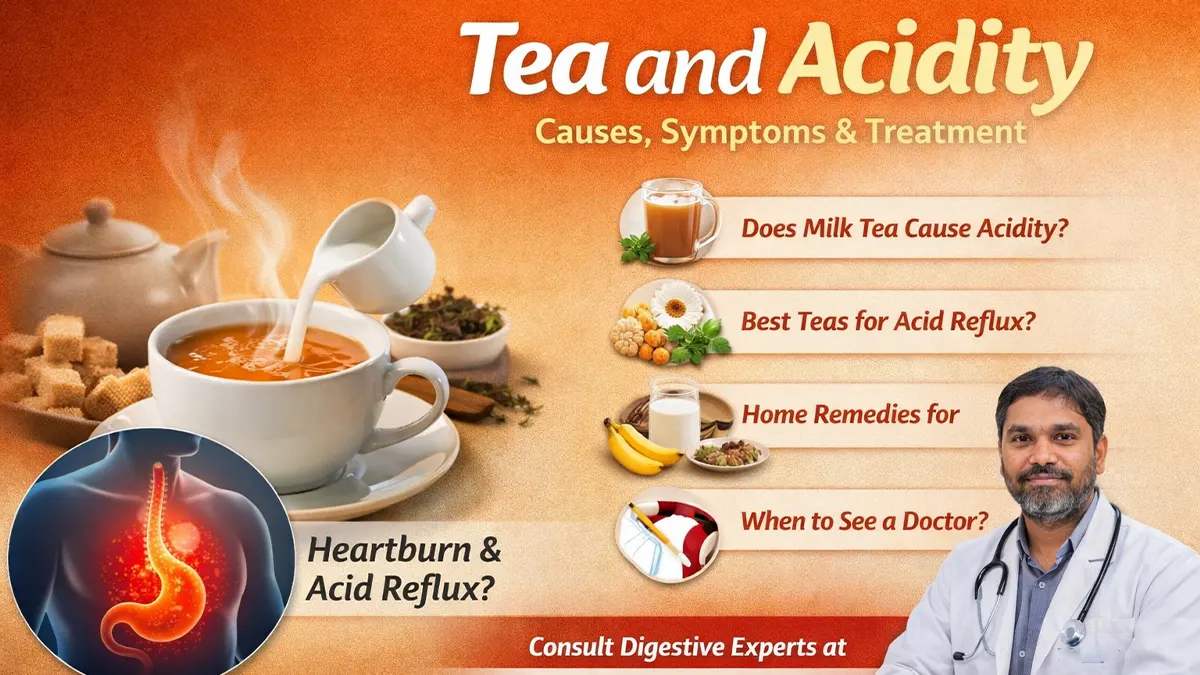
Tea and Acidity: Causes, Symptoms & Treatment
Tea can be a reflux trigger for some people. If you notice heartburn, a sour taste, regurgitation or throat symptoms after tea, understanding your personal triggers can help.
Quick answer:
Tea does not cause acidity in everyone. Caffeine and other characteristics of a drink
may trigger reflux symptoms in susceptible people. The most useful approach is to identify
whether tea consistently worsens your symptoms and adjust your intake accordingly.
How Are Tea and Acidity Connected?
Gastroesophageal reflux happens when stomach contents move back into the esophagus. Tea can act as a symptom trigger for some people, especially when the drink contains caffeine. However, individual responses differ, so tea should not automatically be blamed for every episode of acidity.
If symptoms repeatedly appear after tea, keeping a simple food-and-symptom record can help identify whether the drink, caffeine, meal timing or another factor is responsible.
Common reflux symptoms
- Burning behind the breastbone
- Sour or acidic taste
- Regurgitation
- Nausea or upper-abdominal discomfort
- Chronic cough or hoarseness in some people
Does Milk Tea Cause Acidity?
Milk tea may worsen digestive or reflux symptoms in some people, but there is no universal rule that milk tea causes acidity. Caffeine, portion size, added sugar, meal timing and individual tolerance can all influence symptoms.
Strong tea
A stronger or larger serving may deliver more caffeine and may be more likely to trigger symptoms in sensitive people.
Meal timing
If symptoms follow tea close to bedtime or after a large meal, timing may contribute to reflux.
Individual triggers
One person may tolerate tea well while another experiences heartburn after the same drink.
Tea, Caffeine and Acid Reflux
Caffeine is commonly reported as a reflux trigger. If tea consistently causes symptoms, reducing the serving size or choosing a lower-caffeine or caffeine-free alternative may be reasonable. There is no need for everyone with occasional heartburn to eliminate every potential trigger.
Important: A trigger-food approach should be personal. If a particular drink does not
cause symptoms, blanket avoidance may not be necessary.
Symptoms of Acidity or Acid Reflux After Tea
Typical symptoms
- Heartburn or a burning feeling behind the breastbone
- Sour taste or regurgitation
- Chest or upper-abdominal discomfort
- Nausea or belching
Possible throat symptoms
- Chronic cough
- Hoarseness
- Throat irritation
- Difficulty or pain with swallowing
What Can You Do If Tea Triggers Acidity?
There is no single home remedy that treats every cause of acidity. Practical measures should focus on reducing your personal triggers and preventing reflux, especially at night.
| What to try | Why it may help |
|---|---|
| Reduce or pause tea | Helps determine whether tea or caffeine is a personal symptom trigger. |
| Choose a smaller serving | May reduce caffeine exposure and the amount of fluid consumed at one time. |
| Avoid lying down soon after eating | Reducing reflux around bedtime may improve nighttime symptoms. |
| Finish meals at least 3 hours before lying down | This may improve nighttime GERD symptoms in people who experience reflux when lying down. |
| Track personal trigger foods | Different people have different food and drink triggers. |
Best Tea for Acid Reflux: Is Any Tea Safe?
There is no tea that can be recommended as a universal treatment for acid reflux. If caffeine appears to trigger symptoms, a caffeine-free drink may be easier to tolerate. Herbal products can also affect people differently, so stop any drink that consistently worsens symptoms.
Caffeine-free options
A caffeine-free beverage may be worth trying if caffeinated tea repeatedly triggers your symptoms. It should be viewed as a beverage choice, not a GERD treatment.
What about green tea?
Green tea still contains caffeine. It is therefore not automatically a better choice for someone whose reflux is triggered by caffeine.
Tea and Acidity: Do's and Don'ts
Do
- Notice which drinks consistently trigger symptoms.
- Consider reducing caffeine if it is a personal trigger.
- Keep meals away from bedtime if nighttime reflux occurs.
- Discuss persistent symptoms with a clinician.
Don't
- Assume every episode of chest discomfort is acidity.
- Rely on unproven drinks or remedies to treat chronic GERD.
- Continue a trigger beverage simply because it is considered healthy.
- Use acid-suppressing medicines long-term without appropriate medical advice.
How Is Acid Reflux Diagnosed and Treated?
Doctors often diagnose GERD from symptoms and medical history. Tests may be considered when symptoms suggest a complication, another condition is possible, or symptoms do not improve with treatment.
Clinical assessment
Your symptoms, timing, medicines, food triggers and medical history are reviewed.
Medical tests
Selected patients may need tests such as upper GI endoscopy or reflux testing based on the clinical situation.
Treatment
Depending on the diagnosis, treatment may include lifestyle measures, antacids, H2 blockers or proton pump inhibitors.

Medical Review
Reviewed by Dr. Krishna Chaitanya Vattem
Dr. Krishna Chaitanya Vattem is a Senior Consultant Gastroenterologist and Laparoscopic Surgeon. Medical review helps ensure that information about reflux symptoms, diagnosis and treatment is presented cautiously and does not replace an individual clinical evaluation.
When Should You See a Doctor for Acidity?
Arrange medical evaluation if symptoms are persistent, recurrent or not improving with appropriate lifestyle measures or over-the-counter treatment.
- Difficulty or pain when swallowing
- Persistent vomiting
- Vomiting blood or passing black, tarry stools
- Unexplained weight loss or loss of appetite
- Persistent or worsening chest discomfort
- Symptoms that continue despite treatment
Emergency note: New, severe or unexplained chest pain—especially with breathlessness, sweating, fainting or pain spreading to the arm, jaw or back—should be assessed urgently rather than assumed to be acidity.
Patient Questions
Frequently Asked Questions About Tea and Acidity
Clear answers to common questions about tea, caffeine, heartburn, reflux and GERD.
Tea can trigger heartburn or reflux symptoms in some people, particularly when it contains caffeine or when it is a personal trigger. Not everyone who drinks tea develops acidity.
Milk tea may worsen reflux or indigestion symptoms in some people, but the effect varies. Caffeine, the amount consumed and individual food sensitivities may all matter.
Tea may act as a trigger for reflux symptoms in some people. If symptoms repeatedly follow tea, reducing the amount or choosing a lower-caffeine option can help identify whether tea is a personal trigger.
Yes. Caffeinated drinks can be a symptom trigger for some people with GERD. A practical approach is to observe whether tea consistently worsens your symptoms rather than eliminating every potential trigger automatically.
Common reflux symptoms include a burning feeling behind the breastbone, regurgitation or a sour taste, nausea, chest discomfort, swallowing problems, cough or hoarseness.
Green tea still contains caffeine, so it is not automatically better for reflux. The amount of caffeine, serving size and your individual response matter more than the tea name alone.
There is no single tea proven to treat GERD. If caffeine appears to trigger symptoms, a caffeine-free beverage may be easier to tolerate, but individual responses vary.
Some people tolerate ginger tea well, but it should not be presented as a treatment that cures GERD. Stop or reduce it if it makes your symptoms worse.
Chamomile is caffeine-free, but strong evidence that chamomile tea treats GERD is limited. Choose it only if you tolerate it and discuss persistent symptoms with a clinician.
If tea repeatedly triggers symptoms on an empty stomach, avoid that pattern and see whether a smaller serving with food is better tolerated.
Identify your personal trigger, consider reducing caffeine or serving size, avoid lying down soon after eating, and leave enough time between meals and bedtime if nighttime reflux is a problem.
Not necessarily. Some people can drink tea without symptoms, while others find caffeine or tea triggers reflux. Your symptoms and response should guide whether you reduce or avoid it.
If reflux occurs when you lie down, it is generally helpful to avoid eating or drinking close to bedtime and to finish meals at least 3 hours before lying down.
It can help some people if caffeine is one of their individual reflux triggers. Reducing or avoiding the trigger beverage for a period can help you assess whether symptoms improve.
Home measures may help occasional symptoms, but persistent or recurrent reflux should be evaluated. Treatment can include lifestyle changes and medicines when appropriate.
Seek medical advice for persistent symptoms, symptoms that do not improve with lifestyle changes or over-the-counter treatment, or symptoms such as difficulty swallowing, persistent vomiting, bleeding or unexplained weight loss.
GERD can cause chest discomfort or a burning sensation, but chest pain can also have heart or other causes. New, severe or concerning chest pain needs urgent medical assessment.
Tea may be associated with digestive discomfort in some people, but bloating and gas have many possible causes. If symptoms repeatedly follow tea, reducing it may help identify a personal trigger.
Commonly reported triggers include caffeine, alcohol, chocolate, mint, spicy foods, acidic foods and high-fat foods. Triggers vary between individuals.
GERD can often be controlled effectively, but treatment depends on the cause and severity. Lifestyle measures, medicines and, in selected cases, procedures may be used.
Persistent Acidity or Reflux Symptoms?
If tea repeatedly triggers heartburn or you have warning symptoms, discuss the problem with a qualified gastroenterologist.