-
 Kphb Branch
+91 9111674111
-
Tarnaka Branch
+91 9100001201
- Book Appointment
+91 9111674111
+91 9100001201
Obstetrics & Gynecology
Medically reviewed by Dr. Swetha Reddy, Obstetrician & Gynecologist.
The second month of pregnancy covers weeks 5 to 8. Your baby is undergoing rapid early development, while symptoms such as nausea, fatigue, breast tenderness and frequent urination may become more noticeable.
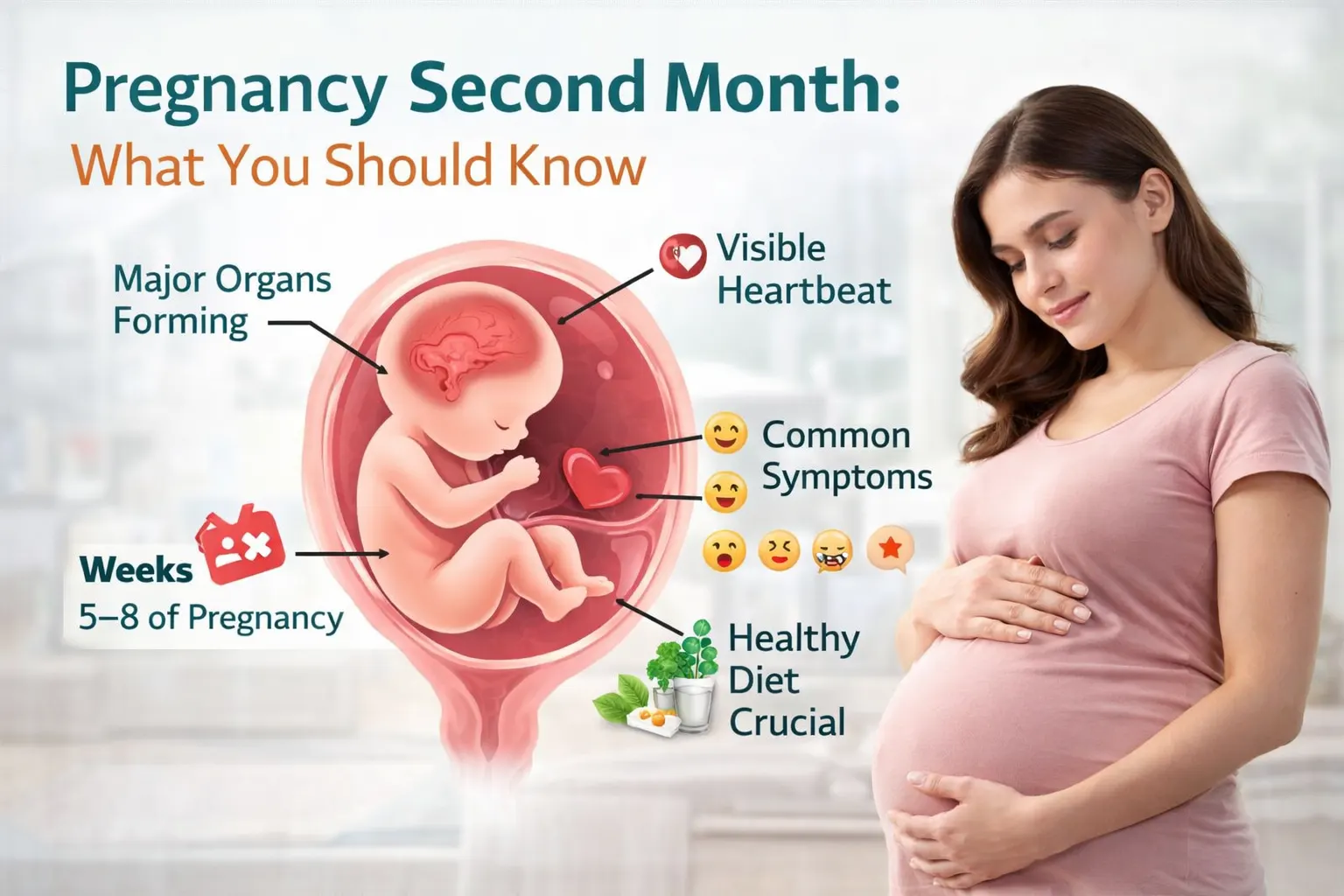
Weeks 5 through 8 are within the first trimester. The embryo undergoes rapid development and structures that will form major organs and body systems continue to develop.
Cardiac activity may be visible on ultrasound depending on gestational age and the type of scan.
Early structures of the brain and spinal cord continue developing rapidly.
Early limb, facial and other body structures become more defined during this stage.
This is an appropriate time to establish or continue early pregnancy care and recommended screening.
Developmental timing varies. An ultrasound finding should be interpreted using gestational age, scan type and clinical history rather than a single expected milestone.
Early pregnancy symptoms can become more noticeable around weeks 5–8, but some people have few symptoms. Common symptoms include:
Morning sickness can occur at any time of day and may vary in severity.
Hormonal and physical changes can contribute to marked tiredness.
Breasts may feel tender, fuller or more sensitive.
Needing to urinate more often is common in early pregnancy.
Food cravings, aversions and increased sensitivity to smells may occur.
Emotional changes can accompany hormonal and lifestyle changes.
There is no single “best” pregnancy food. Aim for a varied, balanced diet that provides protein, iron, folate, calcium, iodine and other nutrients according to your individual needs.
Keep caffeine within the limit advised for pregnancy, remembering that tea, coffee, cola, energy drinks, chocolate and some medicines can contribute to total intake.
Wash produce, separate raw and cooked foods, and cook animal products thoroughly.
Tests are individualized. Early antenatal care may include a medical history, blood pressure and weight assessment, routine blood tests and infection screening. Ultrasound may be used to estimate gestational age and assess the pregnancy.
| Assessment | Why it may be done |
|---|---|
| First antenatal assessment | Review health history, medicines, symptoms and pregnancy risks; plan ongoing care. |
| Blood tests | May include hemoglobin, blood group/Rh status and infection screening according to local antenatal protocols. |
| Ultrasound | May help establish gestational age and assess pregnancy location, viability or other findings when clinically indicated. |
| Additional tests | Thyroid or other investigations may be advised when symptoms, history or clinical findings warrant them. |
For uncomplicated pregnancies, appropriate moderate activity can generally be continued. Follow individualized restrictions if your clinician has advised them.
Early pregnancy advice is often mixed with myths. Here are a few common examples.
Severe morning sickness means the pregnancy is weak.
Nausea and vomiting are common in early pregnancy. Severe vomiting needs assessment because dehydration and inadequate nutrition can become problems.
You must eat twice as much food in the second month.
Pregnancy nutrition focuses on nutrient quality and adequate intake, not simply doubling food portions.
Any spotting automatically means miscarriage.
Bleeding can have different causes, but bleeding during pregnancy should be discussed with a healthcare professional.
All herbal remedies are natural and therefore safe.
Pregnancy safety varies by product and dose. Check with your clinician before using herbal products or supplements.
Some symptoms in early pregnancy require urgent medical assessment, particularly when they are severe, sudden or worsening.
Obstetrician & Gynecologist
My Health Hospitals, Hyderabad
Antenatal care, pregnancy monitoring, high-risk pregnancy assessment and women’s health care.
Arrange antenatal care early so your clinician can review your health, medicines, supplements, symptoms and recommended screening.
Meet Our Gynecology TeamThe second month of pregnancy is a period of rapid development and changing symptoms. A balanced diet, recommended supplements, safe food practices and timely antenatal care are important foundations for pregnancy health.
If symptoms are severe or unusual, contact your obstetric clinician rather than relying on home remedies or self-medication.
Clear answers to common questions about symptoms, diet, tests, activity and early pregnancy warning signs.
Expert-written medical articles from My Health Hospitals
Find the Best Hospital Near You
H.No 15-24-212, MIG-212, Rd Number 1, K P H B Phase 1, Kukatpally, Hyderabad, Telangana 500072
H.No:-12-5-30, WhiteHouse, Moula Ali Rd, South Lalaguda, Tarnaka, Secunderabad, Telangana 500017